

Caroline Rose Alukkal - Postdoctoral Scholar Feature
“We use [PFAS] very, very commonly in almost all consumer products, from cosmetics to clothes to carpets. They can cause very serious endocrine disruption and thyroid dysfunction, are a possible cause of cancer and can impact fetuses.”
- Caroline Rose Alukkal, postdoctoral researcher in Agronomy
The Path Here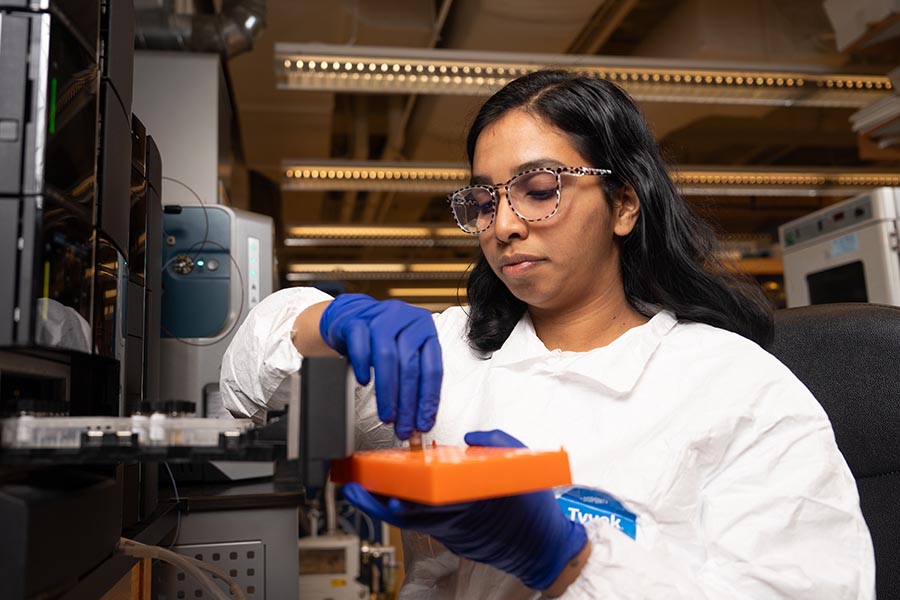
At an age when most kids are still learning long division, Caroline Rose Alukkal was already thinking about wastewater management. Her village in rainy Kerala, a state in southern India, often had issues with runoff and water shortages. By fourth grade, Alukkal had learned about the downsides of impervious surfaces, like concrete, which keep stormwater from soaking naturally into the ground. “I started helping my parents make decisions about increasing the number of plants and trees around our house,” she says.
By the end of high school, she knew she wanted to study something that would allow her to contribute to improving the environment. So, while many of the best students at her school applied for prestigious electrical engineering degrees, she chose biotechnology engineering.
“It was hard for me to decide I needed to do something else,” she says about rejecting the electrical engineering path. “But I was convinced I could help us to live a better life.”
She earned a master’s degree in environmental science and engineering and learned about PFAS — per- and polyfluoroalkyl substances, the so-called “forever chemicals.”
“We use them very, very commonly in almost all consumer products, from cosmetics to clothes to carpets,” she says. “They can cause very serious endocrine disruption and thyroid dysfunction, are a possible cause of cancer and can impact fetuses.”
Fascinated, she read as much as she could about PFAS and came upon the work of Purdue’s Linda Lee, one of the world’s experts in the subject.
She approached Lee, a distinguished professor with a joint appointment in the Department of Agronomy in the College of Agriculture and environmental and ecological engineering in the College of Engineering, and asked if she had any openings in her lab. Lee said yes and encouraged her to apply. Alukkal arrived in 2019 to begin a second master’s degree in environmental chemistry and stayed on to earn a PhD in environmental and ecological engineering. She’s now a postdoctoral researcher in Lee’s lab.
The Work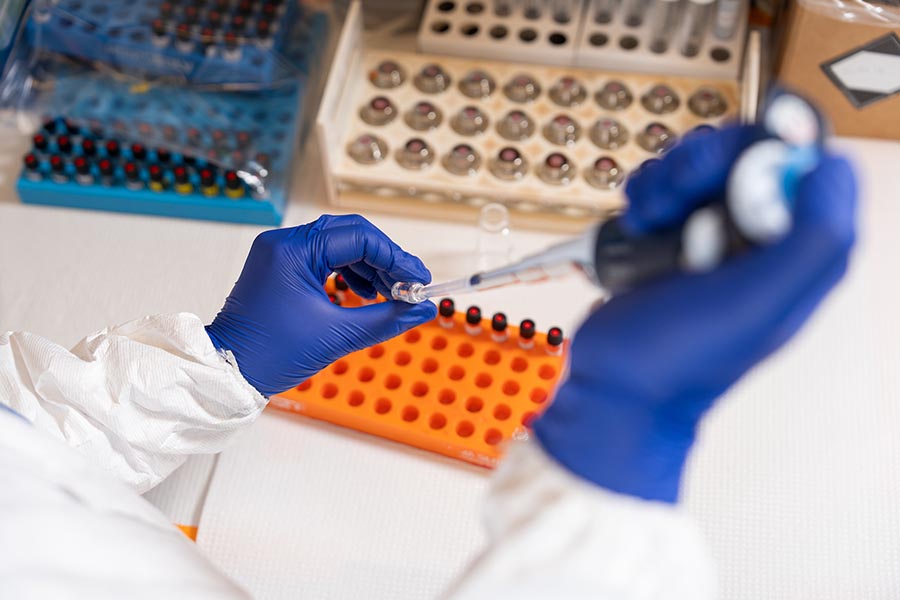
Alukkal studies how PFAS change across the wastewater treatment process. It’s become increasingly common to turn wastewater biosolids into fertilizers, but this potentially sustainable practice is threatened by the presence of PFAS. Alukkal also looks at different potential methods for quantifying PFAS in complex biological samples.
It’s a rapidly changing field, she says.
“In 2019, we were analyzing only 18 PFAS because we didn’t have standards to do more. Now, in 2026, we can analyze over 100, and that number’s growing very fast because of the scientific progress.”
Some PFAS are necessary, Alukkal says. But PFAS in food wrappers, for example, are used for convenience. Alukkal hopes many of those will be phased out as manufacturers and consumers grow more aware of their hazards.
“It’s still not fully understood what’s in each product, so you, the consumer, are making the best decision with the information you have right now,” she says. “As the science and technology progresses, we may know better so you can make better decisions.”
Future Plans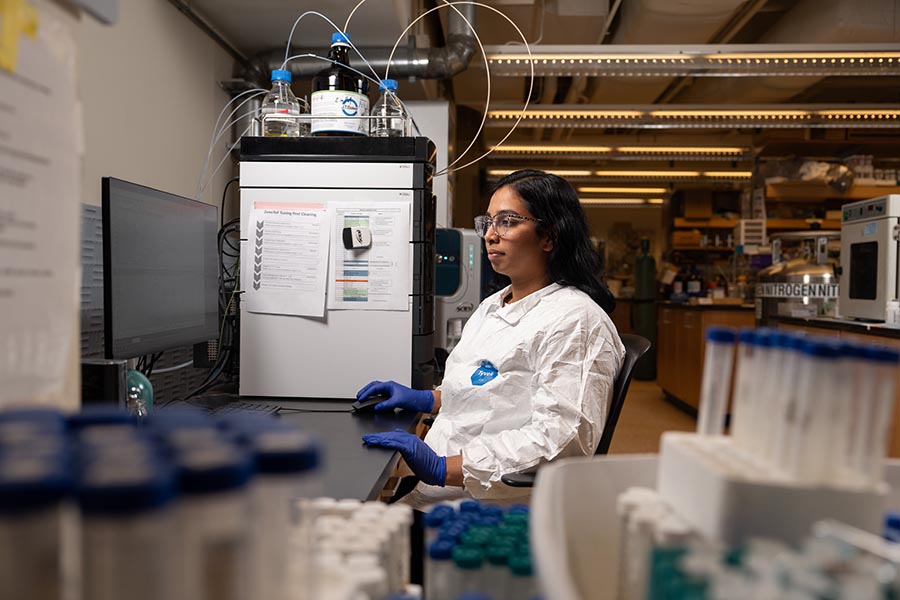
Alukkal has found tremendous support from Lee, she says. “It was a big transition going from grad student to postdoc, but I got a lot of mentorship,” she says, “and now I’ve got opportunities for mentoring others.”
She also feels lucky with her group of lab mates. “The group I’m in is very supportive. There’s always someone I can ask questions of,” she says. “It’s a very international group — people from Africa, Asia, Europe, North America, and all of us make a really good mix.”
Alukkal enjoys cooking and hiking with her husband and daughters, ages 5 and 8.
Alukkal’s husband is a grad student in civil engineering, with a specialty in water resource engineering. She expects they’ll go on the job market together when he graduates.
“Being in academia is where I find I can contribute best,” she says.
More Postdoctoral Scholars
It wasn’t until she was actually in a veterinary hospital, attempting to give an injection...

Jingxian An has always been interested in the science of what people eat and drink, whether...
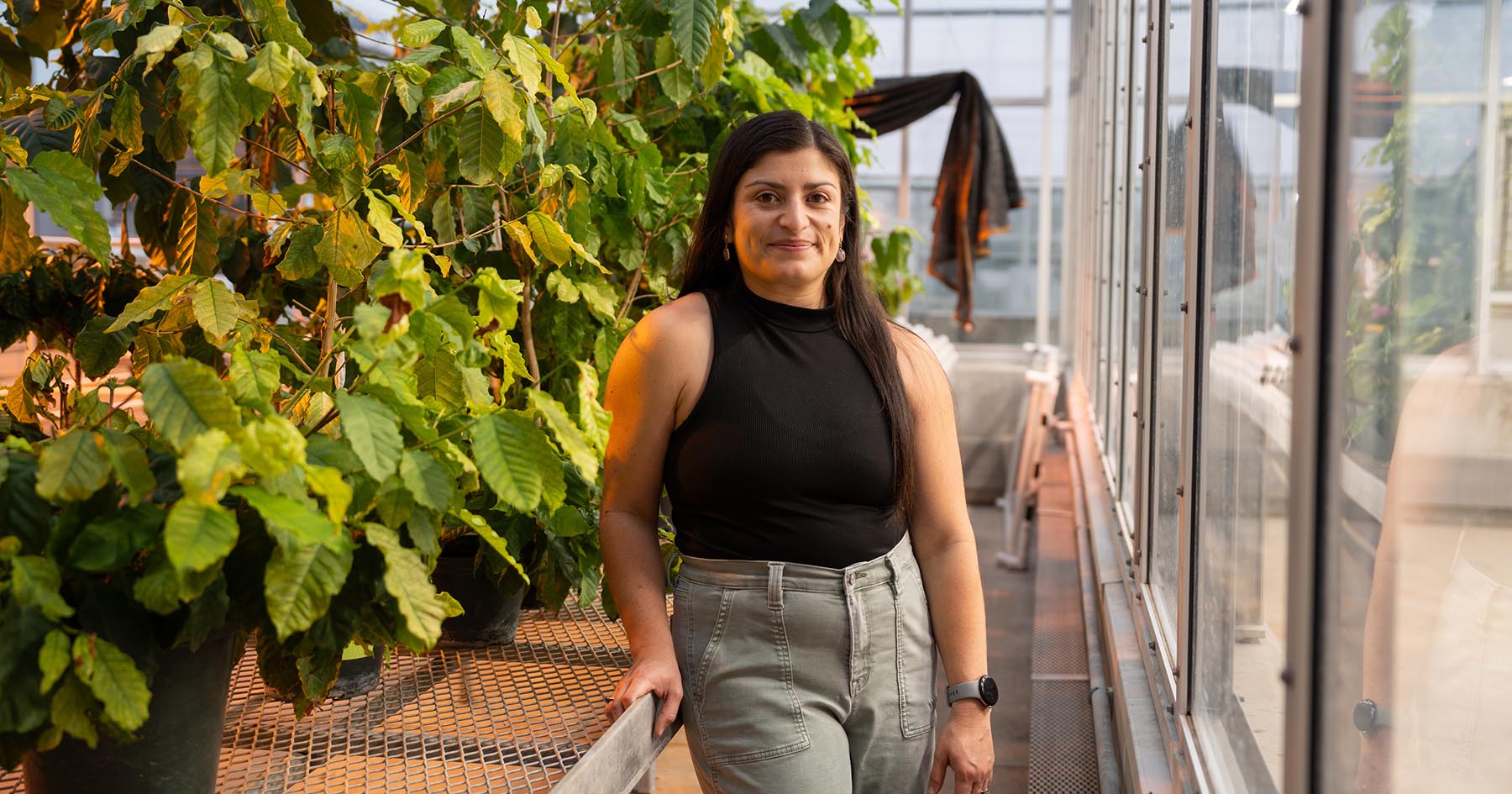
Terry Torres Cruz’s path to mycology — the study of fungi — has been guided by...
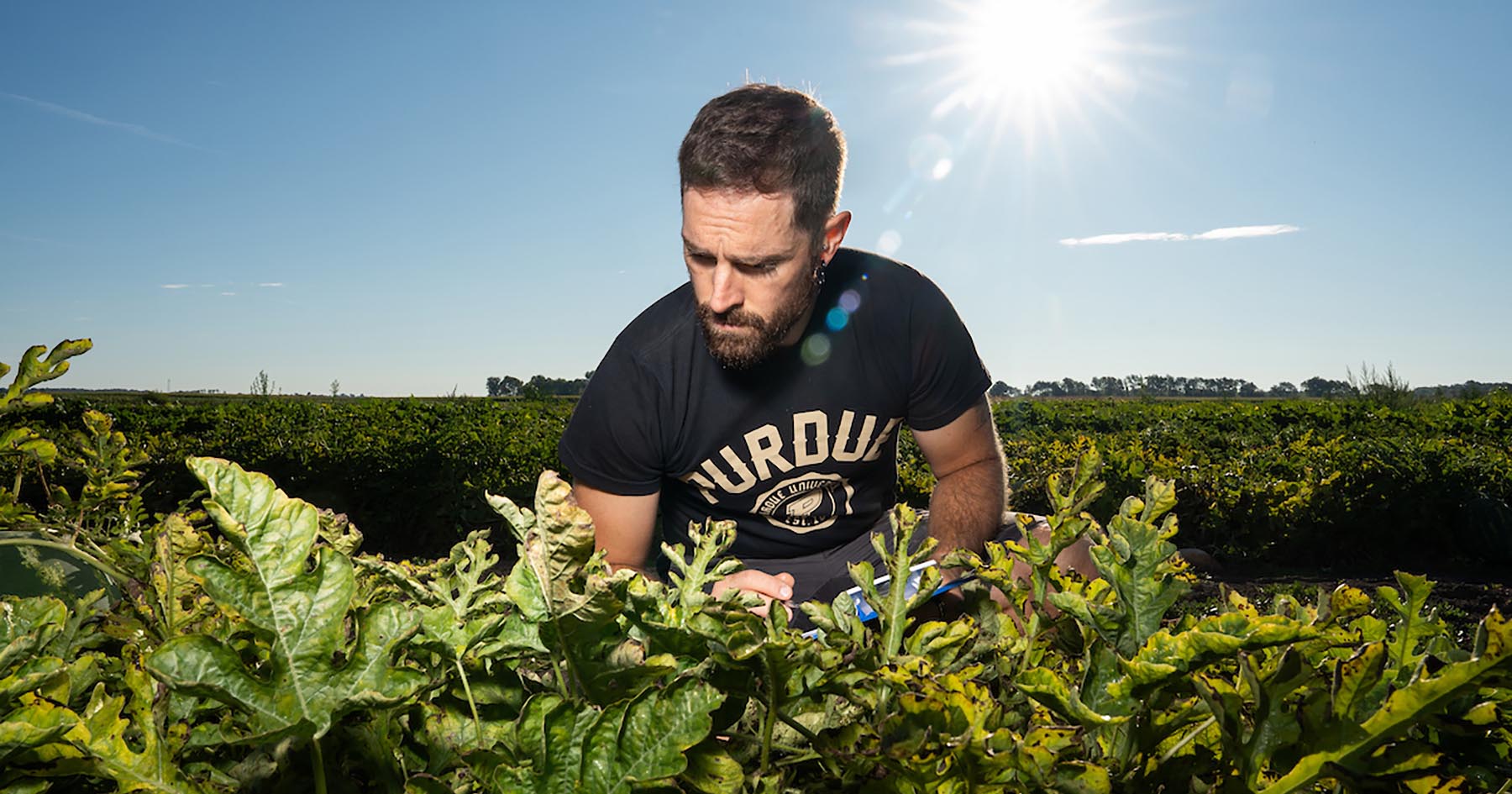
When Zeus Mateos-Fierro arrived in Indiana, he’d never seen a watermelon field in his life....

Many of us remember our high school lessons in genetics – drawing Punnett squares,...