

Intro to Trees of Indiana: Silver Maple
The classic and trusted book "Fifty Common Trees of Indiana" by T.E. Shaw was published in 1956 as a user-friendly guide to local species. Nearly 70 years later, the publication has been updated through a joint effort by the Purdue Department of Forestry and Natural Resources, Indiana 4-H, and the Indiana Department of Natural Resources, and reintroduced as "An Introduction to Trees of Indiana."
A printed copy of the full publication is available for purchase for $7 in the Purdue Extension Education Store. The field guide helps identify common Indiana woodlot trees.
Each week, the Intro to Trees of Indiana web series will offer a sneak peek at one species from the book, paired with an ID That Tree video from Purdue Extension forester Lenny Farlee to help visualize each species as it stands in the woods. Threats to species health as well as also insight into the wood provided by the species, will be provided through additional resources as well as the Hardwoods of the Central Midwest exhibit of the Purdue Arboretum, if available. 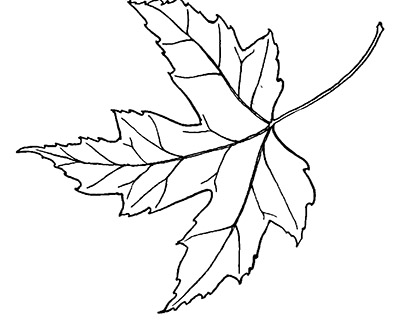
This week, we introduce the silver maple or Acer saccharinum.
Silver maple has simple, typically five-lobed leaves with deeply cut divisions, or sinuses, between the lobes, with narrow lobes at the base. The leaves, which are silvery on the underside, are held oppositely on long leaf stems coming off the twigs. The bark on young trees is smooth and light gray, and darker and scaly on older trees.
Silver maple, which is commonly found in swamps and overflow bottomlands, is one of Indiana’s soft maples alongside red maple. It flowers early and sheds its large winged seed in the spring, typically by late May.
Silver maples, which prefer moist or well-drained soil, grow 50 to 80 feet tall and are found growing from the Great Plains eastward, excluding the Gulf and Atlantic coastal region. Most silver maple lumber is produced in the Mississippi Delta and central states region.
The Morton Arboretum warns that without proper and frequent pruning, high winds and ice can cause limbs to break on silver maple trees due to its weak wood and branch structure. These species is also drought sensitive, so be careful to provide supplemental water during dry periods.
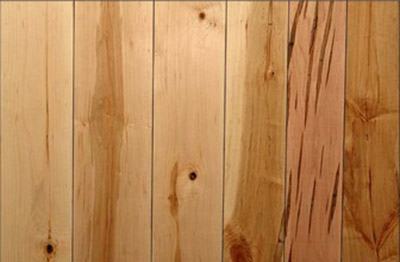 According to the Hardwood Lumber and Veneer Series, silver maple weighs 33 pounds per cubic foot and is described as soft maple in the lumber trade along with red maple as they are lighter and softer than hard or sugar maple. Some mills separate the soft maples into silver leaf (silver maple) and red leaf (red maple).
Soft maple lumber is used for many of the same purposes as hard maple except where strength and hardness are concerned. Commercially, the wood can also be stained to look like cherry. High value uses of soft maple include millwork, kitchen cabinets and furniture. It is also used for pallets, crates and basket veneer.
Other Resources:
Hardwoods of the Central Midwest: Silver Maple
Hardwood Lumber and Veneer Series, The Education Store: Soft Maple
Morton Arboretum: Silver Maple
Purdue Plant Doctor
Native Trees of the Midwest, The Education Store
Shrubs and Woody Vines of Indiana and the Midwest, The Education Store
Investing in Indiana Woodlands, The Education Store
Forest Improvement Handbook, The Education Store
ID That Tree, Purdue Extension-Forestry & Natural Resources (FNR) YouTube playlist
Woodland Management Moment , Purdue Extension-FNR YouTube playlist
Featured Stories
Carolyn Foley, a long-time member of the Purdue Forestry and Natural Resources (FNR) and...

Purdue University’s College of Agriculture recognized nine alumni at the Distinguished...
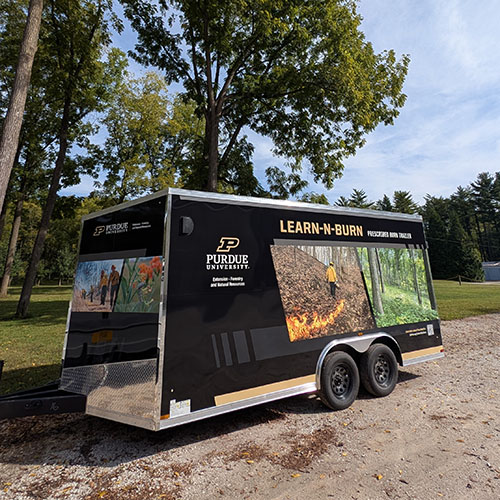
Keep your eyes peeled across Indiana for the newly minted Purdue Forestry and Natural Resources...
Senior wildlife major Madison Medley spent her summer as a natural resource intern with Hamilton...

Addy Ellis, a sophomore aquatic sciences and political science double major, spent the summer as...

Zachary Feiner, who earned his PhD from FNR in 2015 and spent two additional years in West...