

Fellowship helps natural resources professionals build digital skills
Digital tools are transforming how forests and natural resources are managed. From drones and sensors to advanced data analytics, technology is changing not only how work gets done but also the skills professionals need to stay effective. A new fellowship program from Purdue University is designed to help natural resources professionals get experience with these tools and apply them in practical, career-relevant ways.
The fellowship combines an intensive, hands-on summer training with a year of virtual professional development and mentoring. It’s designed for working professionals who want to grow in their current roles, explore new career paths or prepare for leadership positions in an increasingly technology-driven field.
Technology is rapidly reshaping forestry and related industries. Program participants learn how to use these advanced digital tools and receive follow-up support to make the most of new skills on the job.
Start with Immersive, Hands-On Training
The program begins in July with Digital Data Acquisition Camp (DDAC), a three-week residential experience led by faculty and staff from Purdue’s Institute for Digital Forestry. Participants work directly with the technologies increasingly used across forestry and natural resources, including drones for forest monitoring, environmental sensors for real-time data collection, and AI- and machine-learning tools that support data-informed decision making.
“Technology is rapidly reshaping forestry and related industries,” said Brady Hardiman, associate professor of forestry and natural resources and co-leader of the fellowship program. “DDAC helps professionals understand how these new tools connect to the work they’re already doing—and where they want their careers to go next.”
Ongoing Support and Career Development
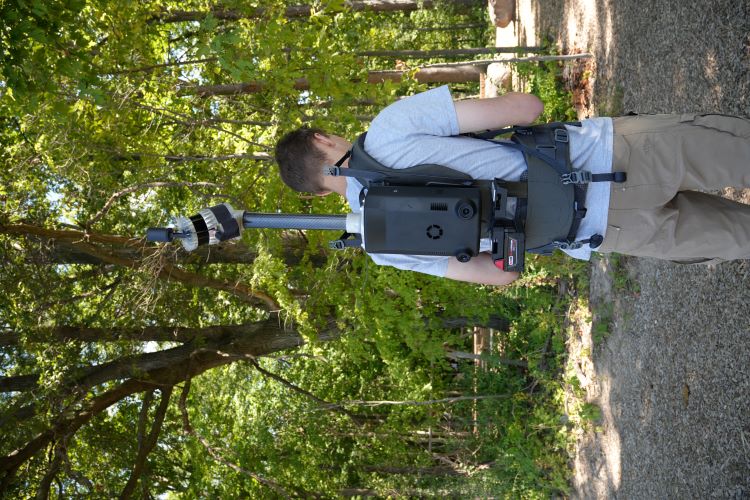 After the summer residency, fellows continue with a year of virtual engagement that builds on what they learned at DDAC. Monthly online professional development sessions, team-based projects using real-world datasets and one-on-one mentoring provide opportunities to deepen skills, explore new applications and reflect on career direction while staying in their current jobs.
“Fellowship funding helps make attending DDAC possible for working professionals by covering many related expenses, like transportation, childcare and lodging during the camp,” Hardiman said.
The year of follow-up professional development and coaching with faculty, staff and partners provides ongoing engagement and support so participants can not only learn new skills but also translate them into meaningful professional growth.
Program Dates and How to Apply
The 2026-2027 fellowship year begins with the Digital Data Acquisition Camp, July 20-August 8, held at Purdue's Wright Forestry Center in West Lafayette, Indiana.
Applications for the fellowship are now open: https://etap.nsf.gov/award/8312/opportunity/11420.
The number of fellowships is limited. Consideration for the 2027-2028 fellowship cohort will begin in fall 2026.
For more information, visit https://ag.purdue.edu/digital-forestry/fellowship.html or email denr@purdue.edu.
* This program is based upon work funded by the National Science Foundation through the Experiential Learning for Emerging and Novel Technologies (ExLENT) program, grant #2526215.
Attend Digital Data Acquisition Camp
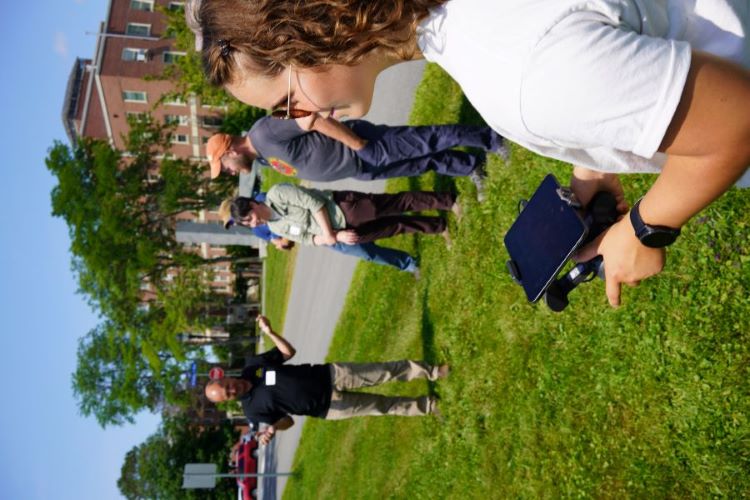
July 20 - Aug. 8, 2026
Wright Forestry Center, Purdue University, West Lafayette, Indiana
Fellowship funding helps cover attendee costs, such as travel, lodging, childcare, etc.
Featured Stories

For Brody Cox, preparing for the Indiana State Fair began long before he entered the show...
Carolyn Foley, a long-time member of the Purdue Forestry and Natural Resources (FNR) and...

In the September Purdue University/CME Group Ag Economy Barometer survey, 52% of respondents...
Purdue University’s College of Agriculture recognized nine alumni at the Distinguished...
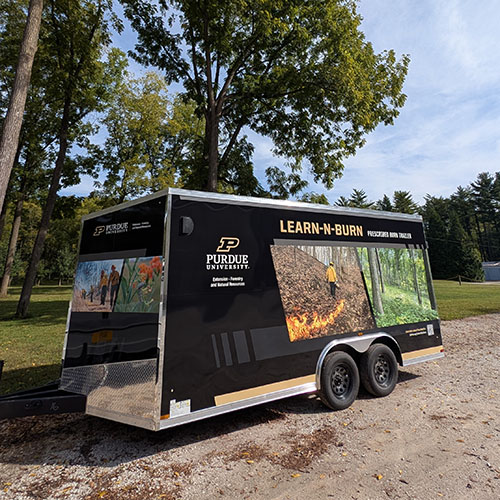
Keep your eyes peeled across Indiana for the newly minted Purdue Forestry and Natural Resources...
“Being at Purdue has changed my thinking entirely,” says Mingyu Zhao, a third-year...