Transforming Passion for Animals into Opportunities

Overview
Contact Us
Julie Mahoney, Ph.D.
Clinical Assistant Professor of Online Programs in Animal Sciences
765-494-4849
Value
We advance careers by developing relevant skills or strengthening academic profiles for baccalaureate or professional program admission. The online Principles of Animal Nutrition (ANSC 22100) fulfills the animal nutrition prerequisite for many veterinary colleges (check specific schools' requirements).
Quality
Our courses follow nationally recognized standards based on the Quality Matters Higher Education (QMHE) Rubric. Combining subject matter expertise with cutting-edge teaching methods, Purdue Animal Sciences’ online programs offer accessible, affordable pathways to success without compromising the educational experience.
Flexibility
Asynchronous courses provide student-centered learning that fits demanding schedules and removes geographic barriers. Whether a student takes one course or a full program, if the learner has a passion for animals we help them build knowledge, practical skills and purpose — when and where it works for the student.

Purdue University Fundamentals of Animal Sciences Certificate

ANSC 10200: Introduction to Animal Agriculture
Introduction to Animal Agriculture provides an overview of livestock industries, with an emphasis on the production of animal food products. The course introduces learners to animal physiology, genetics, nutrition, behavior and management and shows how these disciplines influence livestock production. Students engage in meaningful conversations about emerging animal agriculture trends in the United States and gain a foundation they can use to build careers that improve livestock industries both in the United States and abroad. The course is offered online in the spring, summer and fall semesters.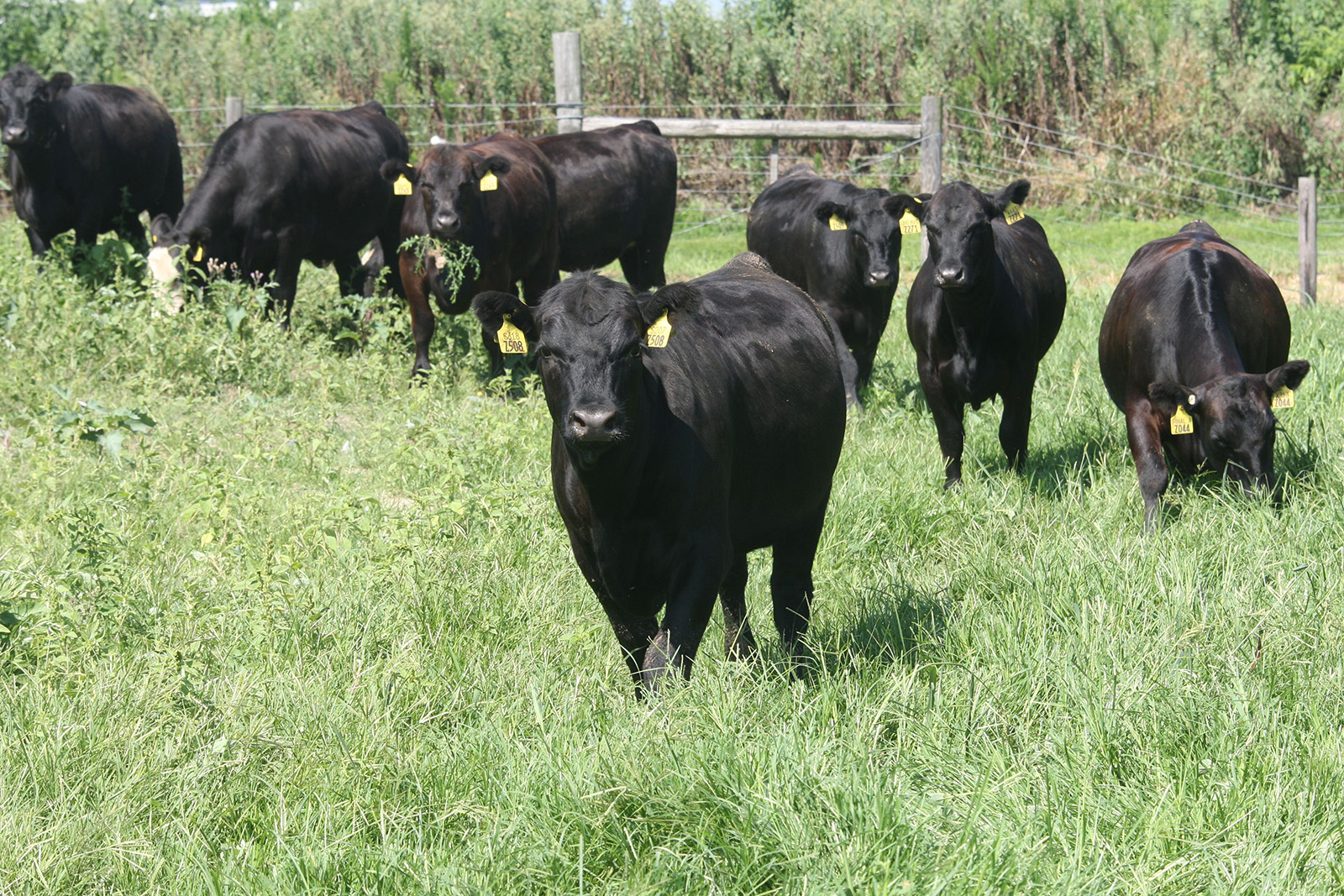
ANSC 12100: Ethics of Animal Use
Ethics of Animal Use explores ethical issues relating to animal use in contemporary society. Students encounter philosophical theories and scientific evidence relating to the use of animals in agriculture, biomedical research, companion animals and issues relating to wildlife and the environment. Activities are designed to assist learners through the evaluation of factors (personal values, knowledge/experience, regulation and economics) which influence societal decisions about animal use and utilization of philosophical framework to construct arguments which support or refute ethical positions. The course will be offered online in the spring, summer and fall semesters beginning Summer 2026.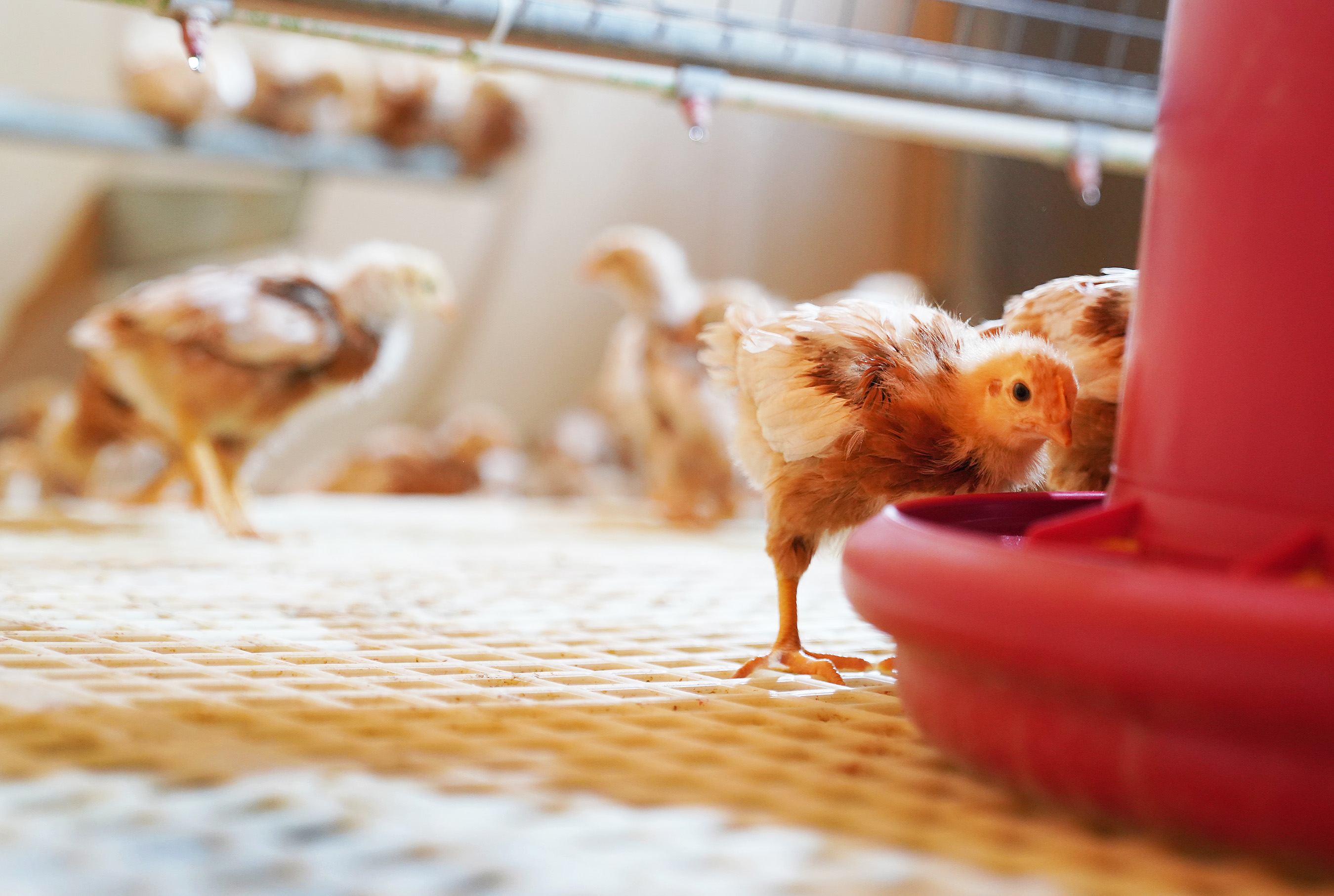
ANSC 22100: Principles of Animal Nutrition
Principles of Animal Nutrition provides a survey of nutrition, feeds and feeding fundamentals for mammalian and avian species. Learning activities expand students’ knowledge of digestive processes, classification and function of nutrients and characterization of feedstuffs. Students apply this knowledge as they develop practical skills in assessing nutritional requirements and formulating diets for domestic animals. Students are prepared to navigate the rapidly evolving field of nutrition through exposure to trending research topics and critical thinking framework. The course is offered online in the spring, summer and fall semesters.
register here
ANSC 23000: Physiology of Domestic Animals
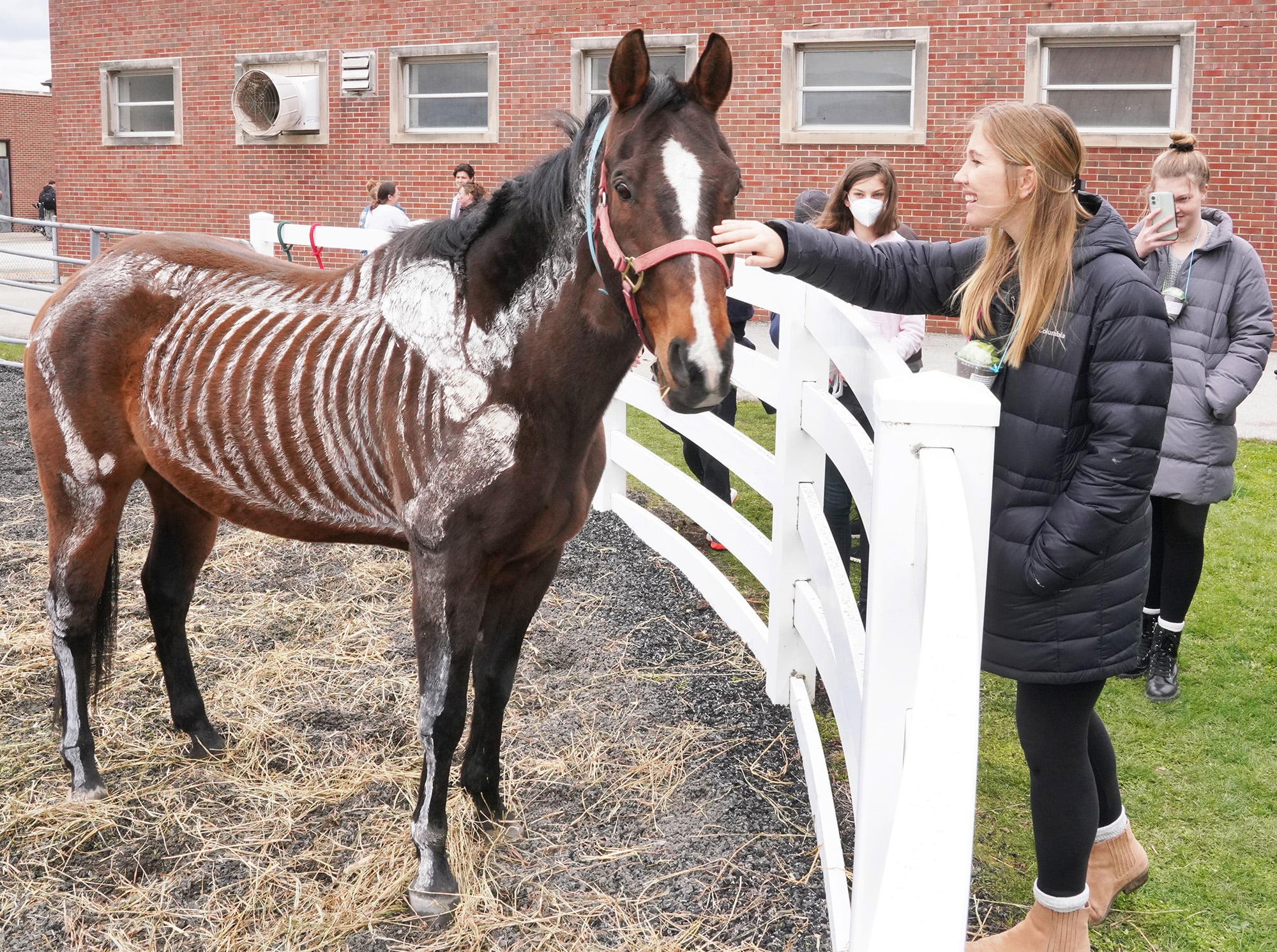
Through lecture and lab-based learning activities, Physiology of Domestic Animals presents the anatomy and function of tissues and organs within the musculoskeletal, nervous, endocrine, cardiovascular, immune, pulmonary, gastrointestinal, renal and reproductive systems. Students explore how physiological mechanisms integrate across the whole animal to maintain homeostasis, respond to external environmental conditions experienced by domestic farm animals and support productive processes such as growth, reproduction and lactation. The course emphasizes forming testable hypotheses and designing conceptual experiments to address aspects of physiological processes. The course is offered online in the summer semester only.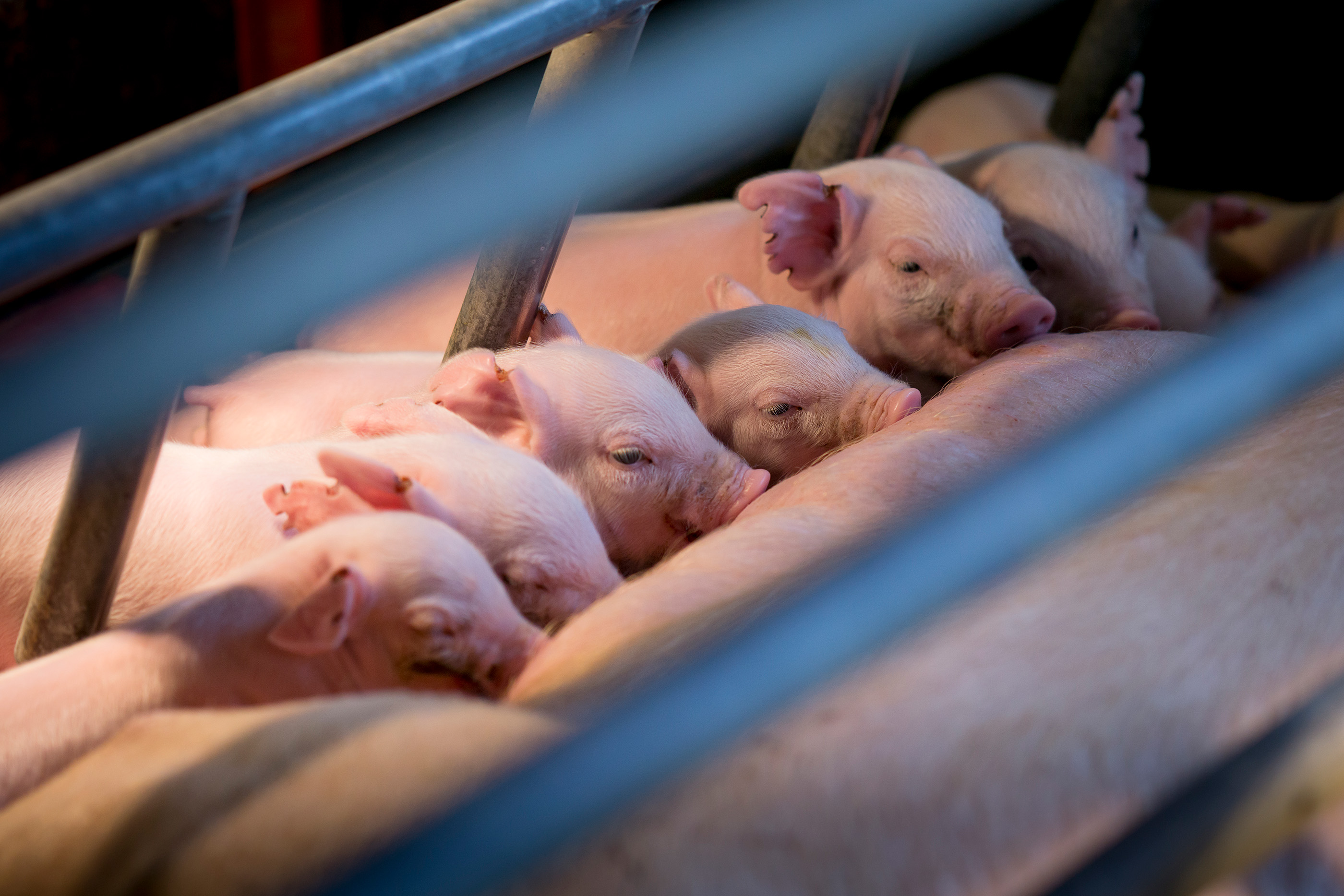
ANSC 24000: Principles of Animal Production
Principles of Animal Production is a comprehensive overview of production systems including life cycles and animal husbandry requirements for non-ruminant and ruminant farm animal species. The course emphasizes the scientific basis for production methodology and how animal production is affected by environment, resource availability and market access. Students become familiar with scientific publications and gain hands-on experience managing data and interpreting it for decision making. The course is offered online in the summer semester only.
ANSC 25500: Principles of Animal Products
Principles of Animal Products is a survey of animal product industries including meat, dairy, eggs and wool. The course emphasizes relationships between animal agriculture and food production by examining factors affecting animal product safety, quality and wholesomeness. As students explore the conversion of muscle to meat, lactation, egg production and fiber, they are introduced to fundamentals of food safety, food quality, inspection and basic processing techniques. The course is offered online in the summer semester only.
Purdue University Fundamentals of Animal Sciences Certificate
ANSC 10200: Introduction to Animal Agriculture
Introduction to Animal Agriculture provides an overview of livestock industries, with an emphasis on the production of animal food products. The course introduces learners to animal physiology, genetics, nutrition, behavior and management and shows how these disciplines influence livestock production. Students engage in meaningful conversations about emerging animal agriculture trends in the United States and gain a foundation they can use to build careers that improve livestock industries both in the United States and abroad. The course is offered online in the spring, summer and fall semesters.
ANSC 12100: Ethics of Animal Use
Ethics of Animal Use explores ethical issues relating to animal use in contemporary society. Students encounter philosophical theories and scientific evidence relating to the use of animals in agriculture, biomedical research, companion animals and issues relating to wildlife and the environment. Activities are designed to assist learners through the evaluation of factors (personal values, knowledge/experience, regulation and economics) which influence societal decisions about animal use and utilization of philosophical framework to construct arguments which support or refute ethical positions. The course will be offered online in the spring, summer and fall semesters beginning Summer 2026.
ANSC 22100: Principles of Animal Nutrition
Principles of Animal Nutrition provides a survey of nutrition, feeds and feeding fundamentals for mammalian and avian species. Learning activities expand students’ knowledge of digestive processes, classification and function of nutrients and characterization of feedstuffs. Students apply this knowledge as they develop practical skills in assessing nutritional requirements and formulating diets for domestic animals. Students are prepared to navigate the rapidly evolving field of nutrition through exposure to trending research topics and critical thinking framework. The course is offered online in the spring, summer and fall semesters.
register here
ANSC 23000: Physiology of Domestic Animals
Through lecture and lab-based learning activities, Physiology of Domestic Animals presents the anatomy and function of tissues and organs within the musculoskeletal, nervous, endocrine, cardiovascular, immune, pulmonary, gastrointestinal, renal and reproductive systems. Students explore how physiological mechanisms integrate across the whole animal to maintain homeostasis, respond to external environmental conditions experienced by domestic farm animals and support productive processes such as growth, reproduction and lactation. The course emphasizes forming testable hypotheses and designing conceptual experiments to address aspects of physiological processes. The course is offered online in the summer semester only.
ANSC 24000: Principles of Animal Production
Principles of Animal Production is a comprehensive overview of production systems including life cycles and animal husbandry requirements for non-ruminant and ruminant farm animal species. The course emphasizes the scientific basis for production methodology and how animal production is affected by environment, resource availability and market access. Students become familiar with scientific publications and gain hands-on experience managing data and interpreting it for decision making. The course is offered online in the summer semester only.
ANSC 25500: Principles of Animal Products
Principles of Animal Products is a survey of animal product industries including meat, dairy, eggs and wool. The course emphasizes relationships between animal agriculture and food production by examining factors affecting animal product safety, quality and wholesomeness. As students explore the conversion of muscle to meat, lactation, egg production and fiber, they are introduced to fundamentals of food safety, food quality, inspection and basic processing techniques. The course is offered online in the summer semester only.Enroll Today
Are you a current Purdue student? Talk to your academic advisor about adding online classes to your course schedule.
Are you interested in taking online college-level courses for transcripted credit? Enroll as a non-degree seeking student in upcoming course offerings by contacting Yve Vega, enrollment counselor, at vega83@purdue.edu or 765-496-3213.
Are you a lifelong learner? Non-credit courses provide robust education without generating academic credit on a transcript or applying to a degree. Browse our non-credit online class options.
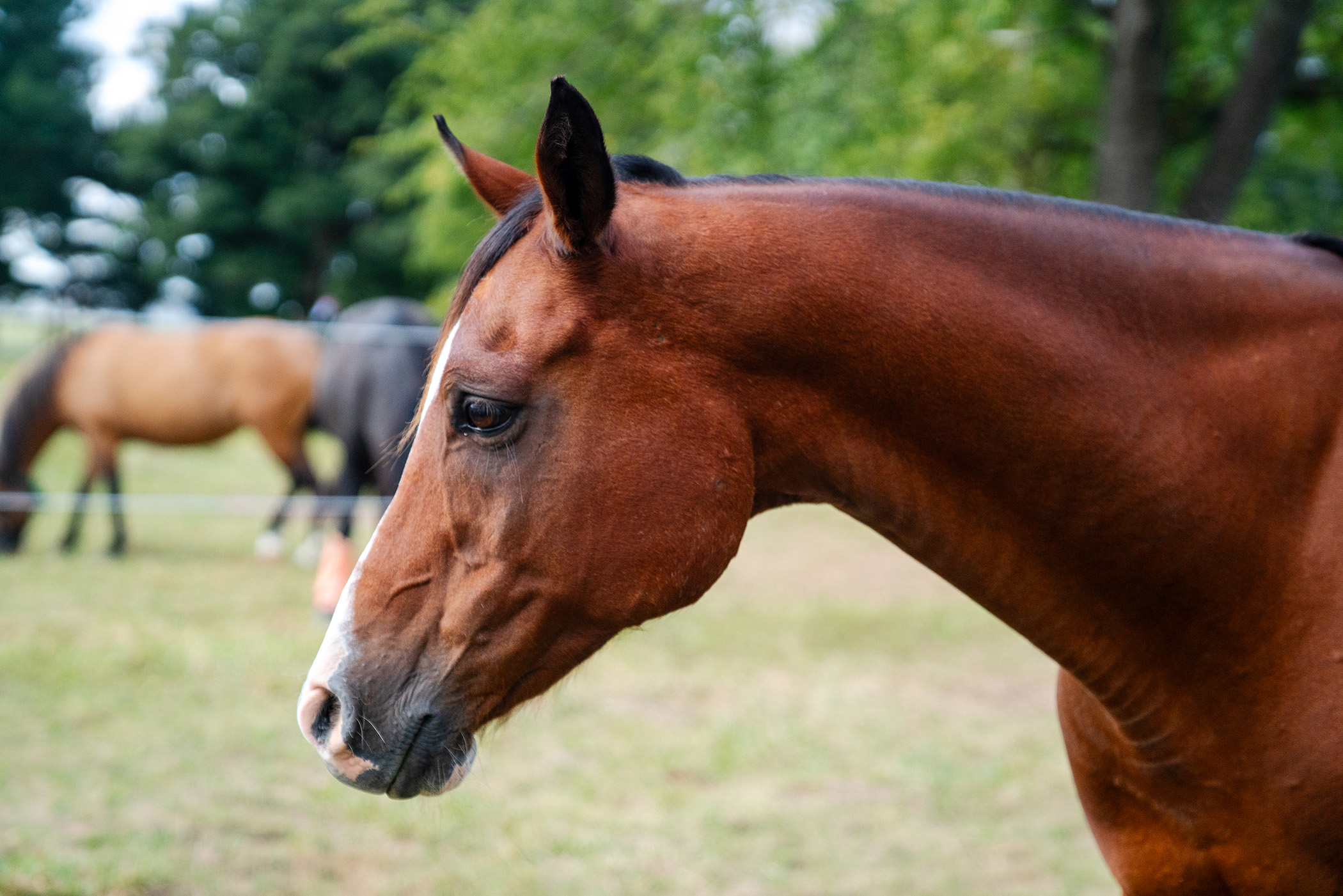
Purdue University Online Certificate in Equitation Science
In partnership with Equitation Science International, Purdue University offers a distinct online certificate for horse enthusiasts and professionals seeking a more informed, ethical approach to training. Grounded in the latest equine research, the program explores how horses think, move and learn — helping students build practical skills and safer, more effective training habits across any riding style or discipline.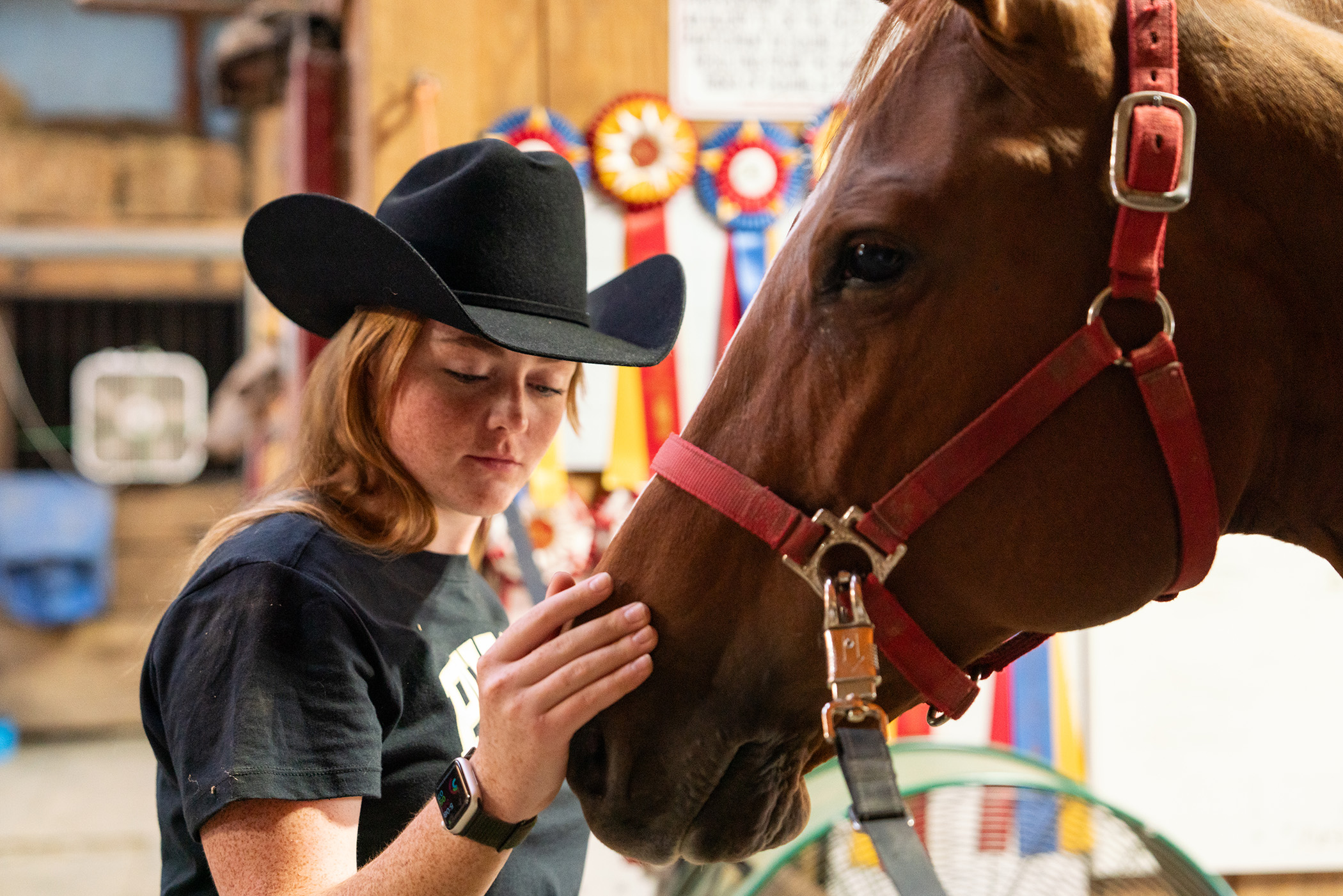
Course #1: Equitation Science Training Principles
If you're looking to deepen your understanding of how horses think, learn and move, this course offers a thoughtful and approachable introduction to the science behind effective, ethical horse training. You'll explore how behavior, biomechanics and learning theory work together — helping you see your horse in a whole new light.
Using the 10 Principles of Horse Training from the International Society for Equitation Science as a guide, you'll learn how to create practical, evidence-based training plans that support clear communication and a better partnership with your horse, no matter your discipline or style. By the end of the course, you’ll be able to put your learning into action by developing a real-world training plan.
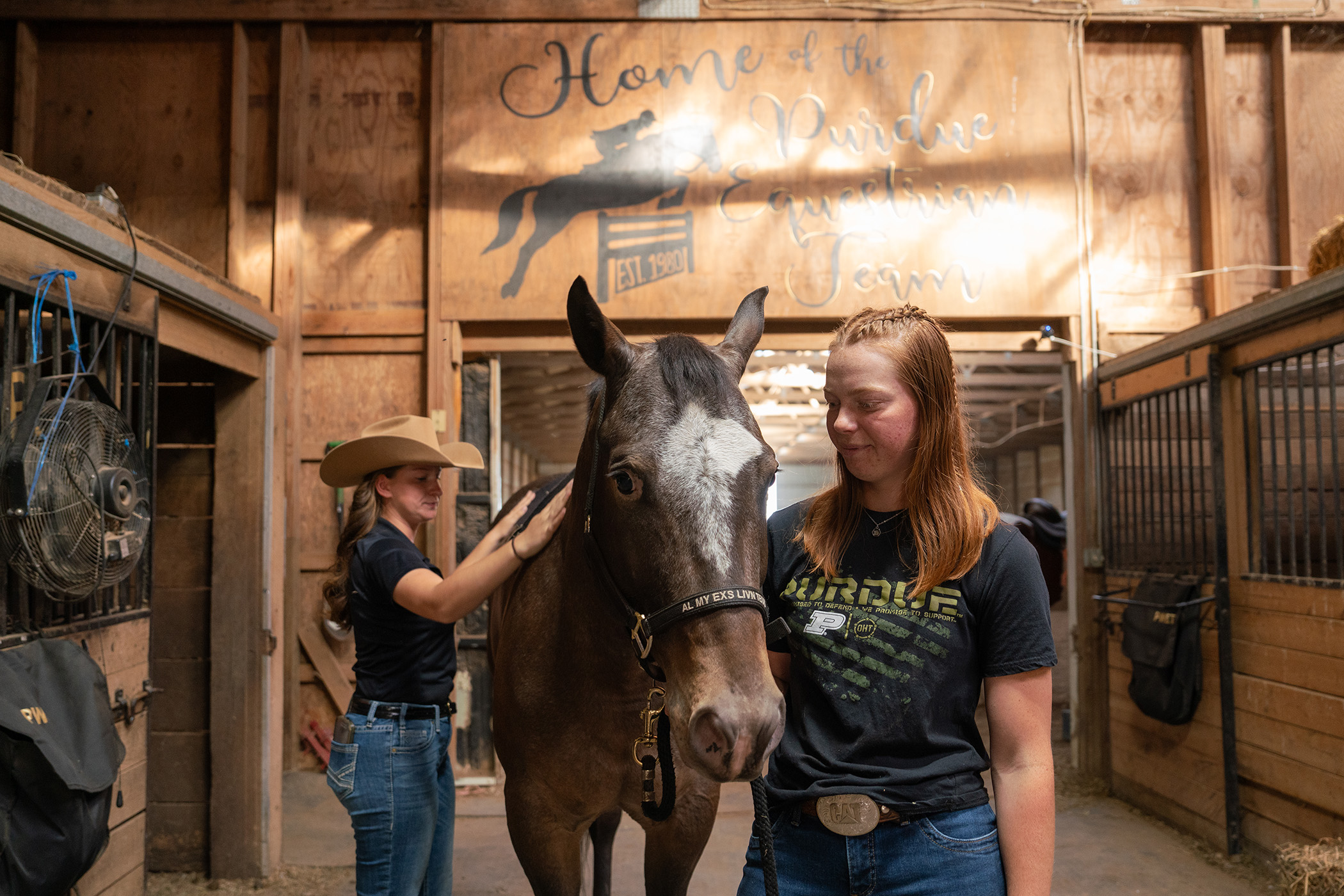
Course#2: Groundwork with Equitation Science
This hands-on course builds on foundational equitation science principles and introduces students to the art and science of in-hand training. By focusing on calm, responsive behavior from the ground, students learn how to train horses to respond to light aids while maintaining rhythm, line and head position. These in-hand skills not only promote safety and relaxation but also lay the groundwork for effective under-saddle work. Through evidence-based techniques, students will gain the confidence to handle and train horses in a way that’s ethical, rewarding and grounded in proven methods.
Course #3: Building Basics Under Saddle
This course introduces riders to the essential building blocks of under-saddle training using clear, science-based methods. Building on groundwork skills from in-hand training, you'll learn how to apply learning theory and the equitation science training scale to develop the 10 basic responses in the ridden horse. Through a focus on rider position and shaping responses progressively, you’ll create a more responsive, relaxed and predictable horse no matter your discipline or experience level. This unit lays the groundwork for everything from confident trail rides to more advanced performance goals.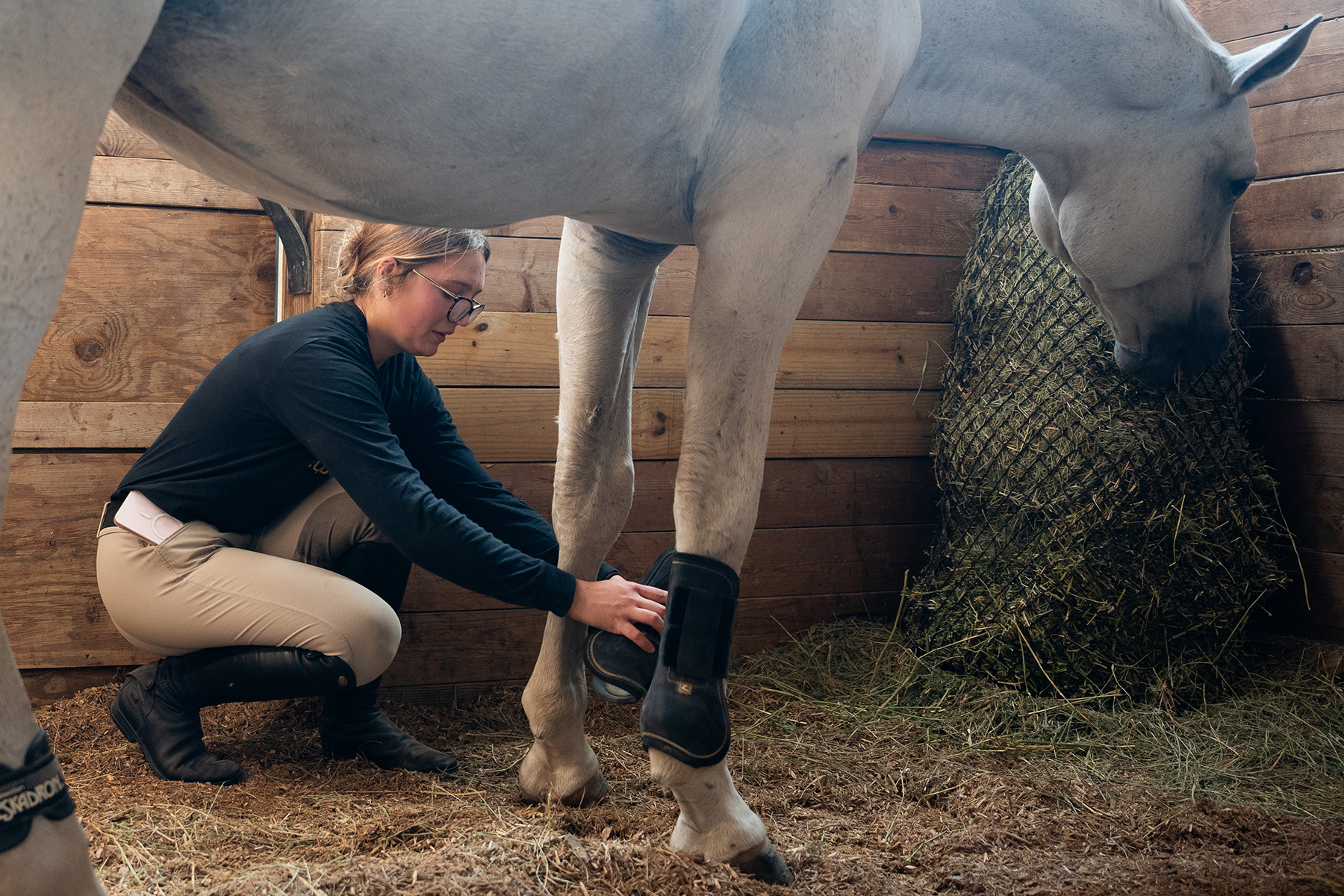
Course #4: Equitation Science Advanced Training
This advanced course is designed for riders ready to take their horse training skills to the next level — whether you're looking to teach new tasks like jumping, working equitation or trick training, or to re-train horses with behavior challenges. Building on a foundation of equitation science, this course focuses on applying learning theory to more complex training scenarios, both in-hand and under-saddle. You'll learn to identify and resolve conflict behaviors, use critical thinking to problem-solve and ensure both horse and handler safety throughout the process. Ideal for those seeking a deeper, more confident approach to training and behavior change.
Purdue University Online Certificate in Equitation Science
In partnership with Equitation Science International, Purdue University offers a distinct online certificate for horse enthusiasts and professionals seeking a more informed, ethical approach to training. Grounded in the latest equine research, the program explores how horses think, move and learn — helping students build practical skills and safer, more effective training habits across any riding style or discipline.
Course #1: Equitation Science Training Principles
If you're looking to deepen your understanding of how horses think, learn and move, this course offers a thoughtful and approachable introduction to the science behind effective, ethical horse training. You'll explore how behavior, biomechanics and learning theory work together — helping you see your horse in a whole new light.
Using the 10 Principles of Horse Training from the International Society for Equitation Science as a guide, you'll learn how to create practical, evidence-based training plans that support clear communication and a better partnership with your horse, no matter your discipline or style. By the end of the course, you’ll be able to put your learning into action by developing a real-world training plan.
Course#2: Groundwork with Equitation Science
This hands-on course builds on foundational equitation science principles and introduces students to the art and science of in-hand training. By focusing on calm, responsive behavior from the ground, students learn how to train horses to respond to light aids while maintaining rhythm, line and head position. These in-hand skills not only promote safety and relaxation but also lay the groundwork for effective under-saddle work. Through evidence-based techniques, students will gain the confidence to handle and train horses in a way that’s ethical, rewarding and grounded in proven methods.
Course #3: Building Basics Under Saddle
This course introduces riders to the essential building blocks of under-saddle training using clear, science-based methods. Building on groundwork skills from in-hand training, you'll learn how to apply learning theory and the equitation science training scale to develop the 10 basic responses in the ridden horse. Through a focus on rider position and shaping responses progressively, you’ll create a more responsive, relaxed and predictable horse no matter your discipline or experience level. This unit lays the groundwork for everything from confident trail rides to more advanced performance goals.
Course #4: Equitation Science Advanced Training
This advanced course is designed for riders ready to take their horse training skills to the next level — whether you're looking to teach new tasks like jumping, working equitation or trick training, or to re-train horses with behavior challenges. Building on a foundation of equitation science, this course focuses on applying learning theory to more complex training scenarios, both in-hand and under-saddle. You'll learn to identify and resolve conflict behaviors, use critical thinking to problem-solve and ensure both horse and handler safety throughout the process. Ideal for those seeking a deeper, more confident approach to training and behavior change.interested in learning more?
Explore the Equitation Science program, including course requirements, certificate options, costs and registration information.
Meet the Instructors