

GRADUATE STUDENT PROFILE - Sajal Bhattarai
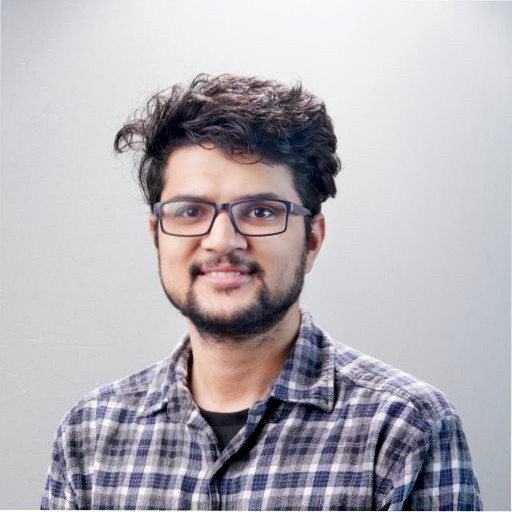 Sajal Bhattarai successfully defended his MS thesis on July 21, 2026. Sajal is originally from Nepal where he received his Bachelor's of Technology from Tribhuvan University before receiving his MS from South Dakota State University.
Sajal's thesis was entitled, "Mostly Automated Rapid Genome Inference Environment." Sajal offers this description of his research, "Whenever we talk about predicting the capabilities of a prokaryote genome (i.e., bacterial or archaeal DNA), we often run into a problem of confidence. While tools exist to predict gene functions—which is crucial when leveraging microbes for biotechnology—they rarely provide a quantitative confidence level. As a result, predictions can be incorrect, requiring complex post-audit processing—too daunting for everyday user. Our goal was to identify conflicts and disagreements in the data to aid reliability in such computational predictions. To do this, we set out to attach a traceable, interpretable confidence score to every gene function prediction. Our pipeline, MARGIE, reconciles predictions by evaluating four core components: multi-database support (C1), operon membership probability (C2), cross-genome context conservation (C3), and enzyme classification concordance (C4). Now, every functional call is associated with a confidence score on a 0 to 1 scale complete with a full audit trail. This empowers scientists to spot database discrepancies and focus human efforts directly on what matters. It is to be noted that this does not replace the currently available tools and pipelines, but rather compliments them."
Sajal was advised by Dr. Steve Lindemann. Other members of his graduate committee included Dr. Bruce Applegate, Dr. Bruce Hamaker, and Dr. Laramy Enders.
Sajal was drawn to Purdue for his graduate studies for several reasons, stating, "I needed the right environment to work on the bigger picture of sustainability and circular economy. Before Purdue, under the guidance of Dr. Srinivas Janaswamy at SDSU, I learned to harness the structural potential of plant polysaccharides—exploring how polymers like ligno-cellulose can be transformed into biodegradable materials to replace single-use plastics. But I knew that was only half the story. Hemicellulose would be wasted during cellulose extraction. And such hemicellulose is well known to act as dietary fibers that can modulate human gut microbiome. I had been following Dr. Stephen Lindemann's works since 2019, and I received the opportunity to come to Purdue to train at the Diet-Microbiome-Interactions lab, investigating how dietary fibers drive targeted health outcomes in humans and animals. In doing so, I learned further techniques in polysaccharide chemistry, gut microbial ecology, and bioinformatics. Interestingly, bioinformatics was my weakest area before I began studying at Purdue, and that is what I worked for on my MS thesis. This has unlocked an entire computational dimension to my work, placing me in a truly unique position at the intersection of material science and microbiome research. The future of research looks exciting!"
After graduating from Purdue, Sajal's short term goal is to return to South Dakota State University to complete his PhD while studying the polysaccharide component of plant matrices. Long term, Sajal plans to lead his own research lab and contribute to science and the economy.
Congratulations, Sajal! We are excited to see what you accomplish next.