

Imagine It. Formulate It. Make It.
The Purdue University Student Soy Food Innovation Competition challenges Purdue students to transform soybeans and soy-derived ingredients into innovative, appealing, safe and commercially relevant food products.
Sponsored by the Indiana Soybean Alliance and conducted through Purdue University's Department of Food Science, the competition gives students hands-on experience taking a food product from an initial idea through formulation, prototype development, technical evaluation, market analysis and final presentation.
There is no annual product theme. Students are encouraged to think broadly, creatively and across food categories. The goal is simple: Create a food consumers would want—and demonstrate why soy makes it better.
Contact Us
Program Manager
Elise Whitley
Purdue University Food Science
745 Agriculture Mall Drive
West Lafayette, IN 47907
ewhitle@purdue.edu
Dr. Senay Simsek
ssimsek@purdue.edu
Competition Mission
The mission of the Purdue University Student Soy Food Innovation Competition is to encourage Purdue students to apply food science, product development, nutrition, engineering, business and creative problem-solving skills to develop new or improved food products that create meaningful uses and market opportunities for soybeans.
Through the competition, students will gain practical experience in: 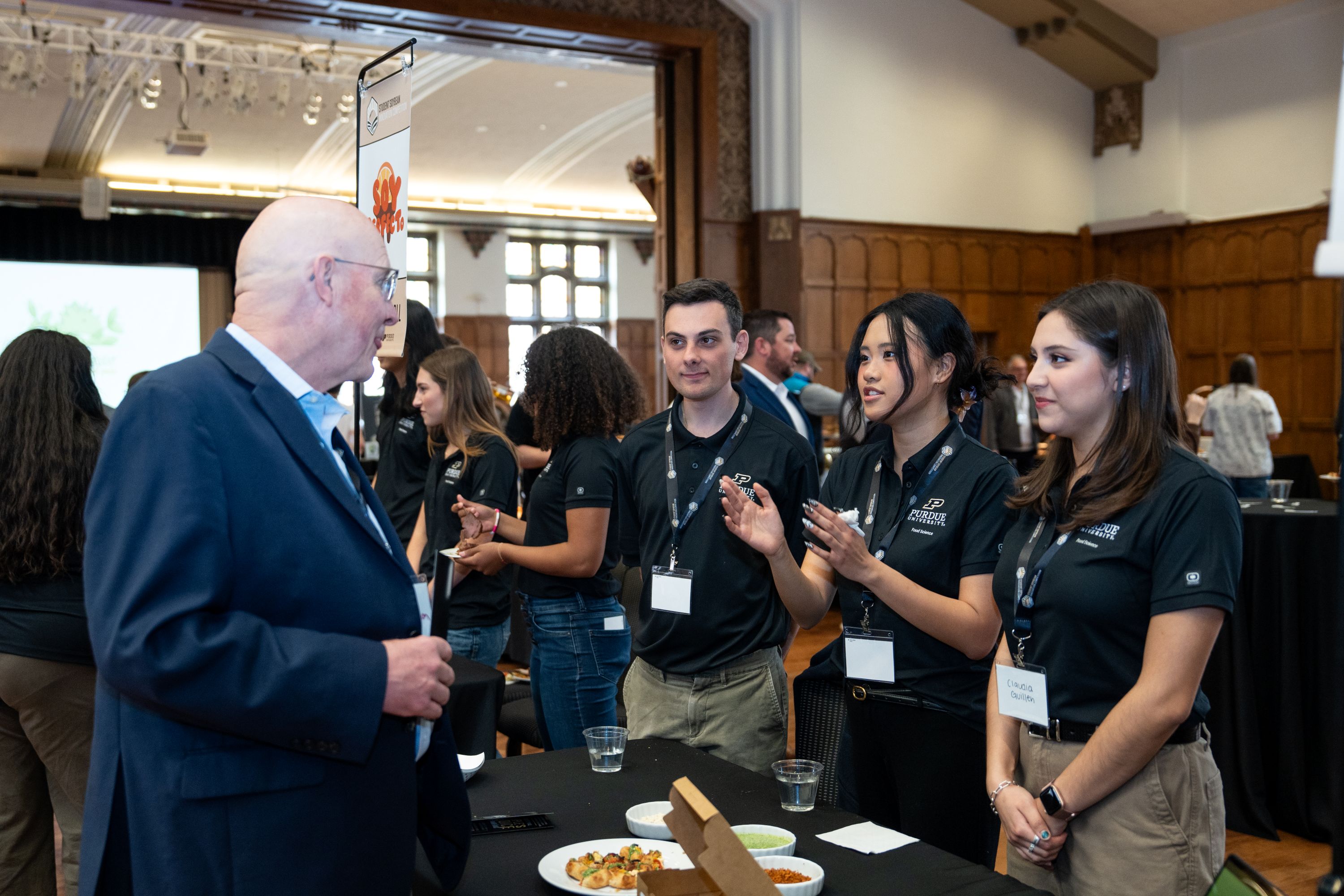
- Food product development
- Ingredient functionality
- Formulation and processing
- Sensory quality
- Food safety
- Market and consumer analysis
- Product positioning
- Packaging
- Cost considerations
- Commercialization
- Technical and business communication
The competition also aims to demonstrate the versatility of soybeans and soy-derived ingredients across a wide range of food applications.
The Challenge
Develop an innovative and commercially relevant soy-based food product in which soy plays a meaningful role. Products may include, but are not limited to:
- Bakery products
- Snacks
- Breakfast foods
- Beverages
- Pasta and noodles
- Sauces and spreads
- Frozen foods
- Desserts
- Confections
- Convenience foods
- Meat alternatives
- Dairy alternatives
- High-protein foods
- Culturally inspired foods
- Foods designed for specific consumer groups
- Foods utilizing soybean coproducts or underutilized ingredients
- Entirely new food concepts
There is no required product category or annual theme. Teams are encouraged to identify a real consumer need or market opportunity and develop a product that addresses it.
The Most Important Question: Why soy?
Teams should explain what soy contributes to the product and why soy was selected instead of another ingredient. Soy should not simply be included to satisfy the competition requirement. It should make a meaningful contribution to one or more aspects of the finished product, such as:
- Nutrition
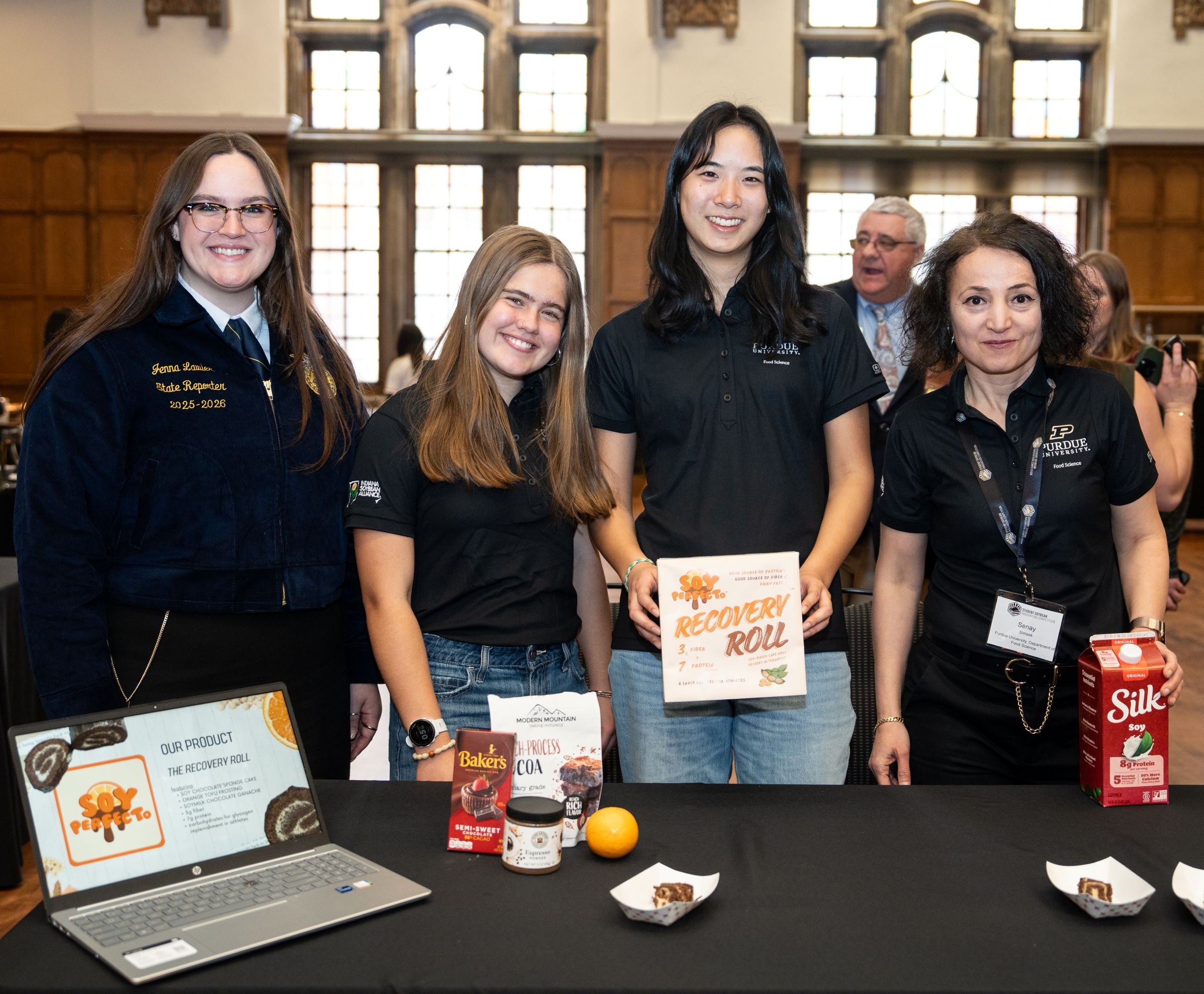
- Protein content or quality
- Texture
- Structure
- Emulsification
- Water binding
- Fat replacement
- Flavor
- Processing performance
- Product stability
- Cost
- Sustainability
- Resource utilization
- Consumer appeal
- Market differentiation
- Creation of a new food application
Product Requirements
Each competition product must contain one or more food-grade soybean-derived ingredients. Soy-derived ingredients must represent at least 10% by weight of the formulation, excluding added water.
Examples of eligible soybean-derived ingredients may include:
- Whole soybeans
- Edamame
- Soy flour
- Soy protein concentrate
- Soy protein isolate
- Textured soy protein
- Tofu
- Tempeh
- Soymilk
- Soymilk powder or solids
- Okara
- Soybean oil
- Soy lecithin
- Fermented soy ingredients
- Other approved food-grade soybean-derived ingredients
The competition organizers may review unusual or novel soybean ingredients before use. Meeting the 10% requirement alone is not sufficient. Soy must also make a meaningful contribution to the identity, performance or value of the food. A conventional food containing a small or token amount of soy simply to qualify will not be considered a strong competition entry.
The soy percentage should be calculated using the formulation weight excluding added water. For example, if a formulation contains:
- 30 g soy flour
- 170 g other dry or liquid ingredients
- 100 g added water
The soy percentage is calculated using the 200 g non-water portion:
30 ÷ 200 × 100 = 15% soy
The product would therefore meet the minimum soy requirement.
Competition organizers may request complete formulations to confirm eligibility.
No. A product containing 50% soy will not automatically score higher than a product containing 15% soy. Judges will evaluate how intelligently and effectively soy is used.
Teams should determine an appropriate soy level based on:
- Product quality
- Ingredient functionality
- Consumer acceptance
- Nutrition
- Processing
- Cost
- Market positioning
The objective is not simply to maximize soy content. The objective is to maximize the value created by using soy.
No. The competition is focused on food innovation, not exclusively on health or functional foods. A product does not have to provide a specific health benefit or make a nutrition or health claim.
A successful entry could simply be:
- More delicious
- More convenient
- More affordable
- Higher in protein
- Better textured
- More sustainable
- Easier to manufacture
- Better suited to a particular consumer
- A new cultural or culinary application
- A creative new use of soybean ingredients
Teams choosing to make nutrition or health-related claims must ensure those claims are scientifically and legally appropriate.
For this competition, innovation does not require creating a food category that has never existed before. Innovation may involve developing an entirely new food or meaningfully improving an existing food product.
Innovation may come from:
- Product concept
- Formulation
- Ingredient functionality
- Processing technology
- Nutrition
- Sensory quality
- Convenience
- Shelf life
- Sustainability
- Cost or affordability
- Packaging
- Target consumer
- Cultural relevance
- Market positioning
- Utilization of soybean ingredients
- Utilization of soybean coproducts
- Solving an unmet consumer need
For example, developing another pasta product would not automatically be considered innovative. However, a soy-based pasta could be innovative if the team demonstrates meaningful differentiation such as:
- Improved protein quality
- Better texture
- Improved sensory quality
- A novel processing approach
- Improved cooking quality
- Lower environmental impact
- A new consumer application
- Improved affordability
- A distinctive formulation
- Use of an underutilized soybean ingredient
Simply adding soy to an existing product without meaningful differentiation will not be considered sufficient innovation.
Competition Rules and Guidelines
Participants must be currently enrolled Purdue University students and must remain enrolled throughout the competition. Both undergraduate and graduate students may participate.
Recommended team structure:
- Minimum of two students
- Maximum of four students
- Teams of graduate students must have at least one undergraduate student
- Up to two graduate students, provided the total team size does not exceed four students
Students may participate on only one competition team. Teams should include students with complementary backgrounds whenever possible.
Students from Food Science are encouraged to participate, but the competition is open to eligible students across Purdue University. Interdisciplinary teams are strongly encouraged.
Each team should have one faculty or staff advisor.
At least one faculty advisor should have appropriate technical expertise related to:
- Food science
- Food processing
- Food engineering
- Nutrition
- Ingredient science
- Culinary science
- Product development
- A closely related area
The second advisor may provide expertise in areas such as:
- Business
- Marketing
- Economics
- Consumer science
- Packaging
- Engineering
- Agriculture
- Entrepreneurship
- Other relevant disciplines
Faculty advisors provide guidance but should not perform the students' competition work.
All products must be prepared using appropriate food-safety practices.
Teams must:
- Use food-grade ingredients.
- Prepare competition products only in facilities approved by competition organizers.
- Complete any required laboratory or food-safety training before product preparation.
- Follow sanitation and safe food-handling procedures.
- Maintain appropriate temperature control.
- Follow safe storage and transportation procedures.
- Provide a complete ingredient list.
- Identify all major food allergens.
- Clearly identify soy as a major food allergen.
- Identify any additional allergens present in the product.
- Obtain approval before using novel, unusual or nontraditional ingredients.
Competition organizers reserve the right to prevent tasting of any product if its safety cannot be adequately established.
Students should not independently conduct formal human-subject research as part of the competition. Any consumer or sensory testing involving human participants must follow Purdue University requirements and must be approved or coordinated through the appropriate competition personnel before testing begins.
Informal product development and instructor/advisor evaluation must also follow competition food-safety guidance.
Teams should not assume that competition participation automatically authorizes human-subject research.
Before submitting a concept, teams should ask themselves:
- What consumer need are we addressing?
- What is innovative about our product?
- Why are we using soy?
- Does soy meaningfully improve or enable the product?
- Would someone realistically buy and eat this food?
If your team has compelling answers to all five questions, you may have a strong competition concept.
Competition Project Elements
Teams should progress through a structured food product development process. Competition activities and deliverables may include the following:
- Product Concept
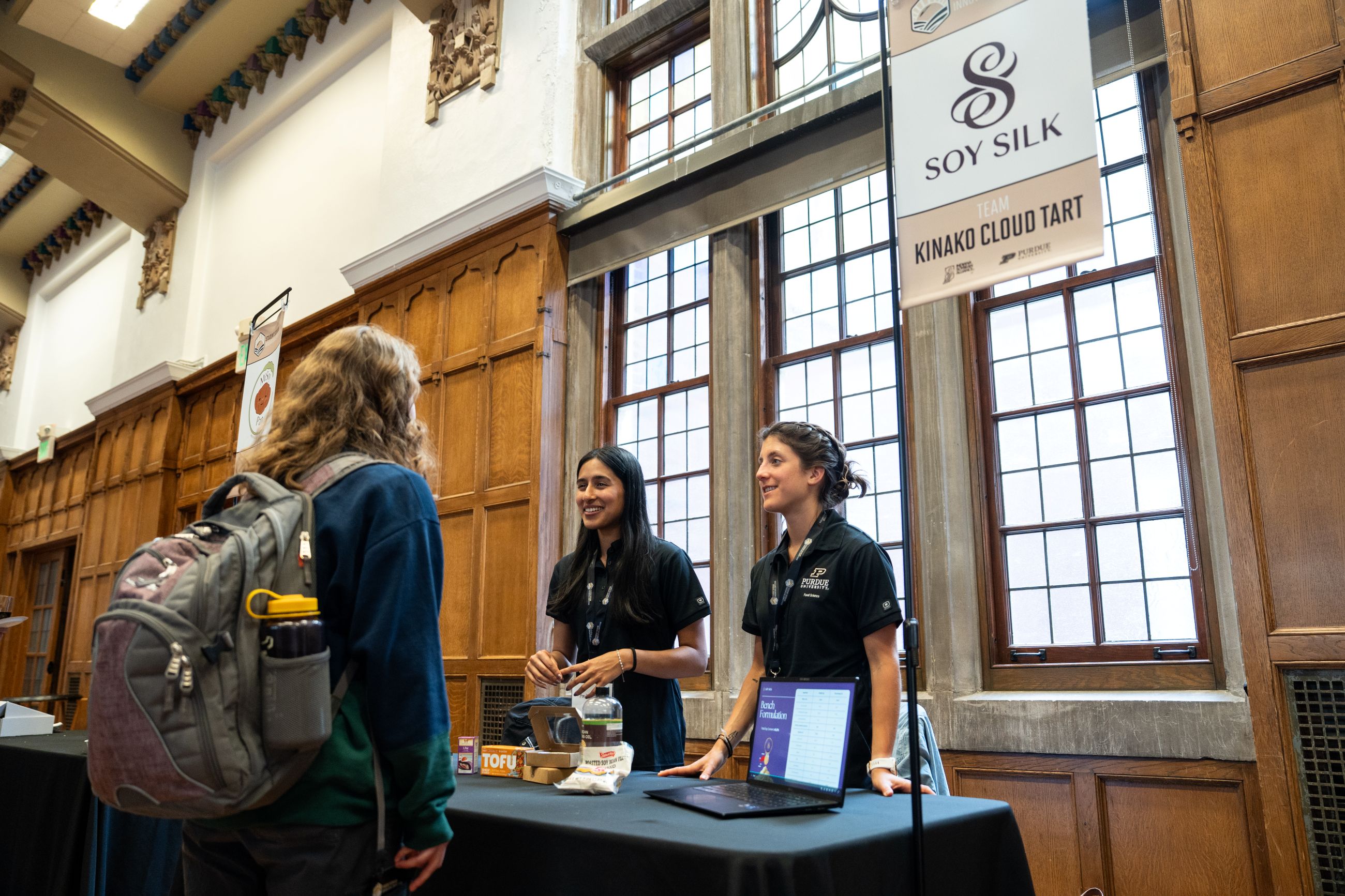
- Soy Ingredient Selection
- Literature and Technical Review
- Competitive and Market Analysis
- Formulation Development
- Process Development
- Food Safety Assessment
- Product Evaluation
- Nutrition Evaluation
- Cost Analysis
- Packaging and Branding
- Final Prototype
- Final Report
- Final Presentation
Judging
Food products will be evaluated on a 100-point scale. Unlike the industrial competition, judging for the food competition places substantial emphasis on the quality and performance of the actual food product. Point values for each of the competition elements are specified below.
25 points - Judges will evaluate:
- Appearance
- Aroma
- Flavor
- Texture
- Mouthfeel
- Overall acceptability
- Product performance
- Whether the finished product delivers the intended eating experience
A technically creative food must still be something consumers would reasonably want to eat.
- Creativity of the product concept
- Degree of innovation
- Meaningful differentiation from existing products
- Consumer problem or opportunity addressed
- Innovation in formulation, processing, nutrition, convenience, sustainability or market positioning
The product does not have to belong to a completely new food category. However, teams must demonstrate what is meaningfully new or improved.
- Why soy was selected
- Importance of soy to the product
- Function of soy in the formulation
- Effectiveness of soy incorporation
- Technical understanding of the soybean ingredient
- Whether the product creates a meaningful new or expanded use for soy
- Potential contribution to soybean demand or market opportunities
Higher soy content alone will not result in a higher score. Judges will evaluate the quality and value of soy utilization, not simply the percentage included.
- Clearly defined target consumer
- Consumer need
- Market opportunity
- Competing products
- Product differentiation
- Commercialization potential
- Realistic price positioning
- Potential for consumer adoption
Teams should be able to explain: Who will buy this product, why will they buy it, and why would they choose it over existing alternatives?
10 points - Judges will evaluate:
- Scientific rationale for the formulation
- Understanding of ingredient functionality
- Processing feasibility
- Reproducibility
- Food-safety considerations
- Manufacturing feasibility
- Product stability
- Quality-control considerations
5 points - Judges may consider demonstrated benefits related to:
- Nutrition
- Protein contribution
- Ingredient utilization
- Sustainability
- Reduced waste
- Utilization of soybean coproducts
- Affordability
- Resource efficiency
- Other meaningful food-system benefits
A nutrition or health claim is not required.
5 points - Judges will evaluate:
- Clarity
- Professionalism
- Understanding of the product
- Technical knowledge
- Ability to answer questions
- Product storytelling
- Effectiveness of the team's final presentation
Awards
Winning teams will receive monetary awards comparable to those offered through Purdue's Student Soybean Innovation Competition.
First Place — $20,000
Second Place — $10,000
Third Place — $5,000
People's Choice Award — $500
Monetary awards will be divided equally among eligible members of the winning team. Winning team members may be required to complete Purdue University prize and payment documentation before receiving monetary awards.
Purdue University and the Indiana Soybean Alliance reserve the right to adjust, modify or remove awards.
To be eligible for final judging and awards, teams must: 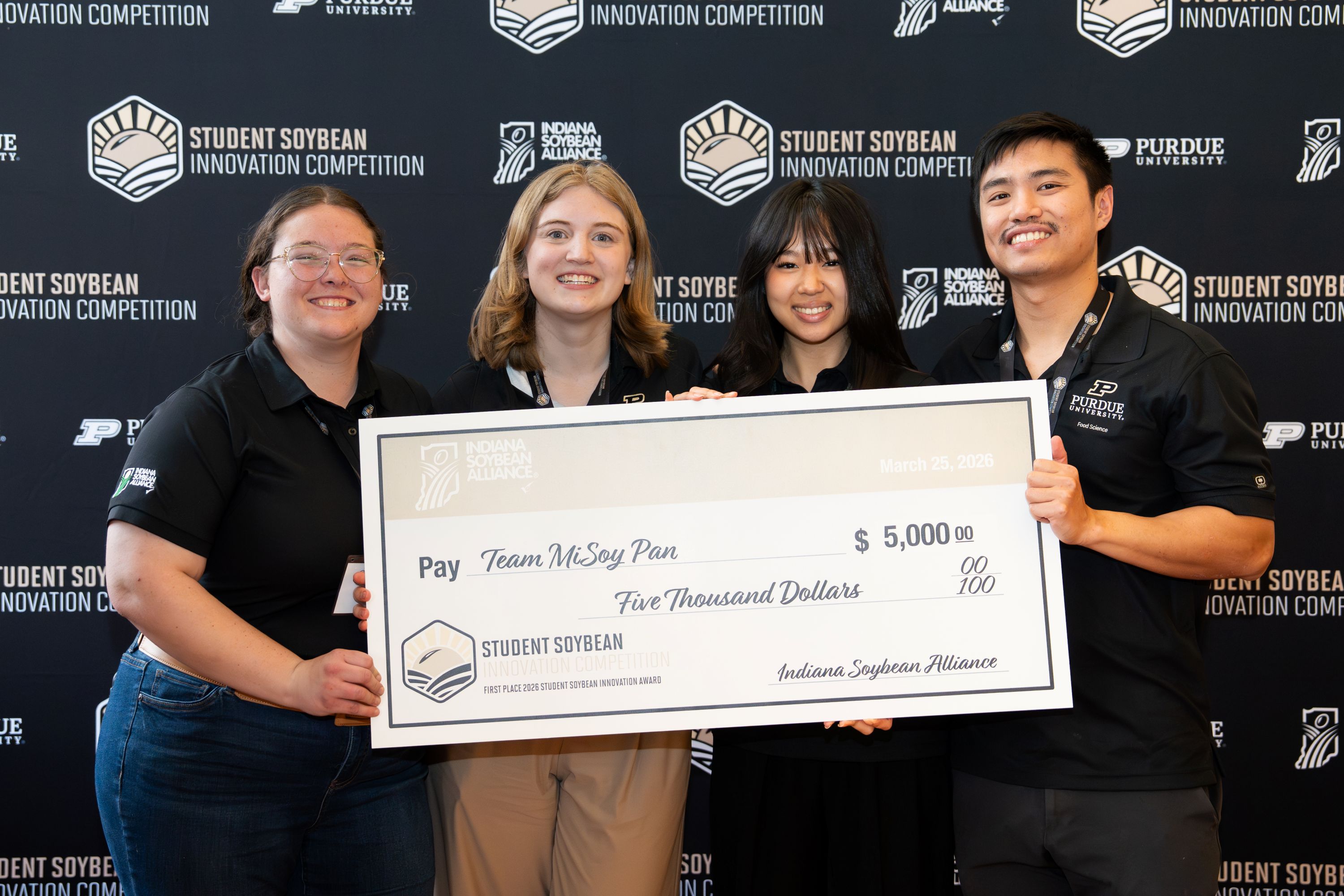
- Remain eligible Purdue students throughout the competition.
- Complete required competition activities and checkpoints.
- Submit required materials by established deadlines.
- Follow laboratory and food-safety requirements.
- Produce a finished food prototype.
- Submit the required final report.
- Participate in official judging.
- Participate in the awards event as required.
The judges' decisions are final.
Why Participate?
The Purdue University Student Soy Food Innovation Competition is much more than a recipe contest.
Students will experience the complete food innovation process—from identifying an opportunity to putting a finished product in front of expert judges.
Participants will gain experience in:
- Food innovation
- Product formulation
- Food processing
- Ingredient science
- Soy functionality
- Product optimization
- Sensory quality
- Market research
- Business development
- Entrepreneurship
- Packaging
- Teamwork
- Technical communication
Students will also have the opportunity to interact with experts from Purdue University, the Indiana Soybean Alliance and the food and agriculture industries.
Thank you to our sponsor
The Purdue University Student Soy Food Innovation Competition is sponsored by the Indiana Soybean Alliance. The Indiana Soybean Alliance works to advance markets, opportunities and innovative uses for soybeans and soybean products.
Ready to Innovate?
Build a team. Find an advisor. Bring us your best soy food idea.
Join us for our call-out meeting on September 17 at 6:00 pm in NLSN 1195. Food and drinks will be provided.
The deadline for teams to register for the competition is November 20.