

Student’s research reduces food waste by improving use-by dates
A
nbuhkani “Connie” Muniandy’s curiosity about food developed in her family’s kitchen in her small hometown of Simpang Renggam, Malaysia. While helping her mother prepare meals, she began to wonder why specific ingredient combinations had different outcomes.
Muniandy came to the United States in 2010 to study food science at Purdue. She joined a research lab in her second year as an undergraduate. She earned a master’s degree in food science from the University of Idaho before working in research and development at Mars Petcare in Tennessee for two years.
“That’s when I started to like food processing,” Muniandy recalled.
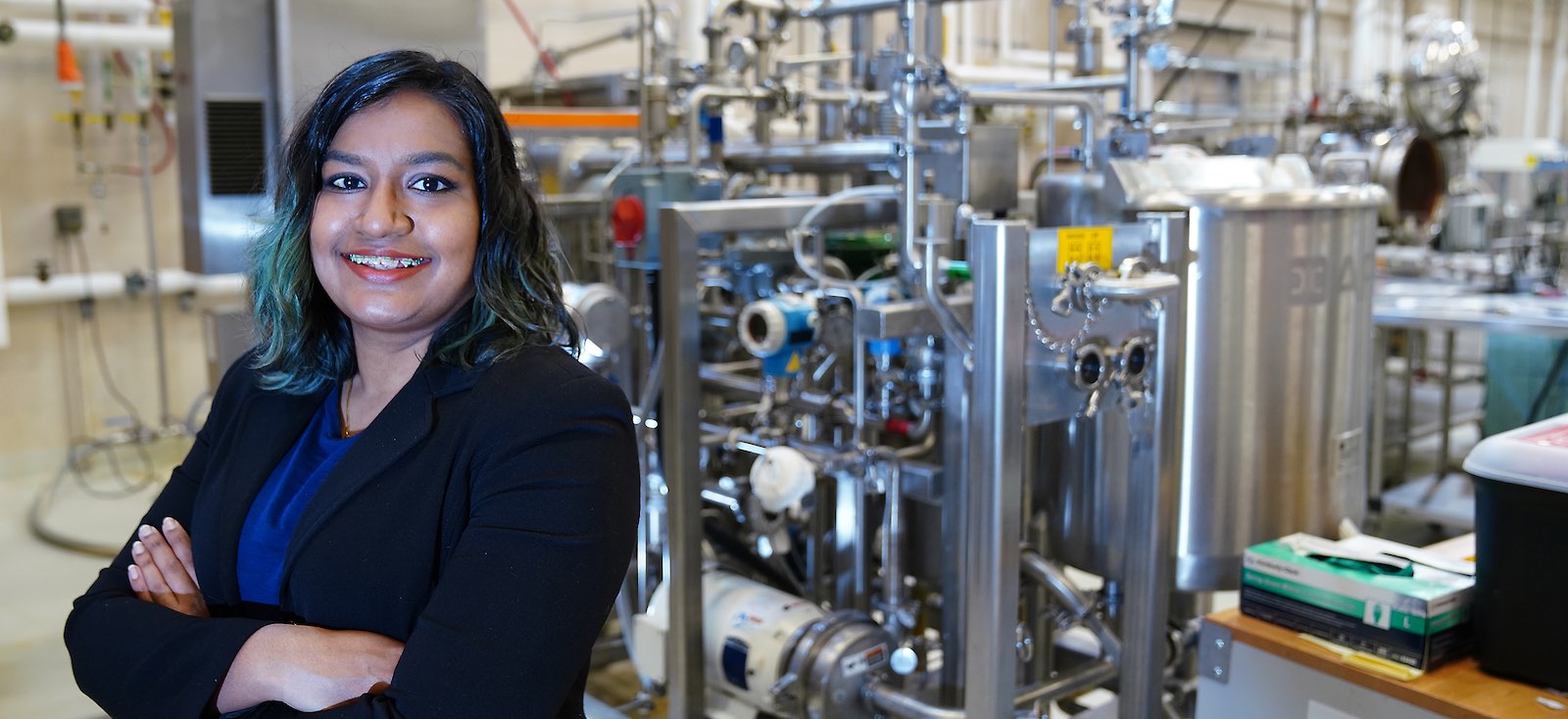
She returned to Purdue in 2017 to join the Process Modeling and Validation lab of Dharmendra Mishra, assistant professor of food science. Muniandy completed another master’s degree in food science with a food processing emphasis. Two years later, she began her doctoral program under Mishra’s guidance.
Muniandy’s research has helped develop innovative technology to help predict the shelf life of food and beverages. The custom equipment built for her study aims to reduce analysis time.
“Every food has an expiration date printed on the label,” Muniandy explained. “The way to decide those labels comes with a methodology that is universal across most foods. It takes months to complete.”
Muniandy noted “use-by” and “freeze-by” dates can confuse consumers, especially with their built-in cushions.
“My research is focused on shortening the analysis time so we can test products faster in efforts to increase accuracy.”
Because retail outlets cannot sell products beyond their expiration date, Muniandy’s research could lead to a reduction of waste at retail and consumer levels.
“I envision myself to be a leader in the food industry,” said Muniandy. “I want to prepare for that while I’m still in school.”
Muniandy has held leadership roles in the Purdue Student Government and served as president of the Hoosier Chapter of Phi Tau Sigma, the honor society for food science and technology. She also led Purdue teams in national product development contests including three top-three finishes in the American Society of Baking’s annual competition.
Featured Stories
The Office of Indiana State Chemist (OISC) is warning Indiana residents about an illegal...
A prominent protein on most human cells may be key to unlocking the code that makes humans...
Ava Hoskins, a double major in aquatic sciences (fisheries concentration) and natural resources...
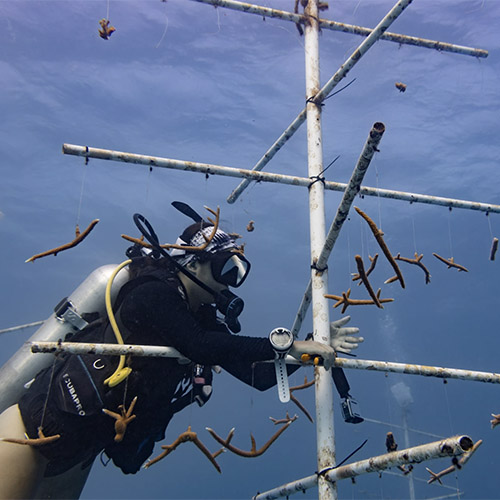
Ashlynn McLaughlin, a senior aquatic sciences major with a concentration in marine and freshwater...
For Brody Cox, preparing for the Indiana State Fair began long before he entered the show...
Carolyn Foley, a long-time member of the Purdue Forestry and Natural Resources (FNR) and...