

Extension
Horticulture & Landscape Architecture
Pampering your poinsettia and crafting poinsettia plant pressings after the holidays
White snow, twinkling lights, brass menorahs, Kwanzaa unity cups and a red-and-green potted poinsettia centered on a table. For many, these images ring in the winter holidays. While some melt in time or are packed back into your attic after the new year, a well cared for plant may provide decoration for longer.
Consumer horticulture Extension specialist Karen Mitchell shares her tips on poinsettia care and crafts in this Q&A.
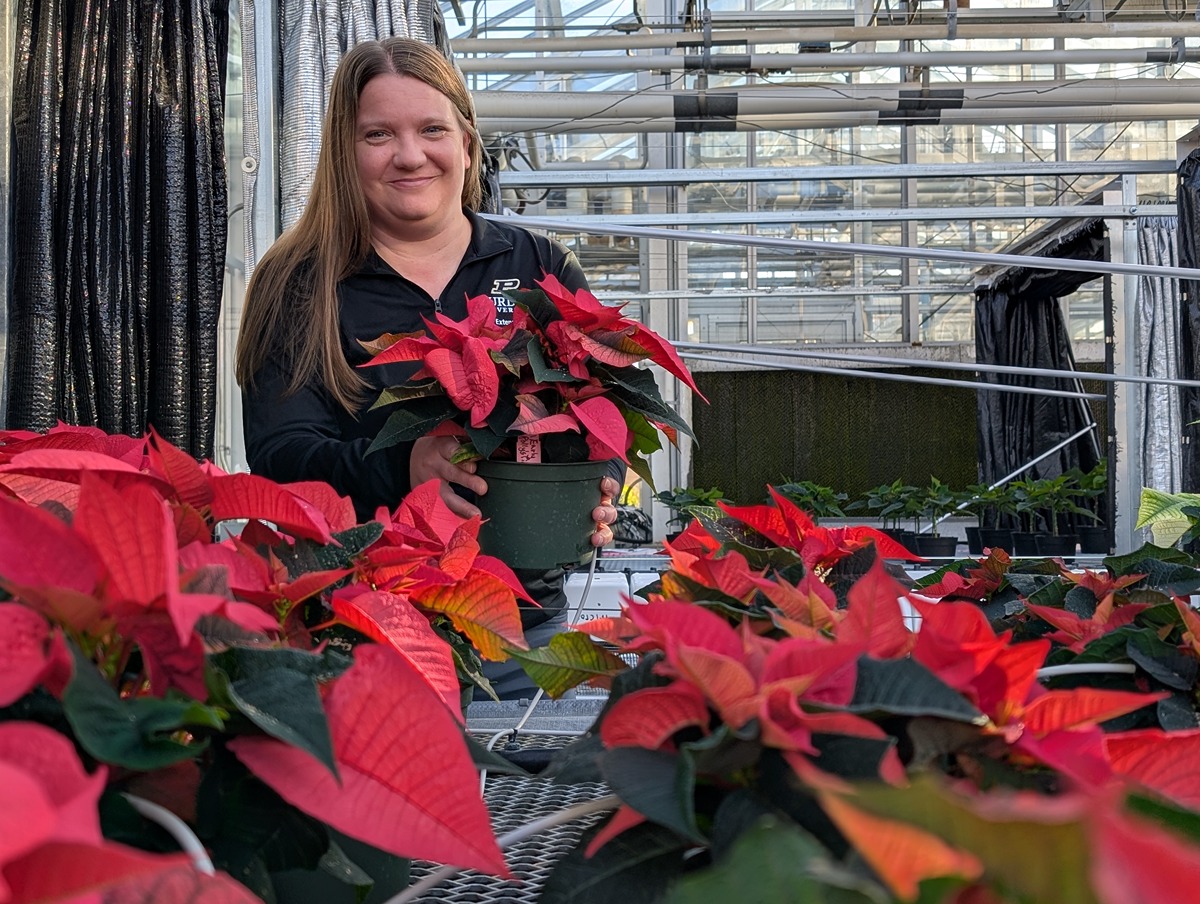
How do you care for a poinsettia?
How do you pick out the healthiest poinsettia?
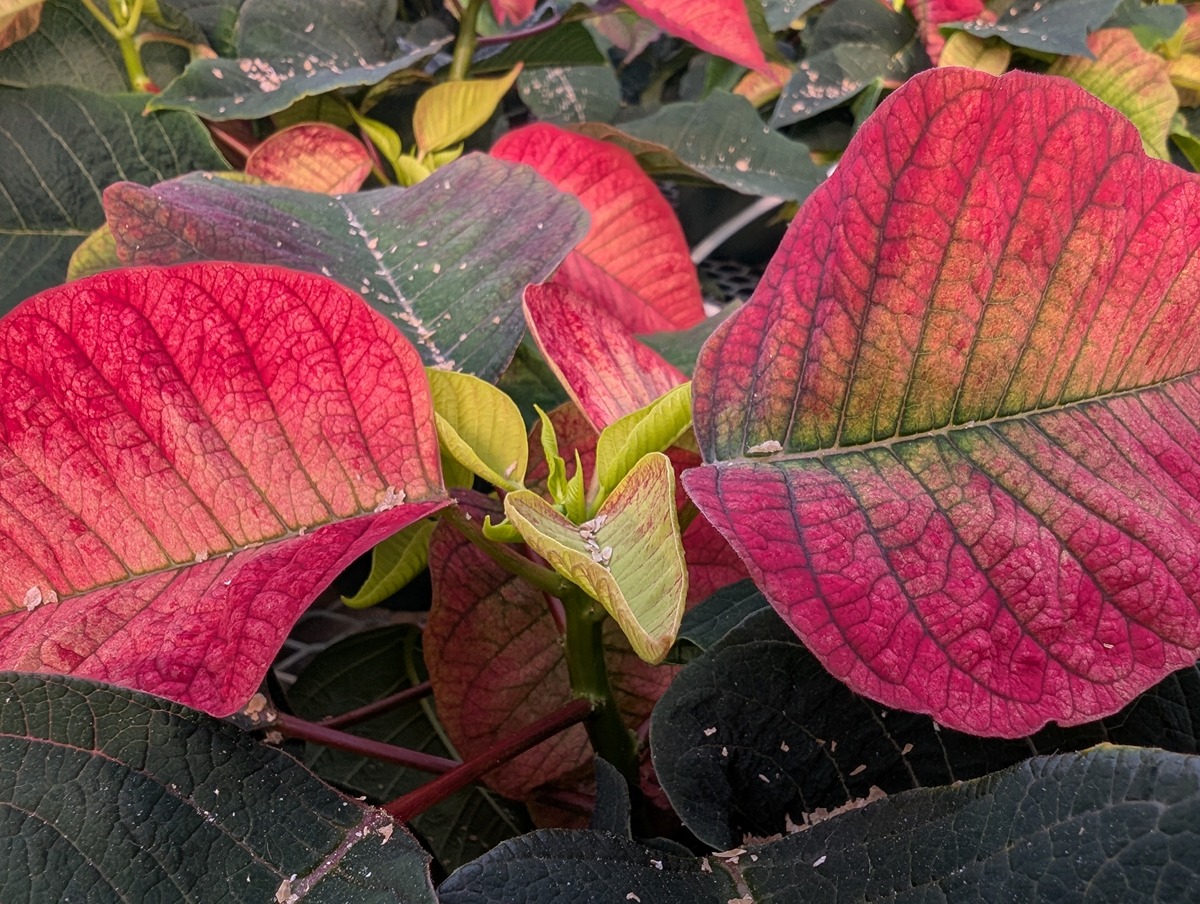
A healthy poinsettia should have dark green leaves, and look for one which is already turning colors. While poinsettias come in many colors now — from white to pink to polka-dotted — they should not have any wilting, yellowing leaves or bugs on them.
Try sticking your finger in the top inch of the potting soil to see how well it has been cared for. The soil shouldn’t be dry or compacted, but rather soft and damp. When you can, try finding a local plant nursery or greenhouse to buy your poinsettias, both giving back to your community and also ensuring it has been pampered by the experts.
HOW DO YOU TRANSPORT YOUR POINSETTIA HOME OR TAKE IT TO A FRIEND?
Poinsettia plants are native to southern Mexico and Central America, so they aren’t used to the cold and wind like Hoosiers are. Even just a short walk to the car on a blustery winter day can make it drop some leaves!
Some growers will have the top of the plant wrapped in a plastic sleeve like a bouquet. This is enough to protect it for a short time outside, or you can even put a plastic grocery bag over the top.
Where should you put your poinsettia?
Try to find your poinsettia a nice, sunny and draft-free spot away from doors. They like to be facing a window for bright light, but keep them at least a foot away from the cold panes! Although they prefer warmer temperatures, it’s also best not to put your poinsettia too close to a heater or vent that might dry them out or burn them.
How much should you water your poinsettia?
Poinsettias are tropical plants and don’t like their soil to completely dry out between waterings like many other houseplants do. It’s best to water them in a sink or tub until water drains out the holes on the bottom of the pot. You may have to remove the decorative foil or poke some holes in the bottom of it to do this. Never allow the pot to sit in standing water, as this can quickly lead to root rot.
You can then lift the saturated plant to feel how heavy it should be when watered. Use that weight as a comparison to later figure out when or how much to water your poinsettia. It will be much lighter when dry!
How long does a poinsettia last?
If you buy a poinsettia in November or December and care for it well, it will probably start dropping its leaves in February. While it may look like the plant is dying at this point in time, it is actually entering a dormancy period.
If you want to keep your poinsettia around longer, you can prune it down to about two inches of green stem, water it less over the spring, and set it outside again in late May when the temperatures rise again. It will grow new leaves and thrive in the summer heat, and you can bring it back inside when fall brings cooler temperatures again.
It will likely remain all green if you don’t force the color change. You can trigger the red to come back in November by tricking the plant into thinking the nights inside are longer. Put a box that doesn’t let any light through over the plant for at least 10 hours a day for six to eight weeks, and your poinsettia should change colors again! Reblooming poinsettias indoors is difficult but possible with some patience and consistency.
Can you plant your poinsettia outside?
After the threat of frost has passed, usually in late May, your poinsettia can be set outside or even planted in the ground. It will thrive in the summer with consistent watering, but will not survive the winter outside in the Midwest. Container growing is the best option if you plan to bring it back inside when the temperatures drop.
Are poinsettias safe for children and pets?
While poinsettias are considered non-toxic, they have a milky sap that flows from broken pieces of poinsettia that can cause skin irritation and allergic reactions in some people and pets. It also contains latex. The best practice is to wear gloves if you are pruning or cutting the poinsettia, and set it in a place higher than where children and pets could access it.
What do I do with my poinsettia after the holidays?
If you don’t want to keep your poinsettia around after the holiday season, you can compost it or craft with it. Always wear gloves when crafting with poinsettia material to avoid potential skin irritation from the sap.
Creating a plant pressing:
Flowers and leaves from all sorts of plants can be pressed and dried to preserve their color and patterns, then used as decoration. This craft is even done as a long-standing part of botanical science, to preserve samples for future research. All you need is a couple of heavy books, some parchment paper, scissors, gloves and the plant itself. Watch the reel to see how its done or follow along with our step by step guide below:
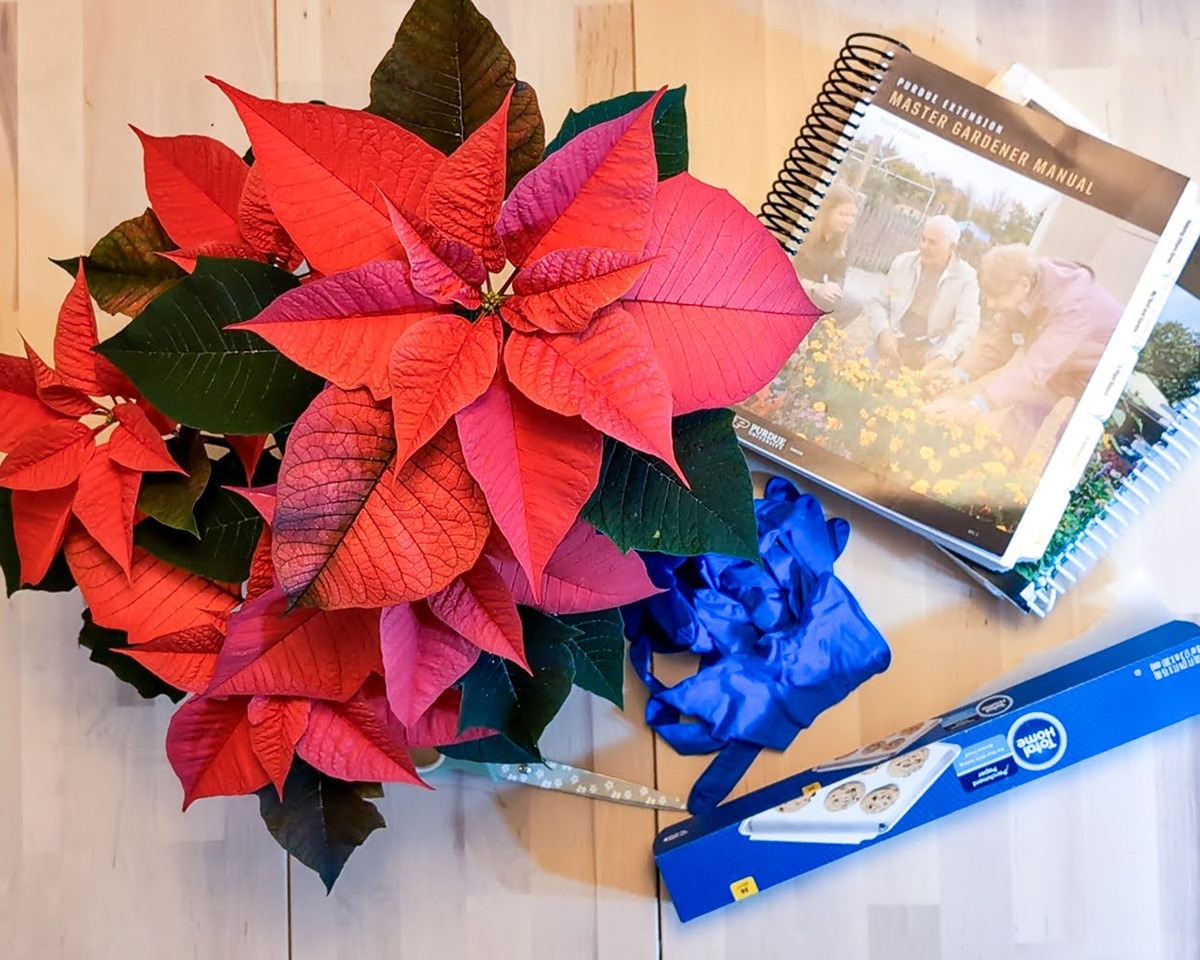 To make a plant pressing, you'll need gloves, scissors, parchment paper, at least two heavy books and a plant. While we used a poinsettia for the holidays, this method works well for many leafy plants and flowers.
 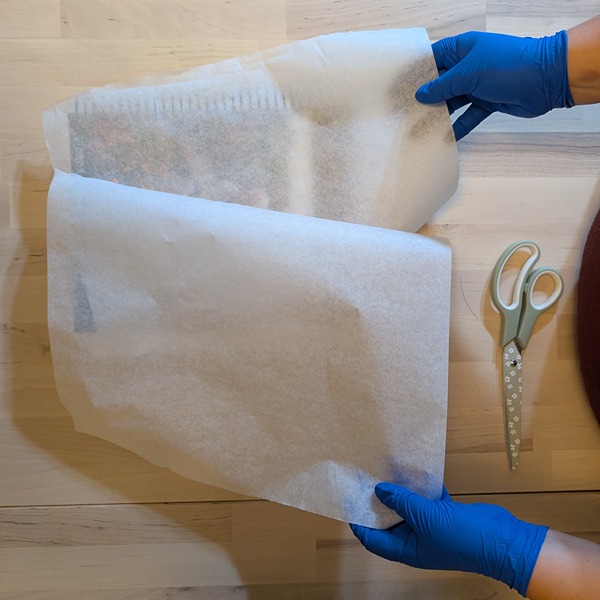 Cut out two pieces of parchment paper
Parchment paper will keep the poinsettia from sticking to your book. Cut out two pieces that are about the same width as the pages in the book you will be using to press the plant.
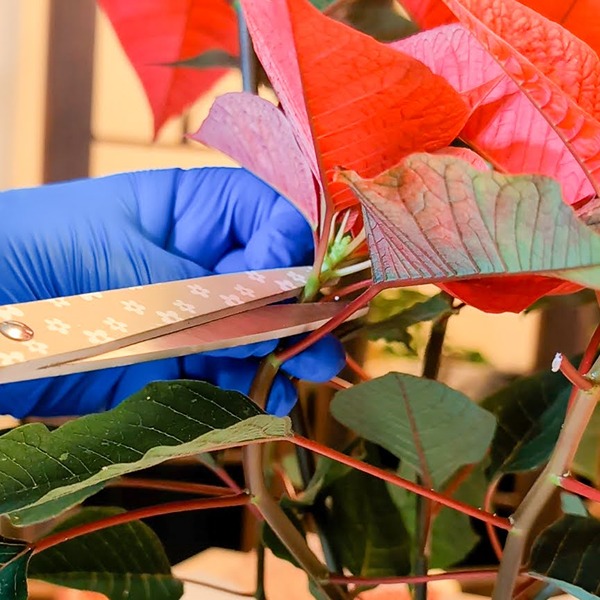 Cut off flowers or leaves
Use scissors to cut off the leaves, flowers or floral bracts you want to press. For best results, avoid pressing large swaths of the plant where lots of leaves would overlap when you lay it flat.
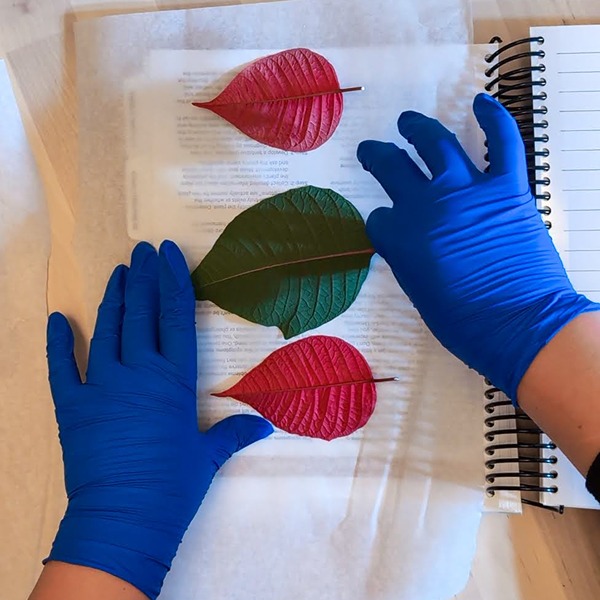 Arrange your plants
Set one piece of parchment paper inside your book and lay your plant cuttings flat on top of it. Try to arrange them so that pieces don’t overlap as much as possible. Cut more parchment paper to use on another part of the book to spread out cuttings if need be.
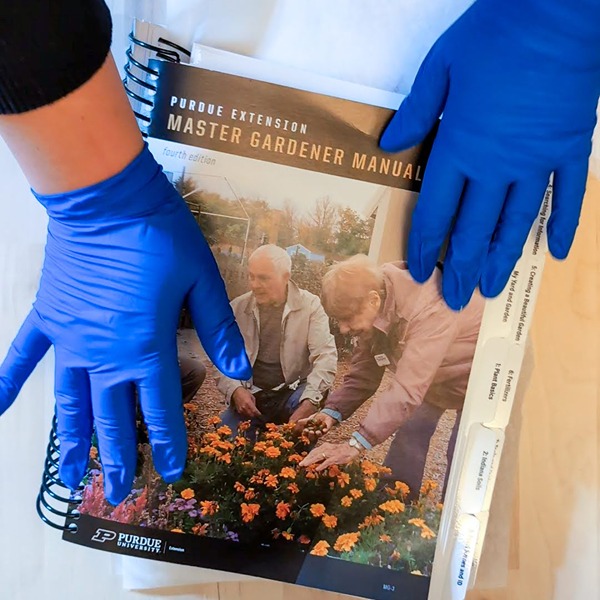 Press it and let it dry
Place your second piece of parchment paper over top of your cuttings, and close the book. Put a second heavy book — or other heavy object — on top of it, and then move it to a cool, dry place inside for several weeks to a couple months.
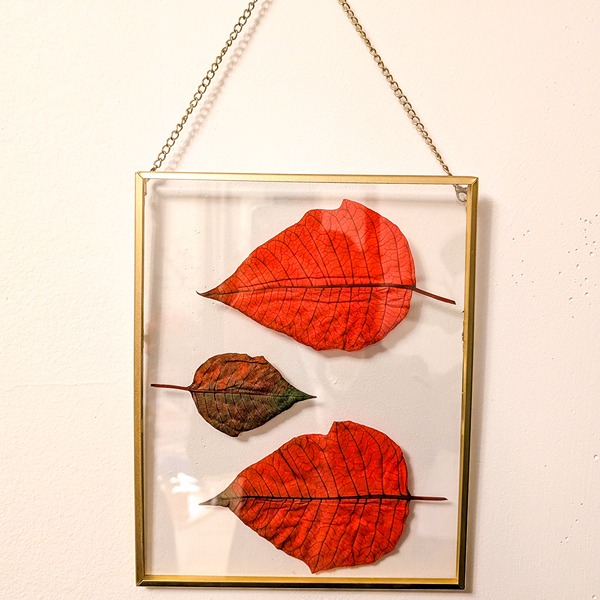 Turn plants into art
After the pressing has dried, you can remove it from the book and parchment paper, then turn it into art. Pressings can be sealed with craft glue onto paper or glass ornaments, or even framed to hang on the wall.
Whether you enjoy your poinsettia for weeks, pamper it for the next year or turn it into handmade holiday keepsakes, this classic plant offers a chance for creative connections between nature and your family.
Fun facts for the family
Are poinsettias a true flower?
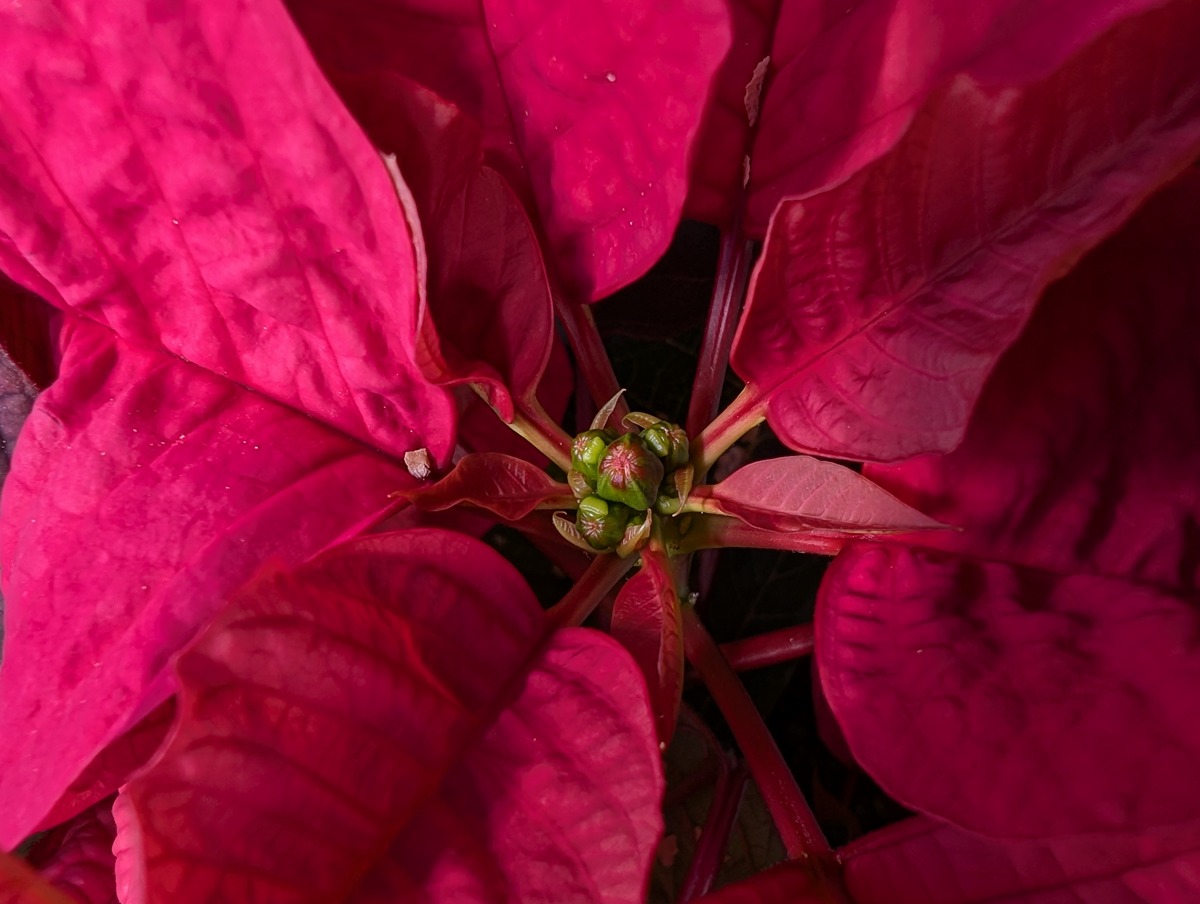
Poinsettias have true flowers, but you may not recognize which parts are which on the plant! For example, the red or colorful leaf-like tissues are not petals but actually “floral bracts.” These bracts usually protect flower buds by curling up around them, but the red color on poinsettias allows the plant to attract pollinators and people alike, similar to what petals do.
The true petals and seed-making parts of the flower are actually in the green and yellow dots that form the top center of the poinsettia. These important flower parts are much tinier and duller than their bracts.
How do poinsettias go from green to red or other colors?
Some flowers, like poinsettias, are triggered to bloom by the lengths of the days or nights. Poinsettias need long periods of night (10 hours) for six to eight weeks to turn red, and greenhouses might replicate this by drawing shades over their plants. Even just a single flash of light can disrupt this night period and delay the color change!


Featured Stories

Making the world a better, and more walkable, place
Alisa Tilson (BS '96, Natural Resources and Environmental Science) works for CDOT’s...
From Hive to Honey
Behind every jar of honey is a fascinating story of pollination, research, and hands-on learning....

Global economic modeling expert grows research program
Maksym Chepeliev, a leading international scholar recognized prominently for his work in...

Inspired by opportunity, driven by purpose
In recent years attendees at Purdue Agriculture alumni, donor, and faculty and staff events have...
Behind the Research: Jada Powlen
People think grass is simple. Lawns, right? Mow regularly and add some water and fertilizer. What...

Indiana residents warned about illegal pesticide product
The Office of Indiana State Chemist (OISC) is warning Indiana residents about an illegal...