

Drawing inspiration from nature to formulate new pharmaceuticals
Karthik Sankaranarayanan trained in two quite different scientific subfields as a graduate student and as a postdoctoral researcher. Now at Purdue University, he aims to combine those fields in a project that will use artificial intelligence to plan the synthesis of complex new pharmaceutical agents.
“Nature uses enzymes to effortlessly produce her complex small molecules. The pharmaceutical industry is increasingly interested in using enzymes to synthesize molecules that may be challenging to produce using traditional organic chemistry,” said Sankaranarayanan, an assistant professor of agricultural and biological engineering. With that in mind, he will design an AI algorithm to sift through the diverse set of enzymatic reaction chemistries that nature uses to produce molecules.
Given a target molecule, the algorithm will select the sequence of enzymatic reaction chemistries most suited for its synthesis. His team will then experimentally verify the ability of the algorithm-suggested recipe(s) to produce the molecule of interest.
The current industry practice starts with assembling a group of experts to collaboratively generate potential routes for synthesizing a new pharmaceutical target. This new algorithm will complement human expertise during this brainstorming exercise by generating additional ideas to enzymatically produce the target compound. The algorithm-suggested ideas will be diverse and unbiased because they are generated after holistically considering all relevant reaction chemistries cataloged in enzyme databases.
As a graduate student in chemical engineering at Stanford University, Sankaranarayanan used enzymes to synthesize complex natural products and their analogs for drug discovery. Then, as a postdoctoral research associate in chemical engineering at the Massachusetts Institute of Technology, he applied data science to drug manufacturing and discovery. His expertise in the two specialties sets his program apart from drug discovery programs that are focused either on enzymes or data science.
Sankaranarayanan’s project is funded by a five-year grant of more than $2 million from the National Institute of General Medical Sciences (NIGMS). Classified as an National Institutes of Health Maximizing Investigators’ Research Award, the grant provides the freedom to pursue high-risk, high-reward lines of research that are otherwise difficult to undertake.
The three graduate students funded by the grant will gain exposure to enzyme chemistry and access to specialized tools that combine aspects of chemistry, computer science and data analysis. The grant also provides Sankaranarayanan an opportunity to present to and connect with undergraduate researchers from the laboratory of Lou Charkoudian, professor and chair of chemistry at Haverford College in Pennsylvania, a Primarily Undergraduate Institution.
Earlier this year, Sankaranarayanan, who joined the Purdue faculty in 2023, also received an $80,000 grant from the American Chemical Society to conduct related research. The National Science Foundation has also provided $7.1 million to support him and his collaborators in converting biomaterials into biodegradable plastics with enzymes. The NIGMS grant focuses instead on applying enzymes to the synthesis of new pharmaceuticals.
Building on his specialized training, Sankaranarayanan plans to merge two technologies that earned Nobel Prizes in chemistry for their inventors. The first technology is computer-aided synthesis planning, for which Harvard University’s E.J. Corey received the 1990 Nobel Prize in chemistry.
“It’s the idea that you work backward from a complex pharmaceutical target until you hit a set of simple starting materials,” Sankaranarayanan said. This contrasts with the more forward-thinking approach of bringing together two molecules as reactants to make a product.
“E.J. Corey formally introduced the idea that you can start with a molecule you’d like and then work backward to get a set of simple reactants that can be commercially purchased off the shelf,” Sankaranarayanan said. Modern data-driven tools for retrosynthesis were pioneered by groups that included the Klavs Jensen lab at MIT, where Sankaranarayanan trained as a postdoctoral scientist.
The second technology directs the evolution of enzymes. Frances Arnold of the California Institute of Technology received a share of the 2018 Nobel Prize in chemistry for developing the capability.
Enzymes catalyze reactions naturally. Techniques from her lab make it possible for researchers to take a natural enzyme and evolve it so that it catalyzes a reaction useful for producing a pharmaceutical agent.
Sankaranarayanan’s project will merge computer-aided synthesis planning tools and enzyme chemistry for drug discovery and production. “We’re doing retrosynthesis for enzyme chemistry. This is largely because directed evolution now allows enzymes to be adapted to catalyze new reactions useful for the pharmaceutical manufacturing industry,” he said.
The merger is only now becoming feasible for drug discovery and production. “For a long time, we didn’t have the datasets,” he said. But many of the datasets are now digitized and machine-readable, factors that enable the application of the new tools.
The Purdue Computes and One Health initiatives lend support for Sankaranarayanan’s research. His work relies on the Institute for Physical Artificial Intelligence, the Rosen Center for Advanced Computing and the Laboratory of Renewable Resources Engineering (LORRE). He also draws upon the expertise of the project’s collaborators, consisting of Merck’s Deeptak Verma, and Purdue’s Michael Ladisch, the Distinguished Professor of Agricultural and Biological Engineering and director of LORRE; Daisuke Kihara, professor of biological science and computer science; Chittaranjan Das, professor of chemistry; and Ramaswamy Subramanian, professor of biological sciences and biomedical engineering.
This research is a part of Purdue’s presidential One Health initiative, which involves research at the intersection of human, animal and plant health and well-being.
Computer science and AI are cornerstones of Purdue Computes — a comprehensive initiative that spans computing departments, physical AI, quantum science and semiconductor innovation.
Featured Stories

For Brody Cox, preparing for the Indiana State Fair began long before he entered the show...
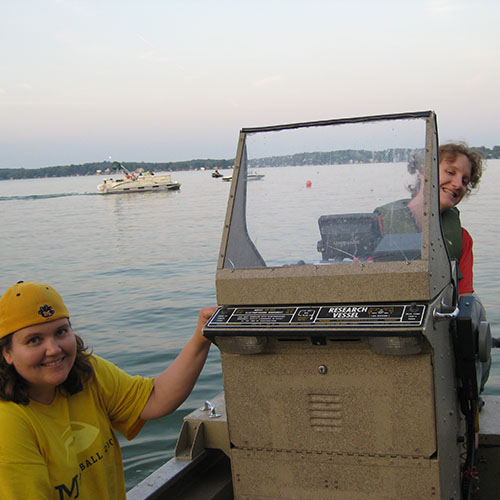
Carolyn Foley, a long-time member of the Purdue Forestry and Natural Resources (FNR) and...

In the September Purdue University/CME Group Ag Economy Barometer survey, 52% of respondents...
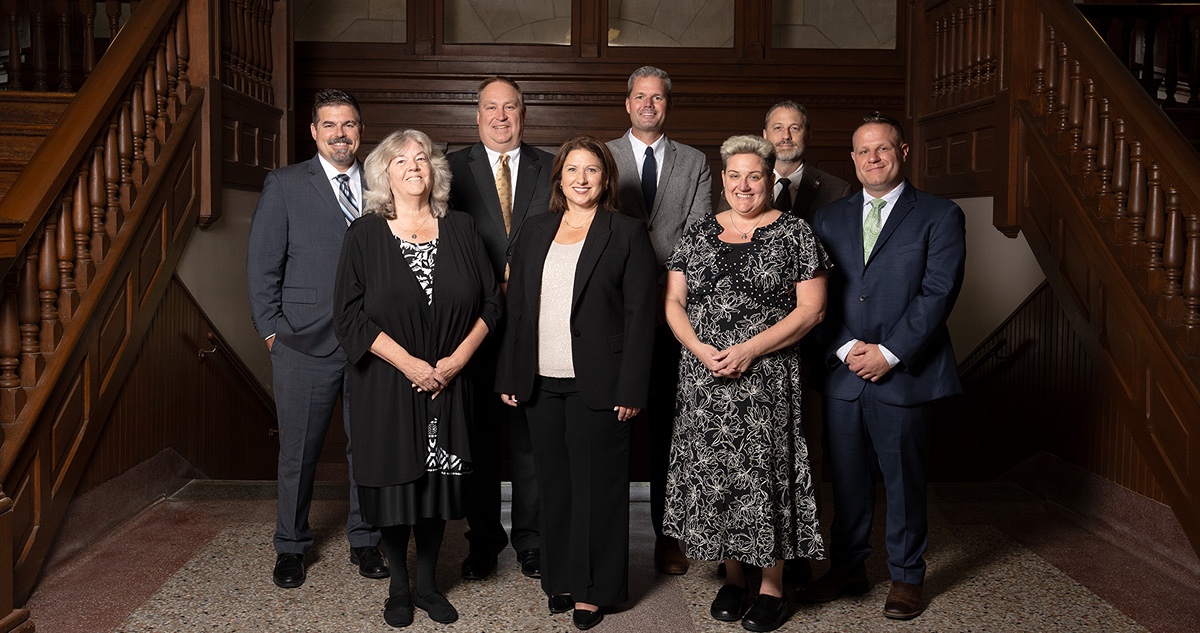
Purdue University’s College of Agriculture recognized nine alumni at the Distinguished...
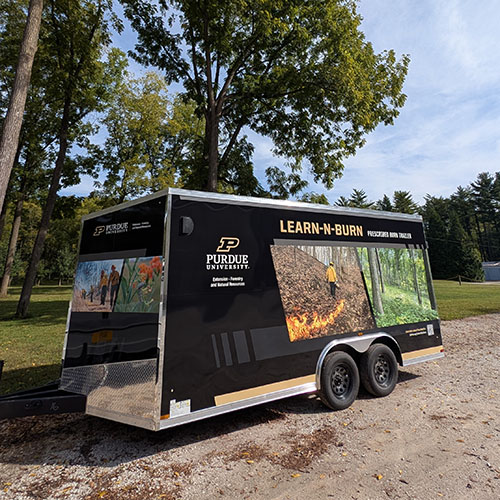
Keep your eyes peeled across Indiana for the newly minted Purdue Forestry and Natural Resources...
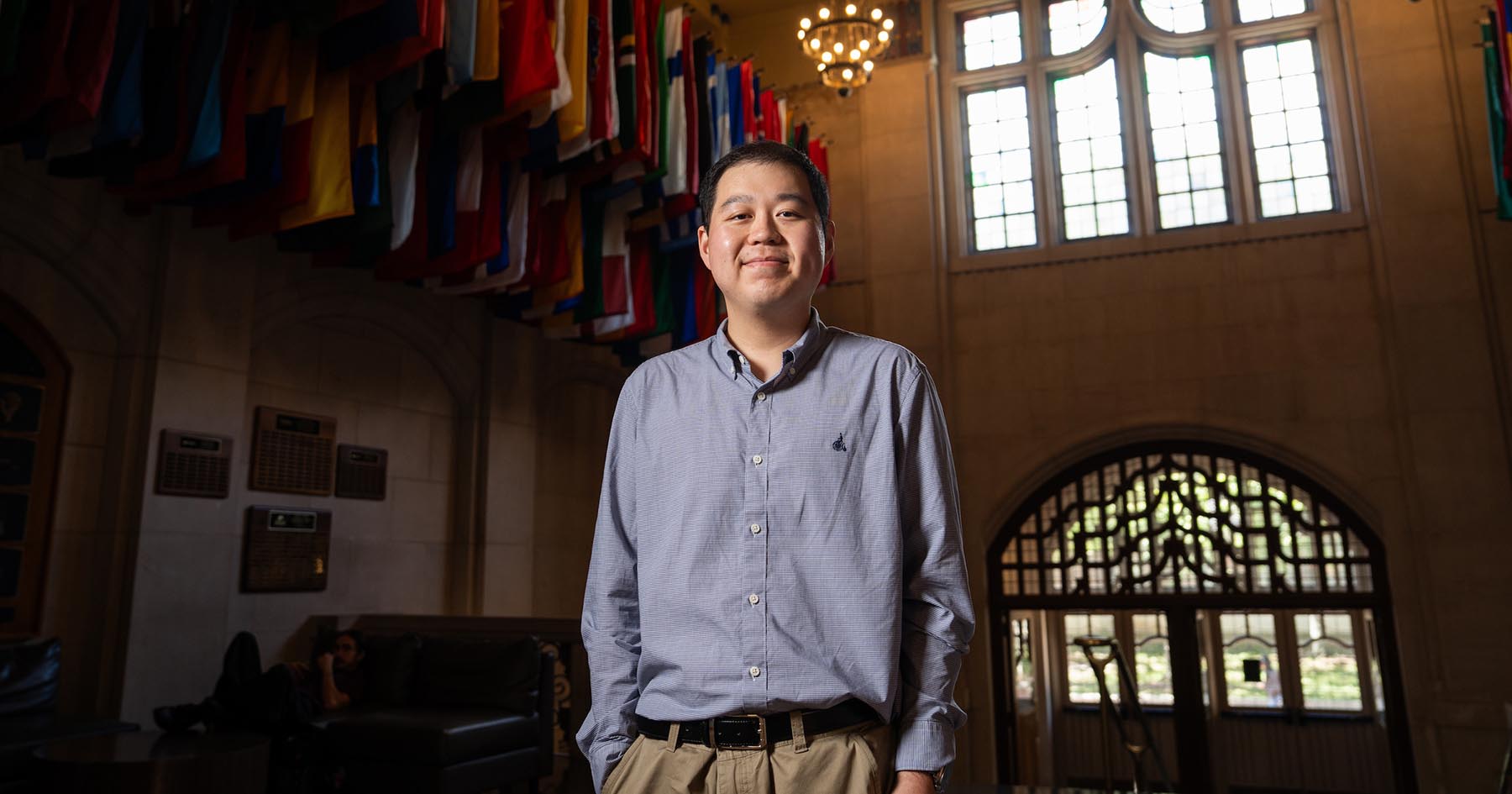
“Being at Purdue has changed my thinking entirely,” says Mingyu Zhao, a third-year...