

Binayak Kunwar - Graduate Ag Research Spotlight
At some point I realized farming isn’t just about soil and seeds. It’s about risk, prices and trade-offs, That’s when I knew I wanted to study agricultural economics.
- Binayak Kunwar, Agricultural Economics
The student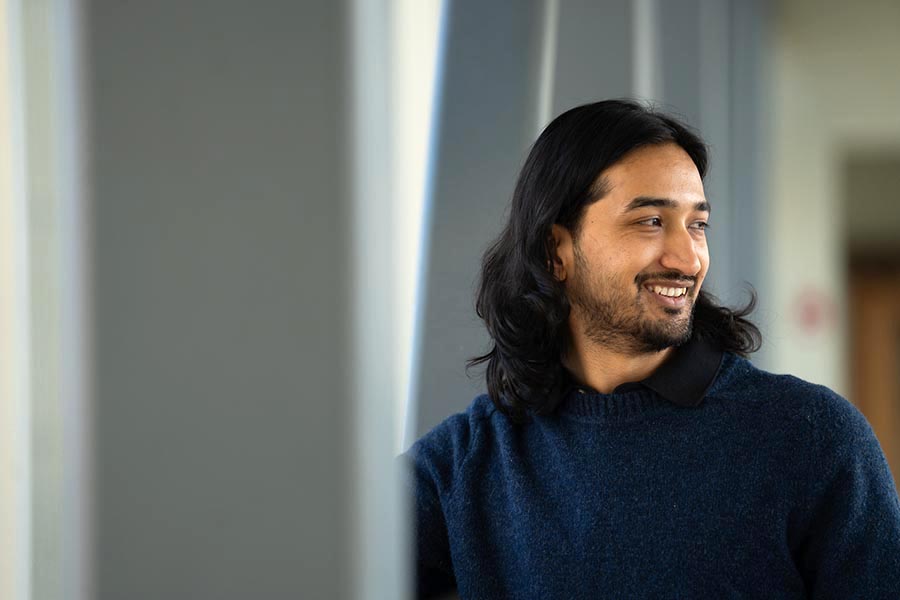
“This might sound very weird,” Binayak Kunwar says, “but my first impression of the United States was that the sky here was too big.”
It’s not weird at all when you consider where Kunwar grew up — outside the Nepali city of Pokhara, at the foothills of the Annapurna Range, which contain three of the world’s 10 highest peaks. Coming from there to the flat Midwest was an understandable shock.
But geography aside, Kunwar was thrilled to join the agricultural economics department at Purdue. As an undergrad studying agriculture in Nepal, he’d become increasingly interested in economics.
“At some point I realized farming isn’t just about soil and seeds. It’s about risk, prices and trade-offs,” Kunwar says. “That’s when I knew I wanted to study agricultural economics.”
Having a friend who had attended Purdue, he knew about the agricultural economics department’s strong reputation. He began his master’s degree in 2022 and stayed on to work for a PhD. He expects to graduate with his doctorate in 2027.
The research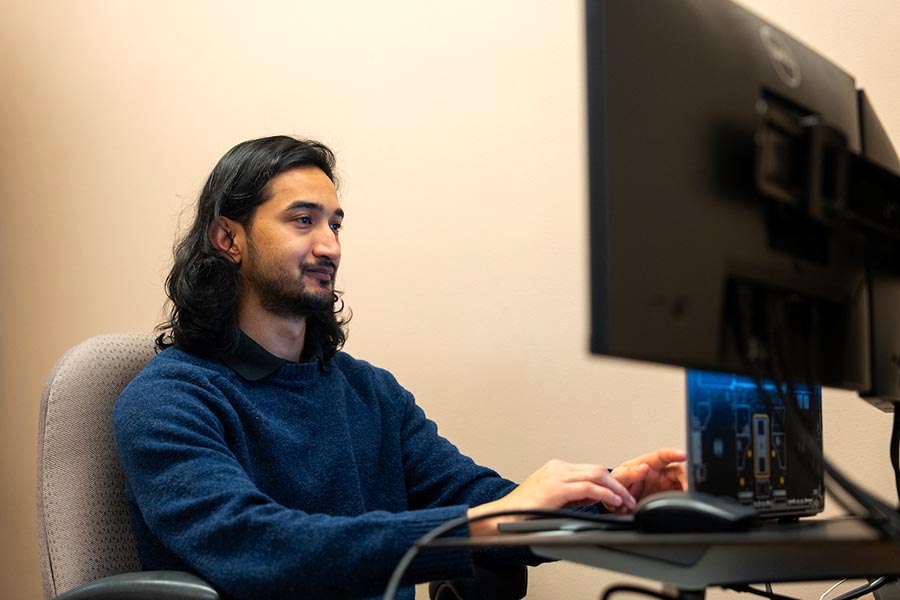
As a master’s student, Kunwar’s advisor was Todd Kuethe, Schrader Chair in Farmland Economics. Kunwar’s thesis, "Impact of Commercial and Utility-Scale Solar Energy on Farmland Prices," received the Outstanding Master's Thesis Award from the Agricultural and Applied Economics Association.
Kunwar is continuing his work on farmland economics with his PhD advisor, assistant professor of agricultural finance Chad Fiechter. His research involves analyzing factors influencing farmland pricing. For example: When farmland is converted to renewable energy generation, such as wind farms, how does that impact the price of nearby land? One of Kunwar’s projects looks at what happened when the Indiana Economic Development Corp. purchased thousands of acres in Boone County for a planned high-tech business park.
“We have done some analysis, and the results are pretty interesting,” he says. “Land prices have increased 40 to 50 percent in the county, and around 7 percent in neighboring counties.”
Kunwar is particularly interested in the impact of data centers on land prices.
“The ‘cloud,’” he says, is a metaphor. “Data gets stored on land, and these big data centers require a lot of land, electricity and other resources.”
Kunwar is designing an experiment to better understand how buyers and sellers come to their final prices for land sales. Available data, he says, only lists the final sale prices. But what factors influenced the price along the way? He’s recruiting two dozen participants to play a sort of agricultural economics war game, giving “buyers” and “sellers” different information in different rounds to see how it affects their decisions.
“To the best of my knowledge, this is not something that has been done before,” he says.
Opportunities
Kunwar says his advisor, Chad Fiechter, is “awesome. He’s very easy to talk to, he’s got a lot of great ideas, he’s very easy to receive feedback from. Everything I’ve learned about research has been from him and Dr. Kuethe.”
Kunwar has had the opportunity to attend multiple conferences and present his own research. He’s also been a member of the Ag Econ Graduate Student Organization.
Future plans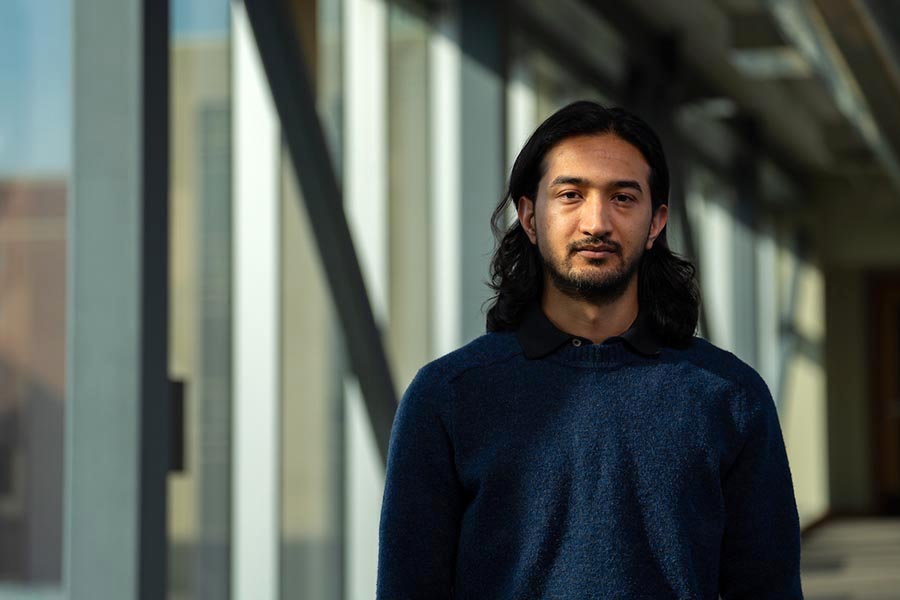
Kunwar hopes to get a job in academia. “I like doing research and asking questions,” he says. “The best way to do that is being on faculty and focusing on research and Extension.” He hopes his work will give farmers, landowners and policy makers more information to guide their decisions.
When he’s not working, Kunwar enjoys cooking, reading (he’s in the middle of John Steinbeck’s “East of Eden,” about farming families in California’s Salinas Valley), and playing soccer.
As for the flat landscape and the “too big” sky?
“I’ve adapted quite well,” Kunwar says. “I love it here at Purdue.”
More Graduate Spotlights
“Being at Purdue has changed my thinking entirely,” says Mingyu Zhao, a third-year...
Most parents want to encourage their child’s hobbies, signing them up for chess club,...
As a child in Rio de Janeiro, Mayara dos Santos Rocha loved animals so much she figured...
At 25, Noah Berning has already accomplished a goal held since middle school: he’s going to...

Growing up in lush northern Florida, Natalie Allen spent much of her childhood outdoors, catching...
When Elizabeth Ogar was growing up in Nigeria, a weevil infestation hit her family’s corn...