Agricultural Economics
Experts examine trade, policy and economic trends in 2026 Purdue Agricultural Economics Report
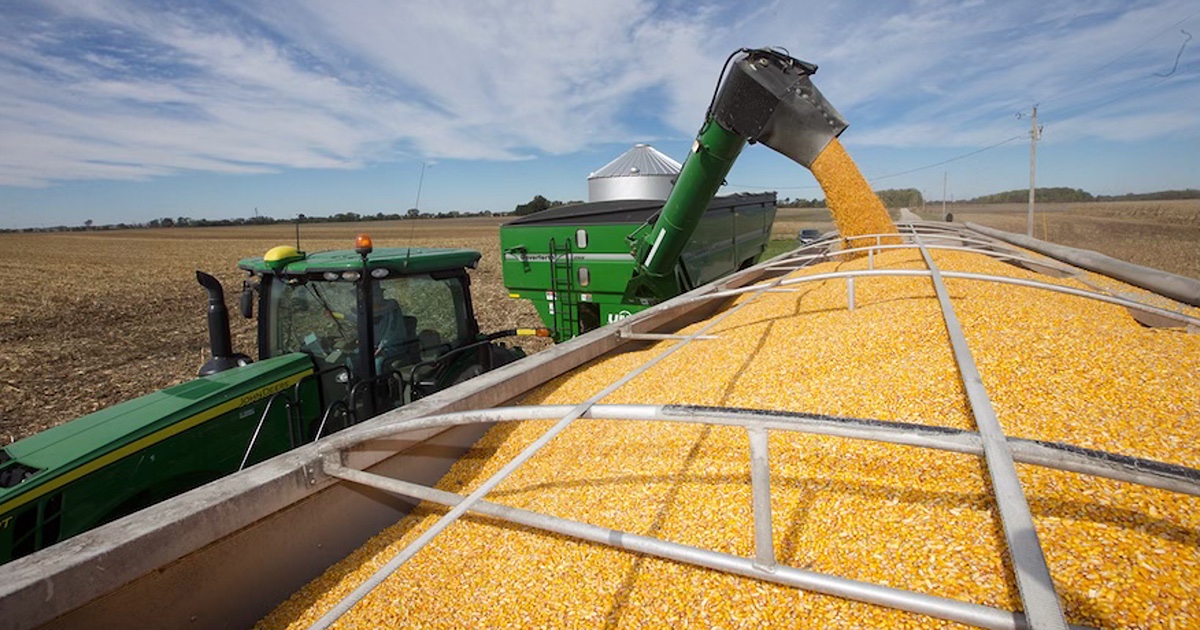 , opens larger image Experts examine trade, policy and economic trends in the 2026 Purdue Agricultural Economics Report outlook issue.
 WEST LAFAYETTE, Ind. — Economic uncertainty, shifting trade policies and questions surrounding the future of the U.S. farm bill are among the key focus areas that experts in Purdue University’s Department of Agricultural Economics and Extension program say could influence agriculture and rural communities in the coming year. Their analysis appears in the 2026 Purdue Agricultural Economics Report (PAER) annual outlook issue, one of the most comprehensive editions in recent years and a reflection of the department’s extensive engagement with matters affecting agriculture and rural communities.
“The 2026 PAER outlook issue brings together perspectives from across the department to help readers better understand the economic and policy environment facing agriculture,” said Roman Keeney, associate professor of agricultural economics and co-editor of the report.
The 2026 outlook edition starts with articles exploring broader economic and policy issues, including the U.S. economic outlook, trade policy and regional economic indicators. The second section focuses on traditional agricultural outlook topics, with articles addressing agricultural commodities and markets, as well as farmland and agricultural credit. The issue concludes with articles that apply new measures to analyze Indiana’s economic performance from a community perspective.
The report points to modest U.S. economic growth in 2026, with inflation expected to remain near 2.5% and unemployment holding steady in the mid-4% range. Trade policy developments and ongoing farm bill uncertainty continue to be major concerns, particularly for export-oriented agriculture. At the farm level, higher livestock receipts and government payments are projected to support an increase in net farm income despite weaker crop revenues.
“With many recent and upcoming economic and policy changes affecting agriculture, this year’s issue covers a wider range of topics than usual,” Keeney said. “These articles offer insights into trends that producers, businesses and policymakers will want to watch closely.”
To read the full 2026 PAER outlook edition, visit https://purdue.ag/paer. The report provides an outlook for the following topics:
- Community vitality and well-being
- U.S. economic outlook for 2026
- U.S. trade policy and impacts on agricultural exports
- Uncertainty surrounding the future of the U.S. farm bill
- Socioeconomic conditions across the North Central region
- Economic trends and indicators for Indiana
- Agricultural labor market trends and wage data
- Employment patterns across industries
- Net farm income projections and farm financial performance
The PAER is a quarterly publication from the Department of Agricultural Economics. Articles in the annual outlook issue are intended to provide a road map for understanding challenges facing the agricultural economy.
About Purdue Agriculture
Purdue University’s College of Agriculture is one of the world’s leading colleges of agricultural, food, life and natural resource sciences. The college is committed to preparing students to make a difference in whatever careers they pursue; stretching the frontiers of science to discover solutions to some of our most pressing global, regional and local challenges; and, through Purdue Extension and other engagement programs, educating the people of Indiana, the nation and the world to improve their lives and livelihoods. To learn more about Purdue Agriculture, visit this site.
About Purdue University
Purdue University is a research institution ranked among the top 10 public universities in the United States. More than 111,000 students study at Purdue across multiple campuses, including more than 57,000 at our main campus locations in West Lafayette and Indianapolis. As a land-grant university committed to affordability and accessibility, Purdue’s main campus has frozen tuition 14 years in a row, enabling more students than ever to graduate debt-free.
Writer: Morgan French, mmfrench@purdue.edu, 765-494-6999
Media contact: Devyn Ashlea Raver, draver@purdue.edu
Sources: Roman Keeney, rkeeney@purdue.edu, 765-494-4253
Agricultural Communications: Maureen Manier, mmanier@purdue.edu, 765-494-8415