Agricultural & Biological Engineering
Grain dust explosion incidents decrease, fatalities increase
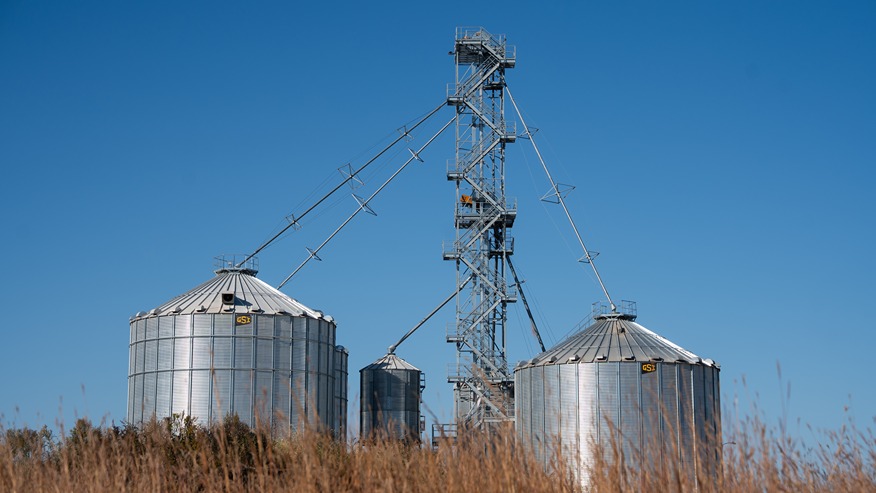 Grain dust suspended in the air or accumulated on surfaces caused explosions in many agricultural industries in 2025. (Purdue Agricultural Communications photo/Joshua Clark)
 WEST LAFAYETTE, Ind. — Seven U.S. grain dust explosions in 2025 caused 10 injuries and four fatalities, according to a nationwide annual summary.
The number of explosions is slightly below the 10-year national average of 8.5 and down from the nine that occurred in 2024. Even though there were fewer explosions, the number of injuries and fatalities increased compared to two injuries and no fatalities in 2024.
The explosions occurred in two grain elevators, one farm-operated grain elevator, one seed processing facility, one feed mill, one flour mill and one biofuel plant.
The probable ignition sources were identified in one case as smoldering grain, one as equipment maintenance work, one as an overheated bearing and one as a dust fire. Three ignition sources were unknown.
Grain dust, which caused five explosions, was the most common fuel source. Wood dust and an unknown source fueled other explosions.
“The incidents occurring across a variety of agricultural industries highlight persistent vulnerabilities in explosive dust management,” said Kingsly Ambrose, Purdue University professor of agricultural and biological engineering and the report’s author. “The increase in fatalities and injuries underscores the urgent need for broader adoption of dust control practices and stronger safety interventions to prevent future injuries and loss of life.”
Texas and Ohio had two explosions each, and Minnesota, North Dakota and Nebraska each had one explosion.
Ambrose said work to prevent explosions in all states starts before harvest.
“Keep your equipment in good working condition, and do preventative maintenance before the start of harvest or handling season,” Ambrose said. “Check for repairs so you don’t have any accidents. For example, belt misalignment in a bucket elevator can lead to friction, heat generation and an increased risk of dust explosion.”
Once grain is harvested, Ambrose urges people to pay close attention to the conditions the grain is kept in. Improper aeration leads to fungal growth, which causes grain and feed to smolder, increasing the risk of igniting dust in the grain bins.
“Dust is not good, both for dust explosions and for human health,” Ambrose said. “Housekeeping is very important. Keep the place clean. Make sure there is no visible settled dust or suspended dust in the air.”
About Purdue Agriculture
Purdue University’s College of Agriculture is one of the world’s leading colleges of agricultural, food, life and natural resource sciences. The college is committed to preparing students to make a difference in whatever careers they pursue; stretching the frontiers of science to discover solutions to some of our most pressing global, regional and local challenges; and, through Purdue Extension and other engagement programs, educating the people of Indiana, the nation and the world to improve their lives and livelihoods. To learn more about Purdue Agriculture, visit this site.
About Purdue University
Purdue University is a research institution ranked among the top 10 public universities in the United States. More than 111,000 students study at Purdue across multiple campuses, including more than 57,000 at our main campus locations in West Lafayette and Indianapolis. As a land-grant university committed to affordability and accessibility, Purdue’s main campus has frozen tuition 14 years in a row, enabling more students than ever to graduate debt-free.
Writer: Olivia De Young, odeyoung@purdue.edu
Media contact: Devyn Ashlea Raver, draver@purdue.edu
Source: Kingsly Ambrose, rambrose@purdue.edu
Agricultural Communications: Maureen Manier, mmanier@purdue.edu, 765-494-8415