

Agricultural & Biological Engineering
Purdue research team wants to harness AI to secure corn crops from pathogenic threats
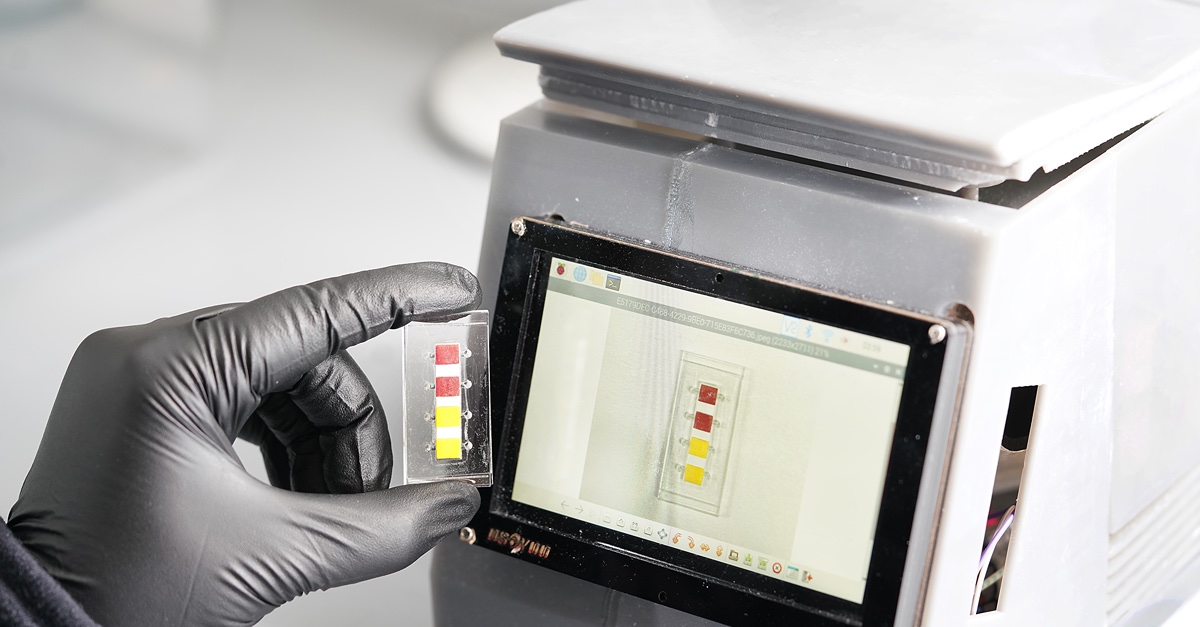 , opens larger image This chip biosensor, developed by Mohit Verma’s lab at Purdue University, has multiple applications, including plant stress signatures. The technology is part of the SignAI project, supported by the Defense Advanced Research Projects Agency to defend U.S. agriculture against pathogenic threats.
 WEST LAFAYETTE, Ind. — A research team at Purdue University’s colleges of Agriculture and Engineering aims to ensure the security of the nation’s corn crops by using artificial intelligence as an early warning system.
The team is using cutting-edge technological advances and research infrastructure to pursue the project with a nine-month, $450,000 contract from the United States Defense Advanced Research Projects Agency (DARPA).
The Purdue team is one of seven to receive funding out of several hundred proposals submitted to DARPA. Christopher Brinton, Elmore Associate Professor of Electrical and Computer Engineering, leads the project.
“I am excited to lead this project in establishing a new interdisciplinary framework for integrating advanced artificial intelligence with real-world agricultural decision-making,” Brinton said. “We are bringing together expertise across engineering, plant pathology, agronomy and farming to connect multi-modal sensing, interpretative machine learning and structured farmer feedback. By identifying a library of signatures indicative of plant stress, this work aims to produce scalable, scientifically grounded tools that enhance crop resilience and agricultural productivity.”
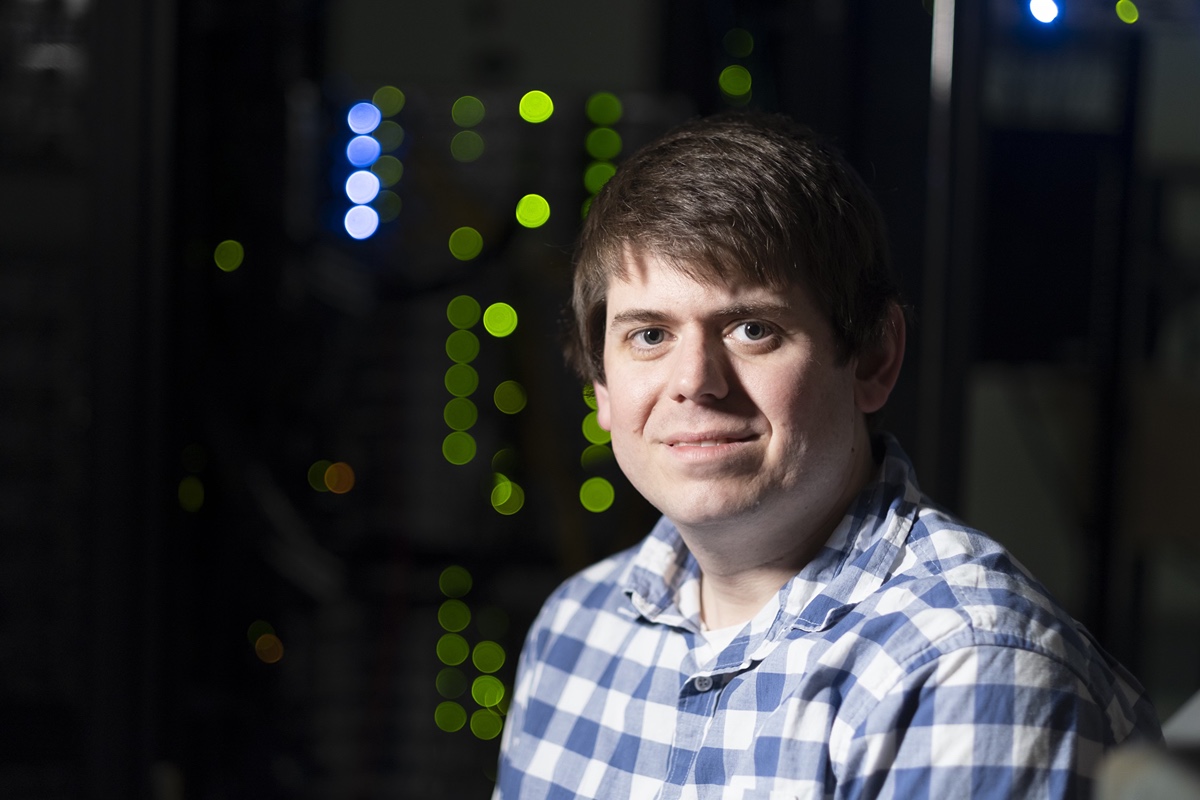 , opens larger image Christopher Brinton, Elmore Associate Professor of Electrical and Computer Engineering at Purdue, leads the multidisciplinary SignAI project. (Purdue University Photo/Vincent Walter)
 Among the co-leaders are Mohit Verma, associate professor of agricultural and biological engineering, and Yaguang Zhang, clinical assistant professor of agricultural and biological engineering.
“We’re focusing on the stress response from corn plants in the presence of pathogens,” Verma said. “Can we find signatures of stress response or pathogen presence earlier than you see actual signs or symptoms on the plant and, therefore, have the potential to intervene early? That’s the goal.”
Called SignAI, the Purdue project is part of a larger Ag x BTO effort of the DARPA Biological Technologies Office to defend U.S. agriculture against naturally occurring and human-made threats. In a recent forecast, the U.S. Department of Agriculture indicated that 2026 corn exports alone could reach $17.6 billion. Further, food and agriculture support more than 34 million U.S. jobs, according to the U.S. Chamber of Commerce.
The Purdue project will build on work that is already being done. The U.S. National Science Foundation Engineering Research Center for the Internet of Things for Precision Agriculture (IoT4Ag) was launched in 2020. IoT4Ag is a collaboration among Purdue, the University of Pennsylvania, the University of California, Merced, the University of Florida and Arizona State University.
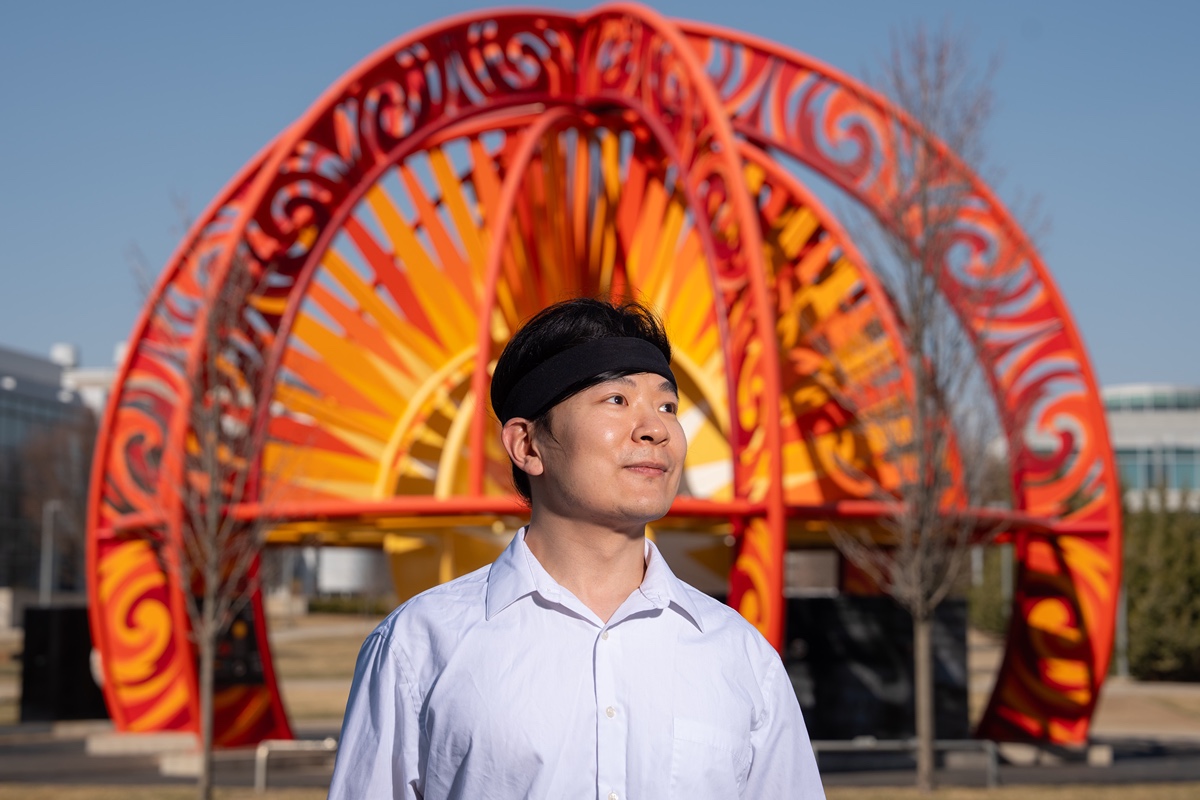 , opens larger image Yaguang Zhang, clinical assistant professor of agricultural and biological engineering at Purdue, is a co-leader of the SignAI project. (Purdue University photo/Joshua Clark)
“We’ve been collecting all kinds of data,” Zhang said. Purdue alone has about 25 research groups collecting soil samples, drone images and data from field sensors and weather stations. “We’ll take advantage of that effort, using the existing data as the baseline to start the project.”
One of those groups, led by project collaborator Christian Cruz Sancan, associate professor of botany and plant pathology, is providing corn leaf and soil samples with stressors of interest for laboratory testing.
A bio-inspired generative AI modeling system will serve as the core of the project. Building on newly developed sensors and existing datasets, the system will process critical data and discern patterns to predict potential pathogenic threats to corn crops. The researchers will simulate the data flow from these sensors into an algorithm that is under development.
“We have a very rich dataset, so we’re going to figure out the minimal dataset that gives you biosecurity,” Verma said. “This type of sensor network could be implemented not just at Purdue and IoT4Ag, but at other ag research stations in the future.”
Two types of novel biosensors will complement the field sensors that have already been deployed. Verma’s lab developed one type that can detect pathogenic DNA and RNA and also RNA markers for plant stress response.
The new DARPA project — which supports university initiatives Purdue Computes and One Health — also will incorporate technologies developed at Purdue’s Open Ag Technologies and Systems Center. These technologies include the Purdue OATS DataStations, systems based on long-range wide area networks.
Purdue Computes is the university’s strategic effort to advance research and innovation in computing, physical AI, semiconductors, and quantum technologies, while expanding access to state-of-the-art computing resources. Purdue’s One Health initiative involves research at the intersection of human, animal and plant health and well-being.
The SignAI team will develop data collection and visualization tools for farmers too. “We have farmers who are collaborators helping to decide how to visualize the massive dataset that underlies the SignAI system,” Zhang said “What do the farmers need to see? They get the chance to tweak what to detect.”
One of the collaborators is Aaron Ault, a full-time farmer and part-time research engineer in the Elmore Family School of Electrical and Computer Engineering.
Mainly designed for data collection, the IoT4Ag hardware can also be modified to work as edge computing platforms — “hubs for data to communicate with sensors and vehicles in the field,” Zhang said.
With SPRING (Solar-Powered Remote IoT4Ag Network Gateway), farmers can place a tripod-supported box of electronics in their fields to meet their wireless connection and sensor data collection needs.
“You don’t need to worry about the underlying technology,” Zhang said. “It just works. That’s what we want to deliver to the farmer.”
SignAI project co-leaders include James Krogmeier, professor of electrical and computer engineering, and David Love, the Nick Trbovich Professor of Electrical and Computer Engineering.
About Purdue Agriculture
Purdue University’s College of Agriculture is one of the world’s leading colleges of agricultural, food, life and natural resource sciences. The college is committed to preparing students to make a difference in whatever careers they pursue; stretching the frontiers of science to discover solutions to some of our most pressing global, regional and local challenges; and, through Purdue Extension and other engagement programs, educating the people of Indiana, the nation and the world to improve their lives and livelihoods. To learn more about Purdue Agriculture, visit this site.
About Purdue University
Purdue University is a research institution ranked among the top 10 public universities in the United States. More than 111,000 students study at Purdue across multiple campuses, including more than 57,000 at our main campus locations in West Lafayette and Indianapolis. As a land-grant university committed to affordability and accessibility, Purdue’s main campus has frozen tuition 14 years in a row, enabling more students than ever to graduate debt-free.
Writer: Steve Koppes
Media contact: Devyn Ashlea Raver, draver@purdue.edu
Sources: Mohit Verma, msverma@purdue.edu; Yaguang Zhang, ygzhang@purdue.edu
Agricultural Communications: Maureen Manier, mmanier@purdue.edu, 765-494-8415
Journalist Assets: Publication quality charts and images can be obtained at this link

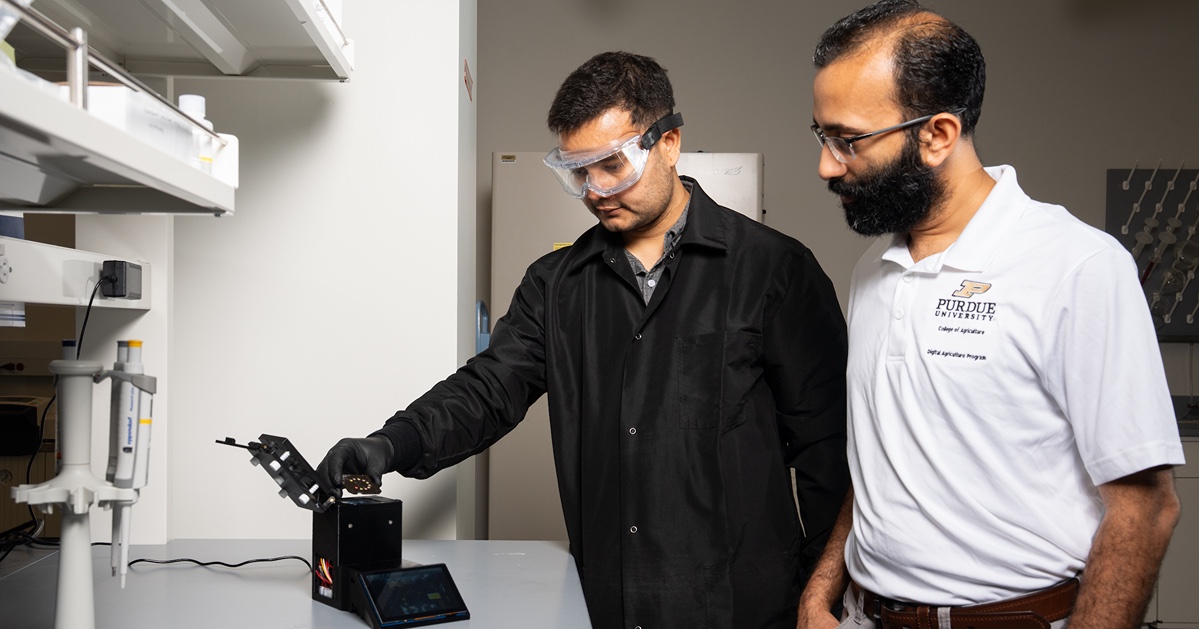
This research is a part of Purdue’s presidential One Health initiative, which involves research at the intersection of human, animal and plant health and well-being.
Computer science and AI are cornerstones of Purdue Computes — a comprehensive initiative that spans computing departments, physical AI, quantum science and semiconductor innovation.