

AI Fusion seed grants help rapidly advance research
Purdue researchers in the colleges of Agriculture, Engineering and Science are fostering interdisciplinary collaboration and innovation to advance AI applications through one-year seed grants totaling $550,000.
Initiated and managed by the associate deans for research in all three colleges and the Office of Research, with input from Purdue’s Institute for Physical Artificial Intelligence, the AI Fusion grants were awarded by the deans in May 2025 to seven collaborative projects.
“AI is having a broad impact on society and changing the nature of work,” said Ali Shakouri, professor in the Elmore Family School of Electrical and Computer Engineering and former associate dean for research and innovation in the College of Engineering. “It is critical to bring researchers with deep AI expertise together with diverse application areas in different colleges to accelerate this transformation.”
The goal of the seed grants is to build teams that bridge disciplines.
“Many of today’s most pressing challenges, such as food security, personalized medicine and resilient infrastructure, require expertise from multiple fields,” said Ron Turco, associate dean for agricultural research and graduate education in the College of Agriculture. “Major federal funding agencies increasingly look for large, multidisciplinary teams. Seed grants enable Purdue to assemble and support such teams early, increasing competitiveness for large-scale, center-level opportunities.”
Here is a look at the seven collaborative research projects:
Mapping soybean root structure

One team received $50,000 to use advanced 3D vision to automate accurate, rapid and affordable tools for soybean root phenotyping. Song Zhang, professor of mechanical engineering, and Jianxin Ma, professor of agronomy and Indiana Soybean Alliance Endowed Chair in Soybean Improvement, are conducting the research on the structure of soybean root systems and their impact on yield.
Soybeans are rich in protein, and nitrogen is an important building block for that protein. Over 50% of the nitrogen needed in soybean production comes from rhizobia, symbiotic bacteria that fix nitrogen in soybean root nodules. The rest comes from root absorption, so understanding how different soybean genotypes impact both root structure and nodulation is critical to improving soybean yield potential.
Current techniques to map soybean nodules and root structures rely heavily on manual measurement. Zhang’s lab has developed advanced 3D vision techniques that work across scales of length and time.
“The overall root structure is pretty big, but the nodules we are measuring are very small. We have to develop technology that can do both big and small ranges at the same time,” he said.
Ma, with expertise in soybean genetics and genomics, can apply that knowledge to soybean nodulation and root structure.
The team will apply advanced 3D vision to capture the soybean root architecture and use AI-powered software to help create the full 3D model, segmenting the tiny root nodules. They will test their tools using promising soybean lines with enhanced nodulation and nitrogen-fixation capability, which will be measured using the new 3D method and validated using the manual method — first in the greenhouse and eventually in the field.
Detecting disease early
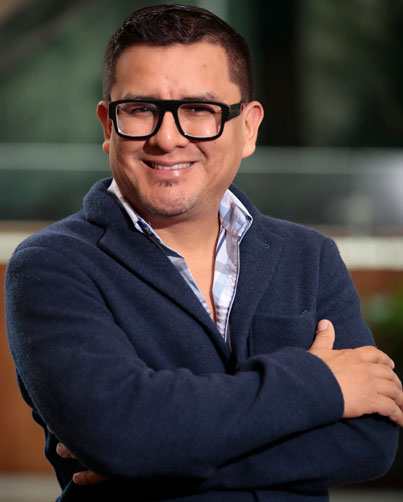
One team was awarded $100,000 to develop a real-time, AI-driven model to detect and mitigate corn tar spot. The project is led by Christian Cruz, associate professor of botany and plant pathology; Mohammad Jahanshahi, associate professor at the Lyles School of Civil and Construction Engineering; and Alexandria Volkening, assistant professor of mathematics.
AI models for plant disease detection have shown success in research settings, but scaling them for real-world application is difficult. Analyzing field imagery for signs of disease is complex when factoring in the variability of field conditions, such as shade, differences in brightness or color, and leaves blocked by objects or other leaves.
Cruz and his colleagues will employ AI-driven models that leverage prior data to infer the probability of disease presence under these variable conditions. The team will also apply advanced computer vision techniques that allow fine-scale segmentation of small objects, enabling detection of features of a disease, such as tar spots, at near-pixel resolution.
“This research matters because under the right but complex conditions, tar spot can spread quickly and kill leaves, which are essential for the plant to grow and produce corn. If farmers don’t know where, when and at what speed it’s spreading, they can’t respond effectively with treatments or make timely management decisions,” Cruz said. “Better monitoring means healthier crops, reduced financial losses and more efficient farming — not only by catching problems early, but also by helping farmers avoid unnecessary treatments.”
Decoding meat quality
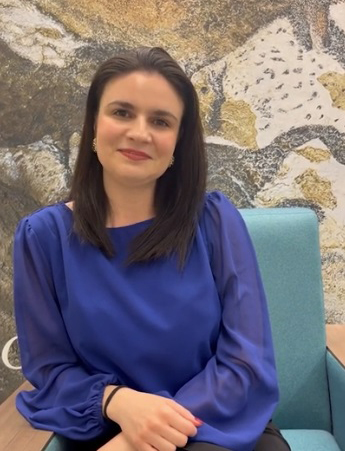
One team is using its $100,000 award to integrate machine learning and phenotyping to predict meat quality in cattle. The team is led by Hinayah Rojas de Oliveira, assistant professor of animal sciences; Qi Guo, assistant professor of electrical and computer engineering (ECE); and Joseph Campbell, assistant professor of computer science, along with additional colleagues in animals sciences, agricultural and biological engineering, and ECE.
Meat quality and thus economic value are determined by traits like carcass weight, yield, marbling and ribeye area. In beef cattle, these can be predicted with high accuracy using genomic data — the understanding of an animal’s full set of alleles (DNA) and how that genetic data relates to desired traits.
However, at modern dairy operations, cows that are not intended to produce replacement heifers are increasingly being bred with beef sires, generating calves that can be better integrated into the beef supply chain. In this growing market for beef-on-dairy crossbred cattle, the genetic data linked to high-value meat quality traits is less well known.
The researchers will use hyperspectral imaging and other evaluation methods to capture carcass quality, analyze the images using machine learning to identify economically favorable traits and establish a foundation for matching genomic data to those traits.
“We saw a clear opportunity to use images and machine learning to get more accurate data on more animals and ultimately speed up genetic improvement. However, we knew we could not do it alone. Rojas said. “When we saw the call for the program, we immediately recognized it as the perfect opportunity to finally get this project started. The program’s emphasis on interdisciplinary collaboration was exactly what we needed to bring together our diverse expertise.”
Discovering problematic antibodies

One team received $100,000 to develop an AI model using machine learning to study antibody response. The team is led by Majid Kazemian, associate professor of biochemistry and computer science; Matt Olson, professor of biological sciences; and Lia Stanciu, professor of materials engineering and in the Weldon School of Biomedical Engineering.
Antibodies are key components of the immune system, and while many defend against infection, not all are beneficial. Problematic antibodies can lead to autoimmune diseases, transplant rejection, pregnancy complications and adverse reactions to cellular therapies. They can target the body’s own tissues, interfere with treatment or trigger severe immune responses.
Antibodies bind to distinct regions of proteins called epitopes; this team will develop an AI model using machine learning to predict and identify epitopes that elicit an antibody response. Pinpointing specific antibodies will allow them to eliminate only those that interrupt gene therapies, rather than suppressing the entire immune system and leaving patients vulnerable to life-threatening diseases.
“As gene therapies become more common, there’s a growing need to address this immune challenge. Yet, no tool currently exists to selectively remove B cell responses to viral vectors without affecting the rest of the immune system,” Kazemian said. “With the emergence of protein large language models, we saw an opportunity to identify regions that could help target and eliminate these specific responses, leading to the idea for this project.”
Creating wearable tech for plants

One team received $100,000 to create technology that could pick up early signals of stress in plants, allowing for timely intervention for the production of a healthy crop. Wenzhuo Wu, professor in the Edwardson School of Industrial Engineering; Cankui Zhang, professor of agronomy; and Yexiang Xue, associate professor of computer science, are working together.
One way people track health indicators is through wearable tech like smartwatches. What if you could apply wearable tech to plants? That’s exactly what these researchers hope to do.
Their project first requires using AI-powered analysis to identify and map the biochemical signals associated with stresses, such as drought or nutrient deficiency. Next, they’ll create electrochemical sensors using the extremely thin, two-dimensional nanomaterial tellurene to monitor plant biochemical signals.
Finally, they’ll use AI-driven “digital twins” of the plants to model stresses in real time, simulating the onset and progression of plant stresses to determine precision agriculture strategies, like irrigation or targeted nutrient supplementation, that lead to plant recovery.
“We see plant digital twins as living, learning counterparts to crops, virtual reflections that stay in sync with the plant’s condition. By pairing continuous signals from plant-friendly wearables with context about the growing environment, the twin offers earlier warning of stress, anticipates how it may evolve and helps farmers and researchers test potential responses before acting,” Wu said. “This approach is designed to scale from a single plant in the greenhouse to entire plots in the field and across staple crops, laying a foundation for more resilient, resource-efficient agriculture in a changing climate.”
Finding metastable materials
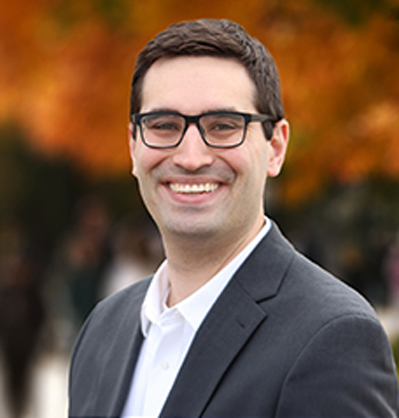
One team received $50,000 to combine researcher expertise for a new approach to discovering metastable materials. The team includes Justin Andrews, assistant professor of chemistry, and Arun Mannodi Kanakkithodi, assistant professor of materials engineering.
Researchers view higher capacity materials for energy storage and more efficient semiconductors as key to the advancement of technologies we use every day. Current computational methods used to discover them are limited because they identify materials at their thermodynamic ground state, or most stable configuration of the material’s atoms. However, metastable forms of the same materials adopt a different atomic arrangement but often have superior properties for energy storage and electronics applications.
Andrews has pioneered a synthetic method to create metastable materials that retain much of the structure of the ground-state material with slight variations.
“I used to say it’s like playing ‘chemical Jenga,’” Andrews said. “We can basically pull atoms out of a lattice in specific pattens to make structures that would be hard to make directly.”
Mannodi will use his expertise in computational modeling to review large materials databases for potential metastable configurations, looking for promising compounds. The team will then synthesize the metastable materials that have a high chance of success and test their applicability in energy storage.
“This was a perfect opportunity for both of us,” Andrews said. “Mannodi’s large-data approaches and methods for rapidly screening materials of interest really put him among the best in the world.”
Testing new conductors

One team was awarded $50,000 to apply AI and machine learning to test new materials to serve as solid ion conductors in lithium-ion batteries and advanced electronics. Can Li, assistant professor in the Davidson School of Chemical Engineering, and Qi Dong, assistant professor of chemistry, are on the team.
The researchers will apply AI and machine learning to direct testing toward potential new materials that perform best in ion transfer while balancing potential drawbacks of the same materials, such as overheating.
Dong will lead by developing a platform that combines ultrafast material fabrication while testing several parameters of material stability, such as upper voltage and surface heating and cooling rates, under real-world conditions.
Li will help guide the testing using a closed-loop system that continuously monitors results to guide the next experiments — preferencing those that clarify areas where the interaction between voltage and temperature change is ambiguous. They will balance high-accuracy, high-cost experiments with lower-cost, lower-resolution tests to maximize resource efficiency.
“Dr. Dong’s research has very nice synergy with chemical engineering,” Li said. “We thought my expertise in AI will complement his expertise in chemistry and materials science to accelerate scientific discovery.”
Using AI to advance collaborative research
Bringing research partners with the right expertise together is critical.
“The AI Fusion initiative is about much more than just funding projects; it’s about building bridges between traditionally separate disciplines,” said Guang Lin, associate dean for research and innovation in the College of Science, who holds appointments in both mathematics and mechanical engineering. “As someone who navigates both the theoretical foundations of AI and its practical engineering applications, I see firsthand how vital it is to break down silos. When mathematicians, engineers and agricultural scientists come together, they don’t just solve problems; they discover entirely new questions that AI can answer.”Seed funding like AI Fusion plays a critical role in launching these collaborations, providing the early support needed to explore bold ideas and generate the foundational data required to bring promising ideas into clinical reality.”
- Majid Kazemian, associate professor of biochemistry and computer science
Computer science and AI are cornerstones of Purdue Computes — a comprehensive initiative that spans computing departments, physical AI, quantum science and semiconductor innovation.
Featured Stories
For Brody Cox, preparing for the Indiana State Fair began long before he entered the show...
Carolyn Foley, a long-time member of the Purdue Forestry and Natural Resources (FNR) and...

In the September Purdue University/CME Group Ag Economy Barometer survey, 52% of respondents...
Purdue University’s College of Agriculture recognized nine alumni at the Distinguished...
Keep your eyes peeled across Indiana for the newly minted Purdue Forestry and Natural Resources...
“Being at Purdue has changed my thinking entirely,” says Mingyu Zhao, a third-year...