

Extension steps up: Where do communities turn after disaster?
Abby Paul was at a friend’s wedding in Newburgh, Indiana, when she got the alert to shelter in place. Chemical fumes wafted through the air even miles away from the burn site. While it rattled the ceremony, Paul had no idea how much the fire would impact her work in neighboring Gibson county.
On Saturday, Sept. 6, 2025, a fire started in a chemical company on the outskirts of Newburgh, a city just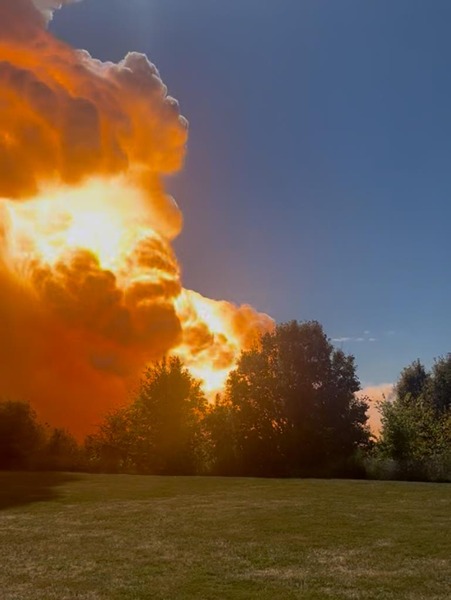 east of Evansville with a picturesque historic downtown, a shopping center and suburban neighborhoods. It took hours for firefighters and first responders to put the fire out, even using specialized chemical extinguishers. Ash fell on the city for days after, covering lawns and cars, keeping everyone inside.
The Environmental Protection Agency (EPA) rushed to the site to analyze the fire, give the shelter-in-place order and to identify what chemicals burned and traveled to the atmosphere, water and soil.
Panic filtered in from the community to Purdue Extension. Paul was the nearest agricultural and natural resources Extension educator to the fire site, and her inbox was overrun with questions about how the ash would affect their lawns, gardens, crops, livestock and overall health.
Paul called Edward Sheldon, an agriculture safety specialist in agricultural and biological engineering at Purdue and INdiana PREPared (IN-PREP).
IN-PREP is part of the nationwide Extension Disaster Education Network (EDEN), which was founded in the 90s to assist extension offices across the country during emergencies and natural disasters. EDEN serves as a library of resources and connects researchers in land-grant universities to local extension educators who can disseminate strategies for prevention and recovery to communities in crisis.
“It's always nice to know that there are people on campus that have resources at the ready so that when something happens in the county — whether that be a natural disaster or any other major event that affects the public. We can provide education, resources and information to those who need it the most,” Paul said.
Sheldon and Paul pulled together all the resources they could find and provided guidance from the EPA to the general public. The fire occurred on a Saturday, and by the Wednesday after, IN-PREP had published a website with the most up-to-date information and recommendations for Newburgh residents, the public health department and surrounding areas.
Sheldon shared the site with Rachel Dillhoff, the Purdue Extension social media coordinator, who posted it across Purdue Extension’s accounts.
"Engagement on the original post was high — 17000 views, 28 shares and 61 clicks to the website," Dillhoff said. "People were commenting, asking questions about crops and wanting to see the information shared further. To me, that's the cherry on top. It shows that Extension is a trusted community resource and that our guidance is valued."
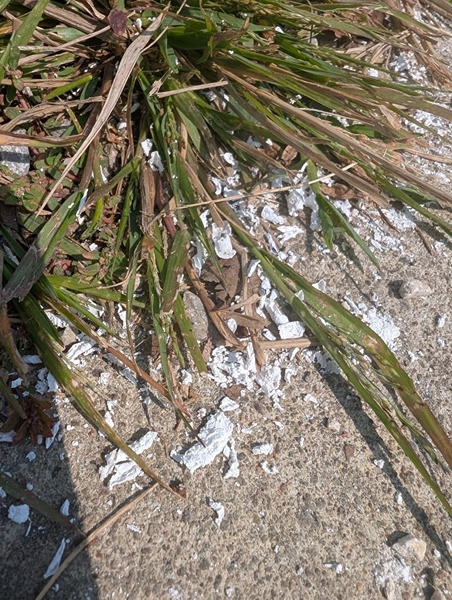 Paul also connected with row crop farmers through the Warrick County Farm Bureau. The fire and ash had come in the middle of harvest time. She created an option for Newburgh farmers to test their grain and beans for toxicity, making an opportunity to reassure the market that their crop was safe to sell to other communities.
None of this would have been possible without Purdue Extension’s network. Sheldon said, “First thing I did was reach out to EDEN contacts. They gave us some of our earliest resources. Then, we connected Abby to her counterpart in Columbiana County, Ohio, where the East Palestine train derailment happened and released toxic chemicals into the land, air and water a couple of years ago.”
Of what chemicals and materials have been identified in Newburgh, Paul and her community were relieved to learn from the EPA that nothing was as toxic as they had originally feared. Residents cleaned their cars and drove to work. Gardeners returned to pulling weeds. Farmers harvested their corn and soybeans, and cows returned to pasture.
Fires aren’t the only crisis that IN-PREP and EDEN handle. The Hoosier summer has brought severe thunderstorms, tornados and heat waves that pose challenges to infrastructure, farms and people alike. On its website, IN-PREP provides instructions for assembling go-bags to prepare for severe weather and how to prevent heat stroke when working outside when it's beyond 90 degrees.
When communities turn to Extension educators for guidance in emergency situations, Extension educators know they can work with and turn to EDEN partners.
Featured Stories

Alisa Tilson (BS '96, Natural Resources and Environmental Science) works for CDOT’s...
Behind every jar of honey is a fascinating story of pollination, research, and hands-on learning....

Maksym Chepeliev, a leading international scholar recognized prominently for his work in...

In recent years attendees at Purdue Agriculture alumni, donor, and faculty and staff events have...

People think grass is simple. Lawns, right? Mow regularly and add some water and fertilizer. What...

The Office of Indiana State Chemist (OISC) is warning Indiana residents about an illegal...