

Gurevitch Explores Science Questions, Environment, Earth System in New Book
Dr. Jessica Gurevitch invites readers into a deeper understanding of the Earth system and its living inhabitants, whose beauty, complexity, and resilience are revealed across space and time in her new book, Life On Our Dynamic Planet.
Title: Life On Our Dynamic Planet: Earth's Past, Present and Future
Authors: Dr. Jessica Gurevitch, Kevin A Reed and Peter M. Groffman
Publisher: Oxford University Press
Publication Date: July 29, 2026
About the Book (From the Publisher)
A storm rolls in, bringing needed rain or catastrophic losses. How does it gather the winds and water that either nurture or kill? Why is the Atacama the driest place on Earth? Why do seasons change, what causes rainbows to appear, and why do some places support rainforests and other places vast plains? How does the living world shape the planet on which it depends? The answers are part of a much larger story—the story of Earth as a dynamic, interconnected system. With clarity, insight, and wonder, readers are invited into a deeper understanding of the Earth system and its living inhabitants, whose beauty, complexity, and resilience are revealed across space and time.
Written for a general audience, Life on Our Dynamic Planet takes readers on a journey through the forces that shape our world, revealing how sunlight, our fluid atmosphere, the depths of our planet’s core, its oceans, climate, and living organisms are interlaced to create the astonishing diversity of life and environments on Earth. From the formation of clouds and glaciers to the rhythms of monsoons and the hidden colors that guide pollinators, the book uncovers the science behind both everyday wonders and extraordinary natural events. But people are not left out of the stories told, from how our rotating planet created the conditions that made the evils of the Atlantic slave trade possible, to the name of the scientist engraved on the Eiffel tower whose theories helped us understand these Earth system patterns.
Richly illustrated and engagingly written, Life on Our Dynamic Planet transforms familiar sights into sources of discovery and reveals the hidden processes that connect all living things to the Earth we call home.
This book explores how the atmosphere, oceans, landforms and the position and movement of our beautiful planet create much of the familiar world that we know and experience. In an accessible and inviting manner, it presents basic explanations for how the dynamic and interconnected land-ocean-atmosphere system creates weather and climate on Earth, and how this interacts with the rich biological world, as they form and shape one another. The approach is engaging, and although at times it may dive deeply into an explanation, it is most definitely not a technical treatise or textbook. There are concise and interesting explanations of fundamental patterns, such as why it is warm, wet and humid in the tropics, hot and arid in Death Valley and the center of Australia, and cool and rainy in Dublin and Seattle. The book outlines what causes the seasons, blue skies and hurricanes, how clouds are formed and why it rains sometimes—and at other times, it fails to rain. There are some interesting digressions and many photos and illustrations. This basic understanding of our planet is something everyone should—and can—understand. The concepts here are fundamental to our everyday lives and will enable the reader to better understand Earth—the home we live on with our fellow humans and the rest of the living world.
Table of Contents:
- Introduction: What should you expect from this book?
- The seasons: Vivaldi didn't know the half of it
- Why the Sahara is dry, the Atacama is really, really dry, and how Columbus got to the Americas
- Why Earth is great for biodiversity and vice-versa
- Soils: The earth beneath your feet and in your bones
- Deserts, rainforests and taiga, oh my!
- Carbon: Where life and climate intersect most intimately
- Heat, cold and water
- Adaptation
- Light and color: Life is not all rainbows (and never mind about unicorns)
- Clouds: Rows and flows of angels' hair
- The mighty polar jet streams and their consequences
- Extreme events: Tropical cyclones, tornados and droughts
- The long and short of it: Changes in Earth's climate: past, present and future
About the Purdue Author
Jessica Gurevitch is a Distinguished Professor and Dean’s Research Fellow in the Department of Forestry and Natural Resources. Her interdisciplinary research is focused on climate change the ecological implications of climate intervention to reduce the impacts of global warming, as well as comprehensive synthesis of ecological data with systematic reviews and meta-analysis. Gurevitch has published six other books and more than 100 peer-reviewed manuscripts.
Featured Stories

Zhao Ma started her academic path pursuing a degree in material physics from the University of...
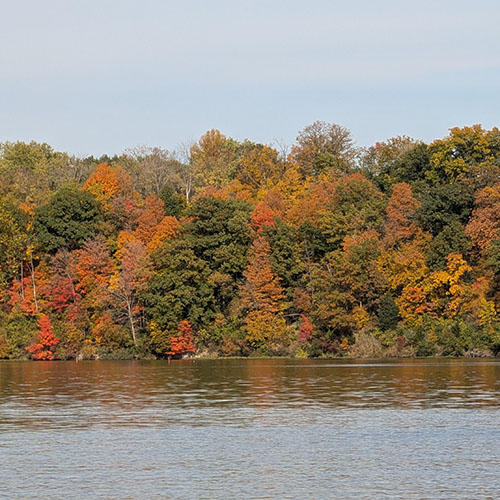
Do you have a favorite place, species, landscape or natural phenomenon in Indiana? Share it with...
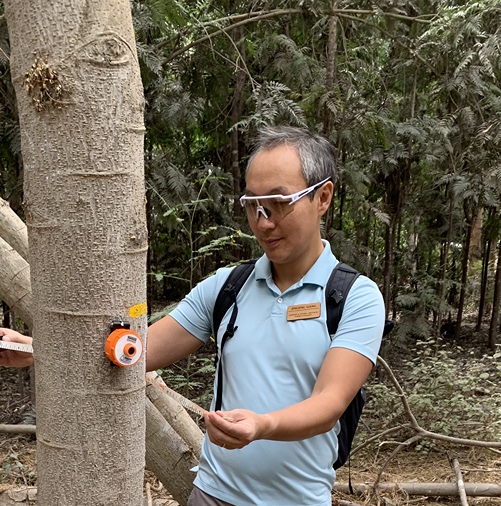
The U.S. Forest Service invested decades of work and tens of millions of dollars to develop a...
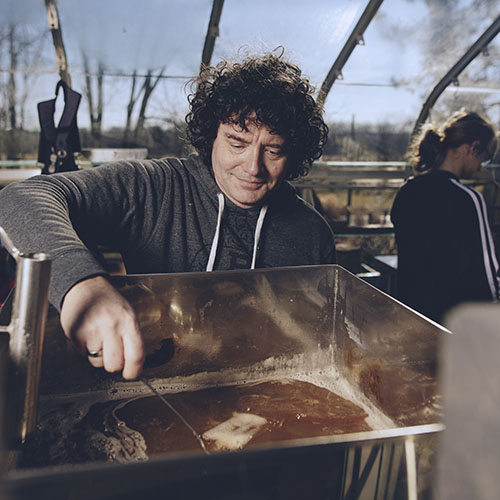
Researchers are working to scale up the green production of maple syrup in the Central Hardwood...

For her contributions to and impact on wildlife management in the state of Indiana, Geriann...
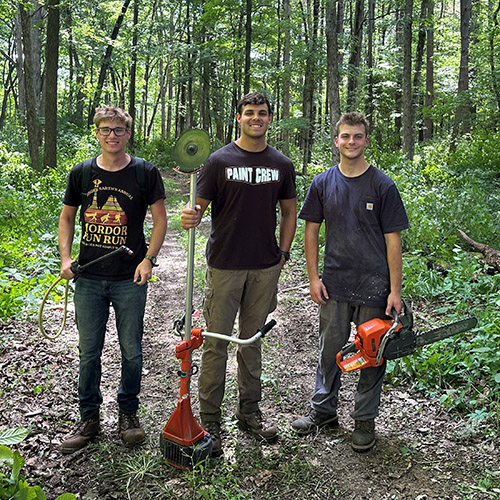
Senior Isaac Johnson, a forestry major with a concentration in forest management, worked as an...