

Meet Dean Zimmerman: 2025 Chase S. Osborn Award Winner
Although Dean Zimmerman (BS Wildlife 1971) retired in 2015 after spending 43 years with the Indiana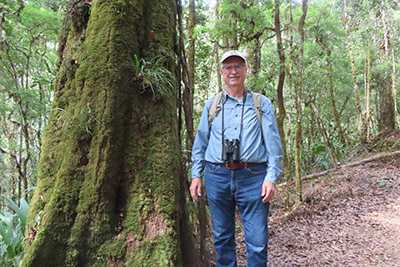 Department of Natural Resources Division of Fish and Wildlife, his contributions continue to shape wildlife conservation and education across the state.
Zimmerman should receive a tip of the cap from anyone who enjoys seeing wild turkeys across the landscape, as he was heavily involved in their reintroduction in the 1970s and ‘80s. The 2025 recipient of the Chase S. Osborn Award for Wildlife Conservation also founded the Indiana Chapter of The Wildlife Society’s continuing education program in 1992 and helped found the 4H and FFA Wildlife Habitat Education Program in 1997.
“I am honored to be nominated and selected for the Chase S. Osborn Award,” Zimmerman said. “I am very grateful for this recognition. I didn’t work hard throughout my career for an award, but the recognition is nice and encouraging. I am humbled when I consider how many students Purdue has turned out that majored in wildlife science or management over the years that are deserving of recognition as well. I am honored that Purdue Extension wildlife specialist Brian McGowan saw fit to nominate me.”
The Chase S. Osborn Award for Wildlife Conservation recognizes significant contributions to wildlife conservation in Indiana through research, teaching, writing or other personal accomplishments. It has been awarded 40 times since its creation in 1953.
Zimmerman, who grew up in rural Albion, Indiana, pheasant hunting and hanging out in the woods whenever he could, began his successful career in the wildlife field with a different goal in mind.
“I started out wanting to be a veterinarian,” Zimmerman recalled. “But, when it was my turn to see the guidance counselor and I told him that, he said, ‘well, I hate to break it to you, but you have to be a straight A student to get into vet school, so you need to be thinking about something else.’ We looked over some materials, and information about a wildlife biologist popped up. I wasn’t really aware of that career before that, so that became my focus. Then, as time went on, and it came time to select a college, Purdue was the only school at that time that had a degree in wildlife science or management, so that solved that issue.”
Zimmerman came to West Lafayette in the fall of 1967, wore a green beanie as all freshmen did and participated in rope pulls, basketball and ping pong tournaments and other dorm-life traditions.
“I led a relatively sheltered life and when I got down to Purdue, I was amazed by the physical size of the campus and the number of students that were here, but I figured things out,” he shared. “Things started to change in the fall of 1968 and there was a falling away of traditions like the beanies and the participation in hazing and intramurals and dorm activities.”
In class, he met some of the most influential people in the wildlife field at the time, faculty members Drs. Charles Kirkpatrick, Russ Mumford and Durward Allen.
“I had all of them as instructors and once I had to do an interview with Dean Pfendler, which was intimidating,” Zimmerman noted. “Dr. Kirkpatrick was my guidance counselor and I grew to admire him. He was a grad student at the University of Wisconsin at the time Aldo Leopold was there and that was rather impressive. At Dr. Kirkpatrick’s urging, I joined the national chapter of The Wildlife Society in 1968, a professional organization for wildlife biologists, and continue to be a member to this day. Dr. Kirkpatrick also helped me get a job at the U.S. Forest Service in the summer of 1969 as a lookout on a fire tower. It was on top of a mountain in Idaho and I had never been west of Chicago. It was quite an experience to see the mountains out west. My eyes kept getting opened to life in general, which pretty much sums up my impression of Purdue.”
Life came full circle for Zimmerman years later, when Mumford came to a talk he gave on large predators in Indiana.
“He came up to me afterwards and said it was interesting ‘being the student of one of my students.’ He was a very good, humble man,” Zimmerman shared.
He also followed in the footsteps of his mentors, earning the Hoosier Wildlife Award from the Indiana Chapter of the Wildlife Society in 1999, following Mumford (1996) and Kirkpatrick (1974).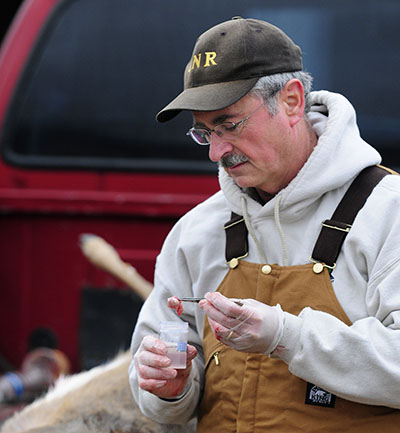
Zimmerman never wavered from his goal of becoming a wildlife biologist with a state agency. He gained hands-on experience with the student chapter of The Wildlife Society, volunteering for deer check stations and through his Forest Service position. Between his junior and senior years, he worked at the Pigeon River Fish and Wildlife Area, trapping and banding mourning doves, woodcock and ducks and contributing to a woodcock study.
“We did line transects and recorded the vegetation, evaluating habitat,” he said. “We were trying to document what kinds of areas, habitat-wise, the woodcock preferred to feed in and to loaf in. At the end of the summer, my buddy and I wrote a report on that.”
After graduating in the spring of 1971, Zimmerman was hired by the Indiana Division of Fish and Wildlife for a naturalist aid position at Jasper Pulaski Fish and Wildlife Area. He joined the Indiana chapter of The Wildlife Society that year. He became the chapter’s president in 1992.
As a naturalist aide, or research assistant, Zimmerman’s job alongside a colleague was to trap and ear tag raccoons, and band wood ducks, woodcock and mourning doves. When the position ended, the property manager offered Zimmerman the opportunity to stick around as a laborer after the summer and do ‘cool stuff.’
“I started that and about a month later, a state wildlife supervisor came by and said, ‘I have a district biologist position open, would you be interested in that?’” Zimmerman recalled. “He essentially offered me the job, no interview or anything. I said, ‘well, what does a district biologist do?’ He told me ‘we give presentations, do radio programs, write articles for the newspaper and generally public relations work.’ I thought, ‘man I hate getting up in front of people and talking and doing all of that stuff, but I would be a fool to turn the job down,’ so I agreed to it.
“I started in the fall of 1971. The first 10 years there was a strong emphasis on public relations, trying to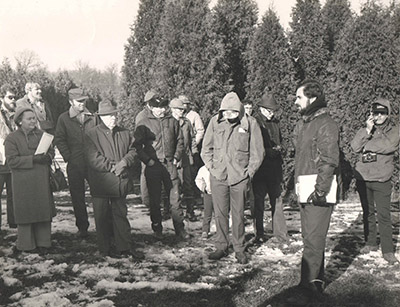 educate the public on wildlife needs and who to contact for information, etc. I had radio programs going in Monticello, in Greencastle and two in Crawfordsville, including a four-and-half minute weekly wildlife related program on a farm show on WCVL for 25 years. I gave a lot of talks and I even gave a presentation to a preschool one time, believe it or not. Habitat development was another area of emphasis.”
To begin with, Zimmerman mainly worked with farmers and large landowners. However, in the late 1970s, as farming transitioned to larger fields, fence rows were pulled out and farms geared up for production, habitat was lost bringing a gradual transition to more work with non-farming landowners. Federal programs were introduced through the USDA to implement wildlife-friendly practices started on private lands.
“I was like a free public consultant,” Zimmerman said. “I could come out and make suggestions on what you could do with a property based on landowner interests, the layout of the land, the topography and what type of habitat was currently there. I could tell you what to plant and where to get it and what programs you could use to pay for it. One of our mantras was that since 96 or 97 percent of the land in Indiana was privately owned, if we were going to have any effect on wildlife, we had to reach private landowners. Improving the habitat for whatever purpose the landowner wanted was a large part of what I did.”
In addition, he spent his time doing federal and state surveys of everything from deer to pheasants, quail, river otters and great blue heron rookeries.
In the late 1970s, Indiana traded some of its ruffed grouse to Missouri in exchange for wild turkeys, three grouse for every one wild turkey, in order to restore wild turkeys to the state for the first time since 1890.
“That program was initiated and I was asked to go out and locate potential release sites after being advised what the turkey biologist was looking for,” Zimmerman stated. “I contacted landowners and got permission to make releases on their properties. I then went to the Purdue or Indianapolis Airport and picked up the turkeys in boxes and hauled them in the back of my pickup for a formal release. We would release 12 at a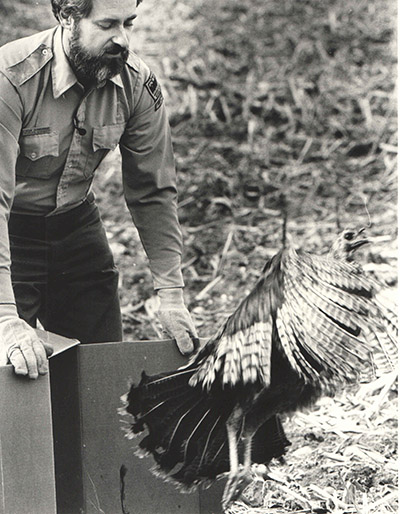 time, nine hens and three gobblers. I would contact the local news media and tell them we would be out there making a release to show what the Division of Fish and Wildlife was doing in Indiana. Then, the population took off. We started wanting to trap our own birds so we didn’t have to trade with Missouri.”
Zimmerman located larger groups of turkeys, secured landowner permission to trap them, caught them with cannon nets, boxed them up and got them ready for biologists in other districts to release around the state.
“It was very rewarding,” Zimmerman said. “We have wild turkeys in every county in the state now and hunting season statewide for them. There is a lot of recreation being provided to hunters and a lot of good viewing by birders and the average person now. Turkeys are now like white tailed deer. You see them often, but it is still cool to look over and say ‘oh, there’s a deer or wild turkey or bald eagle,’ and know you were a significant part of that.”
White-tailed deer management also was a large part of Zimmerman’s responsibilities over the years. Significant growth in the state’s deer herd resulted in crop damage leading him to advocate for population control. He served on the deer management, wildlife damage management and rule revision committees and advised on and helped create doe quotas for different counties. In addition, he collected samples for epizootic hemorrhagic disease and chronic wasting disease for testing.
Dating back to his early days sharing an office with the state pheasant biologist, Zimmerman assisted with the management of that species as well. One of his most vivid memories is of helping his colleague tag pheasants with radio transmitters via a now-retired technique.
“In the early days, we had really good pheasant populations in Indiana,” he said. “I would go out and help my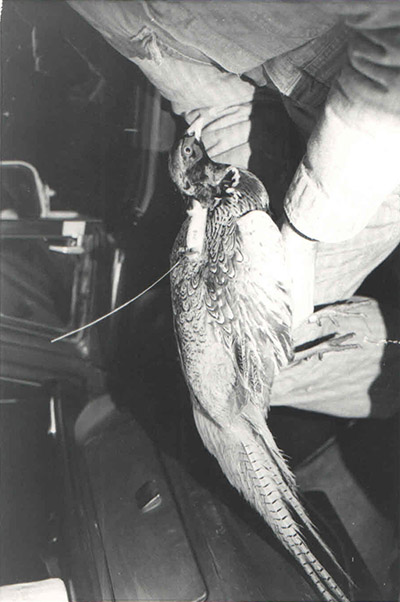 office partner with various projects. He had a pickup truck with a seat mounted on the front bumper. We would get permission from the landowners, go out at night and drive through grassy fields. When the pheasants got up and flew, while in pursuit, he would turn a big spotlight on the bird and then turn it on and off. When the spotlight its out, the pheasants can’t see and the birds go down. I would then jump off the front bumper and use a big hoop net on a long pole and net the pheasants so we could band them and put radio transmitters on them. Things have changed in 40 years, though. But we continued to have hunter bag checks and I ran pheasant crow counts to help determine population density. We also had a pheasant sex ratio count, where we counted how many hens and roosters were in a flock of pheasants, which helped us be able to set seasons later on.”
In 1992, Zimmerman started the Indiana chapter of The Wildlife Society’s continuing education program. The next year he began serving as the committee’s chairman, through which he planned a workshop yearly until his retirement in 2015. He also was part of the TWS Wildlife Damage Management group at the national level for several years.
In 1997, Zimmerman, some DNR colleagues and Purdue staff brought the 4-H and FFA Wildlife Habitat Education Program (WHEP) to Indiana. The program continues to this day and he has actively helped plan state and regional contests even in his retirement.
“In 1997, Brian Miller, a former Purdue wildlife staff specialist, and I, along with five other DNR colleagues and Purdue staff, met with the guy who headed WHEP in Kentucky and learned about it and decided it was something we wanted to go for,” Zimmerman recalled. “I was a 10-year 4-H member and fond of 4-H and wildlife as well, so I thought it was a win-win. We started the program in Indiana. At first it was just 4-H, but then FFA wanted to be involved and use the program for their skill program for wildlife. We started out with just state contests and then we went to three regional contests because of the increase in popularity of the program. One aspect of the program is to write a wildlife management plan and another is testing on wildlife identification and life history.
“The program’s purpose was to stimulate an interest in wildlife and providing habitat for wildlife and what that habitat looks like. It has been encouraging to see how enthused the high school students involved in this contest have been and the growing demand for it.”
Zimmerman has acted as a mentor for several laborers and summer naturalist aides over the years. He says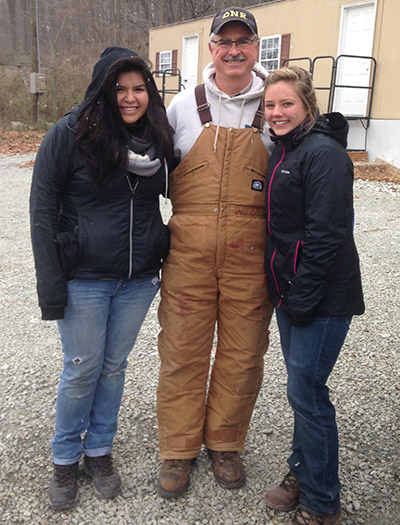 seeing them succeed has been gratifying. That list included: Mark Ryder, who went on to be the director of the Division of Fish and Wildlife; Gary Langell, a former biologist aide who became the head of private lands programs in the state; Steve Siscoe, who is a property manager for the Division of Forestry in southern Indiana; and Jim Kershaw, who was in the central office of the Division of Fish and Wildlife.
With his office in West Lafayette and through many relationships at Purdue, Zimmerman also has mentored FNR students through the co-op program and the student chapter of The Wildlife Society. He was the Division of Fish and Wildlife’s coordinator for the Purdue Co-Op program, working with Dr. W.L. Mills and interviewing students. He also hosted student hunting workshops and gave presentations to TWS students.
“I always enjoyed college aged students,” Zimmerman noted. “I talked about district biologist positions or about turkey reintroductions. I also worked with the hunting committee of TWS to involve students that had never been hunting before or maybe even fired a firearm. I have 12 acres, so I would invite them to go squirrel hunting at my place. We would talk about firearm safety and hunting and whatnot and then they got to go out and hunt.”
Throughout his career, Zimmerman maintained good relationships with FNR faculty and staff, from Herb Krauch, Ed Lott and Bill Fix in the early days to Brian Miller and later Brian McGowan and Jarred Brooke on the Wildlife Habitat Education program and on various field days. He also worked with Dr. Harvey Holt on a Division of Fish and Wildlife publication on the use of herbicides in establishing tree and shrub plantings.
For all of his efforts in the state, Zimmerman has earned a variety of awards and honors, the Indiana Furtakers Appreciation Award (1984), the Indiana Chapter of the Wild Turkey Federation’s Appreciation Award (1985), the Hoosier Wildlife Award presented by Indiana TWS (1999) and the Indiana Governor’s Long-Term Service Award in both 2011 (35 years) and 2015 (40 years).
“I think I was the first actively employed individual within the DNR to receive the Hoosier Wildlife Award,” Zimmerman said. “It was very special to receive that award and be recognized. It was primarily for starting the continuing education program within the Indiana chapter of The Wildlife Society. I think we have done a huge amount of good with that. I feel good that 25-30 people a year have benefited from the different workshops over the years. I’ve always tried to be a lifelong learner myself and I think that continuing to learn is a really important aspect of our lives.”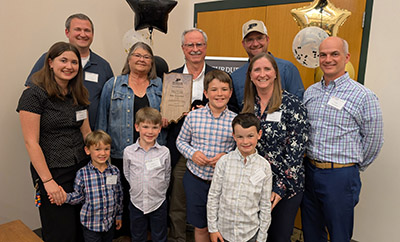
Although he retired from the DNR in 2015, Zimmerman remained involved in the WHEP program until 2024. He still tries to attend at least one meeting of the Indiana chapter of The Wildlife Society per year to see old coworkers and be an encouragement to newcomers. He also was a 15-year member of the Tipmont REMC EnviroWatts program board, which awarded grants to nonprofits for habitat related or energy saving projects.
With more than 40 years of working knowledge to contribute, his advice to those who might follow in his footsteps is simple, be patient, get to know the people and never stop learning.
“We went through a period where there were very few jobs,” he shared. “A lot of people started out as laborers and worked two, three or four years at a property before they were hired in a permanent, full-time biologist position. So, number one, be patient and continue to work toward your career goals. Get to know the people in your field. Stop by and say hello to the people in the Fish and Wildlife offices and meet the non-game and wildlife research people. Talk to them and show interest. And lastly, be a life-long learner. You can always learn something. My grandson recently taught me something about a platypus that he learned from Wild Kratts, the cartoon show.”
Dean and his wife enjoy birding and take several trips a year across the country, and even to Costa Rica, pursuing the hobby. He also gardens, supporting local pollinators with his zinnia patch.
Featured Stories

Zhao Ma started her academic path pursuing a degree in material physics from the University of...
Do you have a favorite place, species, landscape or natural phenomenon in Indiana? Share it with...
The U.S. Forest Service invested decades of work and tens of millions of dollars to develop a...
Researchers are working to scale up the green production of maple syrup in the Central Hardwood...
For her contributions to and impact on wildlife management in the state of Indiana, Geriann...
Senior Isaac Johnson, a forestry major with a concentration in forest management, worked as an...