

Fulbright Scholars take Purdue Ag research to India, Australia
For Krishna Nemali and Stephen Meyers, both associate professors in the Department of Horticulture and Landscape Architecture, their Fulbright Fellowships provided opportunities to extend their research into new environments while building relationships with international students, faculty members and institutions.
Both scholars returned to Purdue with new perspectives, research questions and international partnerships.
Krishna Nemali: Developing low-cost digital agriculture across the globe
Nemali’s Fulbright experience brought his digital agriculture research to India, where he spent five months at G.B. Pant University of Agriculture and Technology (GBPUAT), India’s first agricultural university. 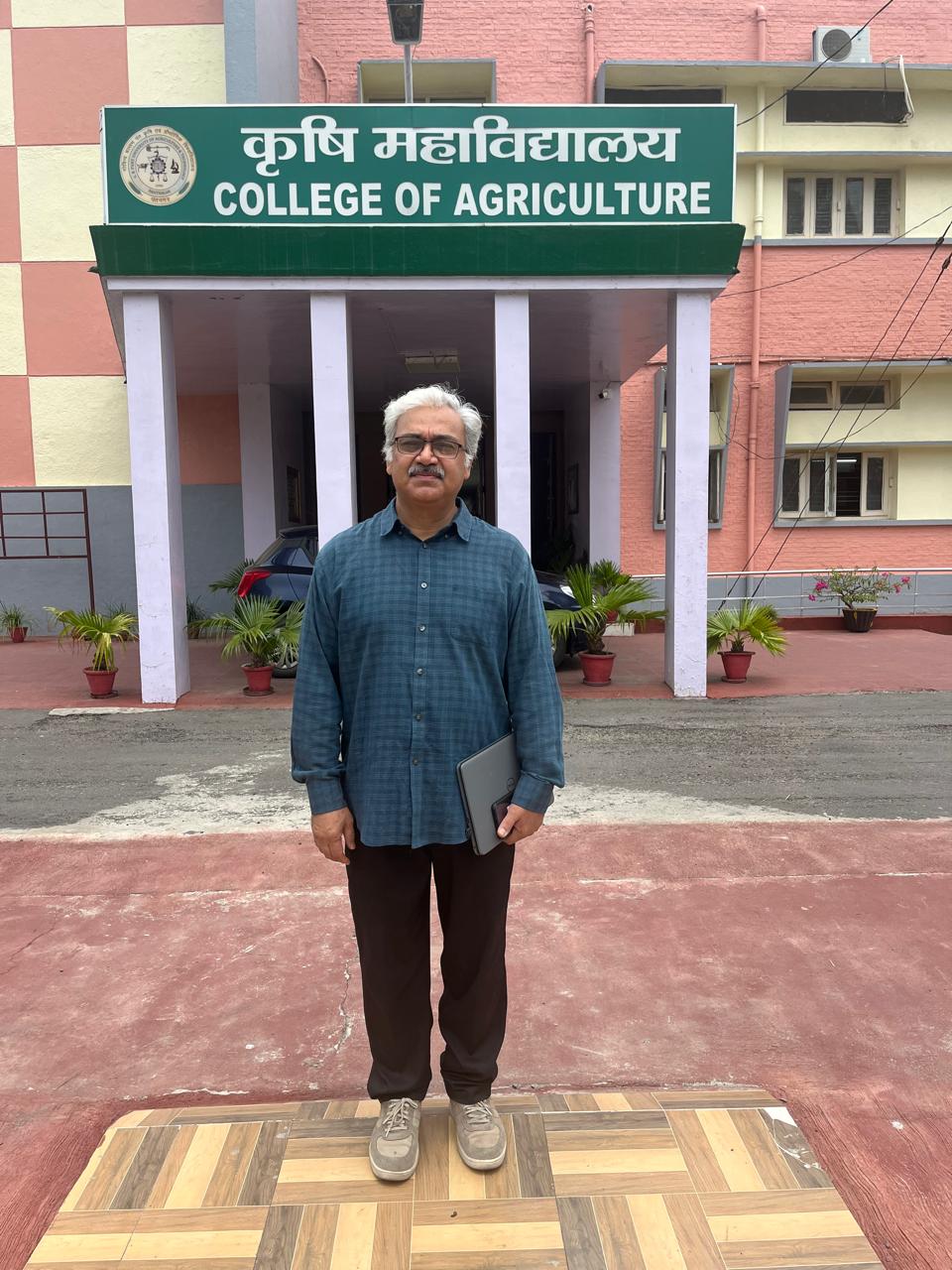 He was selected for the Fulbright Nehru Fellowship for Excellence in Research and Teaching, a program supported by both the government of India and the U.S. Congress.
“GBPUAT was the harbinger of the Green Revolution in India, and because of the Green Revolution, India’s crop yields increased significantly, allowing the country to feed the growing population,” Nemali said. “With the university being historically important and my previous collaborations with the horticulture department, I was thrilled to conduct research to determine the impact of digital technologies, not just for agriculture in India, but in the U.S. as well.”
His research at Purdue focuses on developing low-cost and IoT-based digital technologies — normal physical objects with small computer chips and sensors inside them — that can help farmers make more precise decisions about crop management. Digital agriculture technologies can be expensive or complicated, limiting their adoption. Nemali seeks to develop accessible systems that can help determine when crops need water or nitrogen.
Traveling to India provided an opportunity to test those technologies in a different agricultural context.
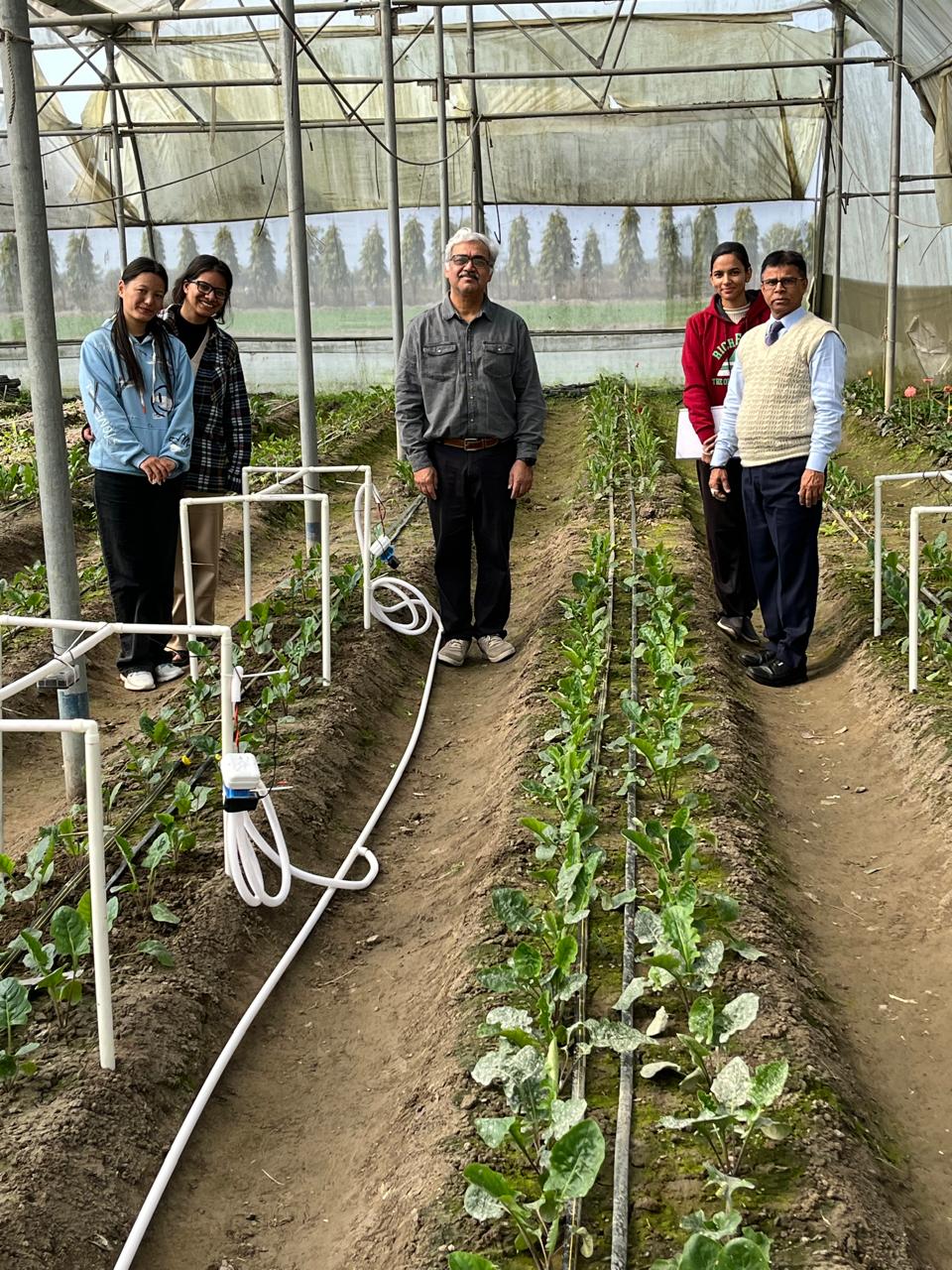 Nemali and students involved in the project.
 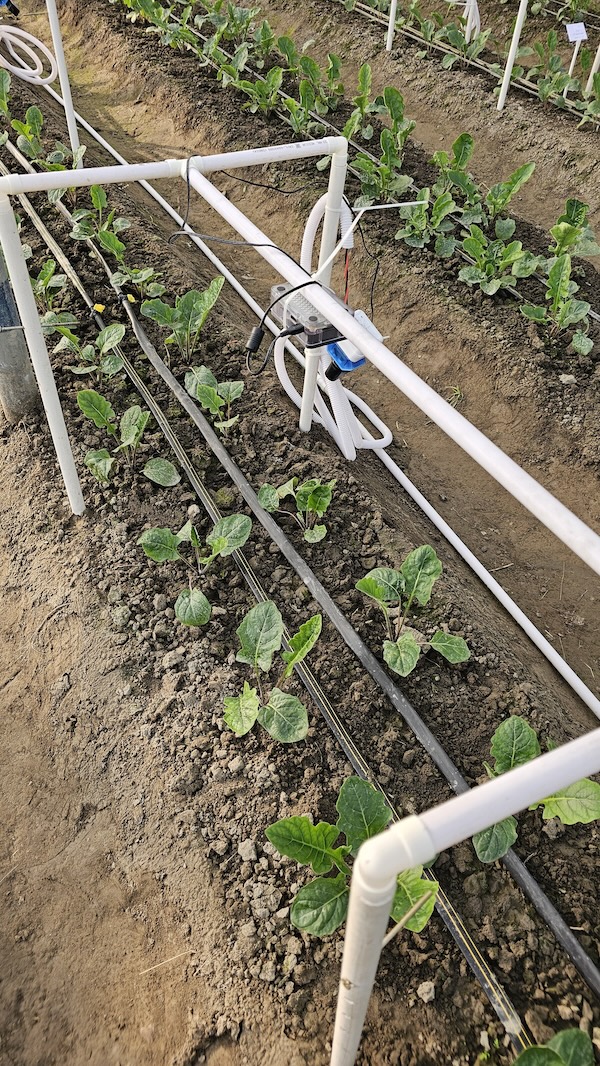 Purdue University-developed technology being tested at the GBPUAT research site.
 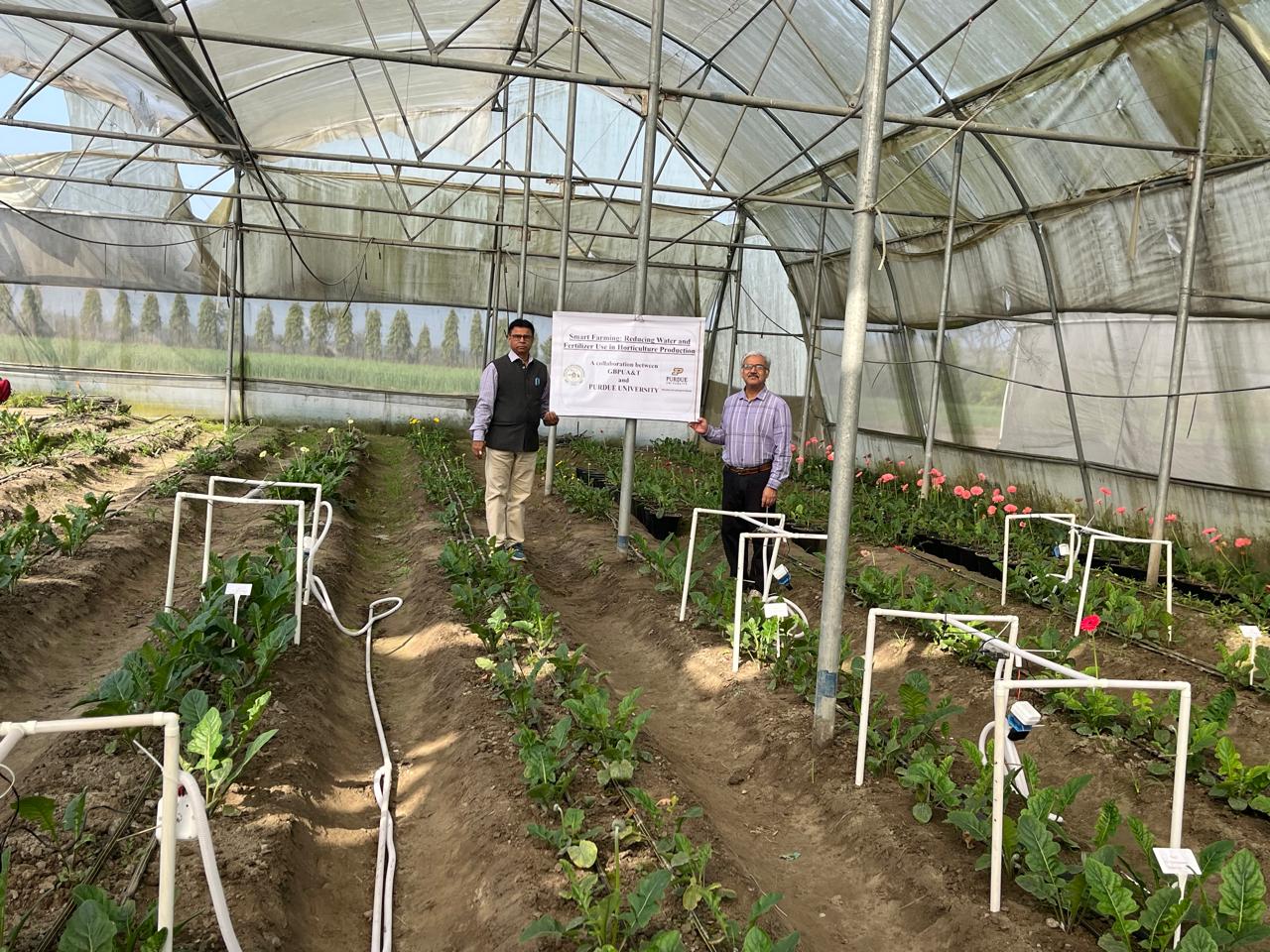 Collaborating with GBPUAT to test smart farming practices — aiming to reduce water and fertilizer use in horticulture production.
 Working with the United States-India Educational Foundation team, Nemali was able to connect with faculty and graduate students at GBPUAT to conduct pilot research in floricultural crops — flowering and ornamental plants — with the goal of evaluating whether technology could help reduce water and nitrogen use. The technology uses images of plants to determine whether irrigation is needed, allowing farmers to respond to plant needs rather than following a fixed watering schedule.
“If you look at India, it is a major ag-dependent country, with around half of the population still somewhat related to agriculture,” Nemali said. “The problem is overpopulation and over-exploitation of resources, which can be a huge challenge considering water levels are falling. This challenge is only going to get bigger in the coming decades due to changes in temperatures and the global climate."
With our technology, we hope to educate farmers when to water plants rather than using timed schedule.”
- Krishna Nemali
This same approach can help determine when plants require nitrogen, potentially reducing unnecessary fertilizer applications and their environmental impacts.
“At the same time, this technology we’re creating at Purdue can help protect the environment,” Nemali said. “Applications of excess nitrogen not only cause increased levels of nitrate in drinking water, but also release nitrous oxide, a potent greenhouse gas.”
For Nemali, testing the technology outside of the U.S. was one of the most valuable aspects of the fellowship.
Although we have developed this technology in the United States, I wanted to put this in a real-world situation and test it on a different platform to make improvements,” he said.
- Krishna Nemali
During Nemali’s five-month fellowship, he developed relationships with researchers at two universities, establishing an agreement to continue this research and collaborate. Additionally, four PhD students from GBPUAT will continue working on this project remotely, under Nemali’s guidance.
Connecting research through teaching and outreach
Research was only one part of Nemali’s Fulbright experience.
At Purdue, Nemali teaches a course on sensors and automation in horticultural crop production. During his fellowship, he developed a three-week intensive version of the course for PhD students. About 40 students from three colleges enrolled. They were also interested in research methods, so Nemali expanded his teaching beyond his original course and discussed conducting research, analyzing data, presenting seminars and publishing papers.
He also shared his research directly with farmers, participating in workshops and a large agricultural exhibition where thousands of farmers visited the university.
With many people seeing the value of my work, my goal is to connect with more students and faculty in the coming years so we can continue this research, learn from it, publish it and apply for additional grants for further research."
- Krishna Nemali
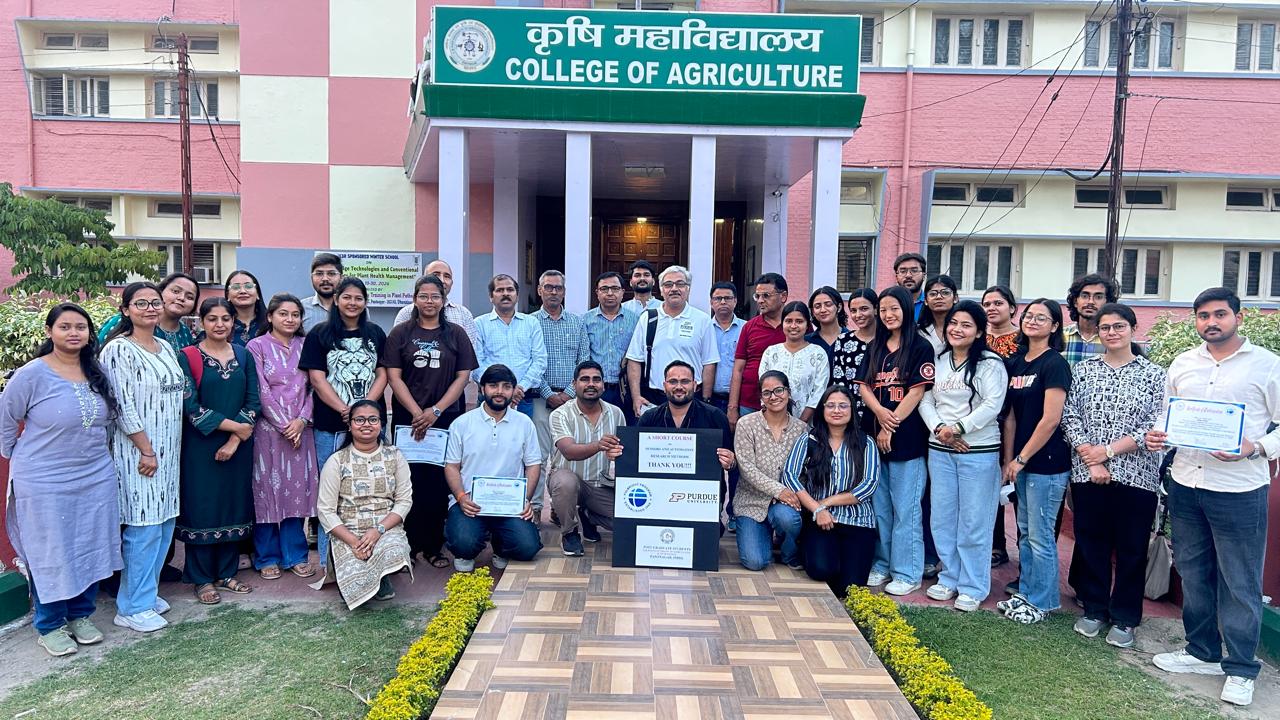 Nemali and students involved in the project outside of GBPUAT.
 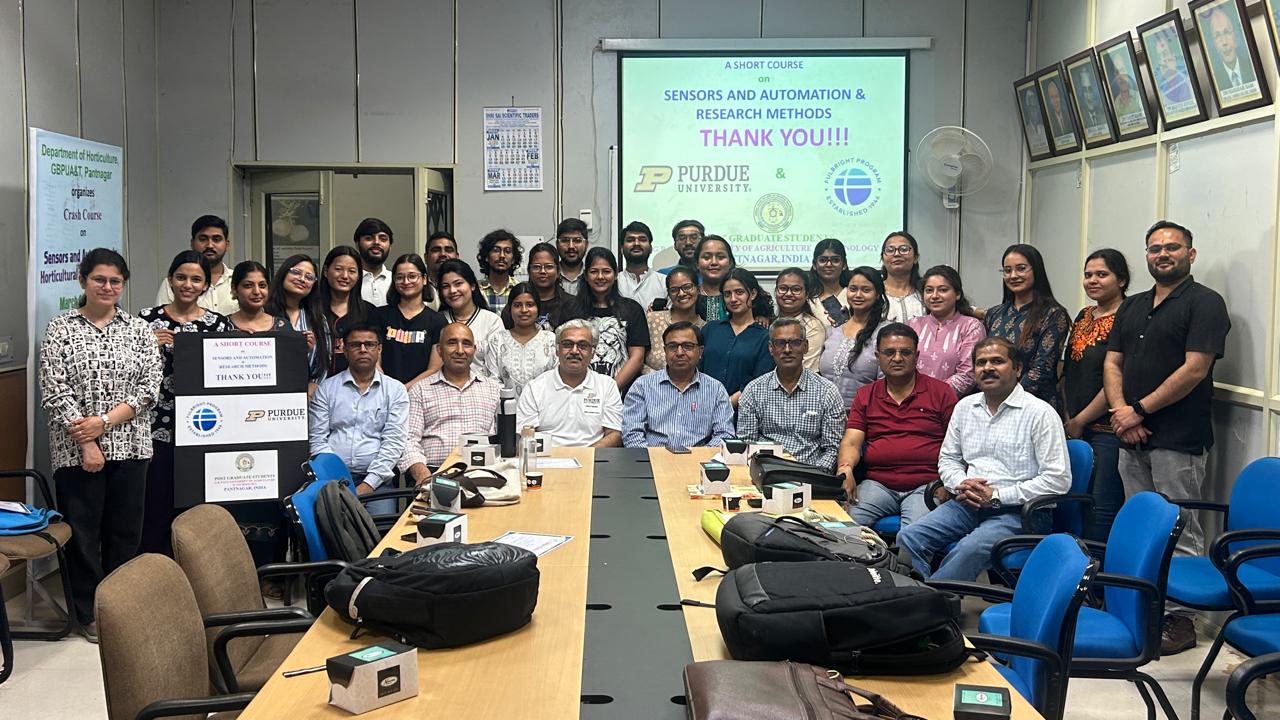 Nemali with MS and PhD students who took his short course, "Sensors and Automation & Research Methods."
 Stephen Meyers: Exploring new uses for black soldier fly frass
Meyer’s Fulbright Fellowship took him to Southern Cross University in Australia, a regional university in Lismore, New South Wales, a community of about 40,000 people. In 1949, the Fulbright program in Australia was established by the first official treaty between the U.S. and Australia, predating a military treaty by nearly two years.
“Being in a rural community, Southern Cross University has agriculture engraved in its mission,” Meyers said. “Because it is considerably smaller than Purdue, it offered a different environment for me to interact with colleagues and gain unique perspectives on my project.”
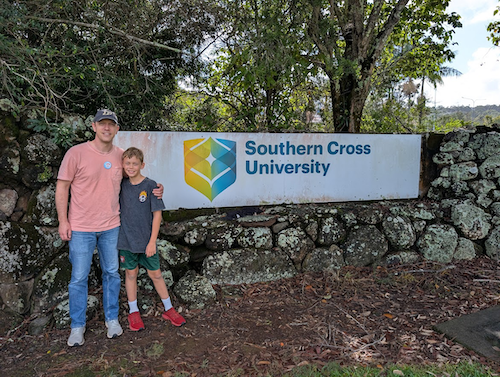 Stephen Meyers and his son pose at the Southern Cross University sign.
 Meyers worked primarily with Lachlan Yee, a polymer chemist, and Nigel Andrew, the university’s entomologist, to investigate whether black soldier fly frass — the material produced during the insects’ processing of organic waste — could have potential as a biological herbicide.
Over the course of four months, Meyers conducted greenhouse and growth-chamber experiments, evaluating black soldier fly frass tea on weeds and different crop species in Australia.
There’s not a lot of research in this area. The limited research available suggests that black soldier fly frass could have negative impacts on seed germination."
- Stephen Meyers
“Our research question was ‘Can we utilize the negative impact on germination as a way to suppress weed seeds?’ To test this, we used two different substrates — one that was food waste and another that was a standard fly-rearing diet — and fed it to black soldier fly larvae to see whether this generated different results," Meyers said.
This novel experiment revealed an unexpected difference: When fly larvae were included in the standard fly rearing diet, the resulting material appeared to be safer for the crop and weed species tested. Understanding why is a follow-up question that Meyers hopes to answer.
His interest in black soldier flies began several years earlier through work involving organic waste and small farms in Indiana. The insects can rapidly process waste, creating a potential way to upcycle organic material.
This research is fascinating because it promotes a zero-waste mentality, providing a waste stream — a way to upcycle organic waste into something more valuable. We can feed the larvae to livestock, then use the resulting frass as a soil amendment."
- Stephen Meyers
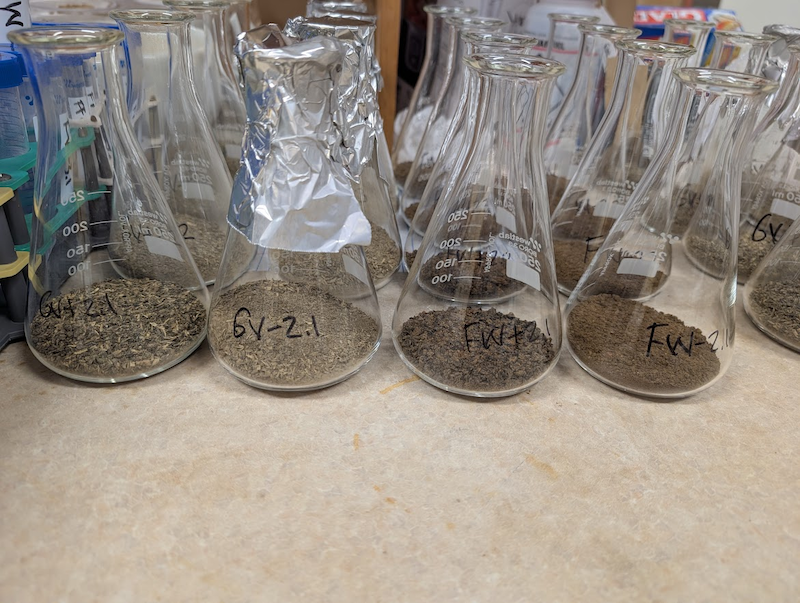 "Compost" samples after removing black soldier fly larvae and oven drying.
 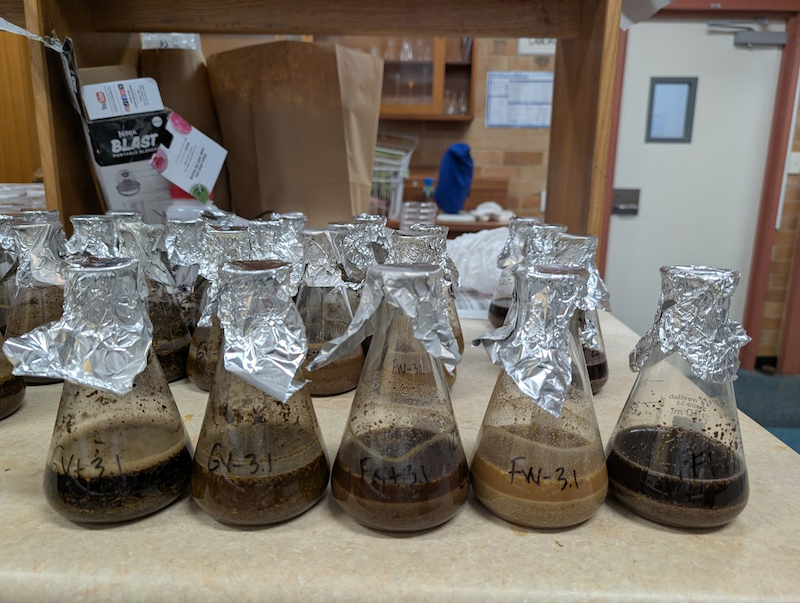 Water was added to each "compost" sample to make "tea."
 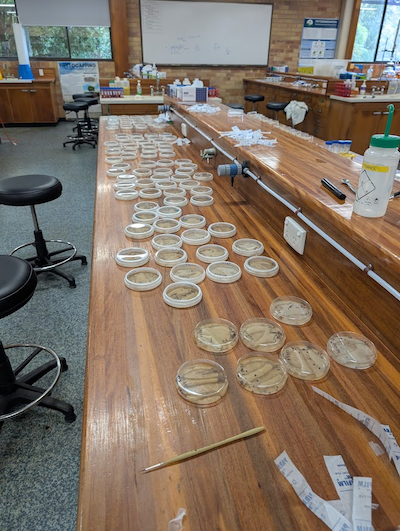 "Compost teas" were diluted and placed into petri dishes with different crop and weed species.
 The next stage of this research will focus on how frass can be applied safely to garden crops, and on a larger scale, how management practices can be developed for its safe use.
“We also need to dig into the chemistry of frass and frass tea,” Meyers said. “We have nutrient analysis and understand the salt content and the pH to give us a small picture, but that doesn’t give us a full sense of what we’re seeing.”
Moving forward, Meyers is particularly interested in whether microorganisms, including fungi and bacteria, contribute to the observed effects. He plans to move beyond the highly controlled conditions of Petri-dish experiments and determine whether the findings hold up in soil, where the biological environment is considerably more complex.
Research through a new cultural lens
Though research was an important component of Meyer’s fellowship, he emphasized that the experience was equally focused on cultural exchanges and communication.
From the Fulbright standpoint, it’s just as much or more about engaging with people from a different culture and sharing life experiences."
- Stephen Meyers
Meyers traveled to Australia with his family and experienced a part of the world that was previously unfamiliar to him. Rather than being stationed in a large city or the well-known Outback region, Meyers lived and worked in Lismore, a rainforest region of New South Wales.
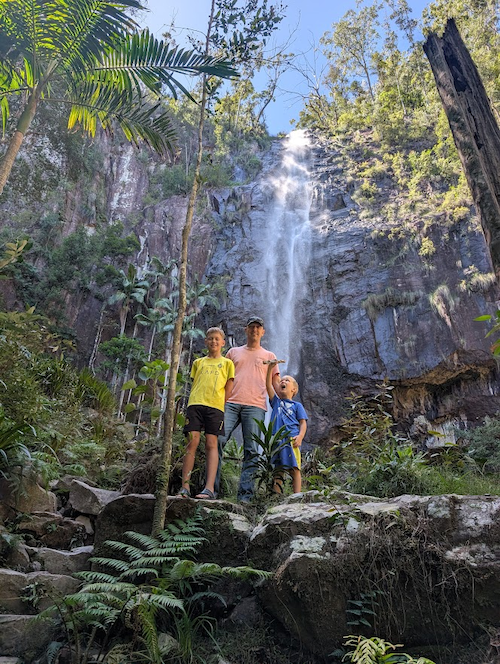 Meyers and his sons at Protesters Falls, Nightcap National Park, NSW.
 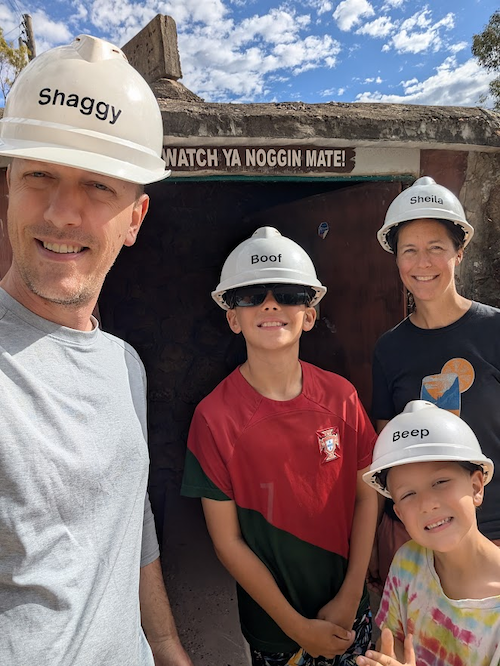 Meyers, his sons and wife at an opal mine in Lightning Ridge, NSW.
 Southern Cross University’s geographical and structural difference from Purdue became a valuable part of Meyers’ fellowship experience. Working alongside researchers with different disciplinary backgrounds encouraged him to approach black soldier flies from a new perspective, generating questions he can continue exploring beyond his time in Australia.
Featured Stories

For Brody Cox, preparing for the Indiana State Fair began long before he entered the show...
Carolyn Foley, a long-time member of the Purdue Forestry and Natural Resources (FNR) and...

In the September Purdue University/CME Group Ag Economy Barometer survey, 52% of respondents...
Purdue University’s College of Agriculture recognized nine alumni at the Distinguished...
Keep your eyes peeled across Indiana for the newly minted Purdue Forestry and Natural Resources...
“Being at Purdue has changed my thinking entirely,” says Mingyu Zhao, a third-year...