The death bloom of a century plant
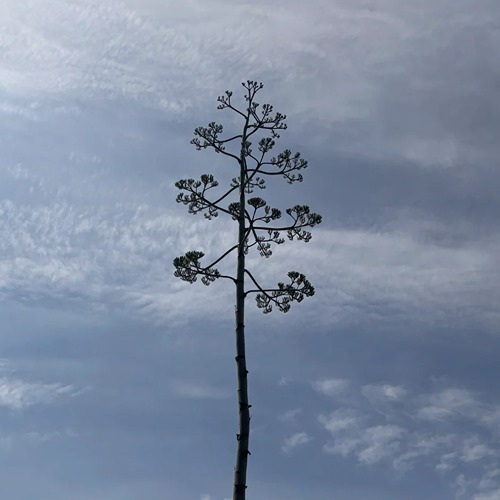
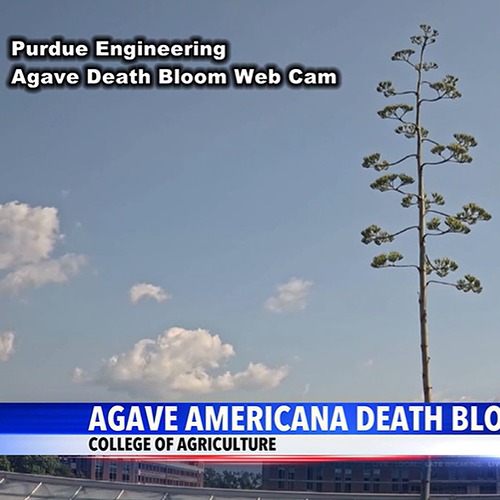
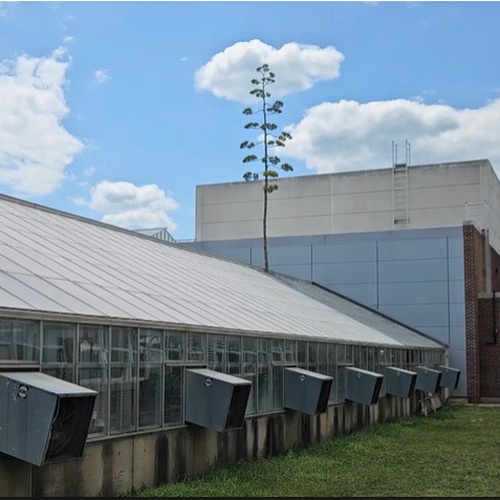
What has spine-lined leaves, a stalk like asparagus and flowered 26 feet over the Department of Botany and Plant Pathology’s teaching greenhouse? Alice, the Agave americana turning heads and making headlines at Purdue, drew in hundreds of people from across county and country to see her death bloom.
Teaching lab coordinator John Cavaletto and professor Scott McAdam share the science and stories behind botany and plant pathology’s Agave americana death bloom.
Agave americana: the century plant
Agave americana, also known as the century plant, has evolved for a dry desert life. It stores water in its heavy, waxy leaves and is monocarpic — meaning it expends resources to bloom only once its life. For 30 years, these succulents photosynthesize, grow and store sugar in their center, called the heart. Then a “death bloom” uses every last ounce of the energy, growing 6 to 8 inches a day, reaching up to 50 feet to grow hundreds of flowers in the sky — a feat that kills the mother plant.
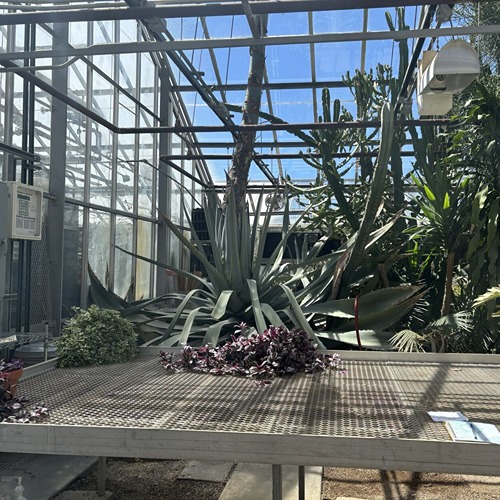
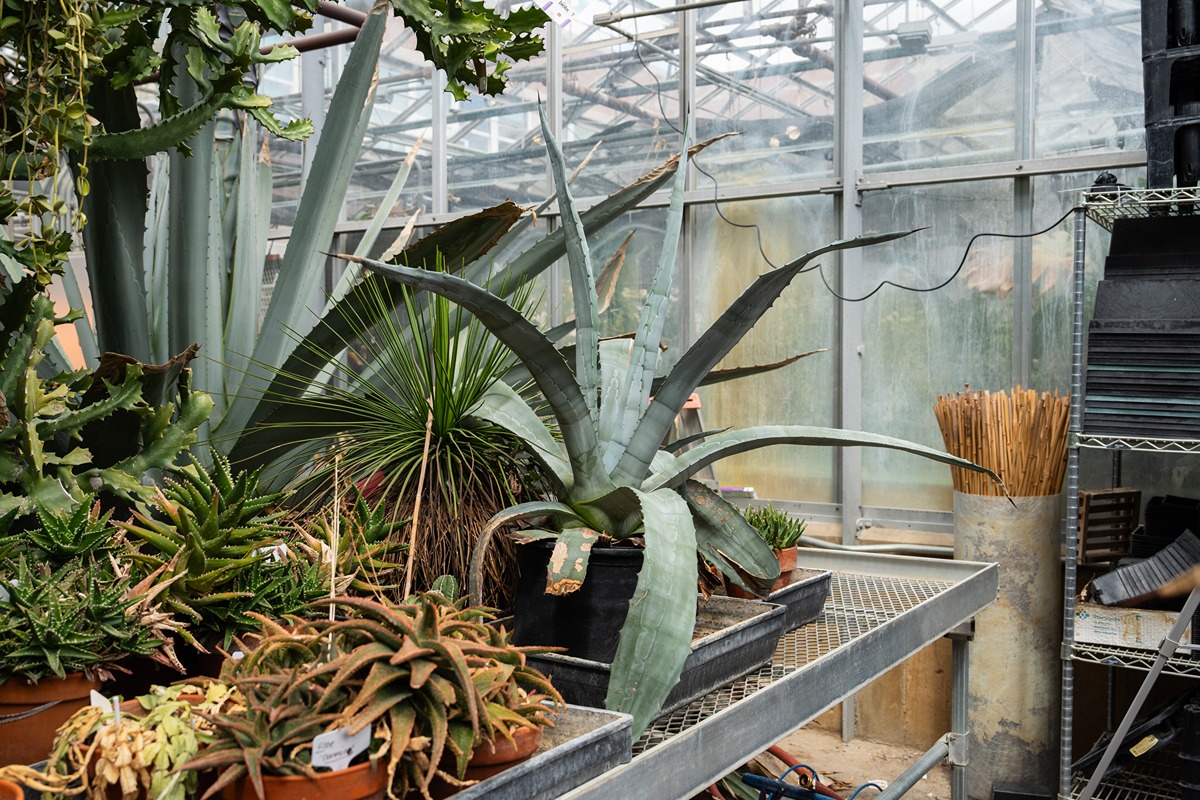
One recently bloomed through the roof of Botany and Plant Pathology’s teaching greenhouse in the Life Science Ranges and Plant Growth Facility south of Lilly Hall of Life Sciences.
“This plant has been at Purdue almost as long as I have,” said John Cavaletto, the teaching lab coordinator of botany and plant pathology since 1997 and an alumnus of the department. “Mary Alice Webb brought several agave pups back to Purdue after a research trip to Mexico in the early ’90s. She gave one to Dave Kniola, the biology greenhouse manager at the time, because he loved cacti and succulents.”
Webb, professor emerita of botany and plant pathology, researched how plants take up calcium and other minerals. The giant agave was named Alice in her honor in July 2026.
 , opens larger image Professor emerita Mary Alice Webb (left) and undergraduate Christina Rinderle view strontium-rich tobacco seedlings through an electron microscope (Purdue Agricultural Communications photo/Mike Kerper).
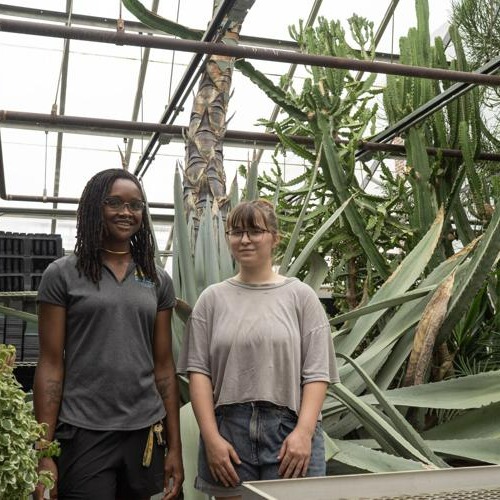
 Krista Caltabiano, the current greenhouse plant coordinator, has tended to the plant’s growth for more than a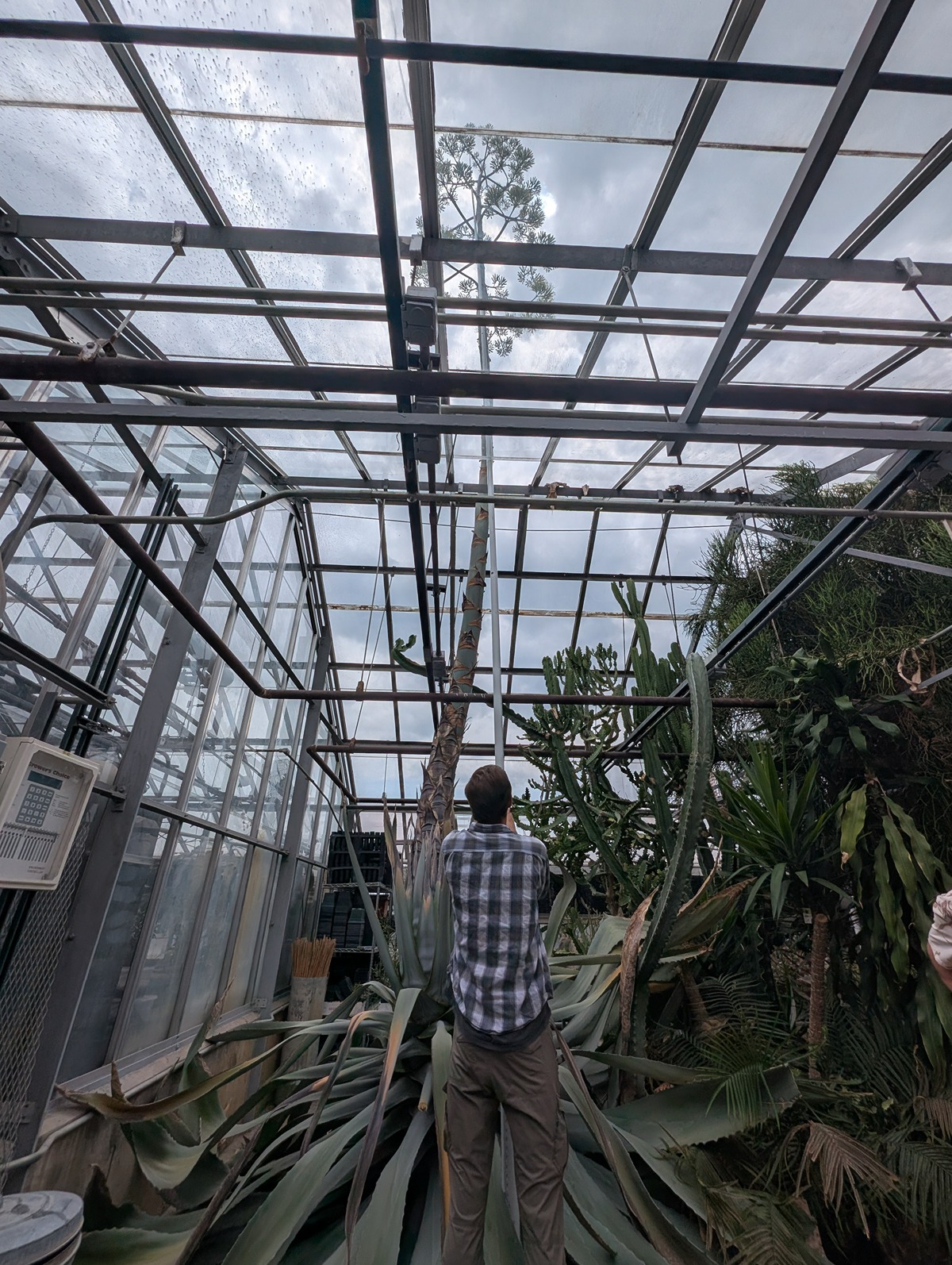 decade. A mistake in the agave’s identification was recently corrected.
“For years, the plant in Purdue’s greenhouses was believed to be Agave tequilana, its relative that is used to produce tequila,” Caltabiano said. “But ours has notoriously gnarly leaves, while tequilana has fewer spines. The flower's height also points toward this being an americana sample — whose height ranges from 35 to 45 feet. Tequilana tends to stop at around 30 feet. Ours is currently 42 feet tall.”
Data analyst Cameron Wingren in the Institute for Digital Forestry measured the plant’s height weekly to see if it would beat a world record.
Come visit the agave or watch online
You can see the Agave americana, its separated stalk, as well as a few related agave species in the Lilly Life Science Ranges. Sign up for a tour on Mondays or Wednesdays, walk in on Fridays (visiting hours are noon to 2 p.m.), or check on more events and ways to interact in the links below.
Having trouble finding the agave on campus? Try using this Google Maps Pin.
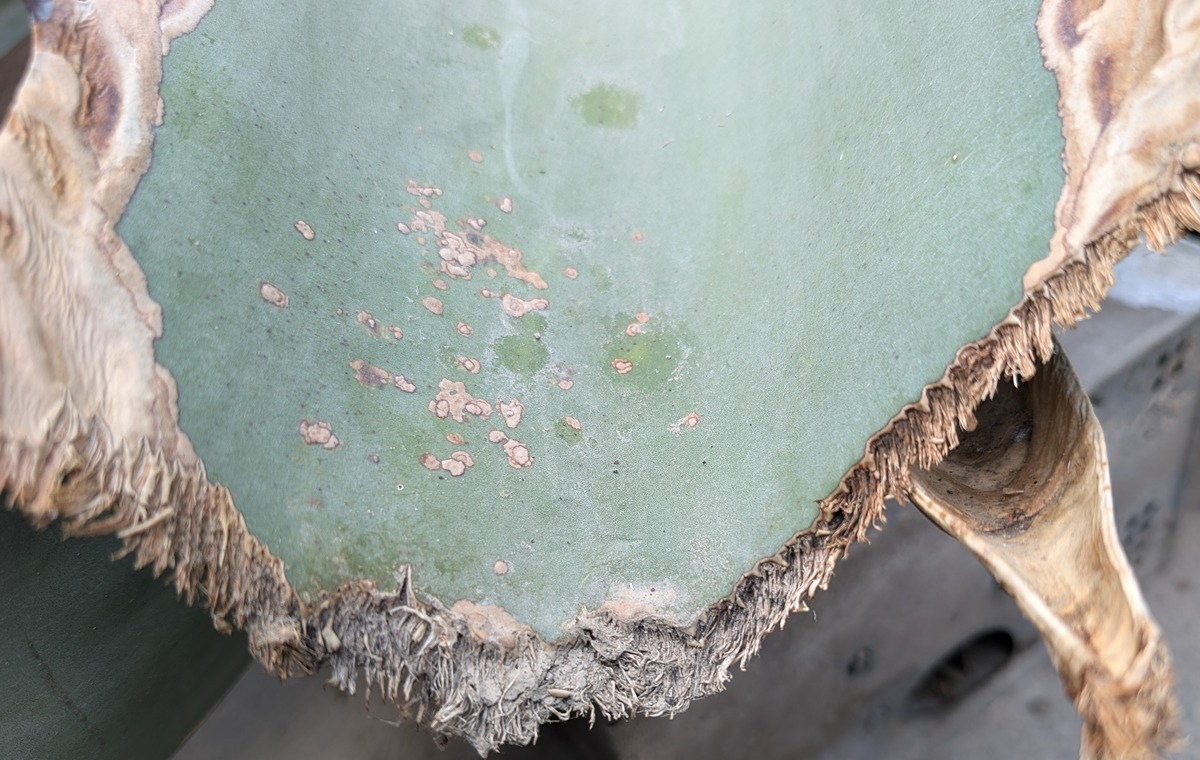
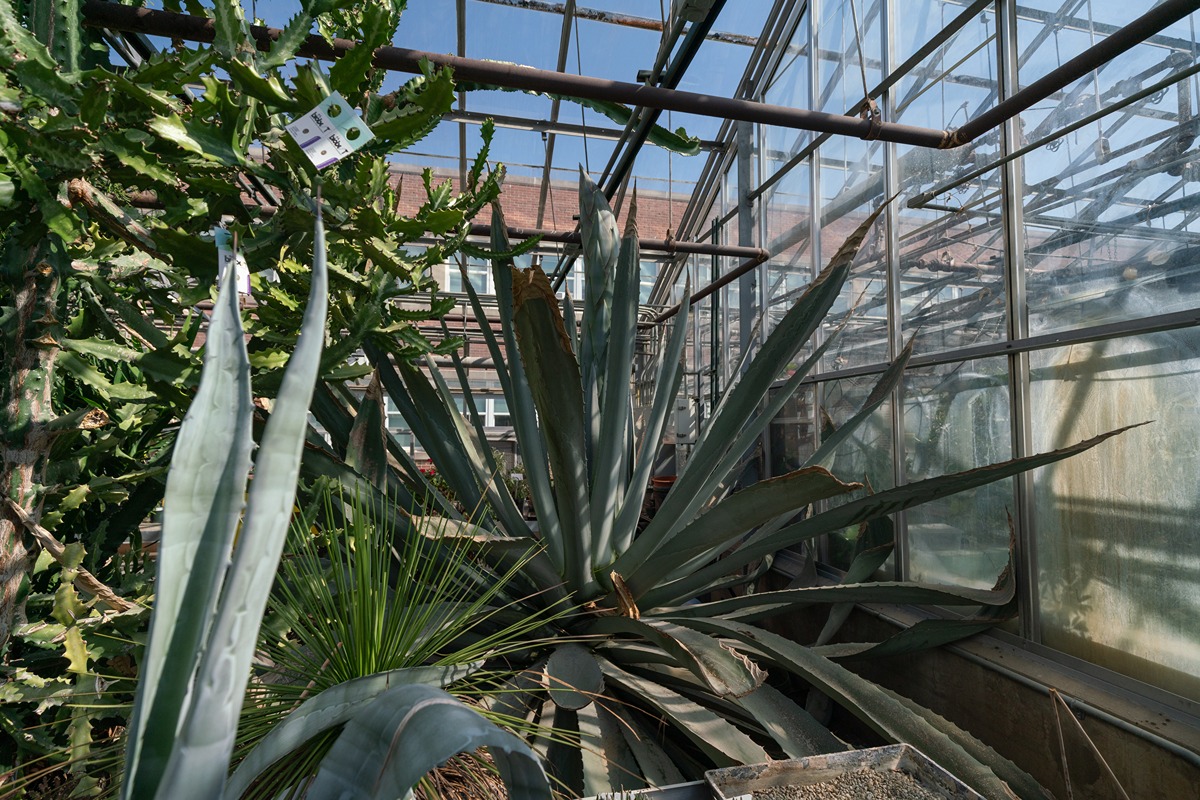 Sharp spines at the tip of each leaf can be used as sewing needles.
  Fibers can be extracted from the leaves and woven into string for traps, nets, ropes, sandals, clothing or bowstrings.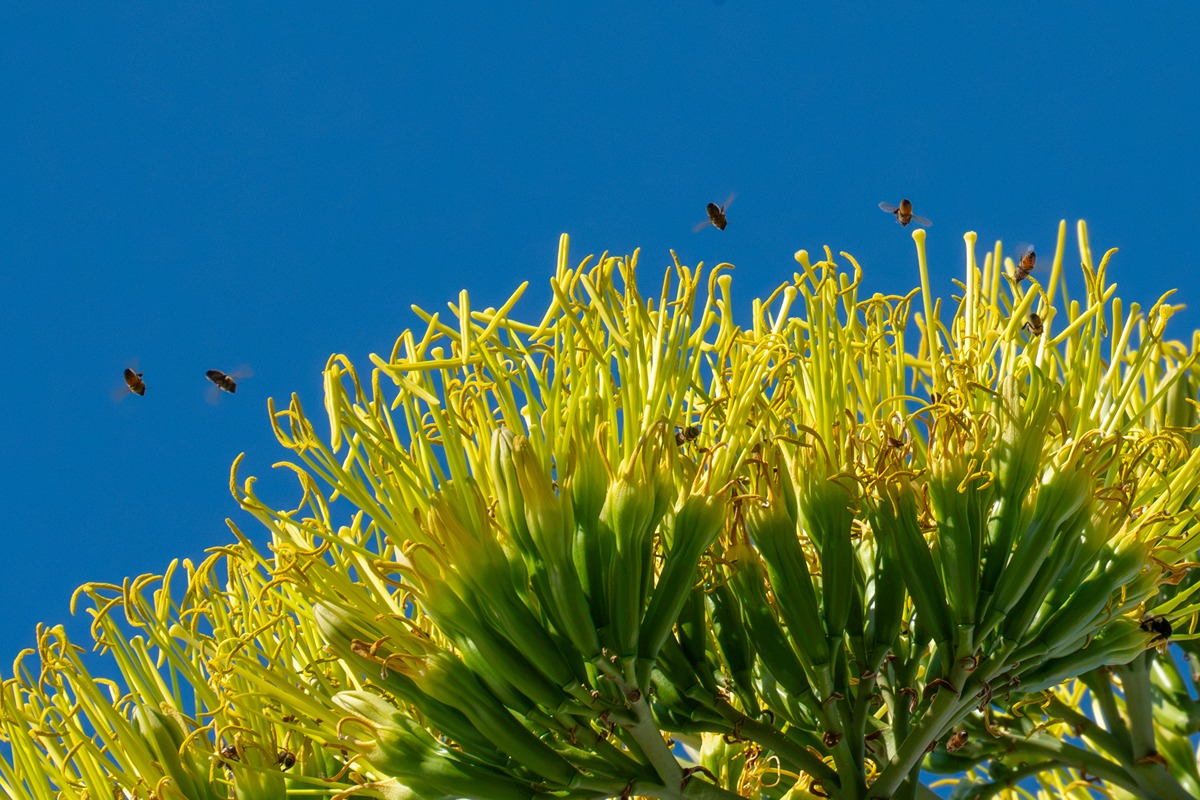
Share your photos of the agave
The botany and plant pathology department is building a photo wall to display everyone’s pictures with the plant over the years. We would love to see your selfies with Alice!
Mail physical photos to: Amy Deitrich, Botany & Plant Pathology, LILY Hall, 915 Mitch Daniels Blvd, West Lafayette, IN 47907.
What happens after the agave dies?
The flowering stalk first appeared in April 2026, and the flower inflorescences opened in late July, once the stalk had grown over 42 feet tall. Even before the stalk fell, the agave leaves were already wilting and changing color — pushing every last resource up to the flowers and tens of thousands of immature seeds above.
The agave will grow genetic clones of itself, called “pups,” from its roots as the mother plant dies. In fact, it’s already produced several pups throughout its lifetime. Two of them are still connected to it and flowering themselves — signals from the mother plant compel it through their shared root system.
What happens to the flower stalk remains to be seen. Forestry and natural resources offered to help get the 600- to 700-pound plant out of the ground, different researchers in the College of Agriculture may study or preserve parts of the plant, and community members can request materials from the agave for art, education and cultural practices.
“The world’s botanical diversity can provide amazing insight into how the plants we rely on grow and survive,” Scott McAdam, associate professor of botany and plant pathology, said, “In botany, we expose students to the diversity of plants and fungi, teaching them about how these organisms have adapted to survive in a wide variety of environments. This research is transforming the future of agriculture and our understanding of the natural world. The agave death bloom gives us the chance to share this important work with our community and beyond.”
Support the greenhouse teaching collection
The greenhouse plant collections give botany students a glimpse at plant diversity from around the world. You could be a part of this deeply rooted history by supporting the Department of Botany and Plant Pathology!
Featured News