

Plant evolutionary biologist joins Purdue Agriculture
Ryan Folk, an emerging leader in the world of plant evolutionary biology, has joined Purdue’s Department of Botany and Plant Pathology as an associate professor. Folk was hired through Purdue’s Moveable Dream Hires program. The program is designed to attract high-performing, top-caliber faculty to the university.
“We are delighted to welcome Ryan Folk to Purdue Agriculture and the Department of Botany and Plant Pathology. His arrival reflects our continued commitment to bring exceptional faculty to Purdue who will advance high-impact science, mentor the next generation of students and scholars, and contribute meaningfully to our land-grant mission,” said Bernie Engel, Glenn W. Sample Dean of Agriculture.
Fascinated with plants since childhood
An orchid conference may not be the average child’s idea of a fun weekend. But Folk was fascinated with plants from a young age. He loved to garden with his grandmother and visit plant nurseries and botanical gardens with his mother. He even had his own membership in the Central Florida Orchid Society.
However, when it came time for college, his dad suggested he pursue accounting.
“I started accounting,” says Folk, who attended the University of Akron. “But it was not exactly a passion profession.”
He’d taken biology as a general education requirement and found himself enthusiastically highlighting the evolution section of the textbook.
“I noticed I had essentially highlighted everything,” he says. “I thought ‘this should be my major.’”
One summer, he participated in the National Science Foundation’s Research Experiences for Undergraduates program, and won the Young Botanist Award from the Botanical Society of America. He realized he wanted to study plant origins and their relations over time, a subspecialty known as plant systematics. He applied to a graduate program at The Ohio State University, where he worked with noted plant systematist John Freudenstein.
“John was a very good advisor, very old school,” Folk says. “Every Friday afternoon I’d have to come to his office and bring two to three organisms, with a paragraph about each one — why I wanted to study it, where the fieldwork would be, what hypotheses I had. Every week he’d say ‘No.’”
Finally, one week, Folk brought the idea of Heuchera, a native North American perennial commonly known as coral bells, a member of the family Saxifragaceae.
Heuchera is “a really complicated genus with a lot of evolutionary forces,” Folk says. “It kind of checked all the boxes.” He’s been studying members of the Saxifragaceae family ever since. He won an NSF grant to study the plants and was awarded a George R. Cooley Award for best contributed paper in plant systematics.
Hybridization and plant evolution
After graduate school, Folk received an NSF-funded postdoc at the University of Florida’s Florida Museum of Natural History. There, he quickly had to learn a new skill: getting DNA out of very old museum samples.
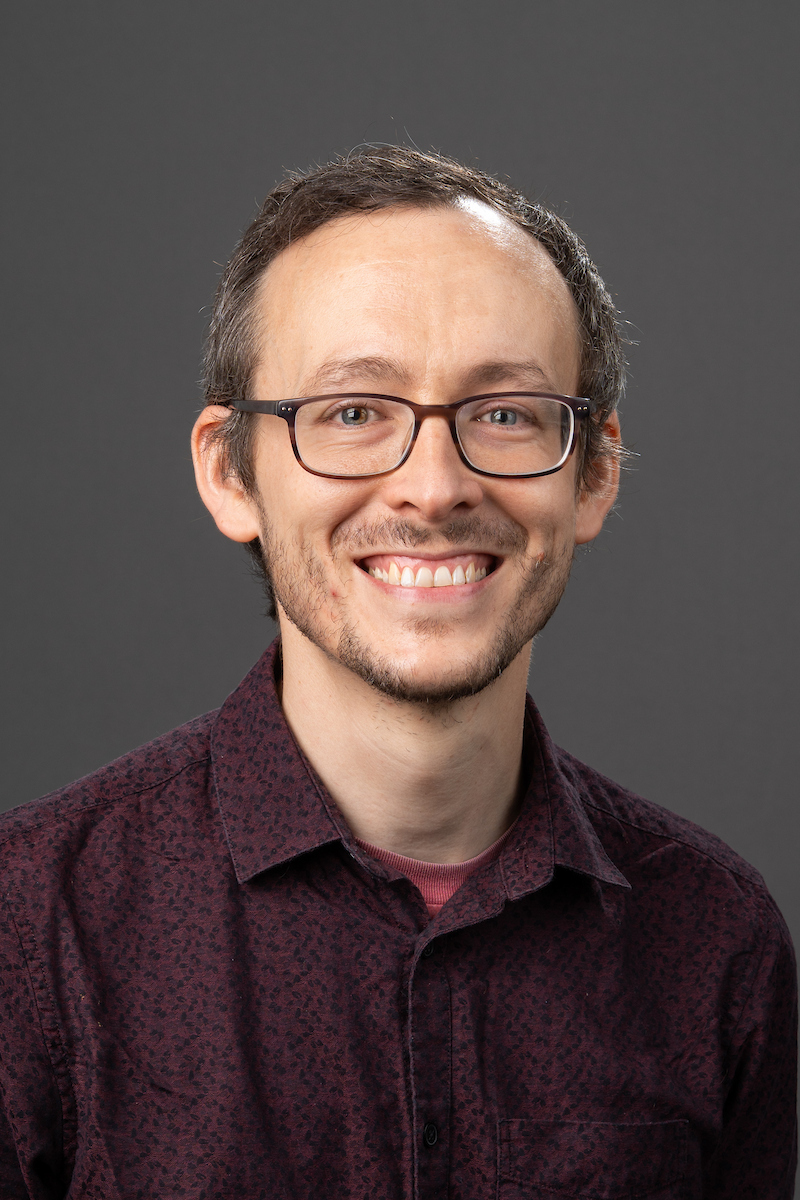 “For plants, it’s especially not trivial because the DNA is very broken up, and as plant samples age their chemical compounds change and sort of create a glue,” he says.
He also worked on reconstructing the evolutionary history of plants in Saxifragales, a larger group containing Heuchera and Saxifragaceae, with a history going back to the mid-Cretaceous. To understand this history, he relied on his expertise in plant hybridization.
“Hybrids are genome mosaics of different parental species,” Folk explains. “What happens is, this gene has this parental history, and this gene has another one, and if you study the proportion of those, you can get an idea of the relative parental contribution, of the exact genetic process that made it happen.”
In 2019, Folk took a job as an assistant professor at Mississippi State University, where he became curator of the university’s herbarium, home to some 40,000 historical plant specimens. While at MSU, he won the College of Arts and Sciences Research Award in Natural & Physical Sciences and the Alumni Association’s 2026 Graduate Mentor of the Year.
He also continued to work on a project he’d started in Florida: understanding the origins of plant nodules, the small swellings on the roots of legumes and other plants, like soybeans, clover and peas, which house nitrogen-fixing bacteria.
Folk’s “Nit-Fix” project now makes up about half of his research program; the evolution of Saxifragaceae continues to make up the other half.
New opportunities at Purdue
When Folk moved from Mississippi this summer, he traveled in a 26-foot U-Haul outfitted to house some 1,000 plants. The plants are now safe in Purdue greenhouses.
“My plants will like this climate much better,” Folk says.
Folk also brought four graduate students from Mississippi to join his lab at Purdue.
“We’re going to move into some transcriptomics to get at how genes are expressed,” he says, referring to the study of the complete set of all RNA molecules. “In five or 10 years, I hope to have a gene editing system in the plants I work on.”
Folk is also working on a “giant” genome sequencing and association genetics project to figure out the genetic basis for species differences. The information could also be useful in agriculture, where about 75 percent of crops rely on animal pollination.
“Dr. Ryan Folk is a nationally recognized plant evolutionary biologist whose research integrates evolutionary biology, systematics, biodiversity and computational biology to better understand the origin and diversification of plant life,” says Tesfaye Mengiste, professor and head of botany and plant pathology. “His expertise will create exciting new opportunities for interdisciplinary collaboration. We look forward to the lasting impact he will have on our department, our students, and the broader plant science community.”
Folk has purchased a home, where he’s looking forward to starting a personal garden. He already has an idea for heucheras that have outlived their research uses on campus.
“I’m going to start throwing them in my yard,” he says. “It’ll be nature’s way of showing me the best garden performers.”
Featured Stories
For Brody Cox, preparing for the Indiana State Fair began long before he entered the show...
Carolyn Foley, a long-time member of the Purdue Forestry and Natural Resources (FNR) and...

In the September Purdue University/CME Group Ag Economy Barometer survey, 52% of respondents...
Purdue University’s College of Agriculture recognized nine alumni at the Distinguished...
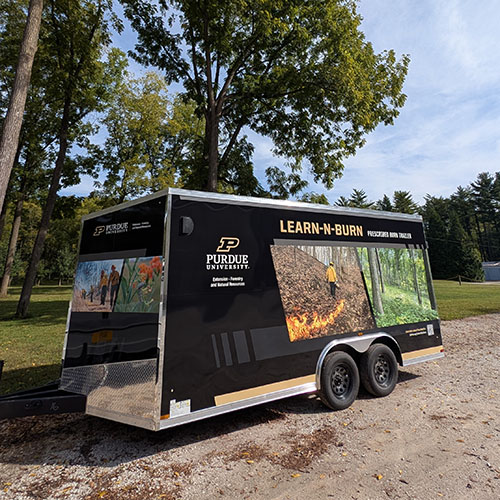
Keep your eyes peeled across Indiana for the newly minted Purdue Forestry and Natural Resources...
“Being at Purdue has changed my thinking entirely,” says Mingyu Zhao, a third-year...