

FNR Field Report: Alexandra Early
Students from Purdue Forestry and Natural Resources took their classroom knowledge to the field for summer internships and paid positions across the country, gaining valuable experience, hands-on training and career guidance. The FNR Field Reports series offers updates from those individuals as their positions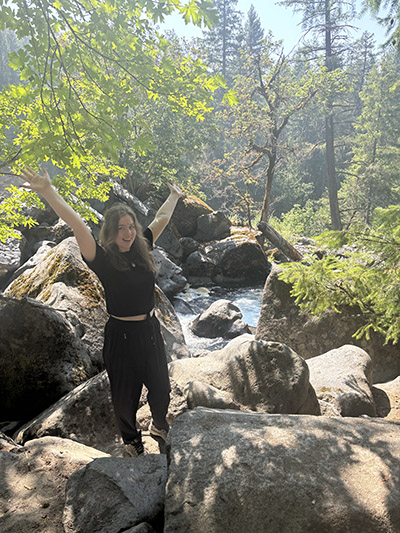 draw to a close.
Junior wildlife major and Spanish and biological sciences minor Alexandra Early was an intern and later took on the duties of a senior keeper at Great Cats World Park in Cave Junction, Oregon.
Her main duties in this role focused on cat care, which involved meal preparation (portioning and adding vitamins), maintaining enclosures, conducting daily health checks, feeding, and administering medications when necessary. Additionally, she served as a tour guide, leading groups around the park and discussing the history, biology, and conservation of each cat.
“A key lesson from this internship was the importance of conservation,” the St. Louis, Missouri, native said. “I gained insight into conservation efforts for various cat species and the challenges they face. I also learned about the specific environmental, dietary, and health needs of different species.”
Early said the most challenging part of the job was the physicality of the work, which included walking for up to 10 hours at a time and carrying around 30-pound buckets of meat for the cats’ meals around the park. She noted, however, the work was “worth it for the cats and their happiness.”
Alexandra’s favorite part of the job was forming bonds with the big cats.
“Unlike dogs, cats need time and trust in order to bond with people, especially wild cats,” she explained.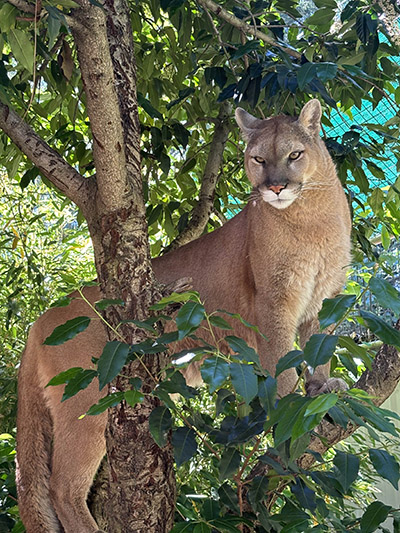 “Over time, I was able to create close and unforgettable connections with the cats. My favorite memory was when one of our more timid cougars, Casa, approached me and purred along her enclosure one morning after I had been working with her for two months.
“Another one of my favorite parts of the job was learning. I was able to get hands-on experience with these apex predators that we study about in a lecture hall. Every day I learned something new from the cats themselves and my director that I can now apply to my current studies.”
Early was able to apply her Purdue FNR studies when doing personal research on the cats as well as in her tours, when she shared with the public about conservation efforts and what people are doing to improve the environments and populations of these cat species.
Her summer at Great Cats World Park shifted Alexandra’s career goals.
“I have been conflicted about whether or not I want to work with wildlife species in a more clinic-based setting or a field setting,” she shared. “I now know that I want to focus on conservation efforts and research out in the field, and gain more hands-on experience out in the wild. My director has plans to start a jaguar conservation center in Belize and I hope to one day be a part of this project after receiving my DVM and other qualifications.”
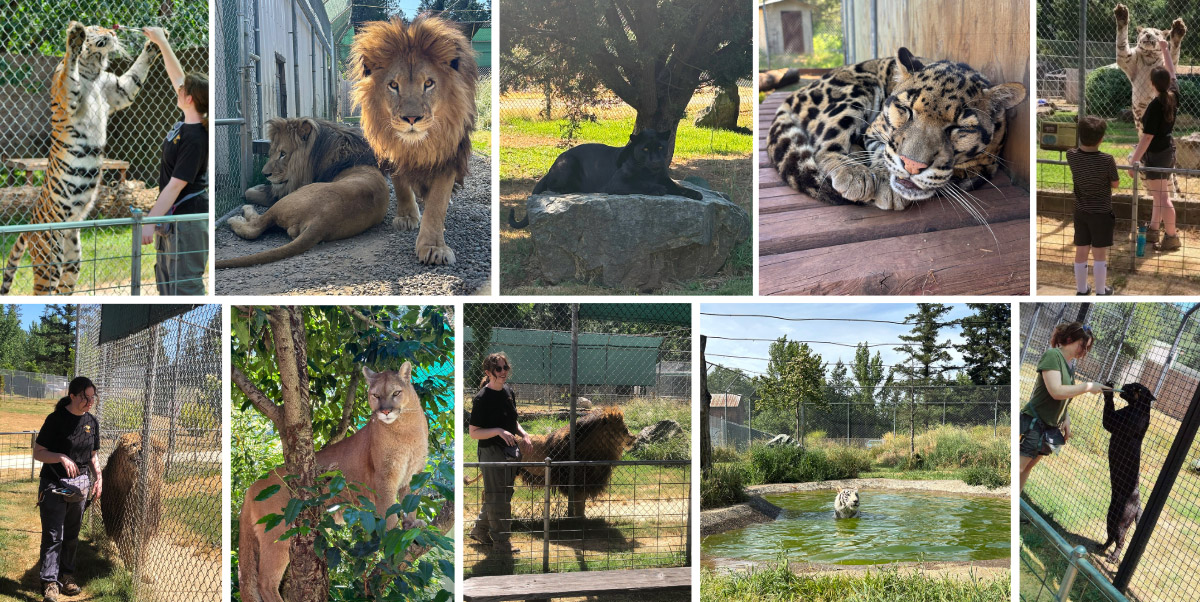 A collage of the cats Alexandra Early worked with this summer. Top row (Left to right): Alexandra stands up a Bengal Tiger named Petra on a tour to show her size; two African lion brothers named Tank and Baku; a black jaguar named Chia sitting on her favorite rock; a clouded leopard named Clouder taking a nap. Row 2: Alexandra interacting with Tumba, an African lion, during a tour; a cougar named Casa standing in her tree; Alexandra giving a tour with Tumba, an African lion, behind her; a white Bengal tiger named Spice swimming in her pond; Alexandra standing up a black jaguar named Sarafina during a tour to show her size.
 In addition to her on-the-job experiences, this summer offered Alexandra the connect with nature in her new environment.
"Several experiences left a lasting impact on me, especially from my time living immersed in nature,” Early said. “My internship was in a small town in Southern Oregon, where I stayed in a trailer house in the middle of the woods. It allowed me to disconnect and explore breathtaking places I never imagined: the Redwoods, Crater Lake, countless waterfalls, many natural wonders, and the stunning Pacific Ocean. These experiences have deepened my appreciation for the beauty of earth and ignited a stronger passion for its conservation.”
At Purdue, Early is a student body representative on the FNR Student Council, and a member of the student chapter of The Wildlife Society and of the Purdue Pre-Veterinary Medicine Association (PPVMA). She also is a part of the Higher Ground Dance Company, a member of Alpha Zeta and a volunteer in the oncology department at the Purdue Small Animal Hospital. Last year, she also acted as the PR committee head for TEDxPurdueU. Early was named FNR’s Outstanding Freshman for 2022-23.
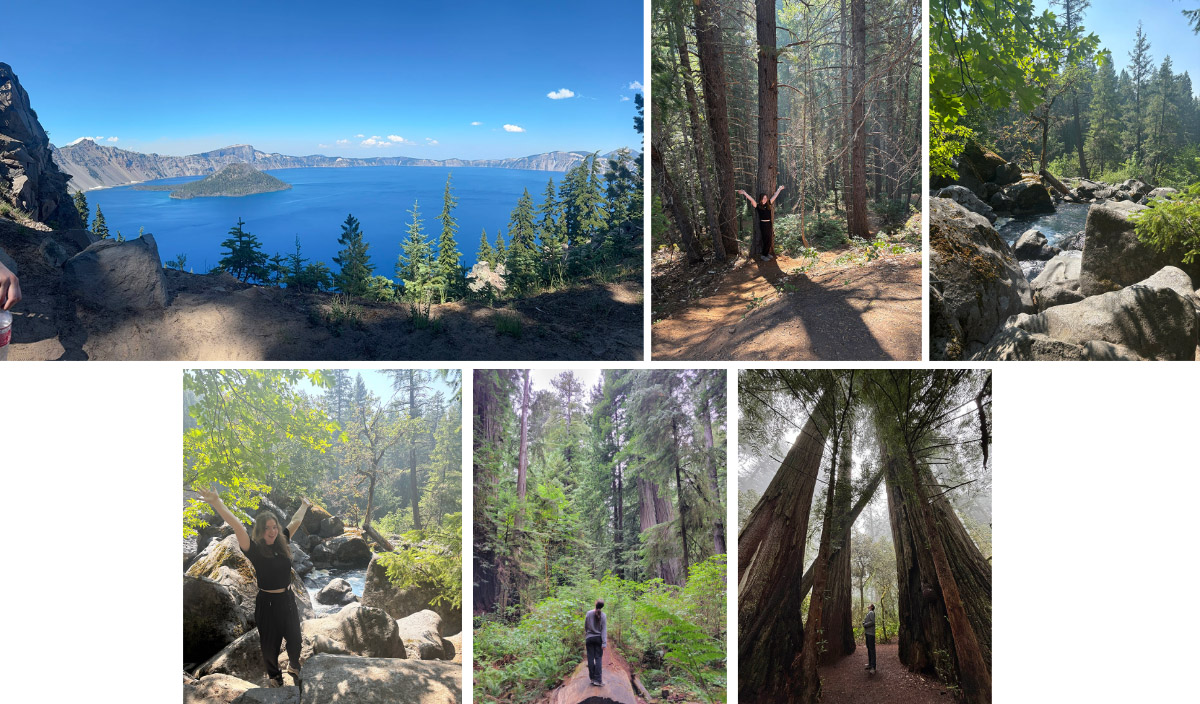 A collage of images from Alexandra Early's travels over the summer. Top row (Left to right): A photo of Crater Lake from a lookout point Alexandra hiked to; Alexandra standing in the beginning of the hike to see Mill Creek Falls in Prospect, Oregon; water flowing through the Avenue of Boulders in Prospect, Oregon. Row 2: Alexandra standing in front of water flower through the Avenue of Boulders; Alexandra looking out into the Redwood Forest on the "Big Tree" trail; Alexandra looking up at the beautiful redwood trees on the Lady Bird Johnson Grove Trail.
 Featured Stories
Carolyn Foley, a long-time member of the Purdue Forestry and Natural Resources (FNR) and...
Purdue University’s College of Agriculture recognized nine alumni at the Distinguished...
Keep your eyes peeled across Indiana for the newly minted Purdue Forestry and Natural Resources...
Senior wildlife major Madison Medley spent her summer as a natural resource intern with Hamilton...
Addy Ellis, a sophomore aquatic sciences and political science double major, spent the summer as...
Zachary Feiner, who earned his PhD from FNR in 2015 and spent two additional years in West...