

Advanced Mammalogy Class Goes Behind the Scenes at Field Museum
The easiest way to have a peek behind the curtain is to learn from those that are ahead of you – Ifeanyi Enoch Onuoha.
Advanced Mammalogy (FNR 56700) aims to introduce students to field and laboratory exercises as well as recent scientific literature in order to provide a look at the most current research topics and techniques with focuses on ecology, physiology, behavior, population/community dynamics and conservation, all through the lens of wild mammals.
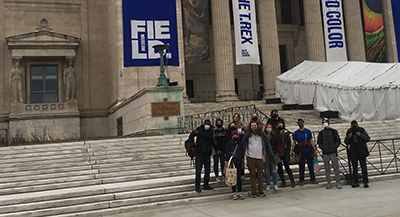 As part of the course, taught by professor of wildlife science Pat Zollner, students are asked to compose a proposal describing either a new exhibit for the Field Museum in Chicago in order to teach the public something about mammals or a research project the student would conduct using museum specimens to answer a new question about mammalogy.
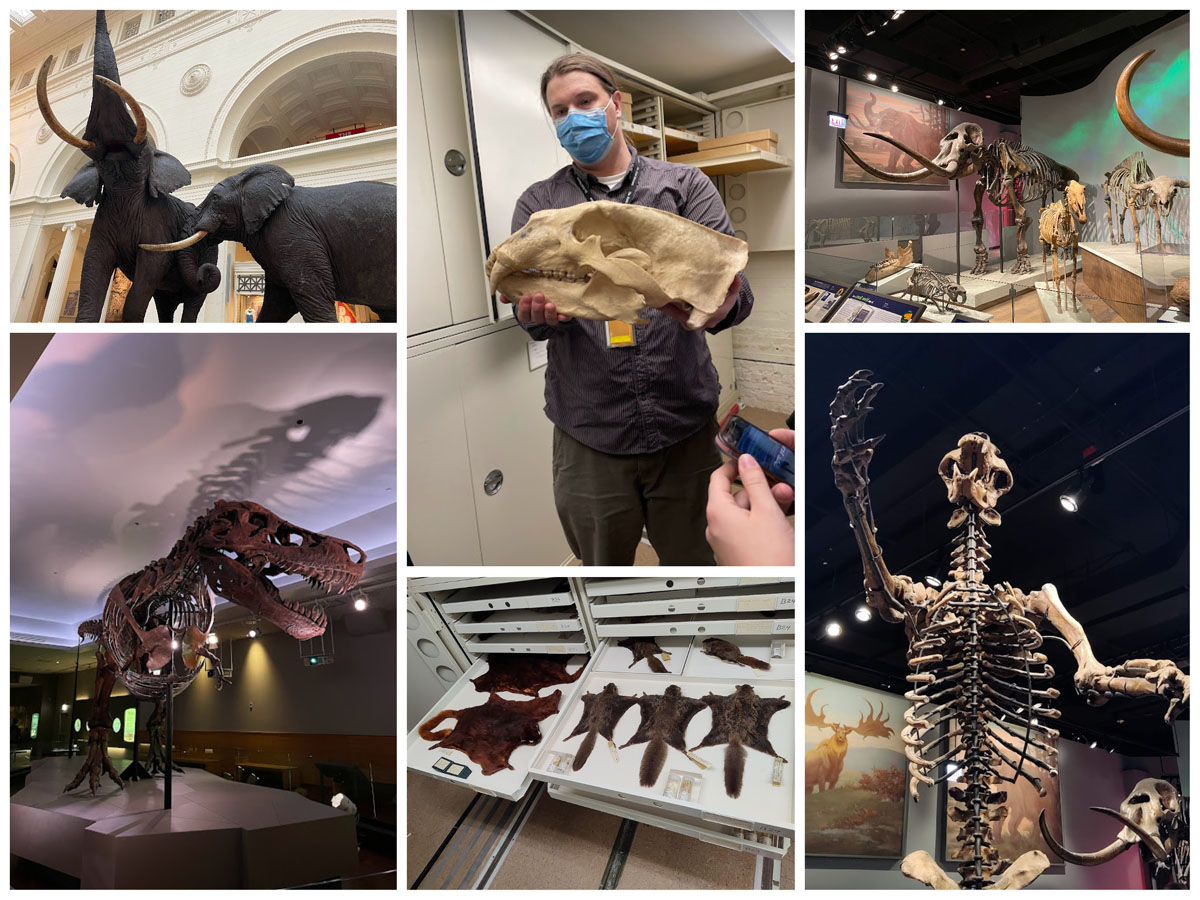
Before completing the project, students had a chance see how museum research and museum collections work, care of a behind the scenes tour of the Negaunee Integrative Research Center and the mammals collection at the Gantz Family Collections Center at the Field Museum in Chicago, as well as virtual lectures about collections-based research and museum exhibit design respectively from Dr. Adam Ferguson and 2016 FNR master's alumna Holly Mutsacio.
The trip to the museum not only opened students' eyes to the vast nature of the collection, but also to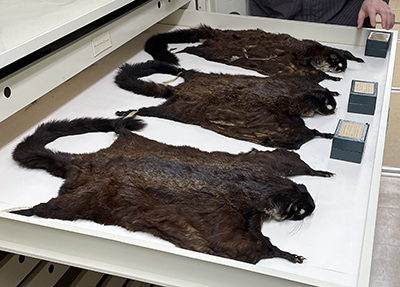 components of the museum beyond the exhibits.
"One of the most exciting parts of the field trip to me was getting to see how the behind the scenes of a museum works," senior wildlife major Megan Kiselica said. "Previously, I had assumed they were a place to show the public natural history and help them learn about it, but now I know it's more so a research institution that also showcases their work to the public 'on the side.' I truly expected the behind-the-scenes tour to be a few different specimens or exhibits they don't have on display currently, but it was floors and floors of specimens and pieces they use for all sorts of projects.
"I'm very glad we got to go on this field trip. One of the major things I've loved about being a wildlife major at Purdue is the hands-on learning components and trips we get to do like this. I think it really helps students be more engaged in the content."
Junior wildlife major Ky Woods was struck by the way the collection was put together and also saw a different side of the research experience during the tour.
"I really enjoyed being able to see the thylacine skull and face," Woods said. "I was not expecting the skull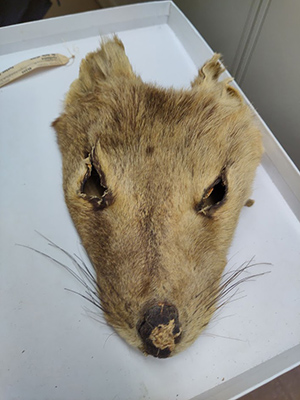 and hide to be with the rest of the dry collection, as I had assumed that there would be a separate room or special case for extinct species. I was expecting to see more tanned hides and taxidermy during the behind scenes tour of the mammals collection, but other than that, my expectations were pretty accurate. A field trip like this one greatly complemented my learning experience for the class as I enjoyed being able to see the different mammal species in person, and it further increased my interest in museum specimens and specimens-based research."
Junior wildlife major Amanda Herbert enjoyed the hands-on nature of the tour and the ability to see course-related material in action, while gathering information for an upcoming class project.
"Going into the field trip I was expecting the behind the scenes tour to primarily be a Q&A session as opposed to going through the collection and seeing the different specimens," Herbert said. "I also thought we would see people creating the skins and collecting data on some of the anatomical aspects of the specimens. The coolest experience I had while being on the field trip was being able to hold a hippo jaw. Being able to feel the weight of the jaw was incredible! I'm glad my expectations were exceeded. The tour was a ton of fun and furthered my love of wildlife.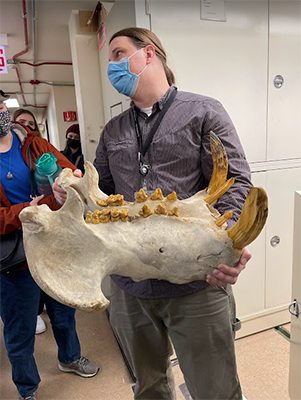
"This field trip allowed me to gain a different perspective on the importance of museums and their research. For our advanced mammalogy course, we have the option to either create a museum exhibit or create a research proposal. While going behind the scenes, I was constantly thinking about what research proposal I might want to create based on the information that was given to us. It was also interesting to be able to apply what we talked about in our advanced mammalogy course to some of the specimens we looked at."
Junior wildlife major Isaac Di Domenico also enjoyed seeing the real-life applications of classwork.
"I think the biggest impact of interacting with the specimens hands-on was just how real it made everything," Di Domenico said. "We discussed a lot of the specimens that we touched in the museum previously in class. After I got to touch or see a specimen, it became something that I could actually visualize. When I held the hippo jawbone, it made me feel small. It's very easy to hear the size of an animal on a website or textbook and think "wow, that is big," but having something like the massive jawbone of a hippo in my arms really put into perspective the size of the species. Another specimen that we got to touch was a pangolin. I was able to touch the scales that they have on their back, which really allowed me to understand how they are able to use the scales as self-defense and why they are so effective."
Featured Stories

Carolyn Foley, a long-time member of the Purdue Forestry and Natural Resources (FNR) and...

In the September Purdue University/CME Group Ag Economy Barometer survey, 52% of respondents...
Purdue University’s College of Agriculture recognized nine alumni at the Distinguished...

Keep your eyes peeled across Indiana for the newly minted Purdue Forestry and Natural Resources...
“Being at Purdue has changed my thinking entirely,” says Mingyu Zhao, a third-year...

Senior wildlife major Madison Medley spent her summer as a natural resource intern with Hamilton...