Indiana Land Values and Ag Enrollment

November 16, 1991

PAER-1991-15

Author: Unattributed

The Indiana agricultural economy experienced massive economic adjust­ments during the 1980s. These dramatic transitions were reflected in Indiana land values, which declined from 1981 to 1987 after the steep rise from the early 1970s. From their low value of $913 per acre in 1987, land values have risen 36% to $1,245 per acre in Purdue’s 1991 survey.

In a similar manner, the Purdue School of Agriculture was not spared the heartbreak of the 1980s. Under­graduate enrollment dropped throughout the decade to a low of 1,655 students. The lowest enrollment was in 1987, the same year land values hit bot­tom. Since that time, Purdue ag enroll­ment has recovered 19%.

Currently, there are good employment opportunities for ag graduates, and projected needs through 1995 look favorable. With these encouraging prospects, continued recruiting efforts by Purdue staff, alumni, and friends will be needed to keep young people aware of the opportunities.

The interesting parallel of these two items shows the impact of the broader macroeconomic condition of agricul­ture, a condition which has stabilized greatly from the trauma experienced in the 1980s.
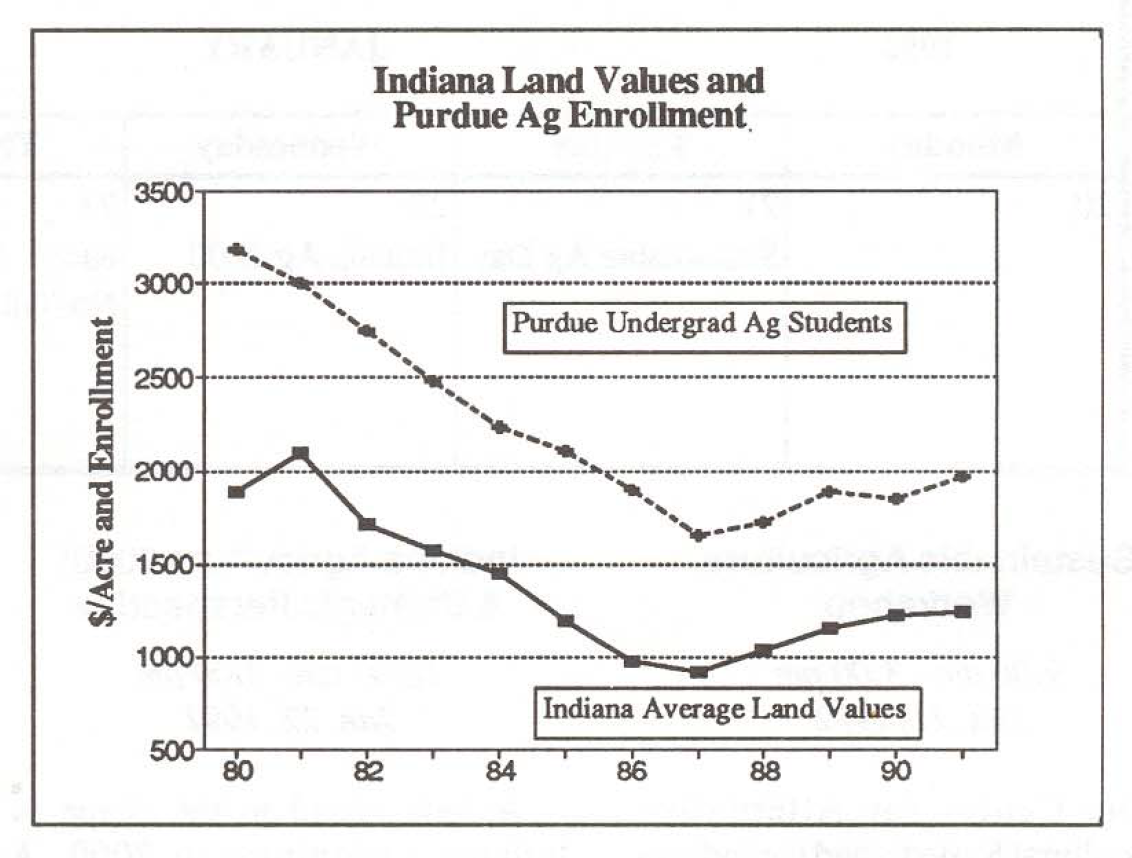
Figure 1. Indiana Land Values and Ag Enrollment
Figure 1. Indiana Land Values and Ag Enrollment

Tags

Publication Appeared Within:

Latest Articles:

The March 2026 CPI Report: What It Tells Us About the Iran Conflict’s Inflation Footprint — And What Is Still Coming

April 13, 2026

The March 2026 CPI report confirms what the structural analysis predicted: the Iran Conflict’s initial consumer price impact is concentrated in motor fuels, which respond to crude oil prices with almost no lag. The 0.9 percent monthly CPI increase is large by recent standards — the largest monthly increase since mid-2022, but it is not yet the broad-based food and goods inflation that a prolonged Strait of Hormuz disruption will eventually produce.

READ MORE

The Iran Conflict and Global Food Security: Why the Burden Falls Hardest on the World’s Most Vulnerable

March 31, 2026

When an energy shock ripples out from the Persian Gulf, the headlines focus on oil prices, gasoline costs, implications for value chains and the profit margins of U.S. producers.

READ MORE

The Iran Conflict and Consumer Food Prices: A Broad but Lagged and Sticky Shock

March 31, 2026

The initial public reaction to an oil price shock reaching $110 per barrel is often to project near-immediate, dramatic increases in grocery prices. This instinct overstates the direct farm-to-retail transmission channel in a straightforward and measurable way. The USDA Economic Research Service tracks how each dollar of consumer food spending is distributed across the supply chain in its Food Dollar Series. The picture it reveals is sobering for those who expect large and rapid retail food price responses driven purely by higher farm input costs.

READ MORE