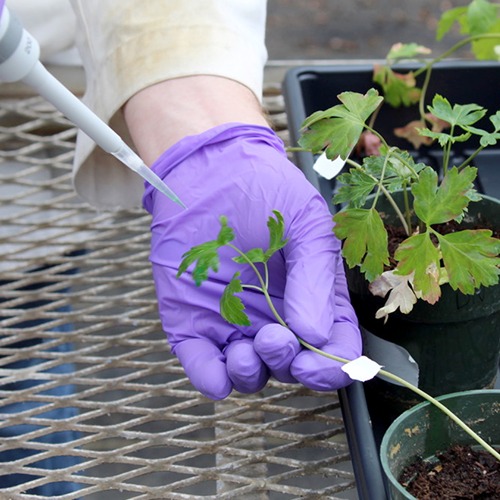
Plant breeders could theoretically increase soybean crop yields if they could control the number of nodules on plant roots since they are responsible for fixing atmospheric nitrogen. Increased crop yield is key to feeding a global population expected to surpass 9 billion people by 2050.
In today’s issue of the journal Science, Jianxin Ma, a professor in Purdue University’s Department of Agronomy, and colleagues report a potential method for increasing nodule formation based on discoveries tied to the RNA in rhizobia, soil-borne bacteria essential to root nodule formation. They describe how rhizobia hijack soybean genes that would otherwise suppress nodule formation.
The findings offer scientists genetic targets for new soybean lines that could get even more of their necessary nitrogen from the atmosphere.
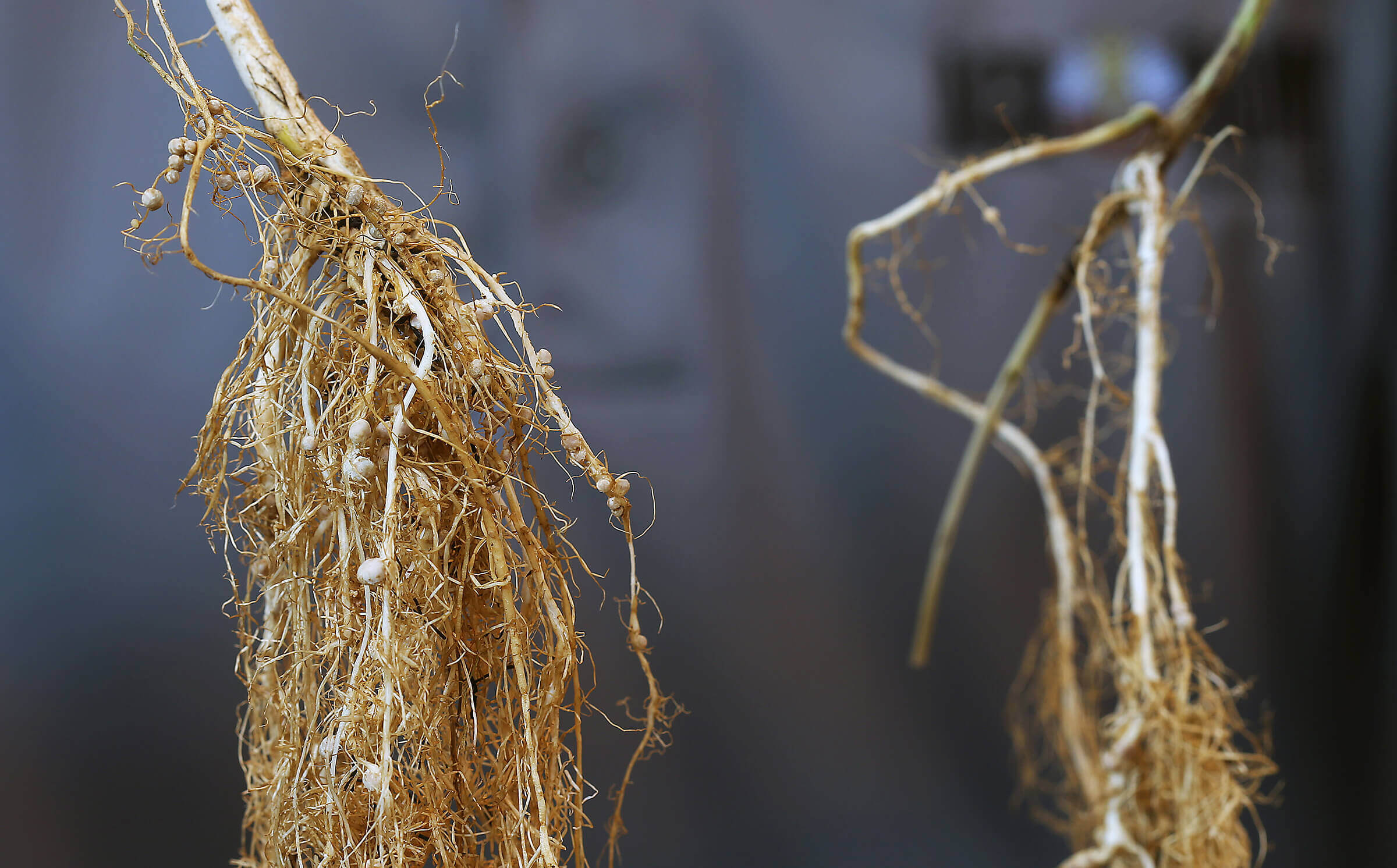 Rhizobia, soil-borne bacteria essential for creating the root nodules in soybeans that allow the plant to fix atmospheric nitrogen, use small RNA to silence soybean genes that would otherwise suppress nodule formation.
 “People tend to add fertilizer nitrogen to increase soybean yield, but that is not an economical solution because the fertilizer represses nodule formation. To increase the plant’s yield potential, it is important to increase the efficiencies of nodulation and nitrogen fixation,” Ma said. “We’ve demonstrated that rhizobia can produce small RNAs to interfere with the function of soybean genes. Controlling these processes could increase the amount of atmospheric nitrogen a legume could fix and improve yields.”
Ma’s team found that soybeans have genes that repress nodule formation. Rhizobia silence those genes with small RNAs, short nucleotide sequences that dismantle the genetic codes in the nodule-suppressing soybean genes.
“Small RNAs chop the messenger RNAs (mRNAs) that carry the codes from those soybean genes, and as a result the capability of the genes to generate functional products (i.e., proteins) is reduced or turned off,” Ma said.
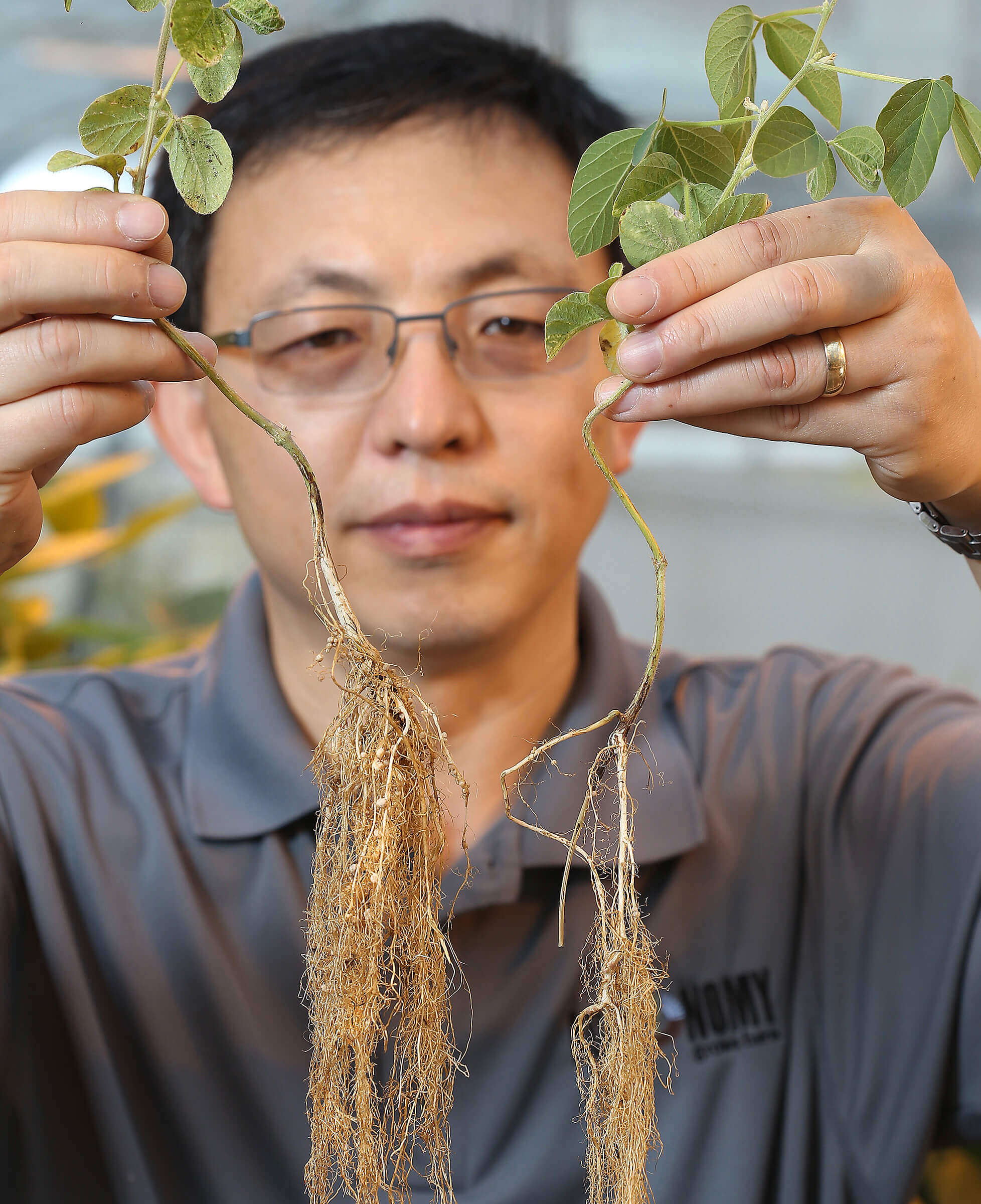 Here, Jianxin Ma shows the difference between soybean roots in which nodule-suppressing genes have been knocked out by CRISPR-Cas9 gene editing technology (left) and unmodified roots (right), which have far fewer nodules. (Purdue Agricultural Communication photos/Tom Campbell)
 These small RNAs are produced from a few transfer RNAs (tRNAs) in rhizobia. Typically, tRNAs help decode an mRNA sequence into a protein. These rhizobial tRNAs produce short RNA chains that hijack the soybean genes, representing a novel function of tRNAs.
A set of approaches, including CRISPR gene-editing technology, validated the findings. When the small RNAs were blocked from affecting the soybean genes, the plants developed fewer root nodules. When the soybean genes were knocked out, the plants developed more nodules.
By taking advantage of these findings, plant breeders could develop soybeans and other legumes that can fix more atmospheric nitrogen. That could lead to higher yields and minimize the amount of fertilizer nitrogen that needs to be added to a field. Ma has filed a provisional patent for the genetic technology associated with the discovery.
“For the first time, we’ve demonstrated the function of bacterial small RNAs in cross-kingdom communication,” Ma said. “This may spur new research toward the understanding of widespread symbiotic relationships such as that between bacteria and the human digestive system.”
The Agriculture and Food Research Initiative of the U.S. Department of Agriculture’s National Institute of Food and Agriculture, the Purdue AgSEED program, the North Central Soybean Research Program and Indiana Soybean Alliance supported this research.
The work aligns with Purdue's Giant Leaps celebration, acknowledging the university’s global advancements made in sustainability as part of Purdue’s 150th anniversary. This is one of the four themes of the yearlong celebration’s Ideas Festival, designed to showcase Purdue as an intellectual center solving real-world issues.