

Pollen & pollination: How ancient partnerships shape today's world
The eighth wonder of the world might be a hundred-million-year-old process: pollination.
When you stop and smell the flowers or buy a bouquet, aroma and beauty likely drew you in. Meanwhile, right under your nose, ancient partnerships are hidden within every bud and are the reason for the sweet scent, bright colors, intricate patterns and up to 90% of the food you eat.
This floral complexity is not made for human appreciation, but rather to move tiny particles that make us sneeze and rub our eyes — pollen grains.
The journey of a pollen grain
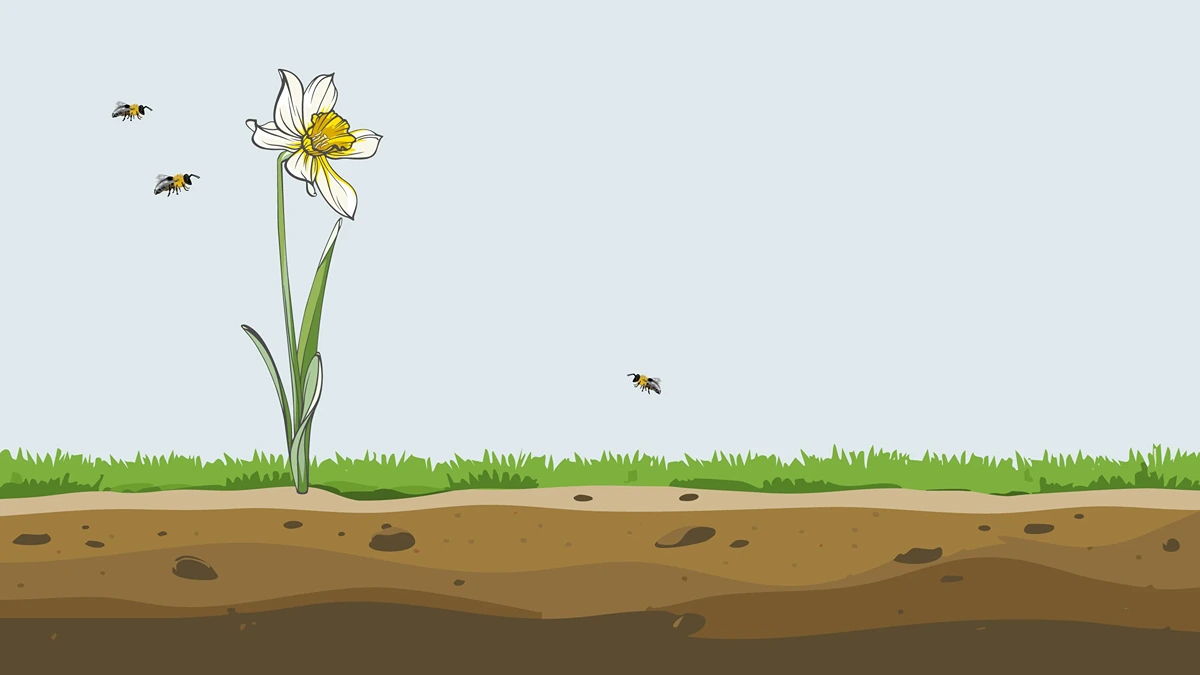
Pollen grains begin their journey on an anther, the male part of a flower. The sections of this structure begin to burst as the grains mature and dry, ready to take flight on bird, bug, bat or other force of nature. Their final destination will be another flower of the same kind that produced them, but this time on the female side.
While early land plants, like mosses, released sperm cells into nearby water so they could swim freely to another plant, flowers evolved to settle further inland by becoming less reliant on water. Pollen, which carries the plants’ sperm inside like a protective bubble, is one of the advancements that have made flowering plants so successful — now representing around 80% of all living plant species.
Dating apps? Plants prefer connections with chemistry
No matter the specific species, the goal of a pollen grain remains the same: Reach the female part of a flower and make seeds.
Flowers themselves can recognize the chemical signatures of a pollen grain that does or does not belong, or that has landed on the wrong species.
This complex communication begins at the stigma, the top of the female part of the flower where a pollinator companion drops the pollen grains.
Sticky, hair-like cells hold on to pollen here so it can’t be picked up by another pollinator. If the stigma recognizes it as a proper pollen grain from the same plant species, it will send it water and nutrients.
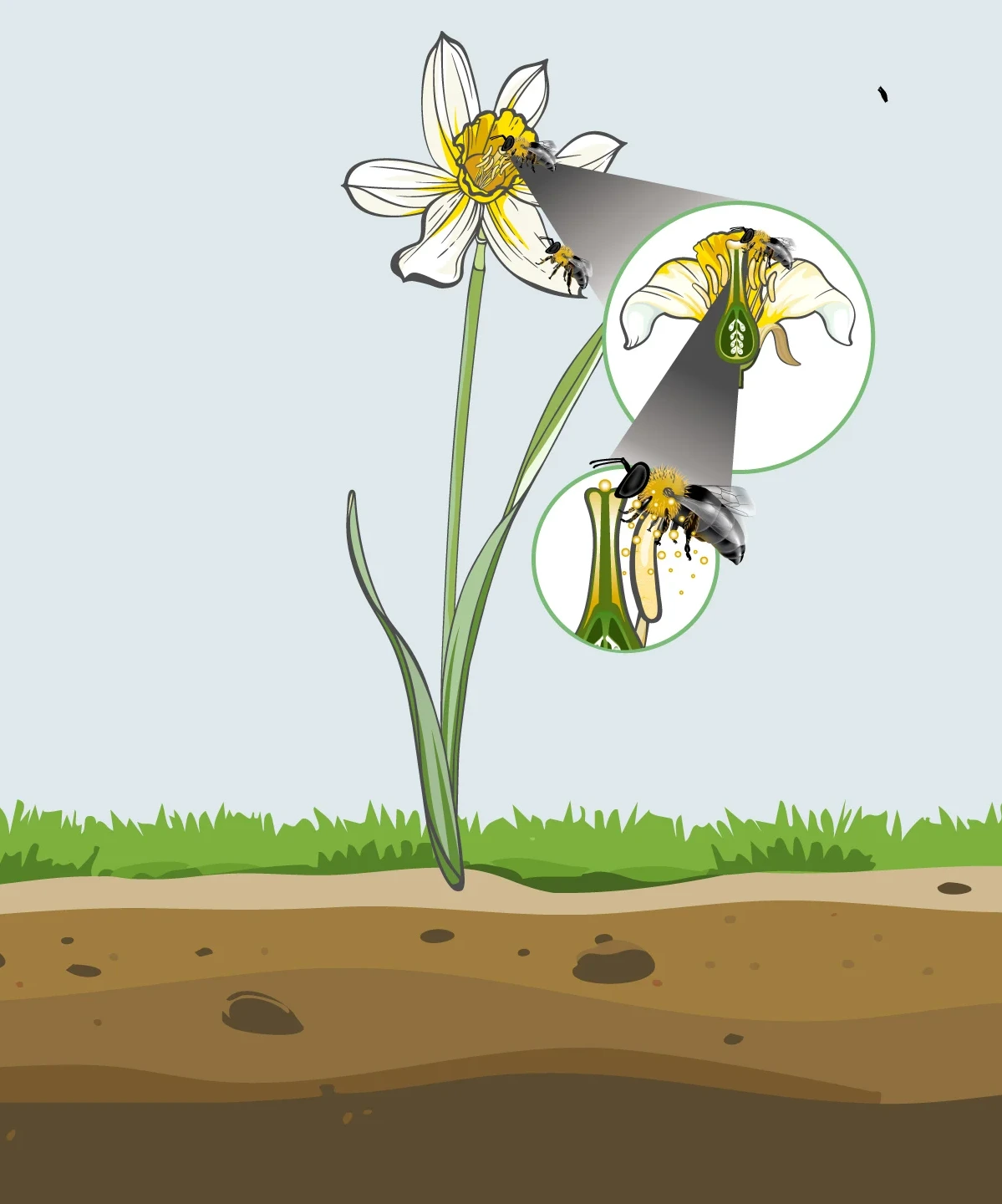 Pollen then grows downward in a tube. The walls of the transmission tract offer it more water and sugars to keep going. It senses the ovules, or female precursors to seeds, in the ovary below like an excited crowd of suitors cheering it on.
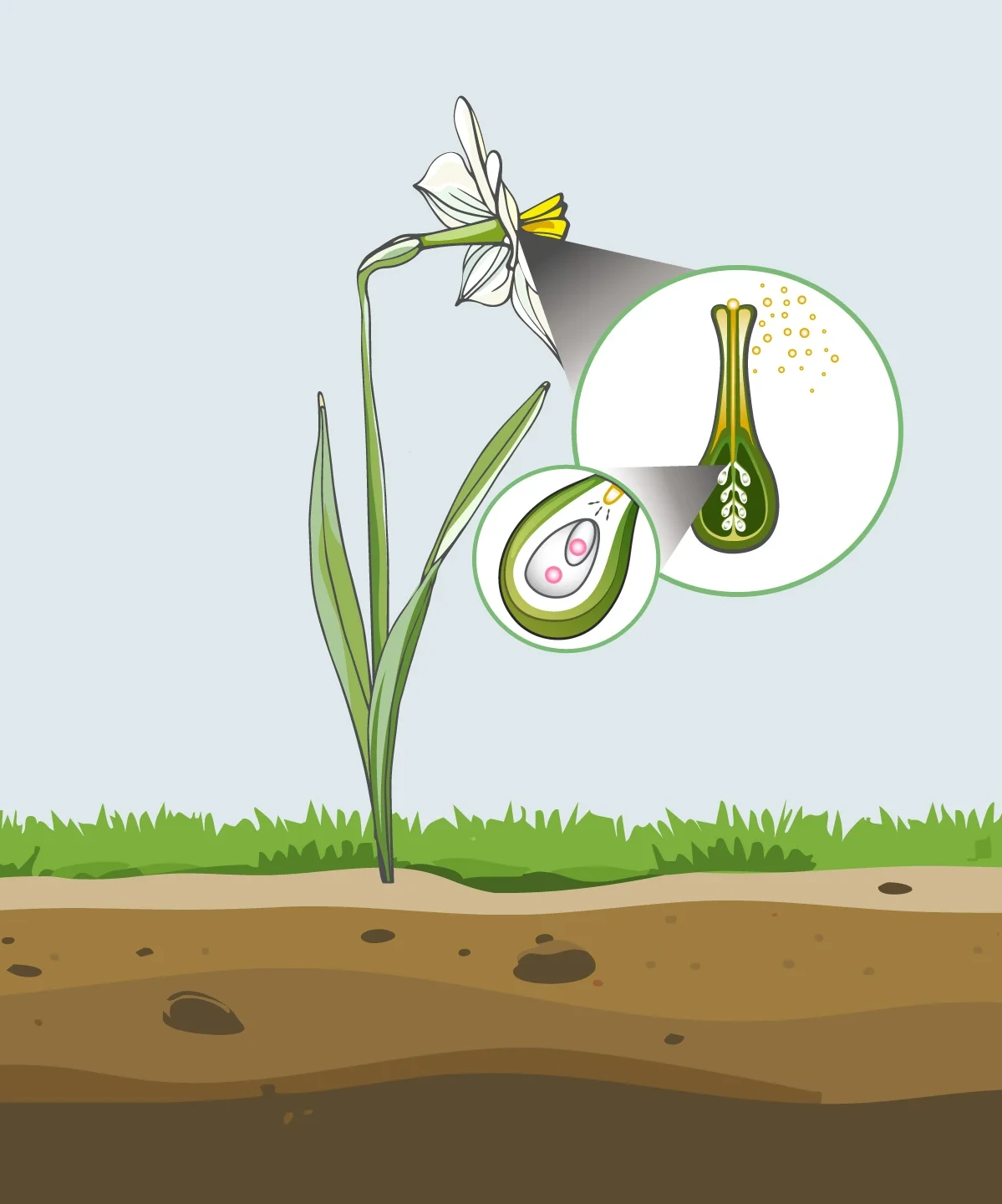 The pollen tube keeps growing, stretching up to several inches once it enters the ovary. Ovules guide the pollen tubes toward them and retain the opportunity to turn them away at any point. With carefully coordinated communication, though, one pollen tube may just get lucky enough to be welcomed into her home.
With dramatic flourish, the pollen tube bursts, and the two sperm cells it carried now enter the ovule and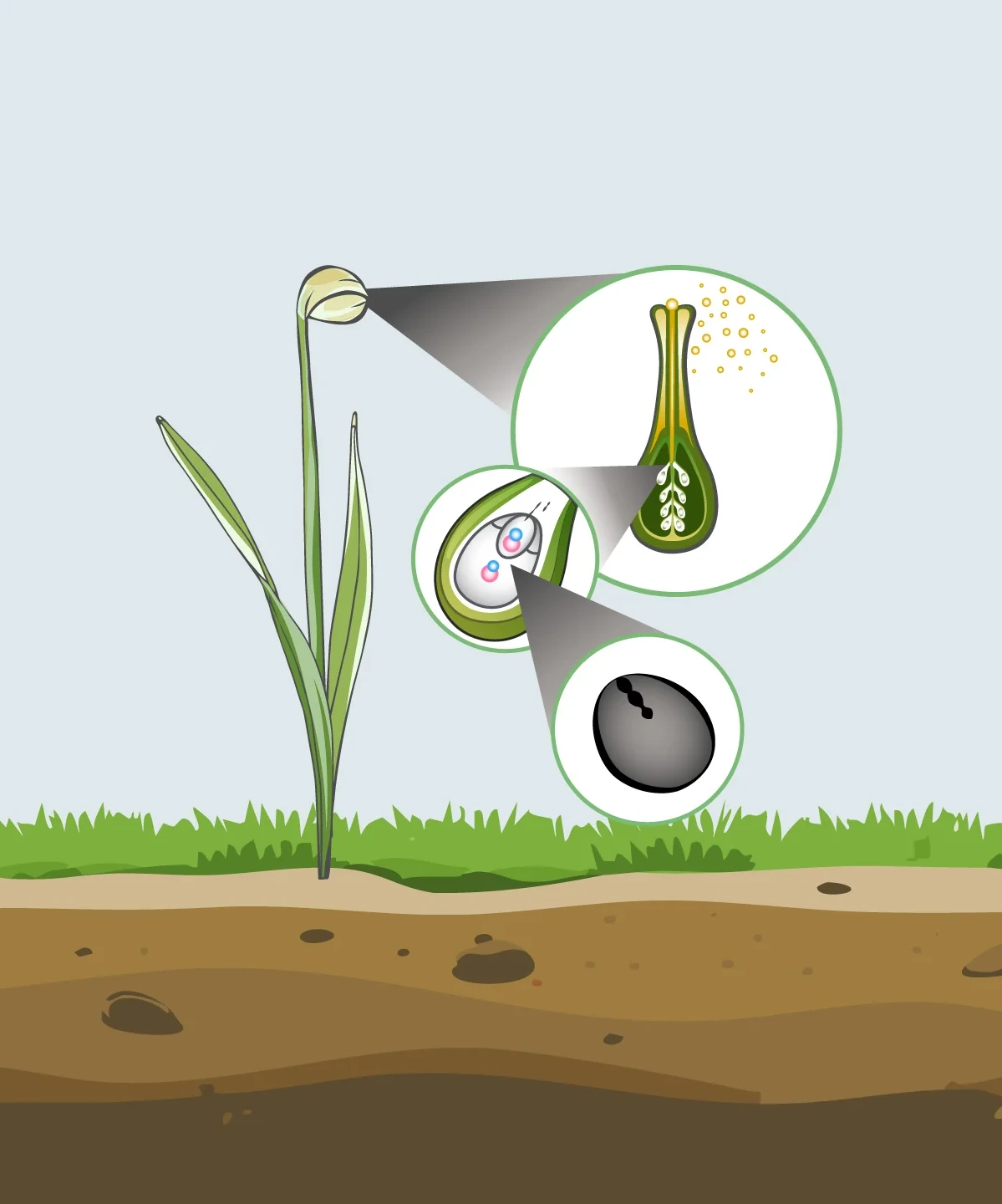 fertilize two of her cells — a central cell and an egg cell.
The egg cell will become the embryo, or baby plant inside of the seed.
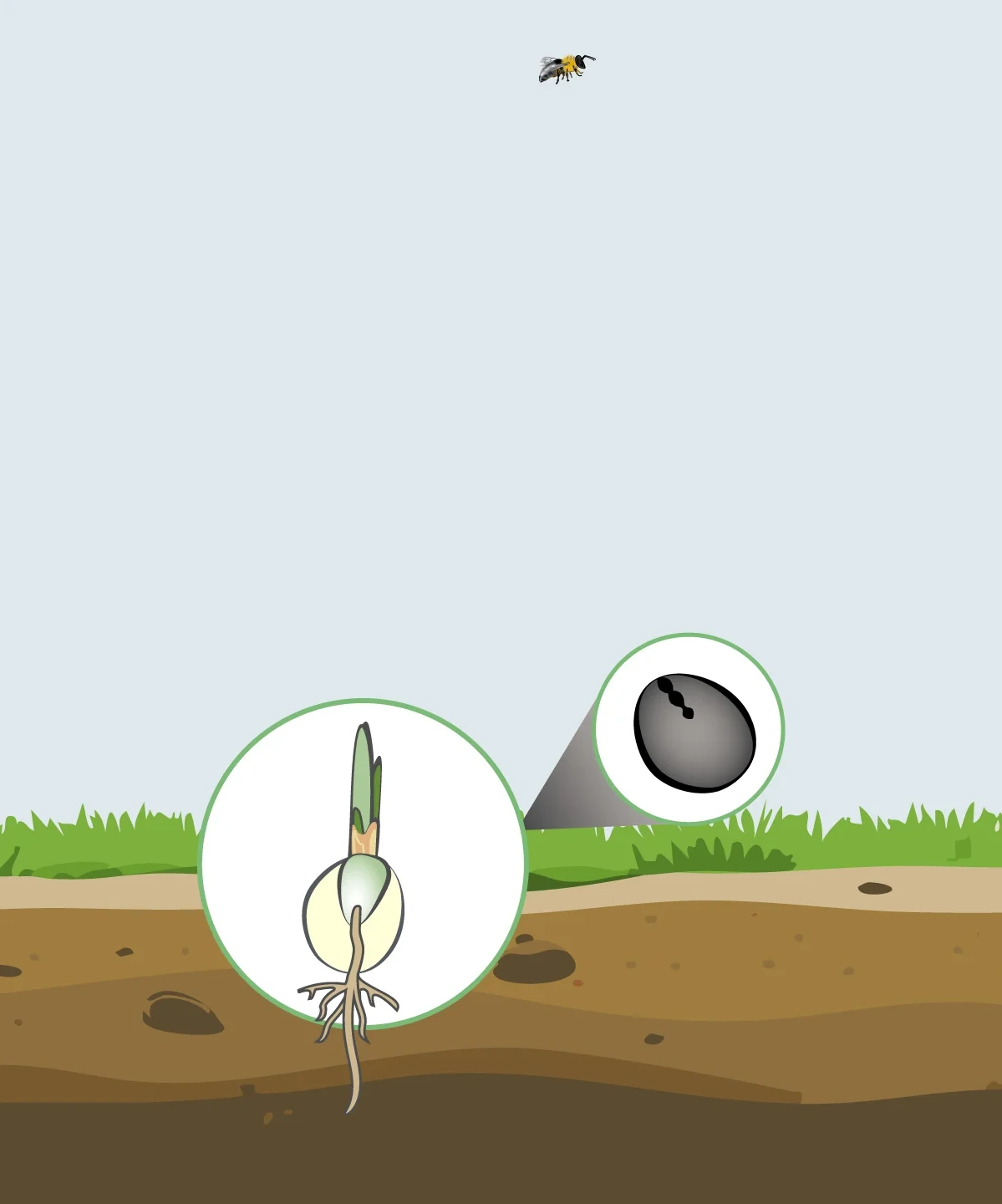 The central cell becomes endosperm, which provides fuel for that embryo until it has leaves of its own to photosynthesize. Over 60% of the human diet comes from the starchy endosperm of seeds, like in rice, wheat and corn.
As the seeds mature, the ovary swells. Eventually, it will dry and burst, releasing seeds and beginning the next generation of flowers.
The research in real life
Although you may not recognize plants as big talkers, "The whole fertilization process is about communication," says Sharon Kessler, professor of botany and plant pathology at Purdue. She and her botany lab study this communication at the molecular level, specifically looking at signals released by two cells, called synergids, in the front of the ovule.
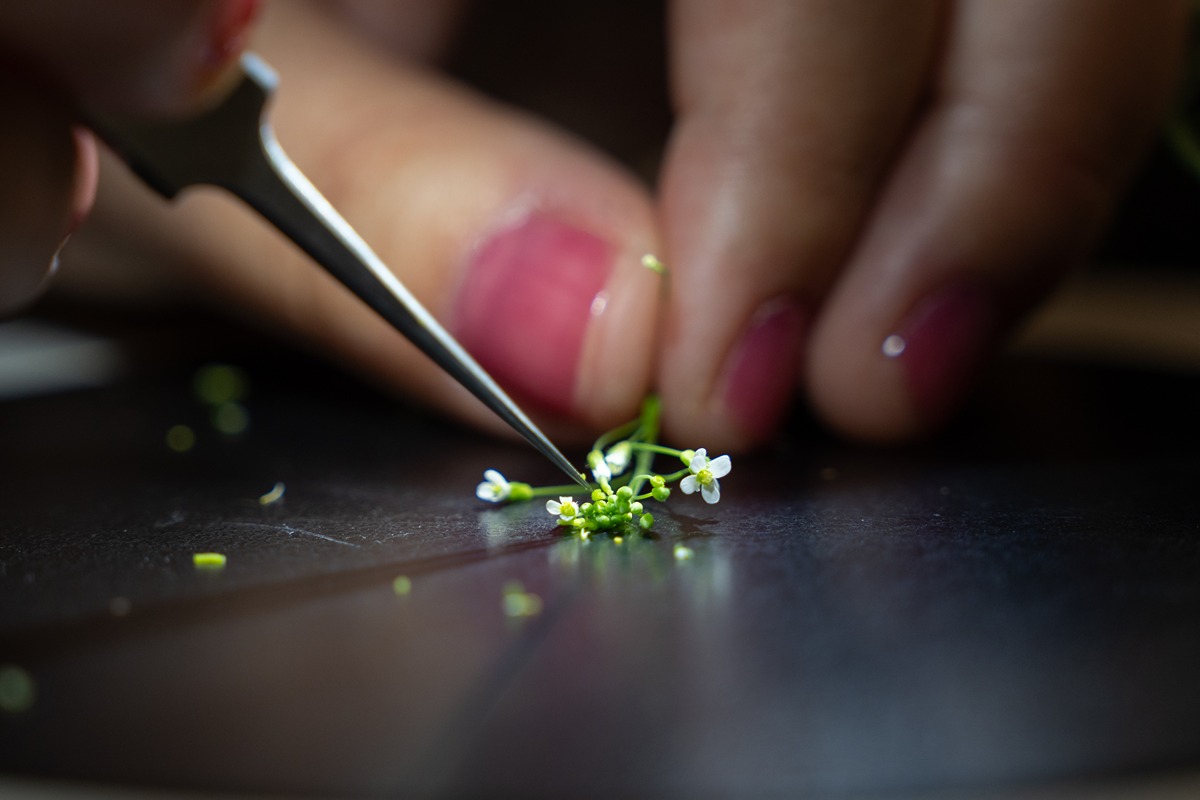 The model plant for Sharon Kessler’s lab and many other plant scientists is Arabidopsis, a small relative to broccoli, native to Europe.
 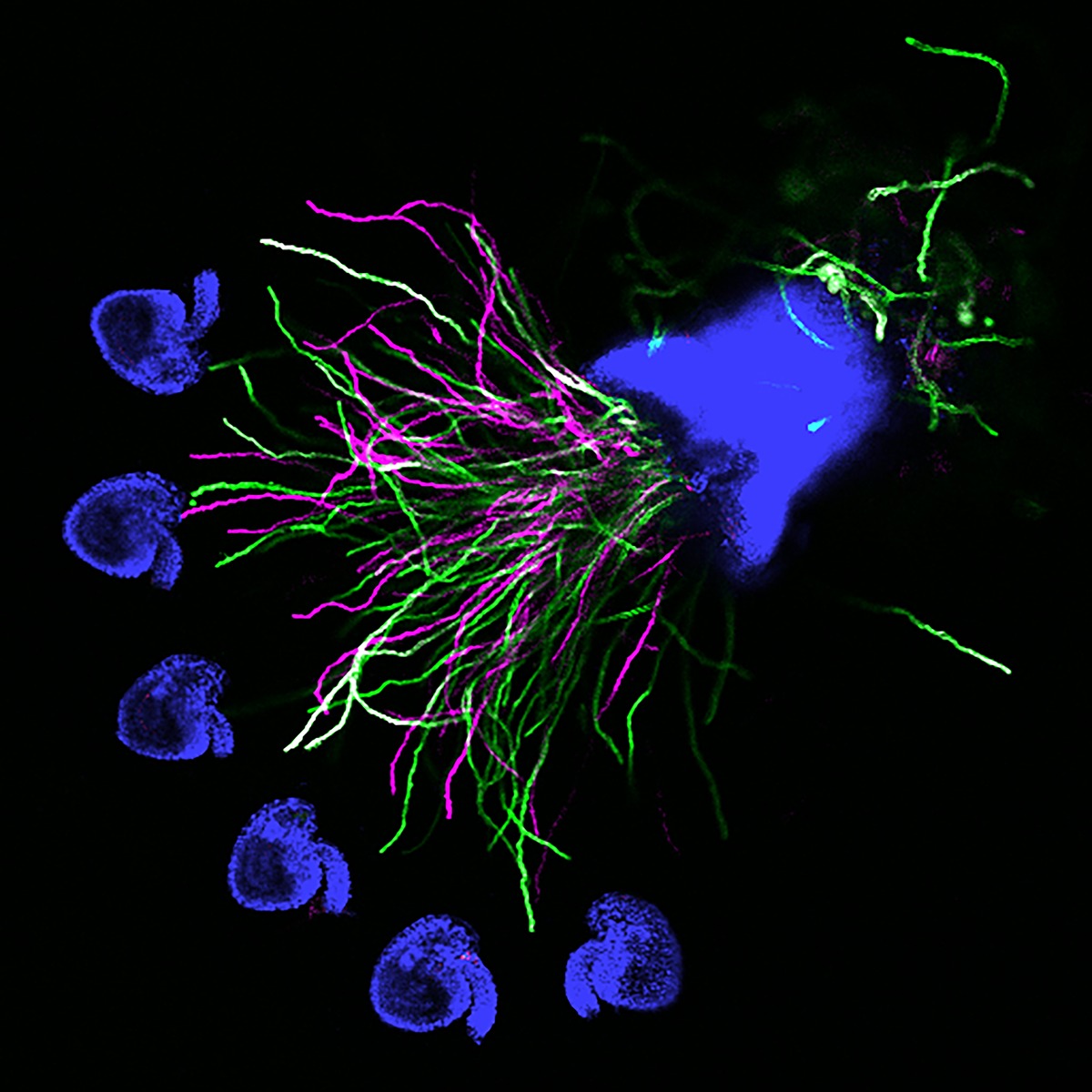 Here, the top female part of a pollinated flower has been cut to reveal pollen tubes and the ovules they are growing toward. Photo by Jing Yuan, arranged on media in a petri dish under a microscope.
 Pollen grains themselves are as diverse and distinct as the flowers that create them, each with specializations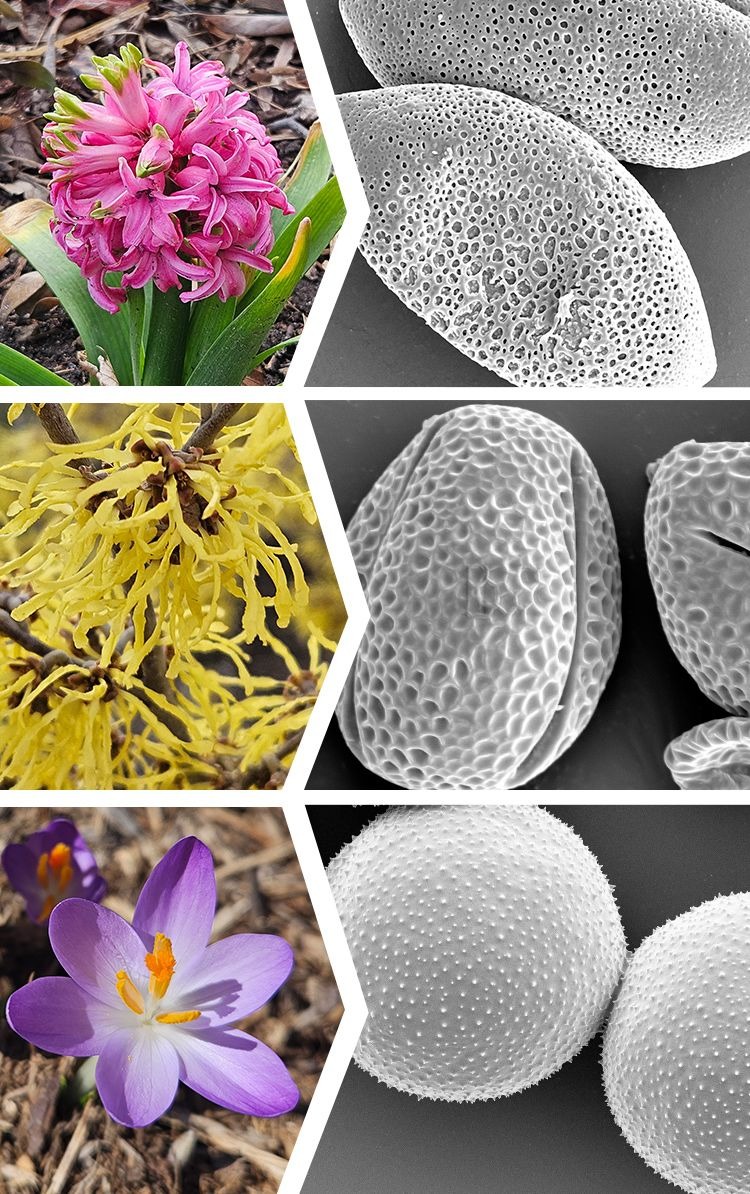 to their microscopic shape.
The differences in pollen shapes have even been used as evidence to solve crimes. “Every species has different modifications to their pollen cell walls," Kessler said. "Some of these facilitate flying through the wind or getting stuck to insects. In forensic science, sometimes they use pollen to track where a crime took place. If there’s a body found with pollen on it, but that pollen doesn’t exist where the body is found, they can trace back where the murder might have occurred.”
People have no idea what information their eyes are missing until they can take a closer look with a microscope.”
- Chris Gilpin, director, Purdue Electron Microscopy Center
COMPLIMENTS TO THE CHEF
From flour in the pantry to orange juice in the fridge, pollen is responsible for many grains, fruits and culinary vegetables. This food arises from the seeds or swollen ovaries in fertilization, creating fruit to entice animals to take a bite and help spread the seeds.
Corn is one food that wouldn’t exist without pollen. Pollen is the fastest growing cell of any plant; corn pollen tubes can grow over one foot in a single day.
The hairy silks you see popping out of an ear of corn are really the female part of the flower. Each silk leads to a single ovule on the ear, and successful pollination creates the golden kernels you find on your plate.
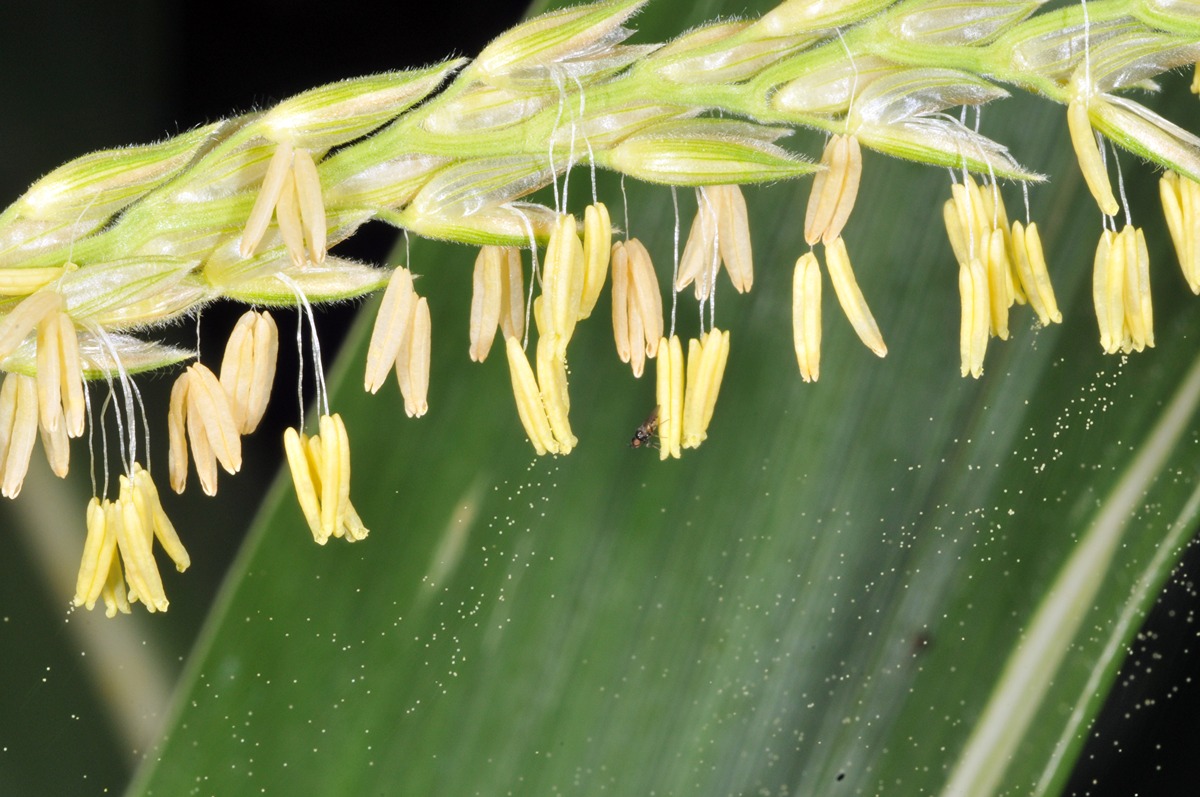 Corn tassels are the male flower of the corn plant, making pollen that is spread by the wind.
 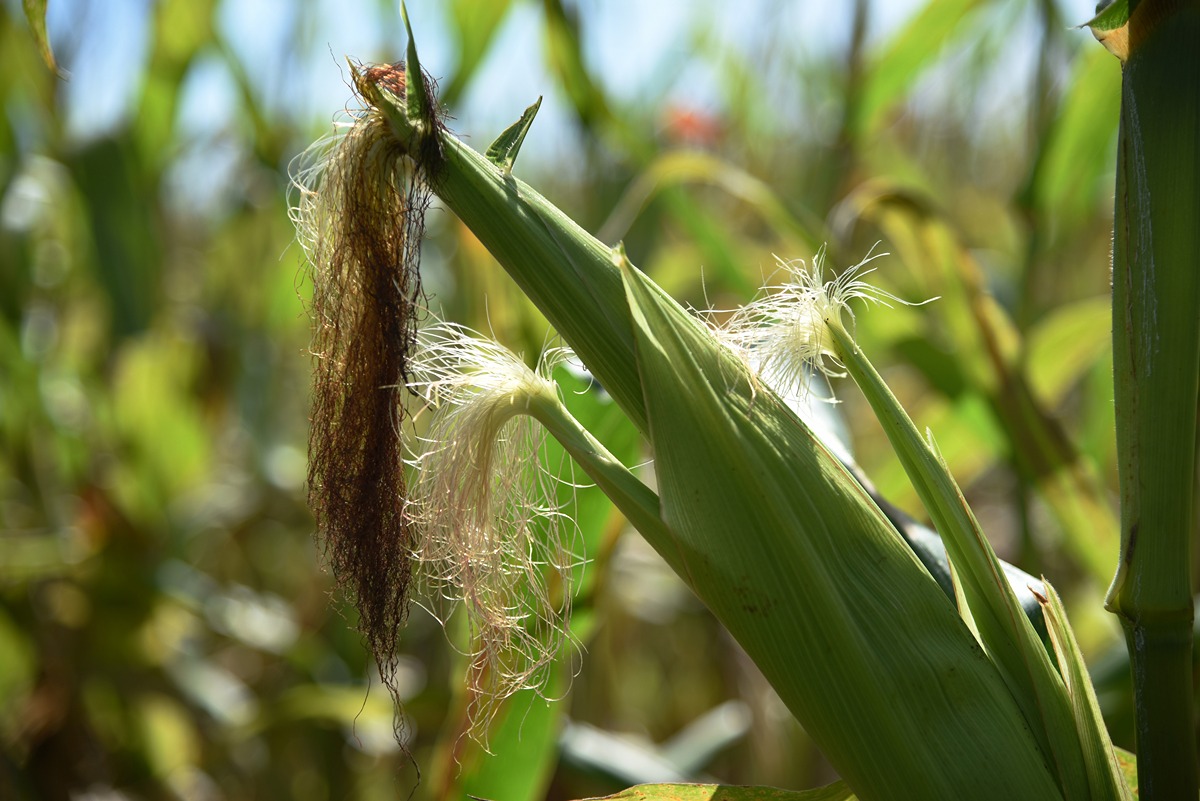 Corn silks are the female flower of corn plants. Each silk thread leads to an individual kernel.
 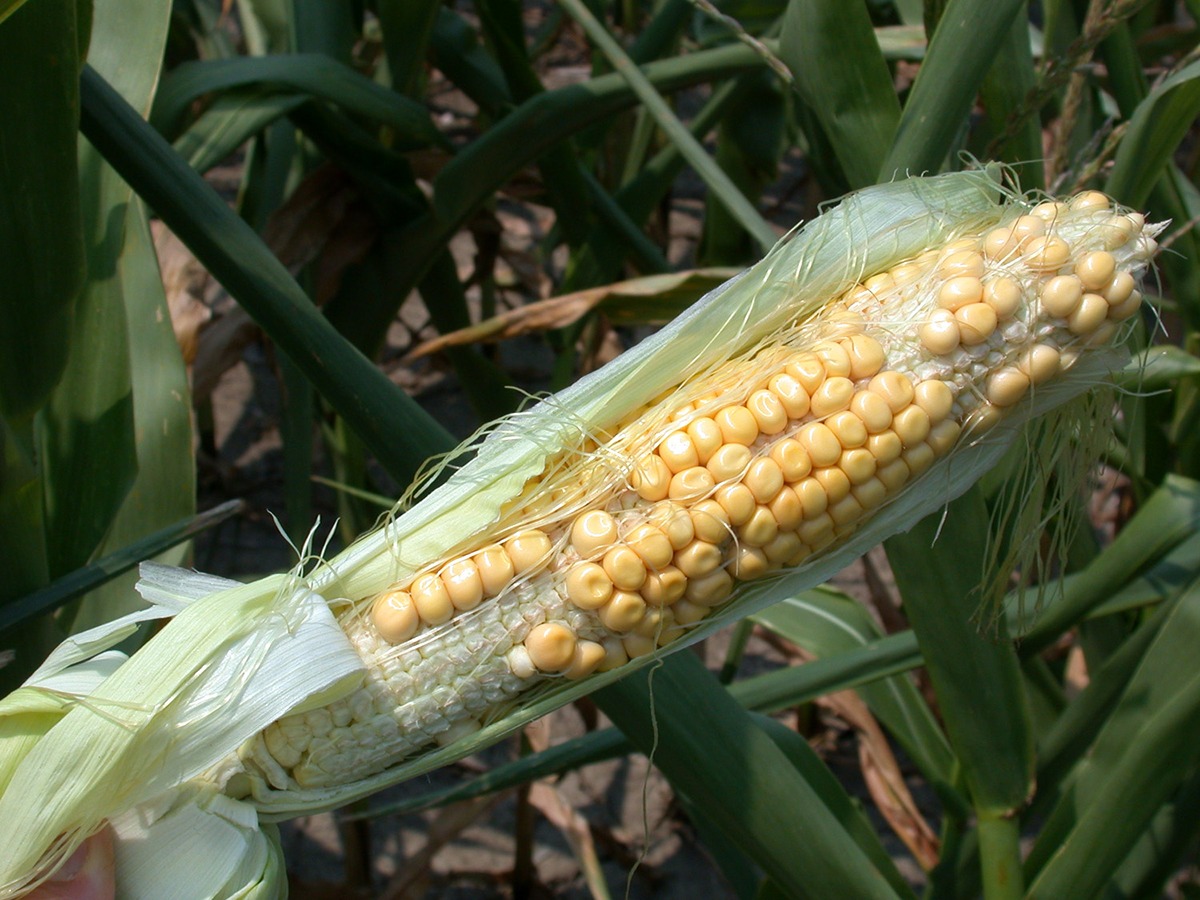 Poorly pollinated ears of corn can't produce full sets of kernels.
 As temperature shifts become more common, plants’ internal clocks are growing confused. They may produce pollen and nectar at atypical times, meaning they won’t be available when the correct pollinators are around. Not only is the plant-pollinator relationship at risk, so is the successful communication between the male and female parts of a plant. Pollen tubes may not grow or fertilize as well under heat stress, and that means fewer and smaller fruits and seeds around the world.
Kessler hopes that her lab's research can make pollination and fertilization more efficient — or unlock ways to bypass it entirely in crops. Dandelions, for example, create seeds that are perfect clones of the mother plant using apomixis, or “without mixing.” Other plants, like the Arabidopsis that her lab studies, fertilize themselves. While both adaptations carry the risk of less genetic diversity — making them more prone to pests and disease — they provide more options for an uncertain future.
Pollinators: Mother Nature’s matchmakers
To reproduce without being able to swim, walk or fly, flowering plants have to make use of other things moving around in their environment. Earth’s variety in flora arose from a co-evolution with other organisms to spread pollen and seeds. The vibrant colors, various shapes and attractive smells that motivate people to plant flower beds are meant to attract pollinators.
Can you guess the pollinators for each different flower?
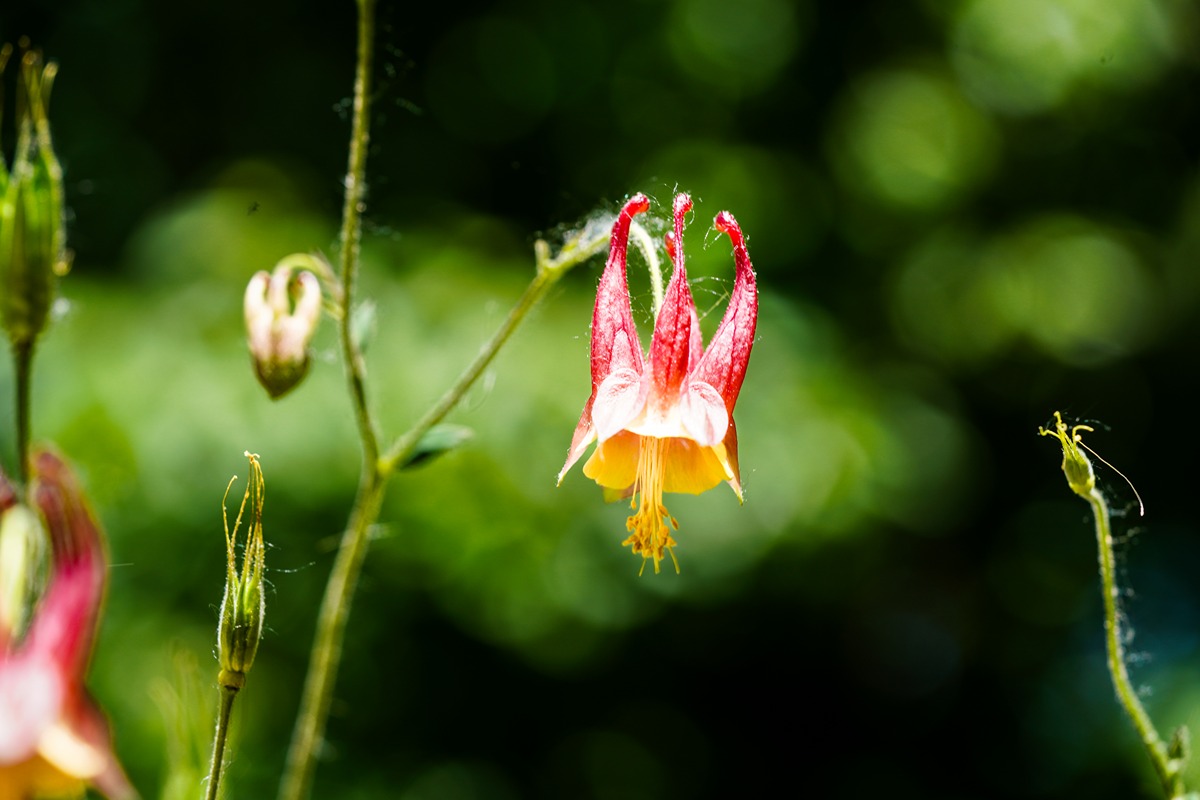
Some pollinators struggle to visit the upside-down columbine flowers.
But, hummingbirds can hover under the opening to reach the nectar at the tip with their long skinny beaks, getting pollen on their foreheads and necks as they work.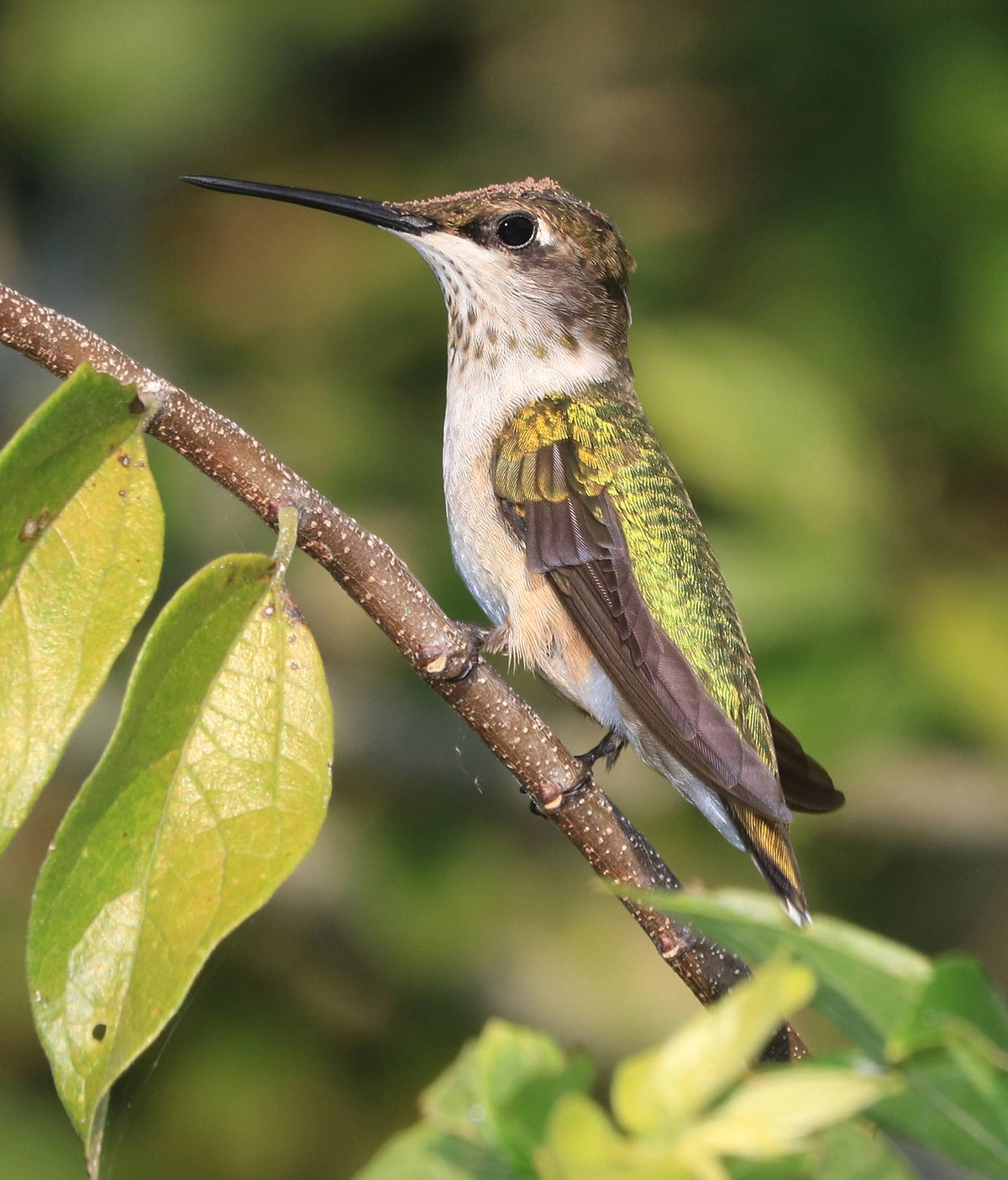
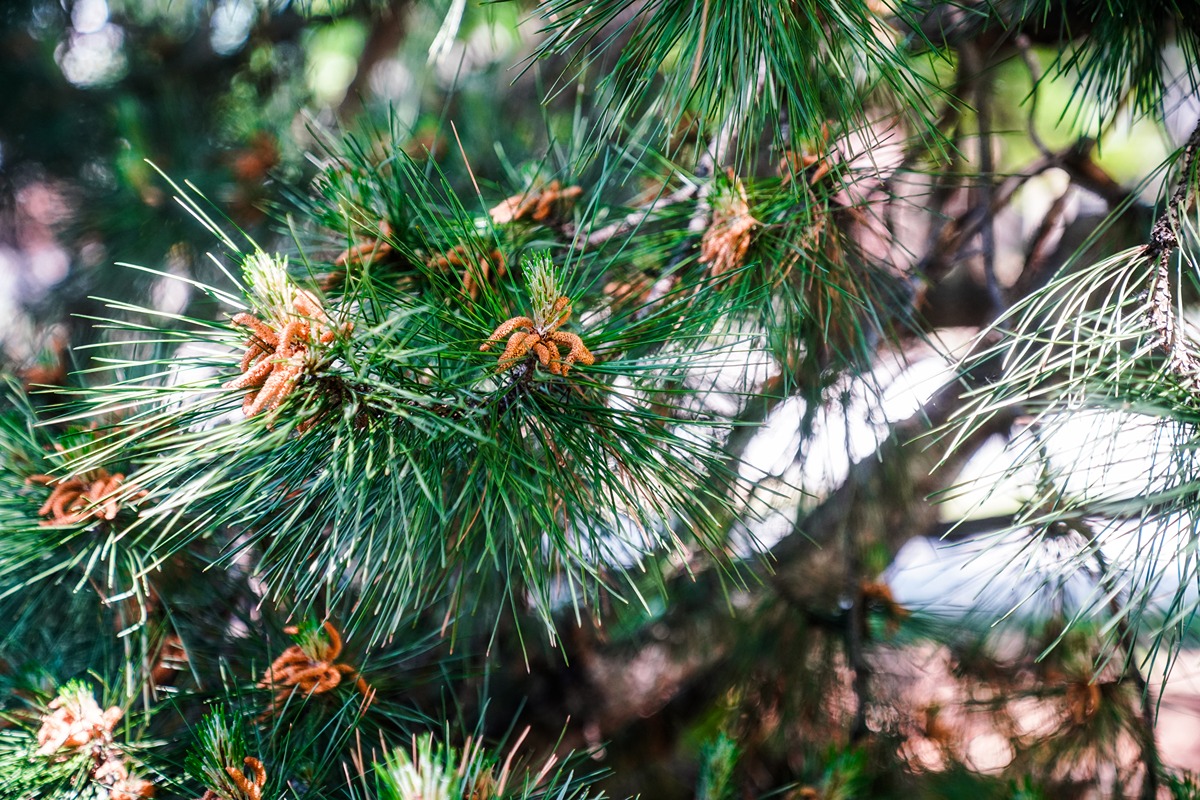
Pine trees produce pollen inside of small cones instead of using petals and rewards to attract living pollinators.
Many tall trees have evolved to use wind. Pine trees make so much pollen just to reach the female cones that it causes environmental allergies and leaves yellow-brown dust on cars in the spring.
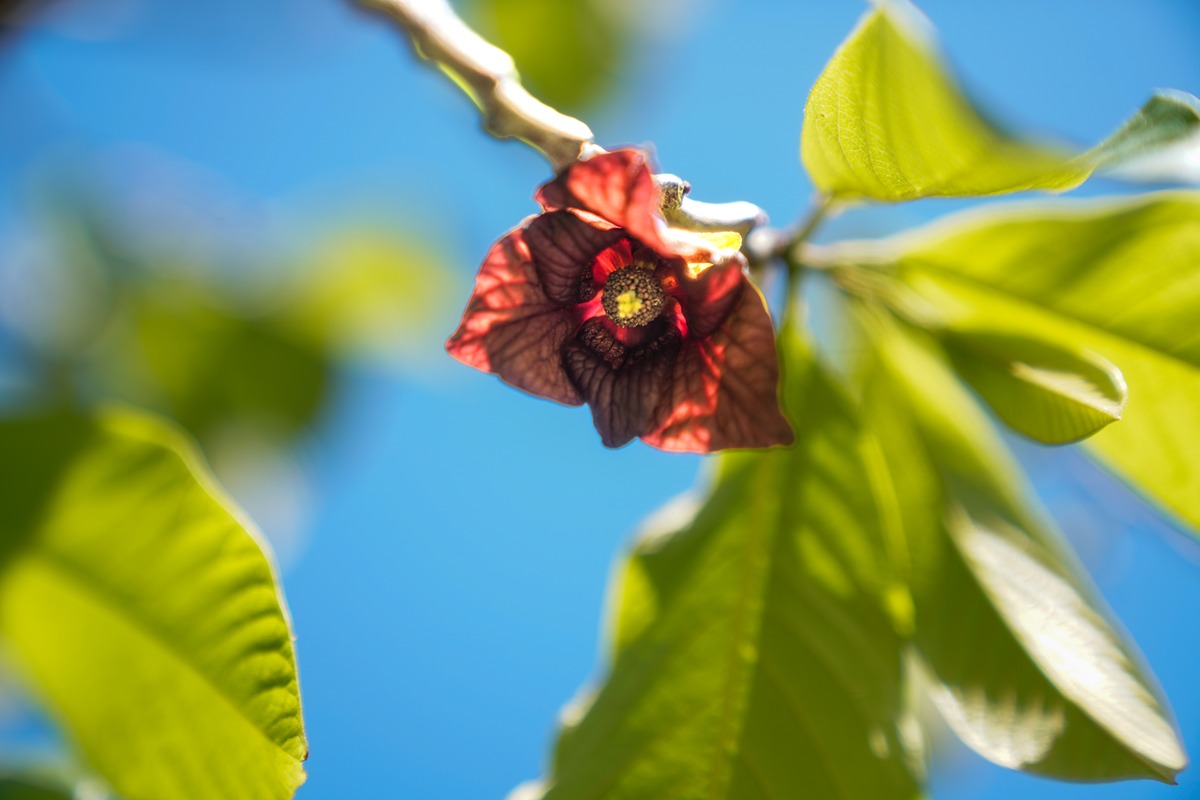
The pawpaw tree disguises its flowers as meat and produces a rotting smell to attract pollinators that like to scavenge dead animals.
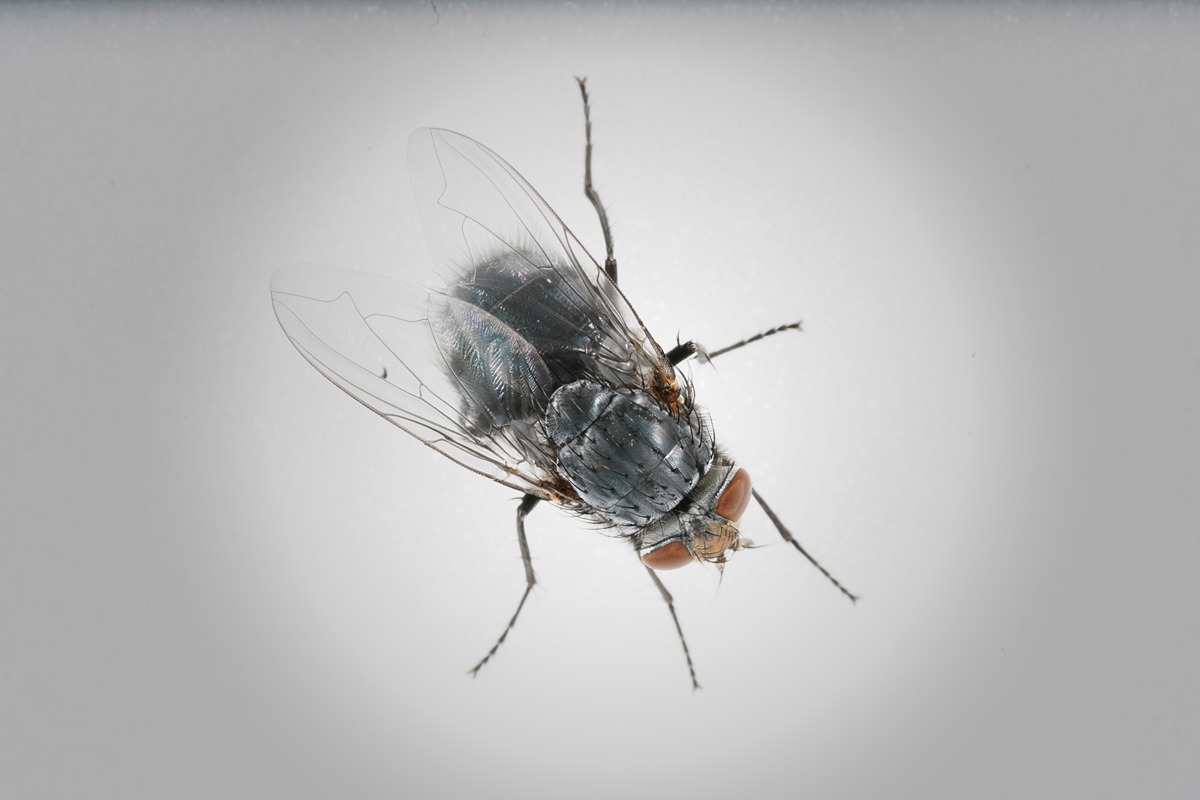 Flies are one of the largest groups of insects, and many are important general pollinators too.
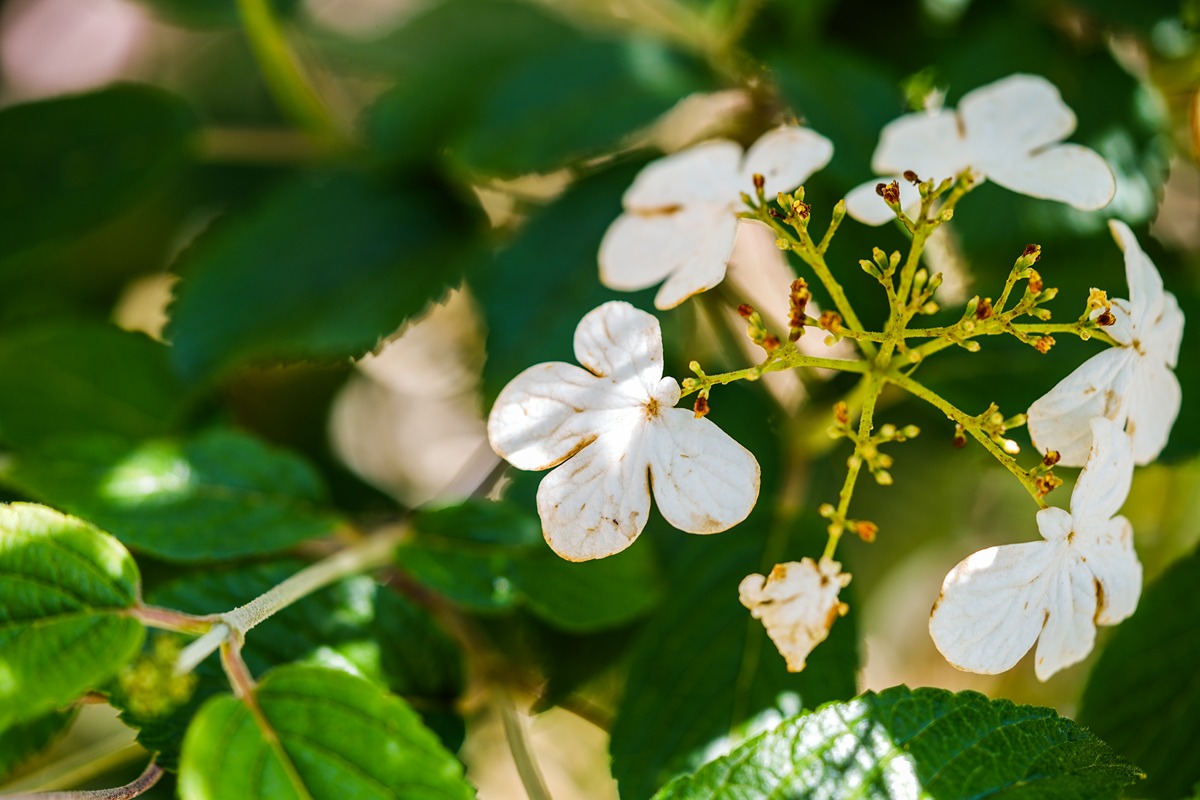
White flowers, like those on the viburnum shrub, might pale in comparison to others, but their reflective petals help nocturnal pollinators find them in the dark.
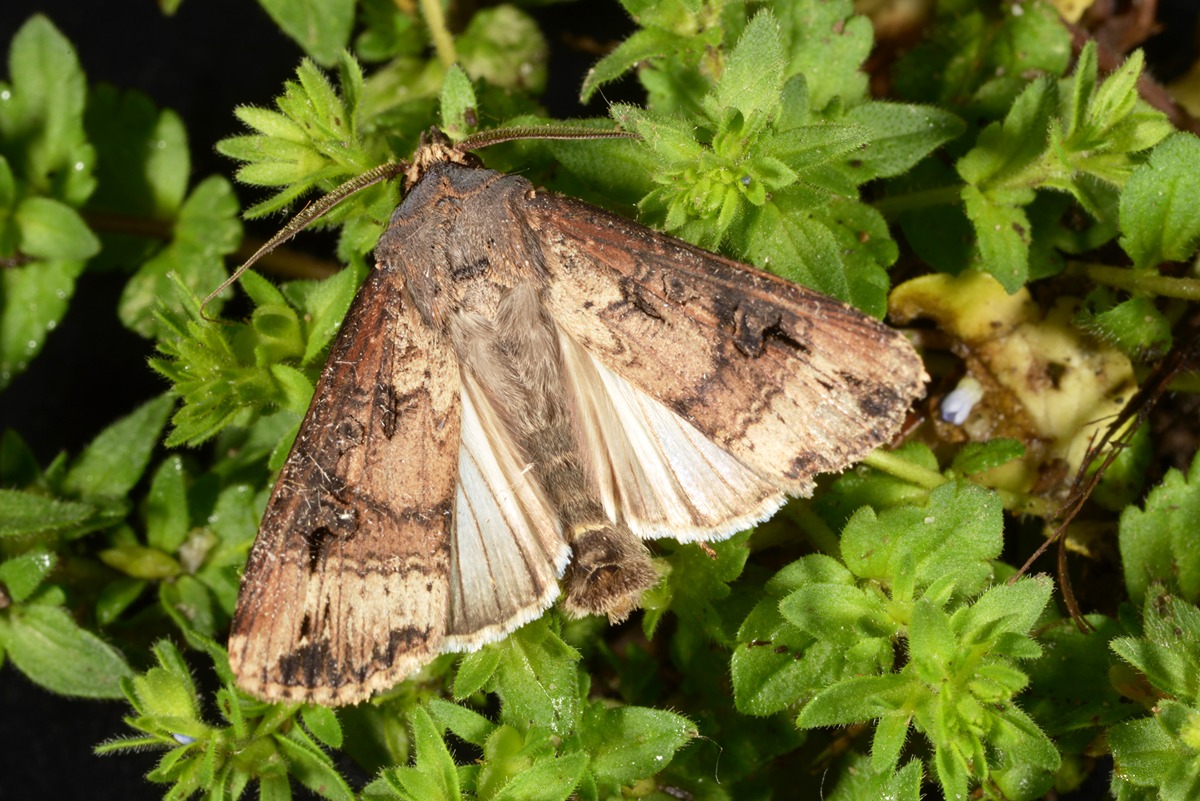 Moths are most active at night, and their thin tongues can reach inside the viburnum flowers to reach the nectar. Some moth-pollinated flowers open only at night to conserve energy.
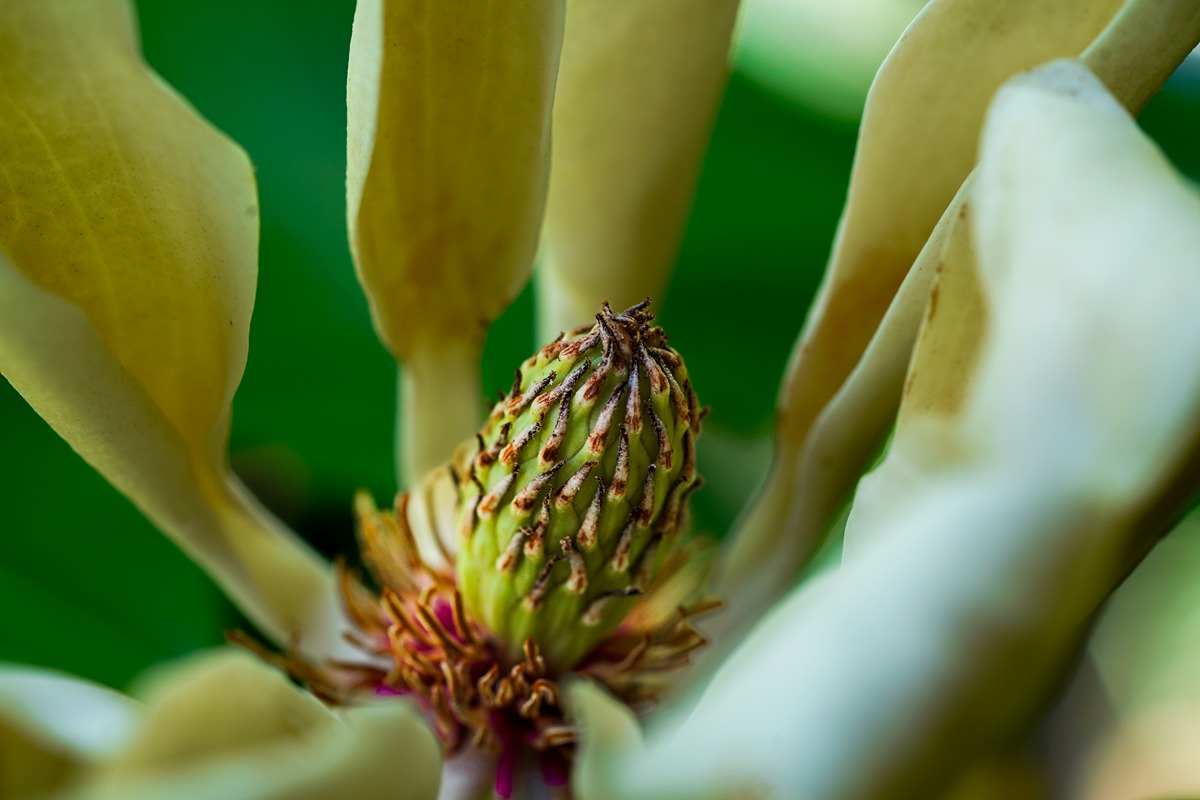
Who pollinates magnolia flowers?
Magnolia trees have been blooming since the time of the dinosaur, and it’s believed they evolved with equally ancient pollinators. Their unusually thick petals may have once provided protection from sharp mouth pieces.
Today, several different beetles, such as the soldier beetle, visit magnolia flowers.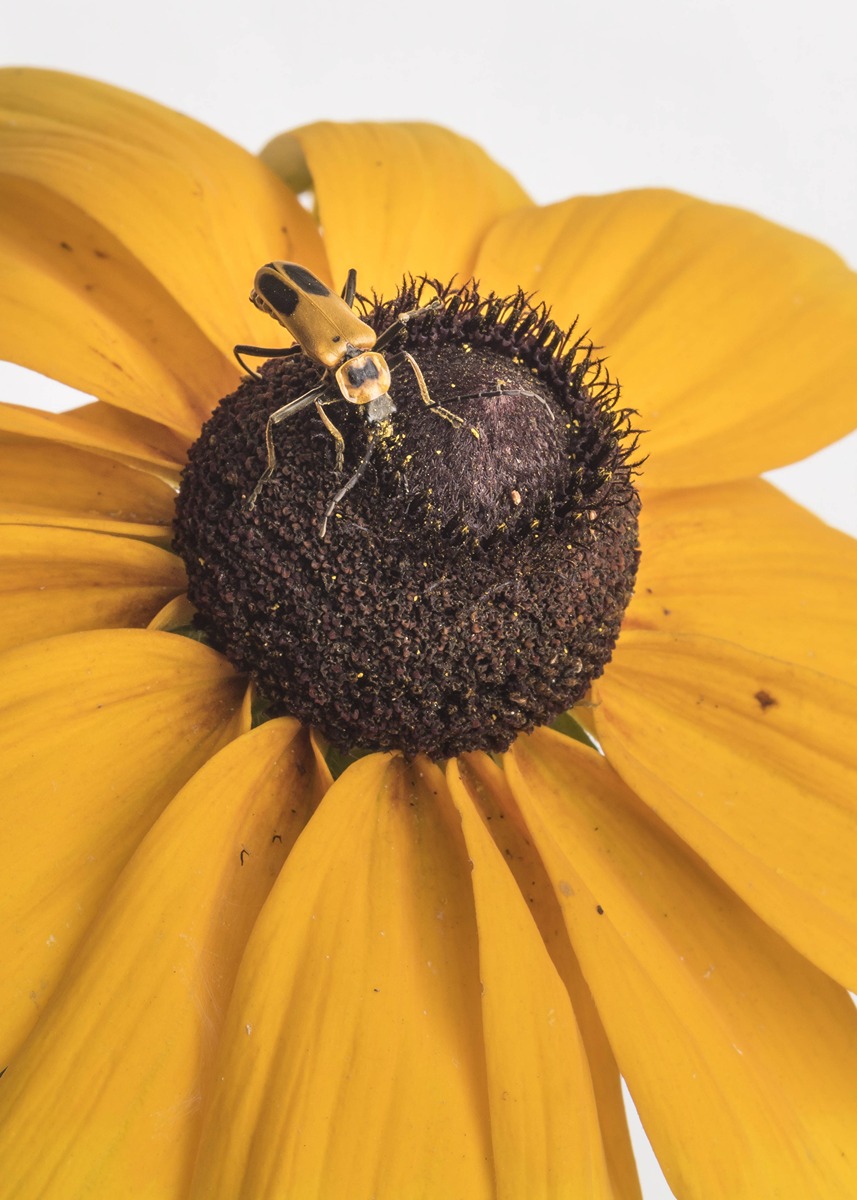
What’s the buzz about bees?
Like other pollinators, bees have co-evolved with flowers. They see in wavelengths of light beyond what human eyes can perceive, and some flowers contain hidden patterns in their petals that can be seen only under ultraviolet light. Many plants have also adapted for bees by creating landing pads in their flowers that insects can walk around on, collecting nectar and simultaneously gathering pollen.
Honey bees, which are native to Europe, Asia and Africa, also evolved with humans. For thousands of years, people have collected their honey and wax, eventually learning to keep these insects in easy-to-use hives, breed them for specific characteristics and travel with them around the world.
Brock Harpur, an associate professor of entomology, said honey bees aren’t just important to sweeten tea.
Our current agricultural system relies on honey bees. We can manage and move them around. Think about an almond orchard, which requires one bee per blossom to produce nuts. Honey bee colonies and the practices we've developed allow us to meet this need.”
- Brock Harpur, associate professor of entomology
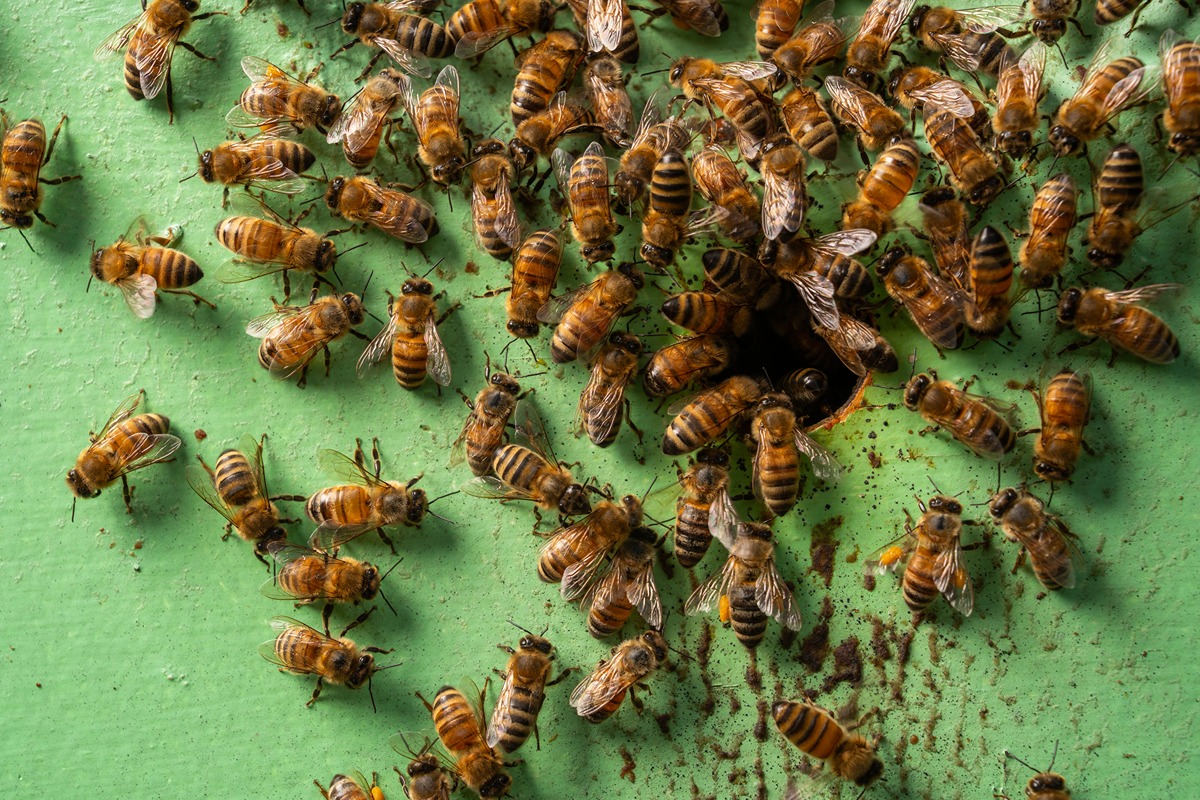 At the entrance to a honey bee hive, some bees have pollen on their legs as they return home from flower forages.
 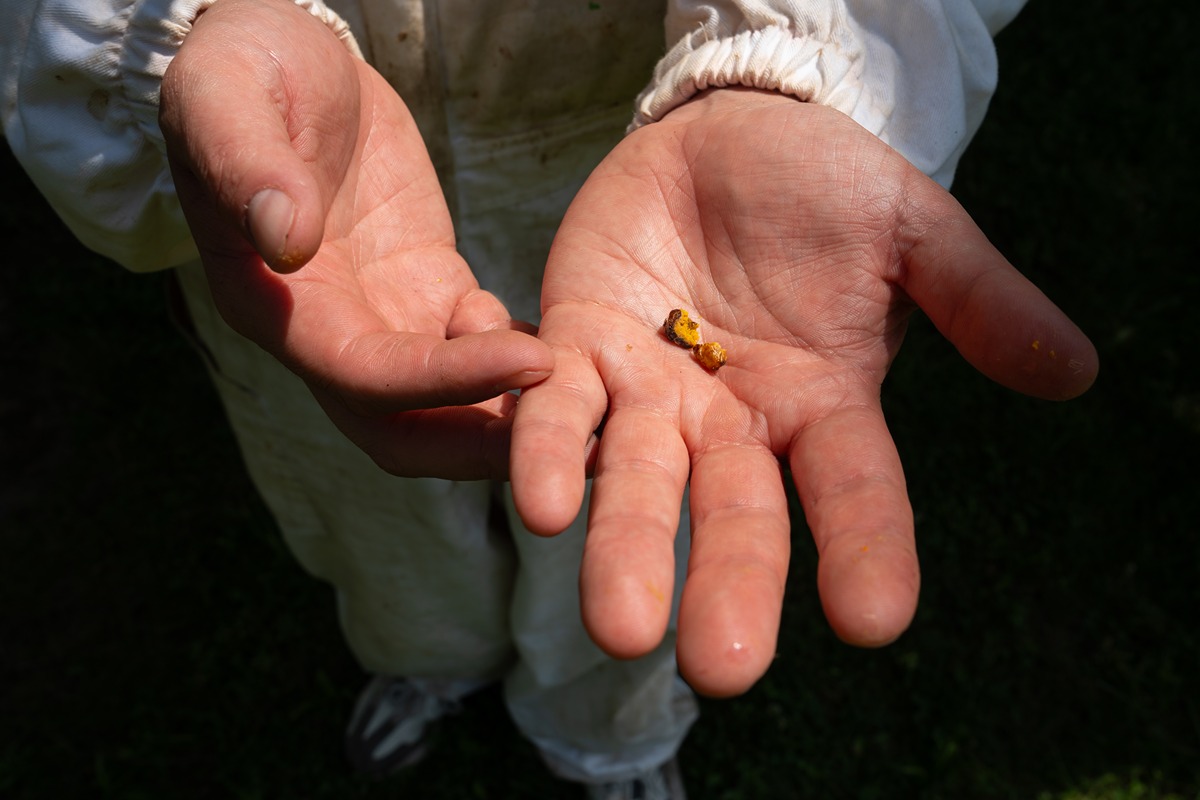 Bee bread, made of pollen mixed with nectar and enzymes from their saliva, provides important nutrients for the hive.
 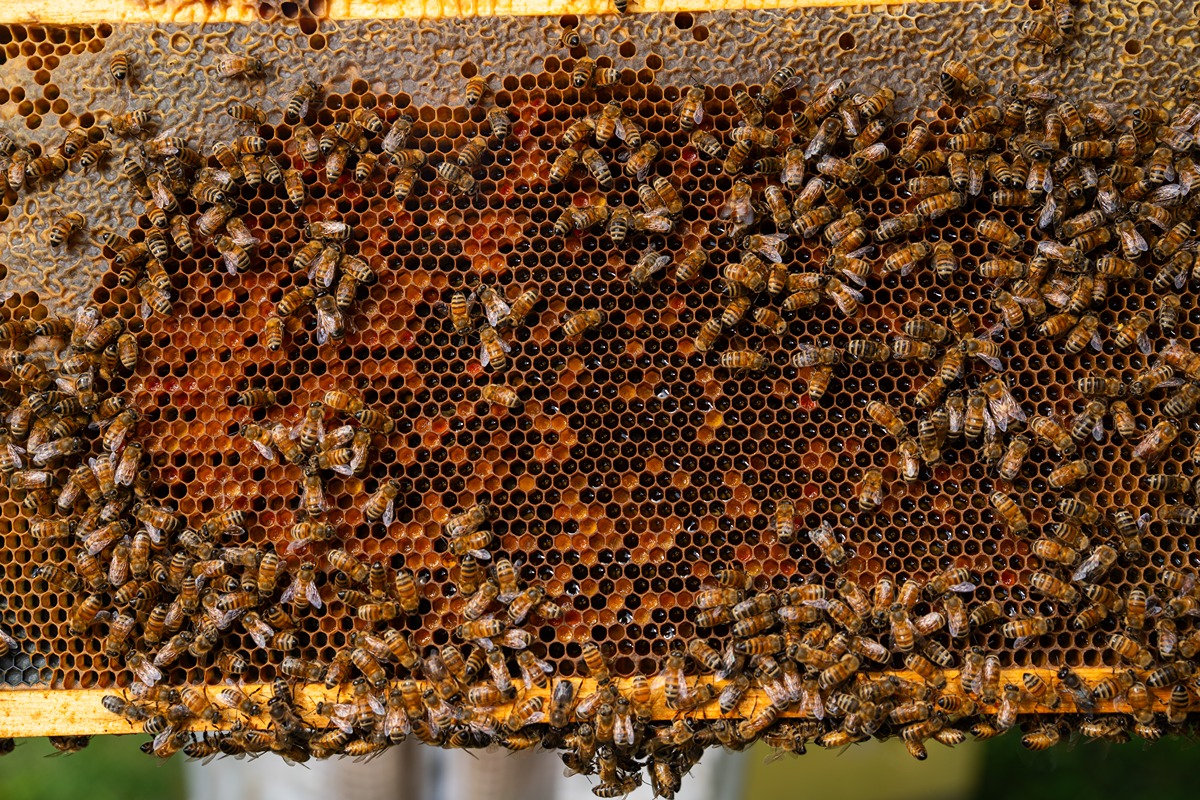 Bee bread retains the color from pollen even when set in comb.
 Jonathan Nixon, one of Harpur’s PhD students, says honey bees are willing to visit any flower but can be picky about what pollen they keep around the hive. Some pollen, even after being collected, may get pushed out of the hive if the colony does not find it up to par.
“There's a lot of interesting pollen-derived microbes, or microscopic bacteria and fungi, that bees need,” Nixon said. “So they can sense those communities. We think a lot of their preferences for different pollen are based on the overall abundance in the environment and the microbial communities that are present within them.”
Beekeepers can use the bee bread to see which flowers their hives have been frequenting. The comb cells retain the color of the original pollen. From yellow and orange, to blue and purple, or even white and black, honey bees form a colorful map that showcases the local flora in bloom throughout the season.
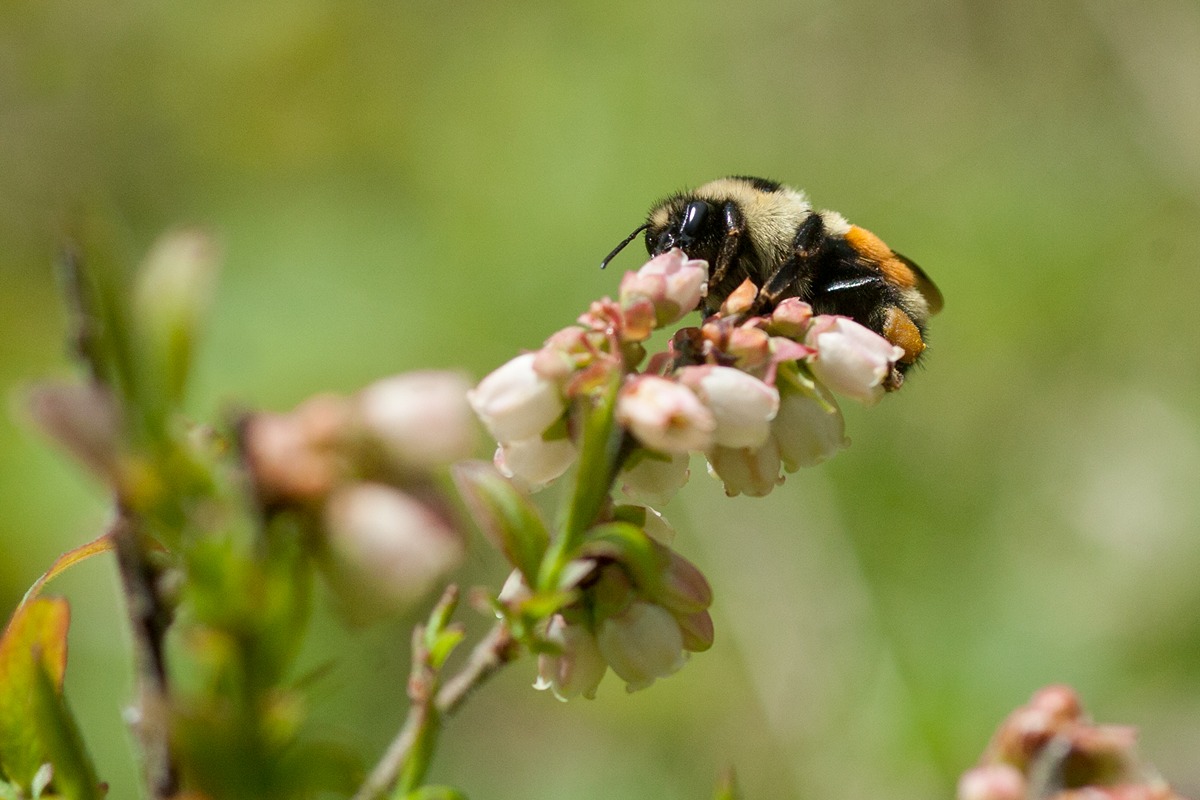 Honey bees are social, forming hives thousands-strong, but many bees native to the Americas are solitary or form significantly smaller colonies. Native bees don’t produce any honey for humans or organize well enough for agricultural field production, but they are essential to the ecosystem. In fact, bees native to different localities across the world are responsible for pollinating 80% of all flowers globally.
Brenna Decker, an assistant clinical professor of entomology, studies native bees and wasps. She’s seen how these pollinators are essential to the survival of local species of flowering plants and the greater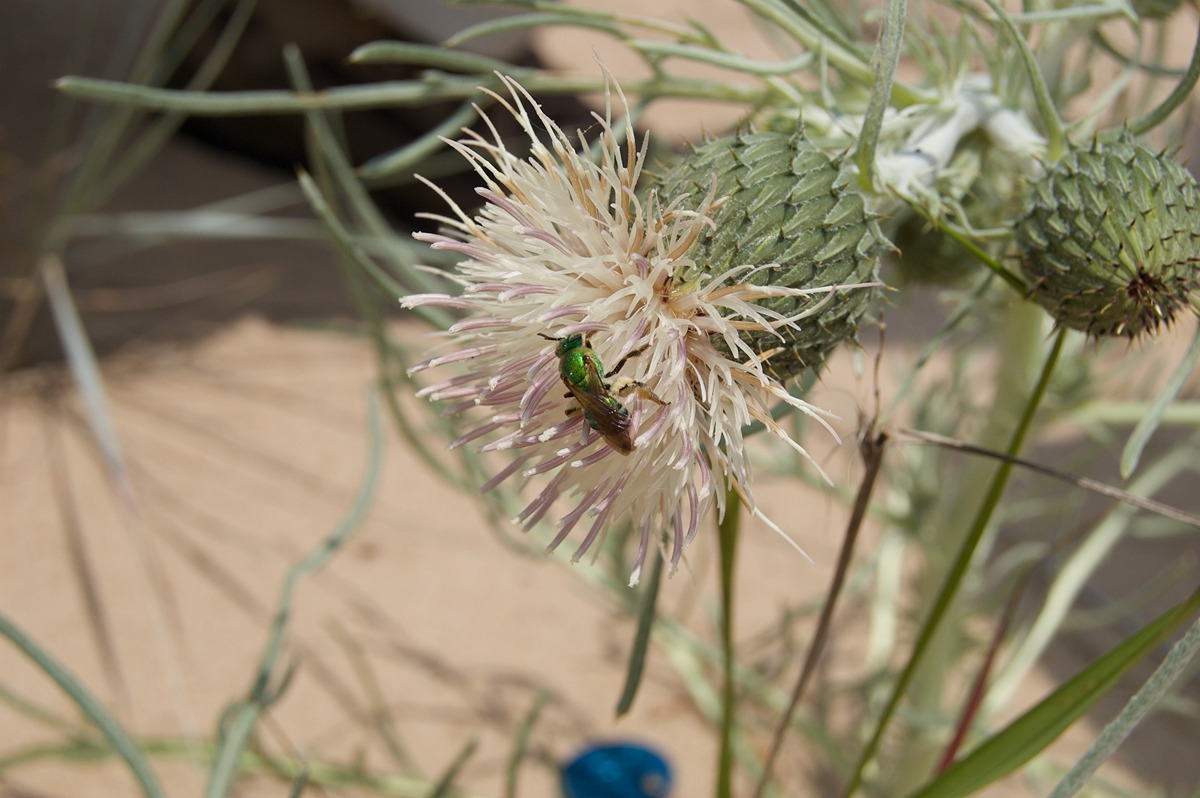 ecosystem. "With the solitary bees," she says, "there's a lot of co-evolution with vegetation and wildflowers." Some bees may strictly pollinate one flower, and one plant may use only one type of pollinator, making them both specialized for and reliant on each other.
Leafcutter bees are required for many bean-family flowers to release their hidden anthers. Tomatoes need native bees to buzz at a specific frequency to shake their pollen free. Zucchinis, melons and pumpkins have pollen so bitter that only squash bees that nest underground in squash fields over the winter can digest it. Endangered plant species are under greater threat without native bees, like the Agapostemon virescens, which visits the endangered dunes thistle that grows on the sandy slopes of Lake Michigan.
Both native bees and honey bees are facing challenges. Pathogens and parasites alike can wreak havoc in a honey bee hive. Native bees are adept at pollinating local flora but aren’t always sure how to interact with flowers from invasive plants. Honey bees may outcompete them, as they can gather pollen and nectar from invasive plants and thus help spread such species as well.
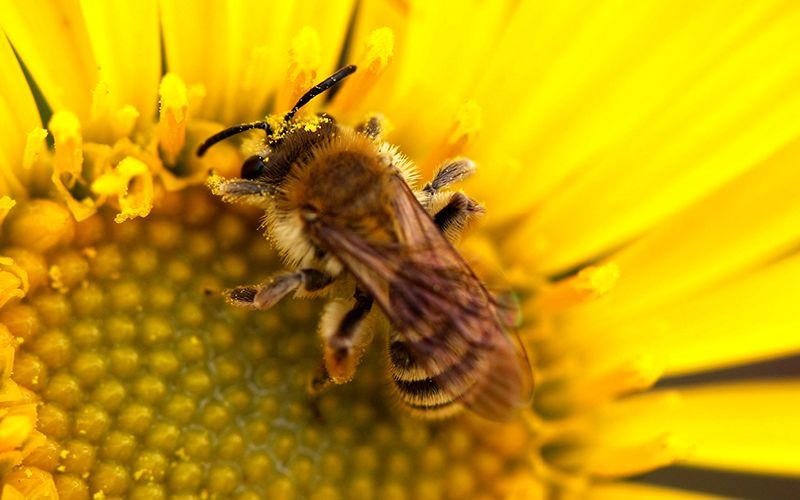 Solitary bees have dense areas of branched, hair-like structures on their legs or abdomen, so there's more surface area for the pollen to stick and be held for transport.
 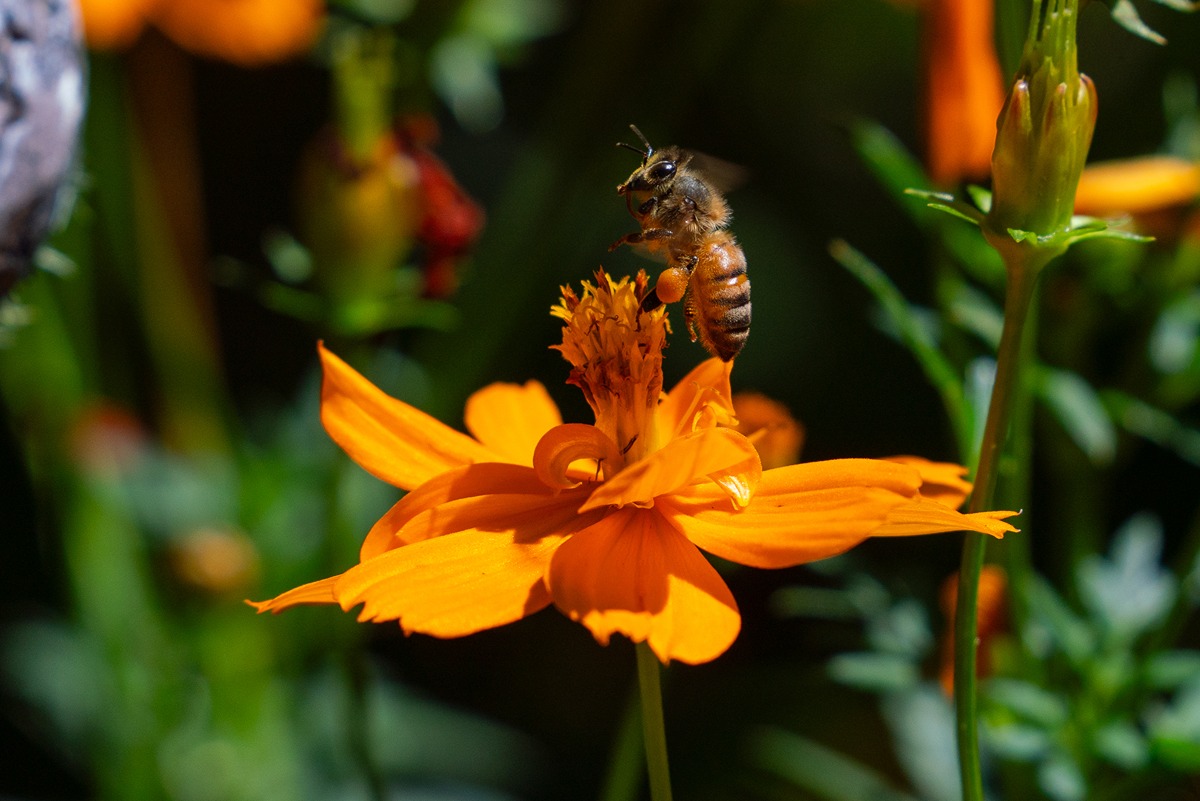 Social bees carry large sacs of pollen on the bare spots of their legs, where they have wet and plastered the pollen to themselves for better transport.
 How to be a pollen steward:
Robert Grosdidier, a PhD student in Laura Ingwell’s entomology lab, says the more biodiversity there is in an area, the better that area is at hosting the pollinators that plants need. For example, planting sweet alyssum flowers next to tomatoes, a technique called “companion planting,” offers readily available nectar to attract pollinators and keep them healthy.
Here are easy ways to increase biodiversity by mimicking natural ecosystems in your area, no matter your space:
- Grow flowers in your yard or in planter boxes on a porch or balcony.
- Beware of pre-made pollinator seed mixes, which may contain invasive plants. Instead, search for native plants on the USDA’s Native Plant Finder. Look for perennials that come back every year.
- Engage in “lazy lawn care,” letting weeds grow and flower alongside your grass, and hold off on mowing as long as you can.
- Leave dried plants up through fall and winter to make places for pollinators to nest, or set up bee houses of hollow wooden tubes for them.
- Work with your community to encourage building pollinator gardens in medians and beside roadways.
- Want to become more bee-friendly? Check out these resources from Purdue Extension.
Ending with new beginnings
The same pollen grain that makes you sneeze in spring is actually a vehicle for life that may have traveled hundreds of miles to make seeds.
The ancient partnerships both within flowers and with pollinators shape life on Earth as we know it and will continue to do so with every new generation.
Featured Stories

The Office of Indiana State Chemist (OISC) is warning Indiana residents about an illegal...
A prominent protein on most human cells may be key to unlocking the code that makes humans...
Ava Hoskins, a double major in aquatic sciences (fisheries concentration) and natural resources...
Ashlynn McLaughlin, a senior aquatic sciences major with a concentration in marine and freshwater...

For Brody Cox, preparing for the Indiana State Fair began long before he entered the show...
Carolyn Foley, a long-time member of the Purdue Forestry and Natural Resources (FNR) and...