

Tiny algae, big benefits to aquaponics
PhD candidate Jemuel Doctolero studies the benefits of microalgae in aquaponics systems, part of Purdue’s When Blue is Green initiative for sustainable aquaculture
They’re microscopic. But they have the potential to help address food insecurity and environmental degradation.
We’re talking about microalgae – single-celled phytoplankton found in both freshwater and seawater. When added to aquaponics systems – systems that combine raising seafood (aquaculture) with growing plants in water (hydroponics) – the microalgae can enhance productivity, in addition to being a valuable product themselves.
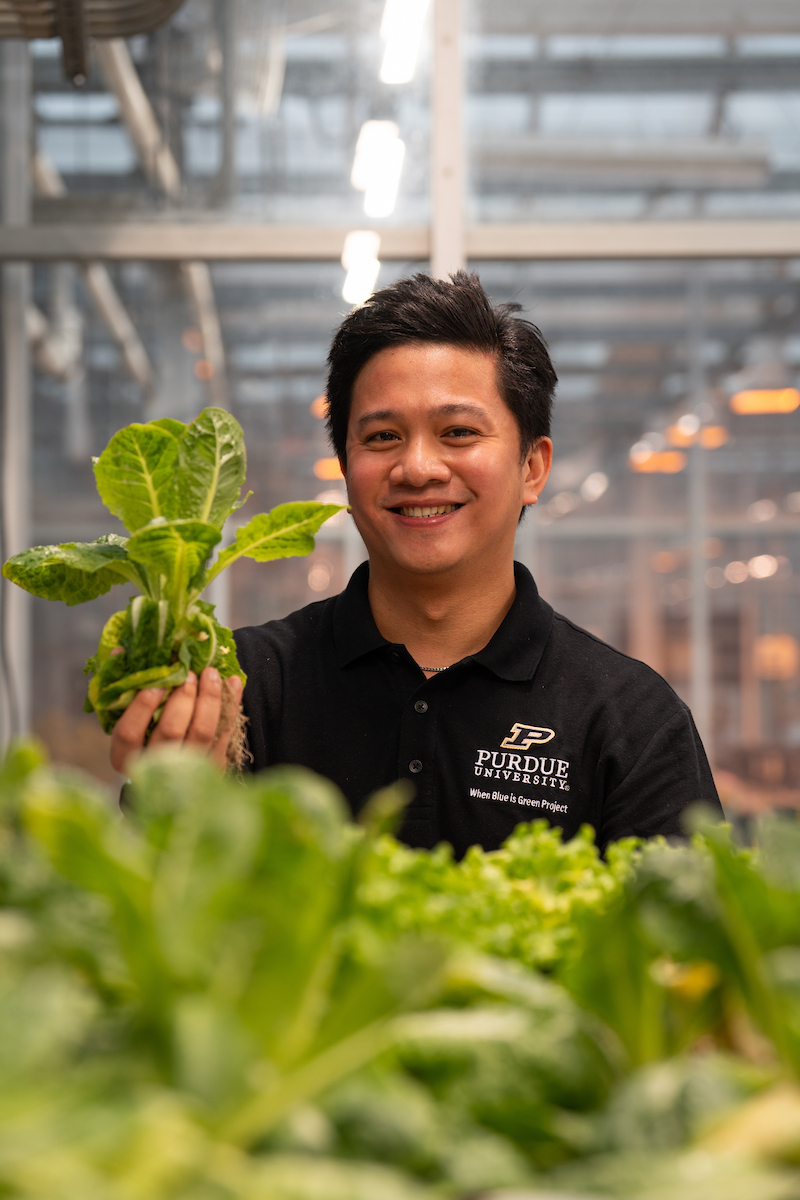 These findings, part of dissertation research by Purdue Forestry and Natural Resources PhD candidate Jemuel Doctolero, will be published in January in the journal Aquaculture.
“Traditionally aquaponics has always been fish and plants,” says Doctolero, a Fulbright scholar originally from the Philippines. “In our project, we introduced a secondary biomass, microalgae. Microalgae have lots of benefits – it’s not a traditional food, but it has commercial applications in nutraceuticals and pharmaceutics, in cosmetics, in animal feed, and in biogas and biofuel.”
For Doctolero’s research, he and his colleagues created aquaponics systems with tilapia and lettuce, two common companions in aquaponics. The tilapia release nutrients in their feces which feed the lettuce, and in return the lettuce purifies the water for the fish. The team stocked the systems with different amounts of fish per cubic meter of water, then added the new biological component: Chlorella vulgaris, a species of green microalgae.
They found that different starting densities of fish provided different benefits. Greater fish density allowed plants and algae to be more productive overall. Higher fish densities allowed algae to produce more crude protein and better amino acid profile, enhancing suitability for aquafeeds and nutraceutical applications. However, lower density increased crude lipid, which are necessary for biogas and biofuel. This means that aquaponics farmers could stock tanks with more or less fish depending on their goal.
Ultimately, our work demonstrates that algae can be effectively integrated into aquaponics to increase production value while also enhancing nutrient recovery,” Doctolero says.
Doctolero, who works under adviser Paul Brown, a professor of forestry and natural resources at Purdue, did his work in the Purdue Aquaculture Research Lab, an indoor-outdoor facility about 10 miles from campus.
“I spent a lot of time designing the setup,” he says. “It took me roughly two months to build the system, but the actual experiment lasted five weeks.”
In the system, the microalgae were suspended in the water, but Doctolero is now investigating growing the algae on a biofilm surface. This would make it easier to harvest – farmers could simply scrape it off, rather than needing to use a centrifuge, which is expensive.
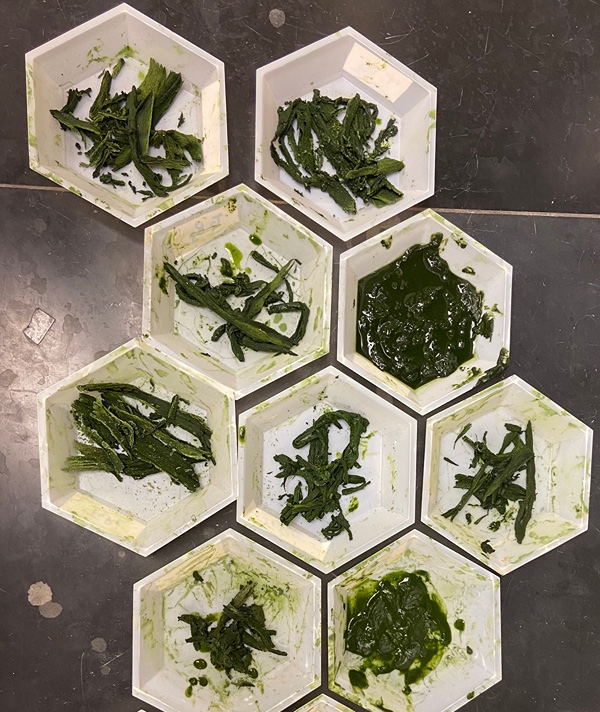
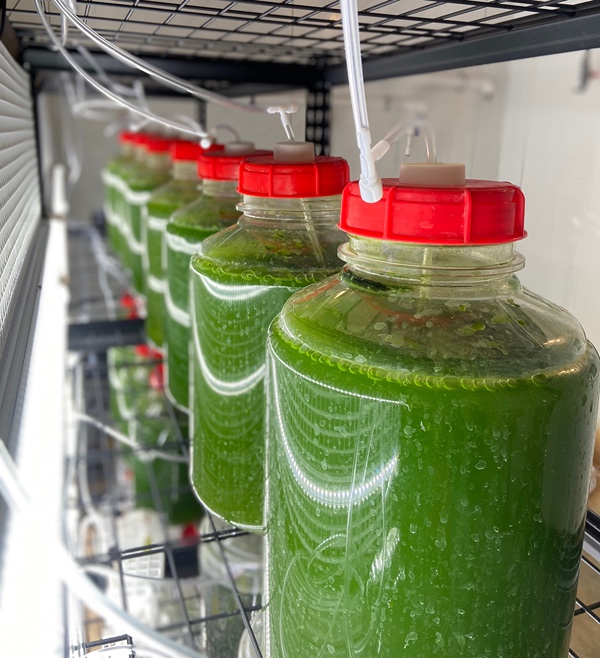
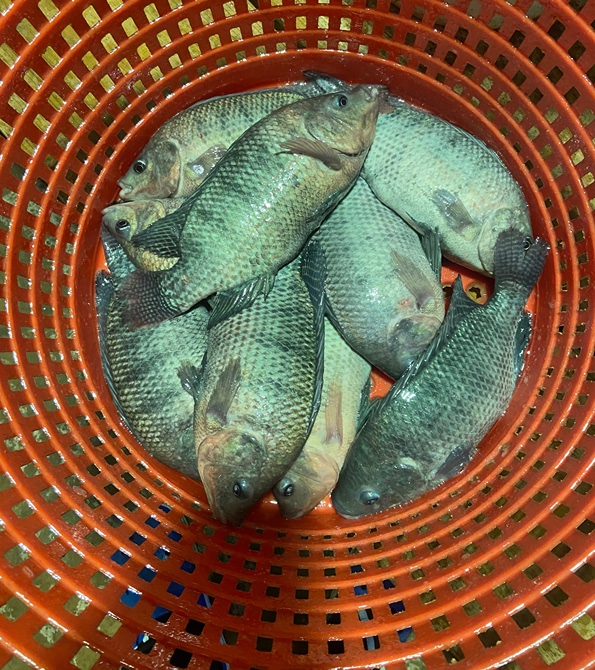
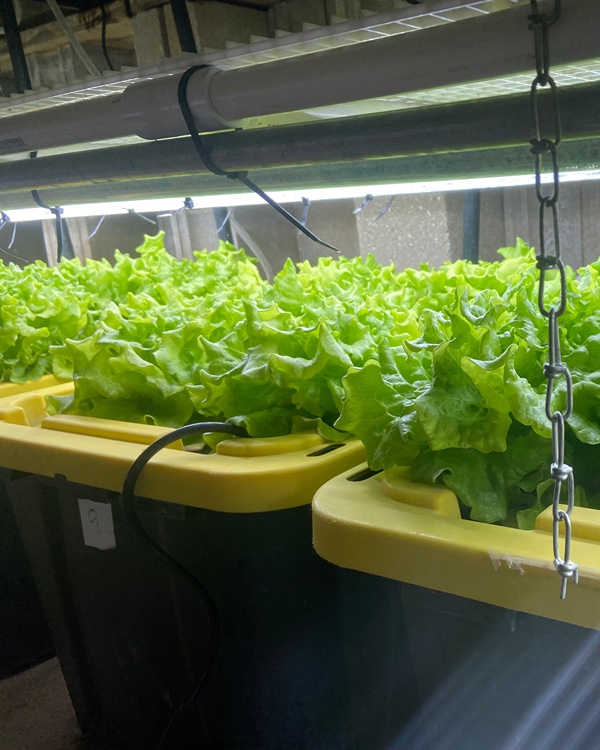
Doctolero hopes his research will benefit current aquaponics farmers and encourage others to see the value in aquaponics. His work is part of the When Blue is Green project, a Purdue initiative for sustainable aquaculture. The project looks to increase local and regional production of seafood in the US; currently 90 percent of seafood consumed in the country is imported. To achieve this, Purdue researchers are working to develop sustainable, economically viable aquaponics systems. Doctolero’s microalgae project fits in neatly with these goals.
“If we can produce fish and plants locally with a small setup, that can help address food insecurity,” he says. “And it has an environmental benefit, in that it’s reusing water, not discharging it into the environment.”
Featured Stories

In recent years attendees at Purdue Agriculture alumni, donor, and faculty and staff events have...
People think grass is simple. Lawns, right? Mow regularly and add some water and fertilizer. What...

The Office of Indiana State Chemist (OISC) is warning Indiana residents about an illegal...
A prominent protein on most human cells may be key to unlocking the code that makes humans...
Ava Hoskins, a double major in aquatic sciences (fisheries concentration) and natural resources...
Ashlynn McLaughlin, a senior aquatic sciences major with a concentration in marine and freshwater...