

The science behind sourdough
Crack open a loaf of sourdough and you’re tasting thousands of years of human curiosity, survival, and scientific discovery—all packed into a single, tangy bite.
Fermentation is no April Fool's trick
April 1st is mostly known for pranks, but it’s also National Sourdough Bread Day. This transition from the playful holiday to honoring sourdough sets the stage.
Sourdough, often known for its tangy flavor and chewy texture, is one of the most distinct-tasting breads. Behind that flavor is both interesting science and history.
According to Allison Wells, fermentation science specialist in the Food Science department, sourdough has a history that is being revived, and it packs a lot of fermentation science into every slice.
A timeless tradition rises again
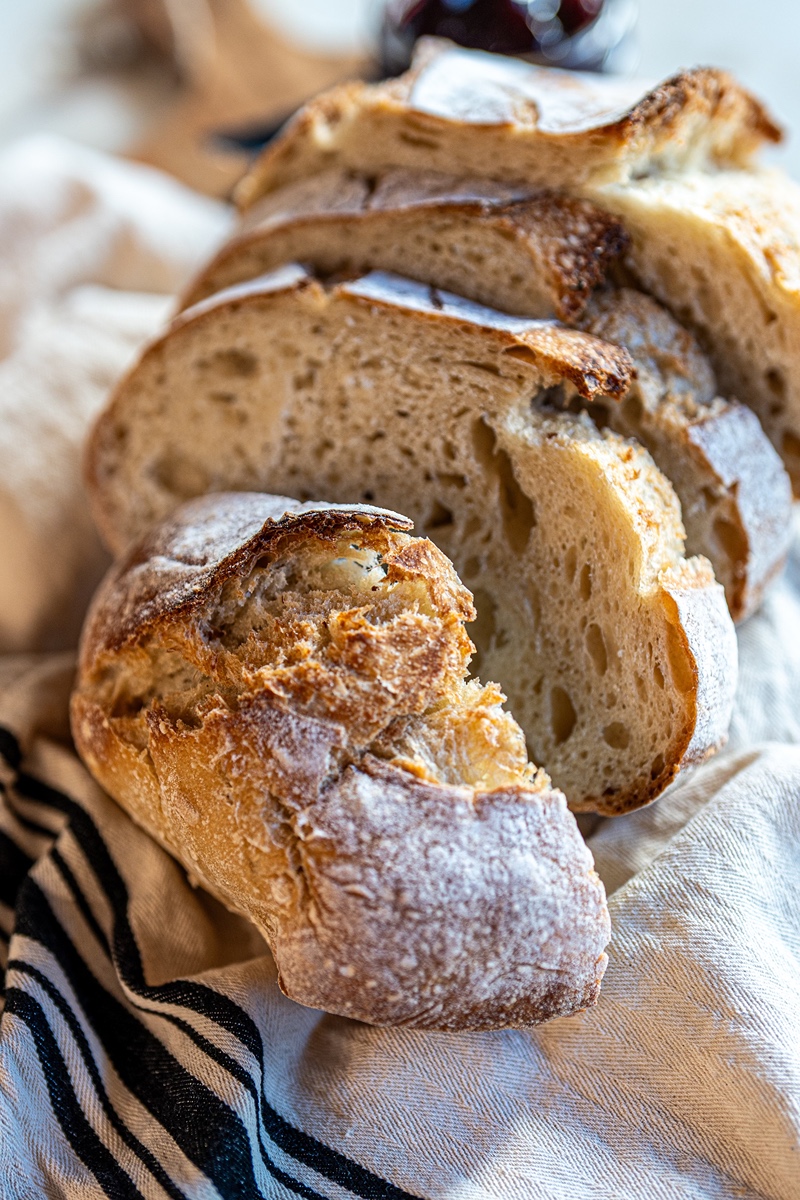 “Sourdough is one of the oldest forms of leavened bread in human history. Ancient Egyptians discovered that dough left out would start to bubble and produce some type of edible bread, but they didn’t understand why or how it happened,” Wells said. “They soon figured out that if they reserved a portion of the previous dough and added it to fresh flour and water—a process called backslopping—fermentation of yeast and bacteria--would proliferate.”
Sourdough became famous during the California Gold Rush, when miners carried sourdough starters with them because they were reliable and easy to maintain in remote mining camps. Wells says that commercial baking caused a decline in sourdough; however, in recent years, there has been a revival of sourdough baking, fueled by interest in traditional food processes, and, in turn, fermentation science.
Meet the Microbes: science in every slice
“There is a lot of science found in a slice of sourdough. Many people are making the bread, but they don’t understand everything that is happening in the background,” Wells said. “Sourdough results from wild fermentation involving Lactobacillus spp. (lactic acid bacteria) and Saccharomyces cerevisiae (a type of yeast). Both are naturally present in flour and water. When flour and water are mixed, they form a paste that becomes an ideal environment for microorganisms to grow and interact.”
Wells explains the symbiotic relationship between microorganisms. “This partnership is essential for sourdough production and explains why sourdough starters can be maintained for long periods of time,” she said.
“The starter is simply a mature mixture of flour and water that contains an established microbial community a stable group of beneficial bacteria and yeast. Bakers periodically feed the starter with fresh flour and water while reserving a portion of the previous culture,” said Wells.
Flavor by Fermentation
The signature tangy flavor and chewy texture of sourdough come directly from microbial activity during fermentation. “When flour and water are mixed together, an ecosystem begins to form. Enzymes naturally present in flour break down the starch molecules into simple sugars,” Wells said. “These sugars then become food for microorganisms in the dough.”
Wells notes that lactic acid bacteria convert these sugars into lactic acid, which is responsible for the sour flavor associated with sourdough bread. Meanwhile, yeast ferments sugars through alcoholic fermentation, producing carbon dioxide and ethanol. Carbon dioxide becomes trapped within the gluten structure of the dough, creating the small holes and airy crumb that give bread its rise. The ethanol produced during fermentation largely evaporates during baking, so bread does not contain significant alcohol after baking. “While it may sound surprising, dough is technically undergoing alcoholic fermentation, even though the final loaf contains no alcohol,” Wells said.
Thinking outside the loaf: A fermentation student’s perspective
College students are also following the sourdough trend. Emily Reeves, a senior studying food science and fermentation science and secretary of the Fermentation Club, has used her knowledge to foster her own sourdough hobby. “I think the increased awareness about gut health and probiotics has played a role in the increased popularity of sourdough and other fermented foods. A lot of consumers are looking for ‘clean label’ and minimally processed foods, and fermentation is a great way to transform foods and increase their shelf lives at home,” Reeves said.
“Sourdough was on my radar for a while, but I really got into it when a family friend gave me some of her starter. Ever since then, I’ve been making my own bread,” Reeves said. “My current sourdough starter is a blend of a starter from a family friend and one from my mentor during my summer internship at Chobani in Idaho. A fun fact about my starter is that it has traveled to Michigan, Indiana, Idaho and Texas.”
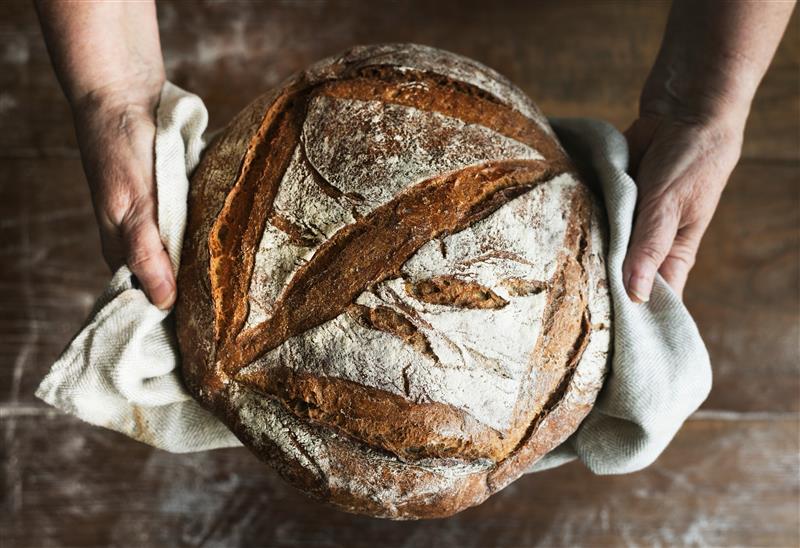
Reeves uses her fermentation background from Purdue to get creative with her baking. She urges others to look beyond the traditional loaf. “With my food science background, I enjoy experimenting with my sourdough bread additions. While my starter is low maintenance, I feed it with tap water and all-purpose flour—I sometimes swap out water for new liquids when I bake a loaf,” Reeves said. “Using a kitchen scale to bake sourdough and feed my starter is something I consider one of the most important things I learned. The recipes may seem random, but I always weigh how each ingredient change might impact the dough’s texture, hydration and flavor.”
Reeves most creative sourdough creation? “One of my personal favorites was making raspberry vanilla bagels using freeze-dried raspberries, which made them turn pink/purple,” Reeves said. “My favorite sourdough discard item might be "extra cultured" biscuits (they use cultured butter, cultured buttermilk, and sourdough,” she said.
More than bread
As Wells observes, sourdough is more than just bread, it's a living link to our past.
“Whether you’re nurturing a starter passed down for generations or just slicing into your first wild-fermented loaf, you’re participating in an ancient tradition that’s as alive as the cultures bubbling in your bowl.”
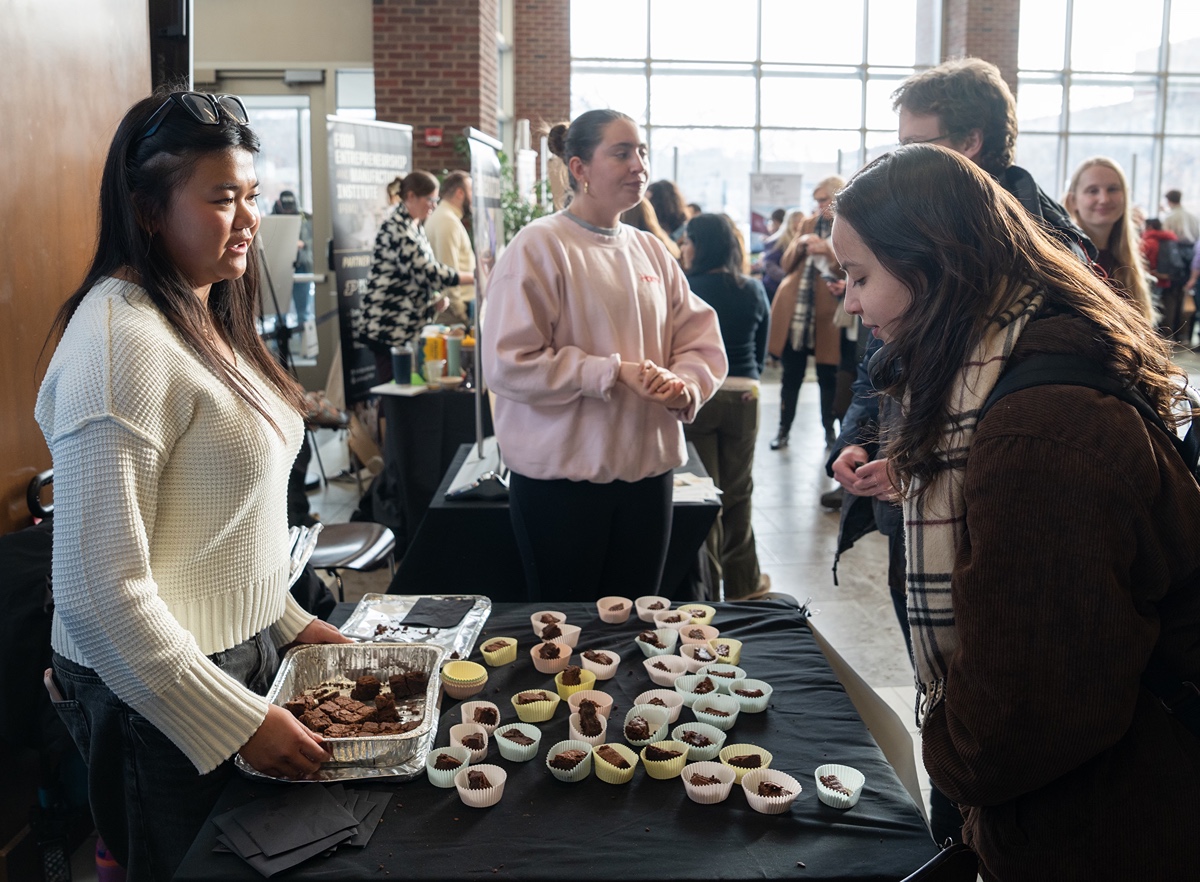 , opens larger image The Boiler Bakers made sourdough brownies for the Purdue Food Science Fermentation Frenzy, and they were a huge hit.
 Super Fudgy Sourdough Brownies
The Boiler Bakers used this sourdough brownie recipe for the Purdue Food Science Fermentation Frenzy.
- Lightly grease an 8" square pan, then line with parchment and lightly grease the parchment. Preheat the oven to 350°F with a rack in the center.
- In a large saucepan, heat the butter, granulated sugar, and brown sugar over medium heat, stirring occasionally to encourage even melting, until the mixture is very hot (the butter should be bubbling around the edges of the pan) and the sugar is starting to dissolve, 3 to 5 minutes.
- Remove the pan from the heat and immediately whisk in the cocoa, vanilla, and salt, whisking until the mixture is smooth. Let cool for 5 minutes (the mixture and pot should still be quite warm), then add the eggs one at a time, whisking vigorously after each addition. The mixture may look greasy and broken after the first egg, but it will turn smooth and glossy after the second.
- Whisk in the sourdough starter and baking powder until no streaks of starter remain, then vigorously stir in 1/2 cup (85g) of the chocolate chips, encouraging them to melt into the warm batter.
Featured Stories

In the September Purdue University/CME Group Ag Economy Barometer survey, 52% of respondents...

Purdue University’s College of Agriculture recognized nine alumni at the Distinguished...
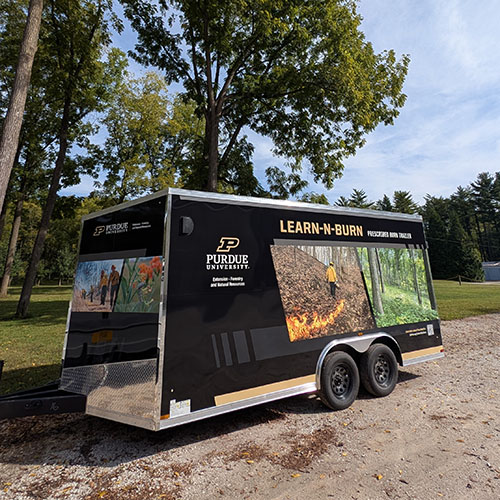
Keep your eyes peeled across Indiana for the newly minted Purdue Forestry and Natural Resources...
“Being at Purdue has changed my thinking entirely,” says Mingyu Zhao, a third-year...
Senior wildlife major Madison Medley spent her summer as a natural resource intern with Hamilton...
Philip E. Nelson, named Indiana State Fair Tomato King at age 15 for exhibiting 24 perfect...