

Composting made easy
Are you curious about composting, but unsure how to do it — or if it even makes a difference? May 29 is National Learn About Composting Day, so we asked Karen Mitchell, consumer horticulture extension specialist in the Department of Horticulture and Landscape Architecture at Purdue, to guide us through some of the basics.
You can definitely make a difference. Composting organic materials like vegetable scraps and coffee grounds can:
- Decrease household waste going to a landfill by 18%-40%,
- Reduce your community’s disposal expenses, and
- Improve soil health in your lawn and garden beds.
More good news: everyone can compost, no matter where you live.
If you own a home…even with a strict homeowner’s association
Looking for a discreet way to compost that your neighbors won’t object to?
“I recommend starting with a bin because they’re easy to make,” Mitchell said. “Consider adding a mesh lid so water can get through while keeping out rodents and other animals that may want to dig in the compost.”
She recommends a discreet corner of the yard, but choosing one that’s close enough to the house that you’re willing to take your kitchen scraps and other compost out regularly.
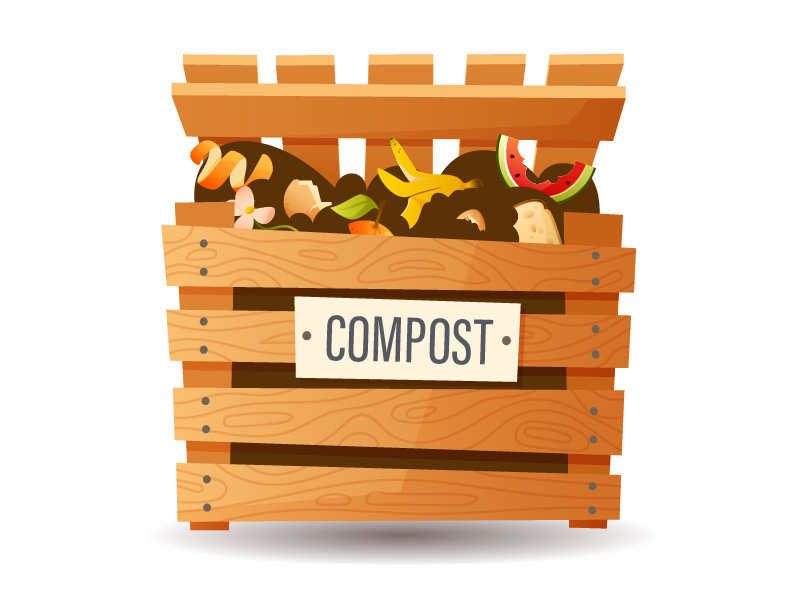 In a yard: Compost bins can be made using inexpensive wooden pallets. Lining the bin with mesh screening allows rainfall and air circulation while keeping pests out. A lid made with pallet wood and/or mesh also keeps compost hidden from neighbors.
 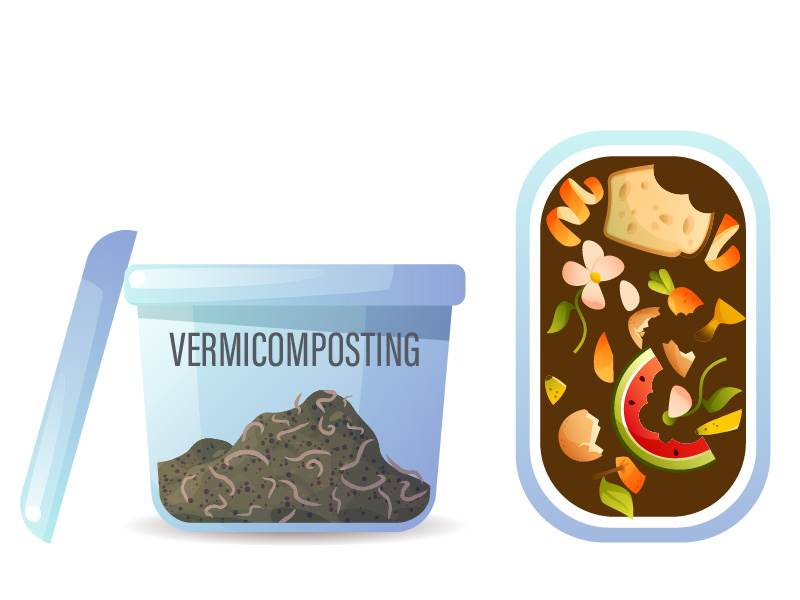 In an apartment: Vermicomposting bins layer food waste with worms and dry materials like paper scraps. You can even make your own vermicomposter from a plastic storage bin or five-gallon bucket.
 If you live in an apartment
Vermicomposting, or using worms to break down organic waste, is a great composting method for apartment dwellers.
“If you’re in an apartment, a small vermicomposting tote works very well, and it doesn’t smell if you have the right balance of materials,” Mitchell said.
If you share a dorm room
If worms aren’t your roommate’s thing, some municipalities have biodigester facilities where you can drop off food waste. Other cities hire third parties to pick up and process household organic waste. Where city services aren’t available, look for private companies that pick up organic waste weekly for a fee.
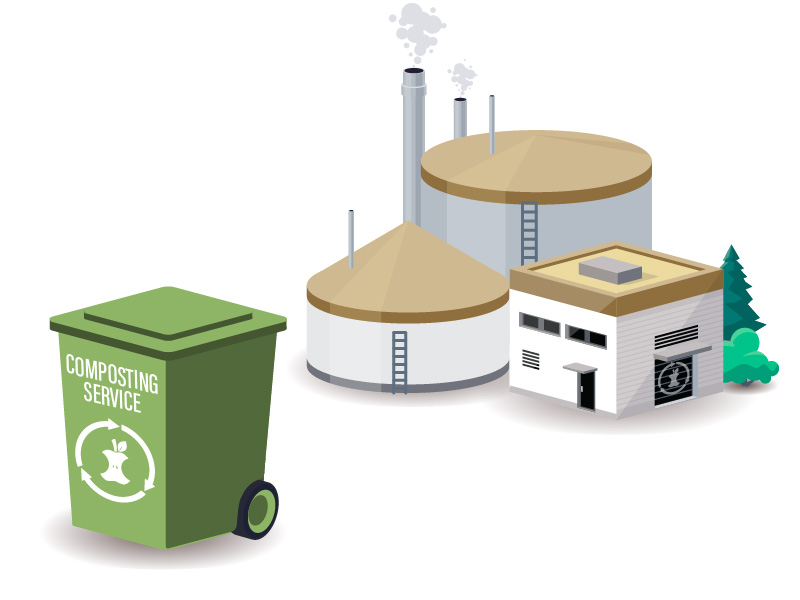 Containers for pick-up services range from small totes to standard trash bins. Biodigesters break down organic waste using microorganisms to decompose materials, producing biogas and liquid fertilizer.
 What should I put in my compost…and how much?
The simplest way to understand what goes in your compost bin is to think of waste in two categories: brown and green.
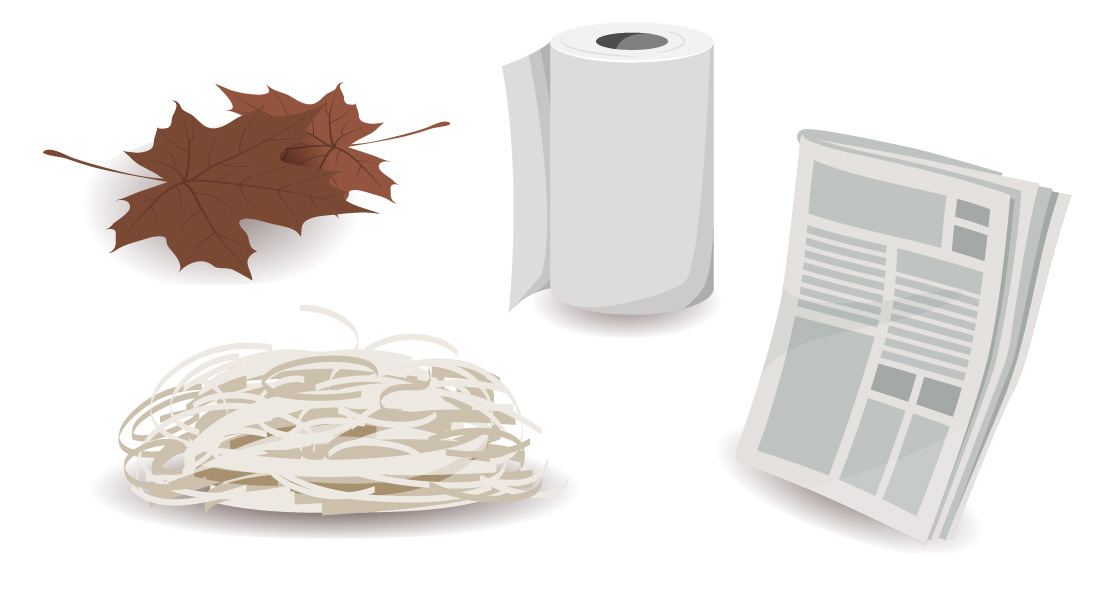 Brown waste includes items like dried leaves, paper towel, newspaper and shredded office paper. Shredded cardboard and straw are also brown waste.
 Green waste includes food scraps like vegetable waste, fruit rinds, coffee grounds and lawn clippings.
“Don’t overthink it. The recipe for good compost is about two to three parts brown to every one part green,” Mitchell said.
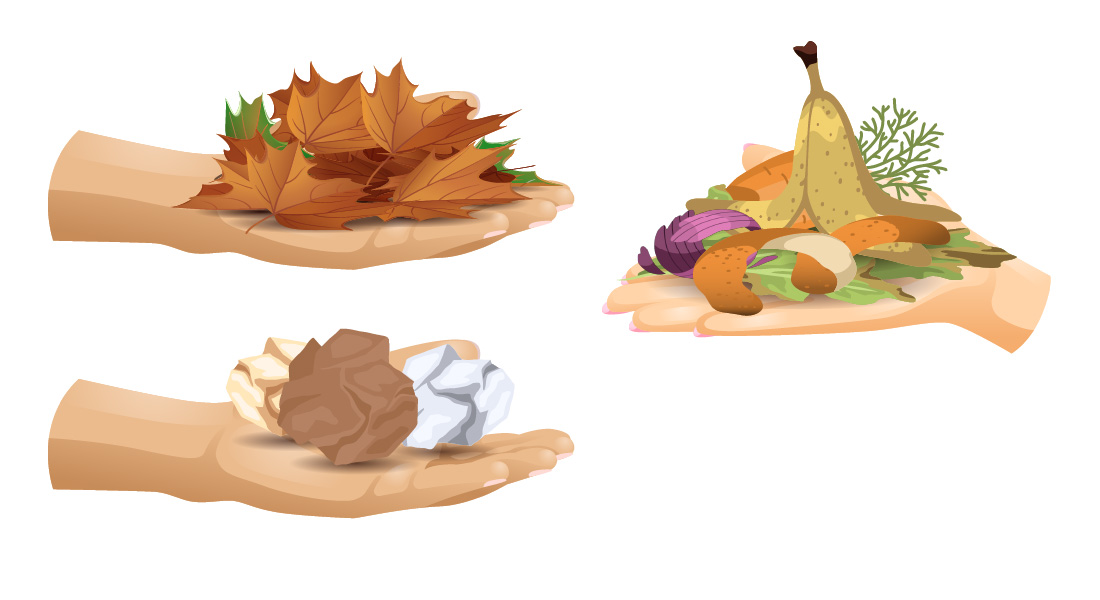 Use two to three parts brown waste to green waste in your compost. If you practice vermicomposting, you can keep a bin of shredded paper, newspaper or cardboard next to your composting bin to easily add browns as you add food waste.
 Common composting questions and myths
Q: Do I need to water my compost?
A: It depends. Treat your compost bin like a houseplant and check it regularly. Pull away the first few inches and grab a handful of compost. It should feel damp, like a wrung-out sponge. It shouldn’t drip when you squeeze it. Depending on humidity and rainfall (or the moisture content of your green waste in a vermicomposter), you may need to add water during dry summer months like July and August or after a vacation.
Q: Won’t my compost smell bad? I’m worried I’ll annoy roommates or neighbors.
A: “One of the most common misconceptions I hear is that compost will smell bad,” said Mitchell. “If your compost smells bad, that means there’s something out of balance; too many greens, not enough browns, or it’s too wet. The fix may be as simple as a layer of browns or turning the pile. Good compost should never smell bad; it should smell earthy.”
Myth: My outdoor compost bin will attract animal pests.
“Never add animal products like meat and dairy to your compost, which may attract unwanted wildlife,” said Mitchell. She also recommends turning it more regularly and using a wire mesh liner and lid for your bin to help keep wildlife out.
Myth: Composting is too complicated for me to try it.
“To simplify it, compost is two to three parts of browns to one part green,” said Mitchell. “So, if I add a handful of vegetable scraps, I need to add two to three handfuls of leaves.” Composting, she said, is more of an art than a strict science, so if you start small, check it regularly and add what it needs, you’ll find it’s not hard.Perfect timing
How long does compost take to break down? A passive pile can take between six to 12 months to break down after you stop adding materials to it. (Having a second bin you switch to as your first bin breaks down is helpful.)
“If you are actively managing your compost bin or pile, turning it regularly and watering as needed, it may take only two to four months to break down,” Mitchell said.
You can add finished compost to flower beds or a veggie garden in fall or spring, depending on your situation. If you don’t till your beds, you can add compost in the fall so that snow, microbes and worms will help integrate it over winter.
If you do till, add your compost in the spring, as tilling it in will aid integration of the organic matter. You can also add it as a top dressing throughout the growing season.
“Indiana is known for its heavy clay soil, and everybody asks how to fix that,” said Mitchell. “Adding organic matter with compost improves your soil texture while benefiting your plants.”
I encourage everyone to start small and see what’s going to work for you,” said Mitchell. “You don’t need to make huge investments to have a successful compost pile.”
- Karen Mitchell, consumer horticulture extension specialist
Featured Stories

For Brody Cox, preparing for the Indiana State Fair began long before he entered the show...

Carolyn Foley, a long-time member of the Purdue Forestry and Natural Resources (FNR) and...

In the September Purdue University/CME Group Ag Economy Barometer survey, 52% of respondents...

Purdue University’s College of Agriculture recognized nine alumni at the Distinguished...
Keep your eyes peeled across Indiana for the newly minted Purdue Forestry and Natural Resources...

“Being at Purdue has changed my thinking entirely,” says Mingyu Zhao, a third-year...