

Catalyzing metabolite research for agriculture, ecosystems and industry
Concealed within the molecular machinery of petunia flowers are metabolic, genetic and cellular processes that biotechnologists can engineer to improve crops and plant health and benefit pharmaceutical and nutraceutical products. Building on a large body of their previous research, Purdue University scientists have launched a project to bring these advances closer to fruition.
“Plant cells function as chemical factories, producing over a million distinct metabolites that are essential for plant fitness and survival,” said Ying Li, associate professor of horticulture and landscape architecture. These metabolites serve as sources of food, nutrients, medicines, natural pesticides, dyes, food additives and other valuable compounds for humans. They also shape ecosystems by how they affect interactions between plants, between plants and insects, and between plants and microbes, Li said.
The project, funded by a National Science Foundation grant, focuses on how specialized metabolites in plant cells regulate genetic activity, and, therefore, feedback-regulate their own production. Collaborating with Li are Natalia Dudareva, Distinguished Professor of Biochemistry; Jing Liu, associate professor of physics and astronomy; and Yiwei Huang, associate professor of landscape architecture.
Dudareva previously led a project that clarified the cellular dynamics of scent chemicals called volatile organic compounds (VOCs) in petunias. And Li, along with Dudareva, gleaned new details about how the day-night cycle alters petunia genetic activity and scent production.
All project components relate to how plants produce a vast diversity of metabolites essential for growth, environmental responses, and the synthesis of valuable natural products. At the same time, their production must be tightly regulated in cells to avoid wasting energy or too much accumulation of harmful compounds. Largely unknown, however, are the molecular mechanisms that plants depend upon to maintain their metabolites at safe and stable levels as they respond to internal and external cues.
Petunia flowers offer an ideal experimental model because they accumulate high levels of easily detected specialized metabolites. In past decades, genes responsible for biosynthesizing floral VOCs have been characterized in petunia, including many in Dudareva’s lab.
Specialized metabolites, also known as secondary metabolites, are often specific to species, cell types and developmental stages that enable plants to interact with and adapt to their surrounding environment, Li said. Primary metabolites, by contrast, are essential across all plant species, cell types and developmental stages.
Metabolic pathways are typically regulated during the gene expression process necessary for producing proteins and other important biochemical products. But recent studies by Li, Dudareva and others have uncovered the role of chromatin modifications in modulating specialized metabolism. Li and Dudareva’s preliminary results suggest that an enzyme may regulate chromatin-based genetic activity by detecting metabolic fluctuations.
Scientists know little about how metabolic enzymes interact with chromatin for feedback regulation. The few known examples of enzyme sensors are limited in scope. “Growing evidence, though, points to signaling roles for specialized metabolic enzymes,” Li said.
In their previous work, Li and Dudareva reported that high levels of specialized metabolites in plants trigger a feedback process that inhibits their biosynthetic genes. This limits the resources allocated to their production, which prevents harmful accumulation.
New experiments will test the hypothesis that the enzyme sensor detects metabolite fluctuations. The researchers suspect that this enzyme sensor further works to regulate the dynamics of two chromatin modifiers. These modifiers play coordinated roles in starting or stopping the process that enables biosynthetic genes to act as a negative feedback mechanism.
Huang will contribute to the project’s outreach and engagement with high school students who annually take part in the 4-H Academy @ Purdue, and collaborate with Li and Dudareva to develop an illustrated children’s book on floral scents. Li and Dudareva will also offer a weeklong research activity through the Purdue Agriculture Science Research Institute to provide high school students with hands-on experience in biotechnology and metabolic engineering.
Featured Stories

For Brody Cox, preparing for the Indiana State Fair began long before he entered the show...

Carolyn Foley, a long-time member of the Purdue Forestry and Natural Resources (FNR) and...

In the September Purdue University/CME Group Ag Economy Barometer survey, 52% of respondents...

Purdue University’s College of Agriculture recognized nine alumni at the Distinguished...
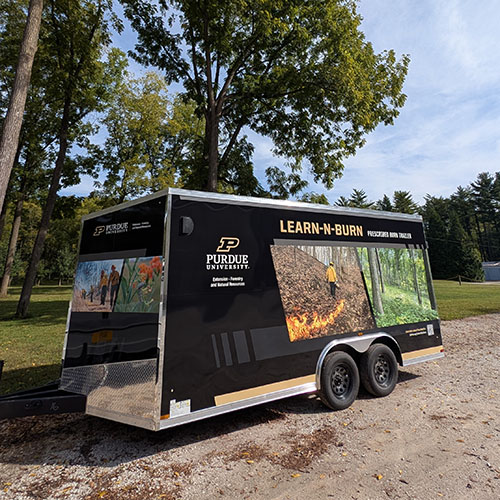
Keep your eyes peeled across Indiana for the newly minted Purdue Forestry and Natural Resources...
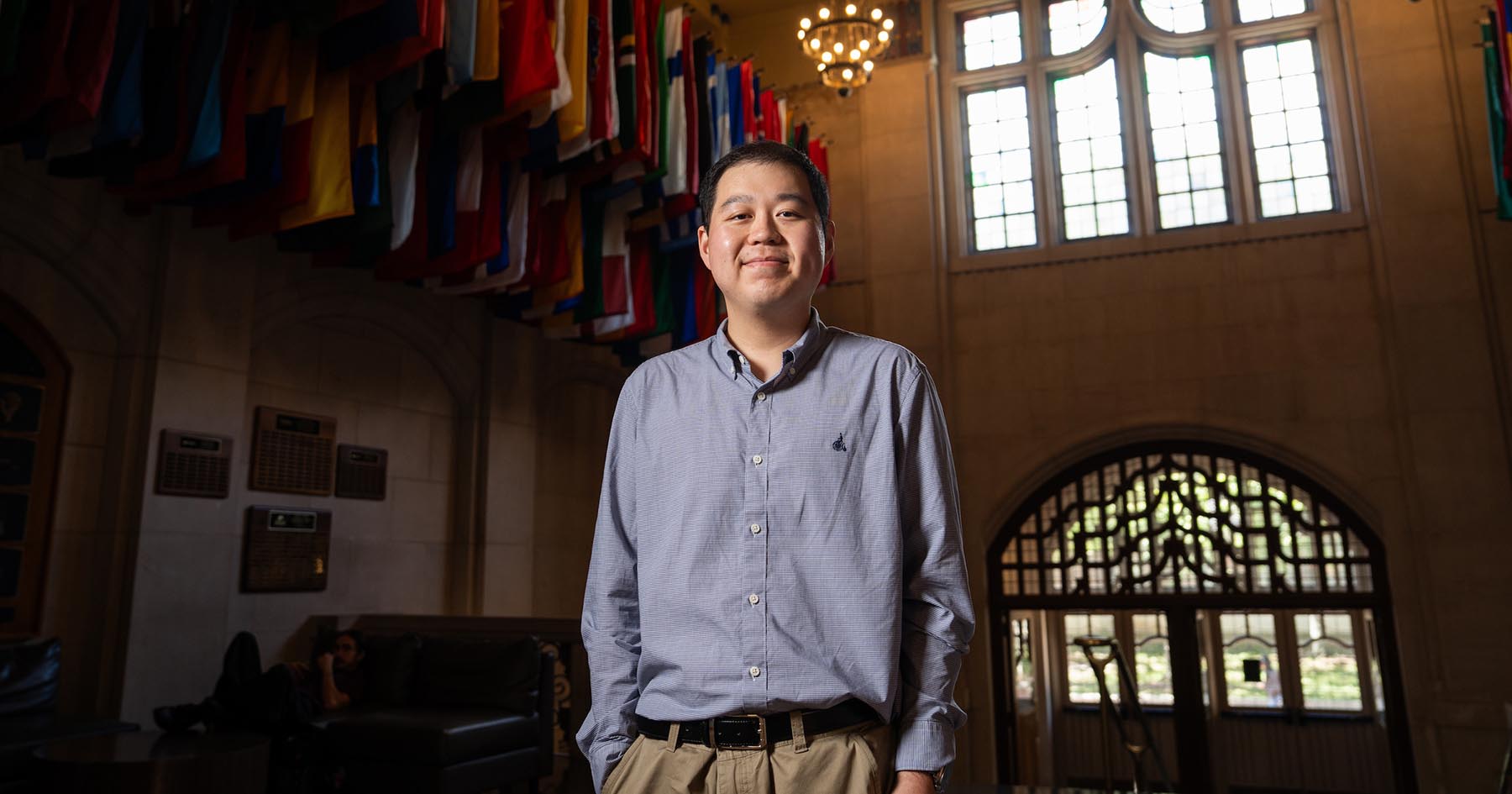
“Being at Purdue has changed my thinking entirely,” says Mingyu Zhao, a third-year...