

Biochemistry
Study details surprising human immune cell link to HIV
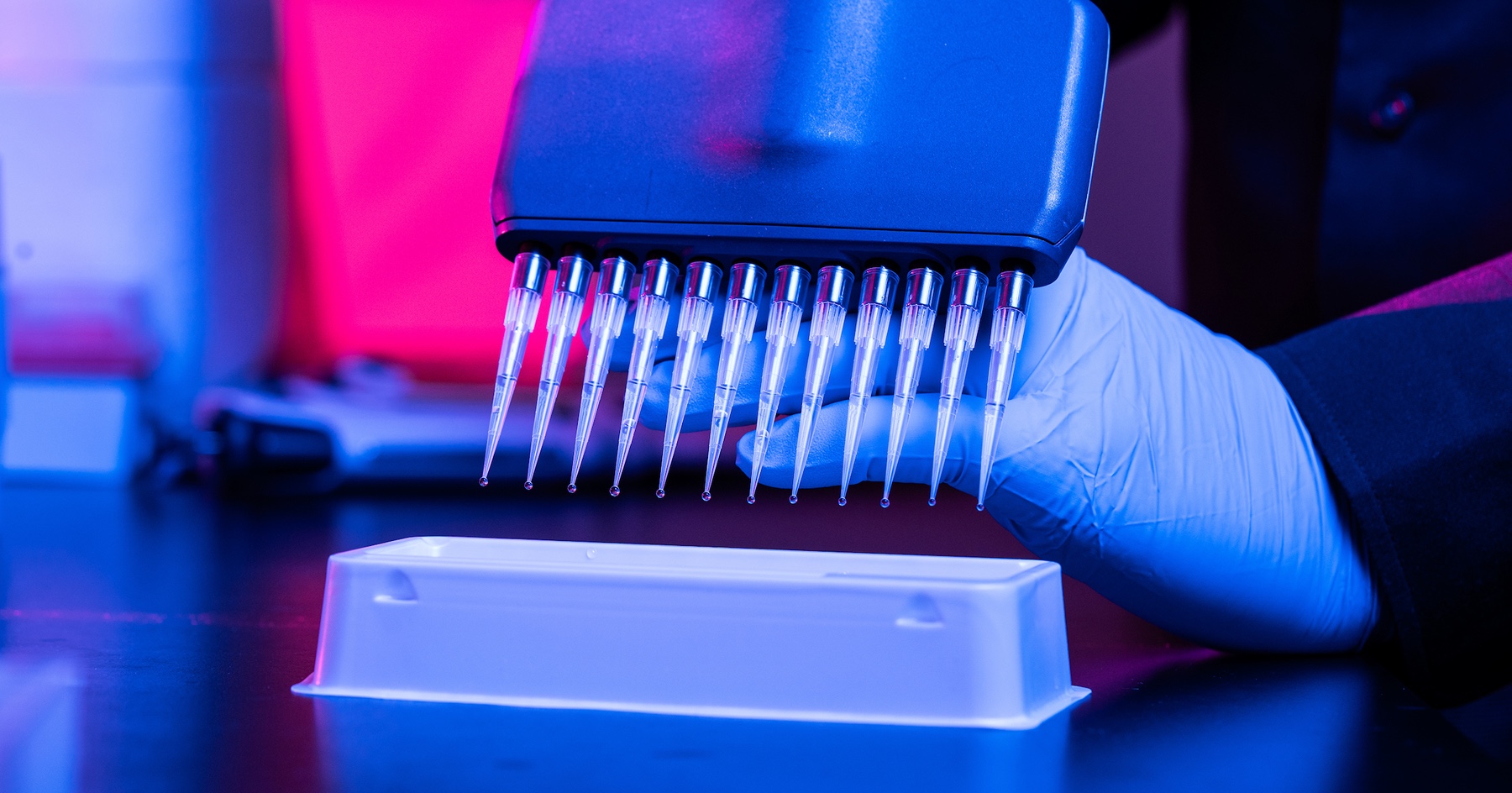 Cells in preparation for analysis by washing and staining with fluorescent markers. (Purdue Agricultural Communications Photos/Joshua Clark)
 A prominent protein on most human cells may be key to unlocking the code that makes humans susceptible to pathogenic bacteria and viruses, including human immunodeficiency virus (HIV), according to a new study in Science Immunology led by researchers at Purdue University and the National Heart, Lung, and Blood Institute.
The work — co-led by Purdue’s Majid Kazemian and NHLBI’s Claudia Kemper — looked at a protein called CD46, which is a part of the complement system, nature’s oldest and fastest immune defense system.
Several pathogenic bacteria and viruses, including those that cause respiratory illnesses and HIV, exploit CD46 to attach to, enter, or interact with host cells, triggering or hijacking host-cell signaling and immune responses. The research identified how signals from CD46 turn genes on or off inside T cells, which spearhead the body’s immune response, to control their functions. The results were surprising.
“We already knew CD46 helps T cells obtain the nutrients they need to function when they become activated,” said Kemper, senior investigator and chief of NHLBI’s complement and inflammation research section. “We didn’t expect that CD46 also acts like a safety switch that prevents circulating naive T cells — T cells that have not yet encountered an antigen or pathogen — from dying.”
A better understanding of the CD46 interaction pathway could help researchers develop new therapies for conditions including immune deficiencies, infectious diseases and inflammatory disorders: disease states associated with perturbed T-cell function. One of the most important, and most recognizable, is HIV.
CD46: Key to unlocking HIV pathways
“We weren’t initially studying HIV, but the newly discovered and unexpected biology of CD46 naturally led there,” said Kazemian, a professor of biochemistry and computer science and University Faculty Scholar. “HIV depends on some of the same cellular machinery that CD46 controls.”
Further, they found that gene activity in infected human T cells resembles patterns found in people who continue to show low levels of HIV despite antiretroviral therapy. CD46 may influence how T cells retain potentially active HIV that could give rise to a new virus.
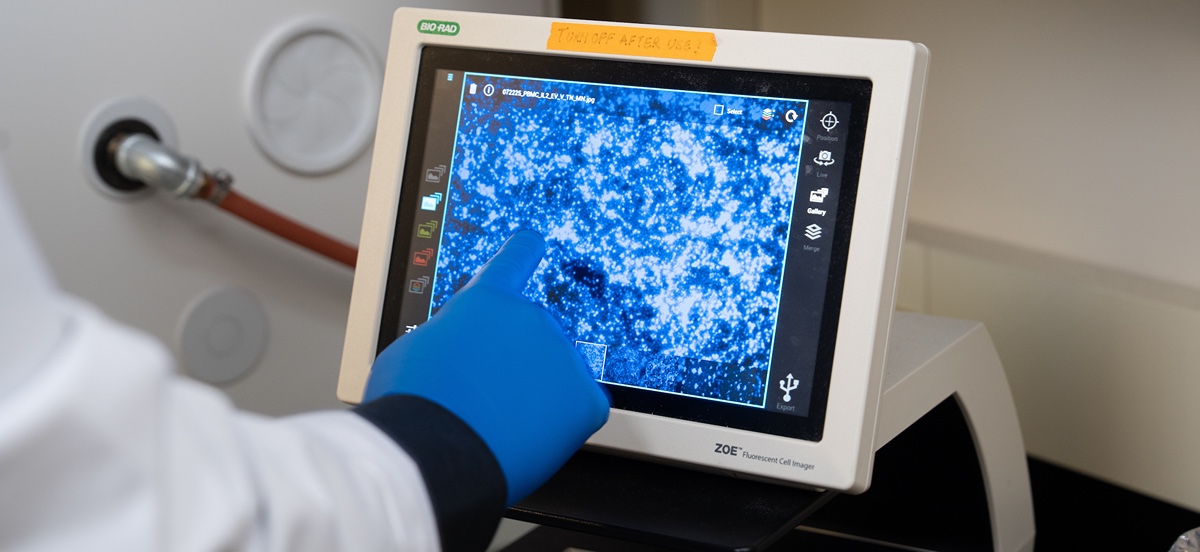 Fluorescently labeled cells under microscopic examination. (Purdue Agricultural Communications Photos/Joshua Clark)
“That’s an intriguing hypothesis that needs to be tested in further studies,” Kazemian said. “Our study shows that CD46 is clearly more than a simple entry point for pathogens. It controls how human CD46 T cells survive, respond to infection and regulate viral gene activity.”
Without CD46 signaling, naive T cells self-destruct through the normal programmed cell death process shared by most plants and animals. This prevents them from mounting a proper response to infection. “CD46 isn’t just helping T cells work. It helps keep them alive,” Kemper said.
A complementary partnership
The complement system, which includes CD46 and its compatriot proteins and cells, is something that has long intrigued both Kemper and Kazemian.
“The complement system evolved about 500 million years ago and has been identified in early primitive organisms such as marine sponges, well before the adaptive immune system emerged,” Kemper said. When everything works perfectly, the system can kill a susceptible bacterium that has invaded the host’s bloodstream in as little as 15 minutes.
Kazemian and colleagues at the National Institutes of Health have been collaborating on projects investigating complement biology for a decade. In 2020, for example, they documented how complement protein activity affects autoimmunity and infections. Additional studies in 2021 and 2022 detailed how the complement system responds to the virus that causes COVID-19.
The complement system has two key proteins that circulate in the blood and help destroy pathogens or mark them for elimination, Kemper said. “But over the last decade, we’ve learned that the complement system does much more than fight microbes,” she said. “It also acts like a communication system that tells immune cells to become active, how to use energy and when to stop responding.”
Understanding the immune system is vital to every area of medicine, from infections and cancer to chronic inflammation or autoimmune diseases. Understanding the basic rules that govern how immune cells function provides the foundation for translational studies — bench-to-bedside research. “This study is one example of that,” said Kazemian, a member of the Purdue Institute for Cancer Research.
“Over the years we’ve shown that complement doesn’t simply attack microbes. It also helps immune cells control metabolism, inflammation and immune responses,” Kemper said.
The new study now explains a key molecular mechanism behind those observations. It identifies how CD46 communicates directly with the machinery that controls the genetic process governing the production of RNA molecules and proteins.
“What makes this study particularly powerful is that we combined several complementary technologies,” Kazemian said. “Using all these approaches together gave us much greater confidence in the mechanism we identified. This is exactly the kind of interdisciplinary collaboration needed to answer complex biological questions.”
The collaborating teams at Purdue, NIH and in Europe contributed expertise in computational genomics, immunology and virology to the study. “The end product is something that each team could not have done alone,” Kemper said.
“It connects many of the discoveries we’ve made over the last decade into one mechanical framework,” Kazemian said.
About Purdue Agriculture
Purdue University’s College of Agriculture is one of the world’s leading colleges of agricultural, food, life and natural resource sciences. The college is committed to preparing students to make a difference in whatever careers they pursue; stretching the frontiers of science to discover solutions to some of our most pressing global, regional and local challenges; and, through Purdue Extension and other engagement programs, educating the people of Indiana, the nation and the world to improve their lives and livelihoods. To learn more about Purdue Agriculture, visit this site.
About Purdue University
Purdue University is a research institution ranked among the top 10 public universities in the United States. More than 111,000 students study at Purdue across multiple campuses, including more than 57,000 at our main campus locations in West Lafayette and Indianapolis. As a land-grant university committed to affordability and accessibility, Purdue’s main campus has frozen tuition 14 years in a row, enabling more students than ever to graduate debt-free.
Writer: Steve Koppes
Media contact: Mary Martialay, mmartial@purdue.edu
Sources: Majid Kazemian, kazemian@purdue.edu
Agricultural Communications: Maureen Manier, mmanier@purdue.edu, 765-494-8415
Journalist Assets: Publication quality images and videos can be obtained at this Google Drive
Featured Stories
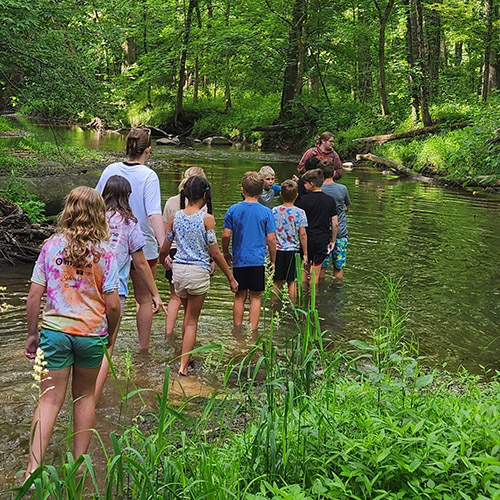
FNR Field Report - Ava Hoskins
Ava Hoskins, a double major in aquatic sciences (fisheries concentration) and natural resources...
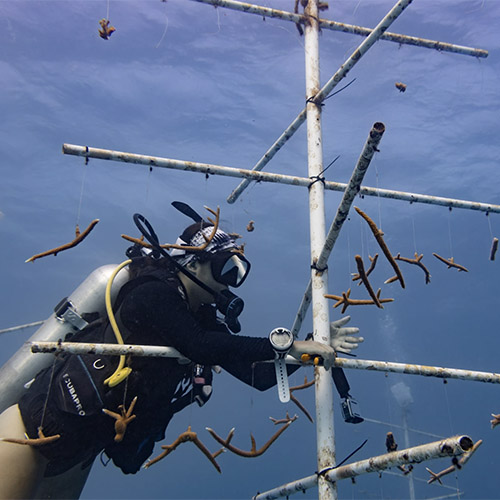
FNR Field Report - Ashlynn McLaughlin
Ashlynn McLaughlin, a senior aquatic sciences major with a concentration in marine and freshwater...

From Indiana 4-H to Purdue Agriculture
For Brody Cox, preparing for the Indiana State Fair began long before he entered the show...
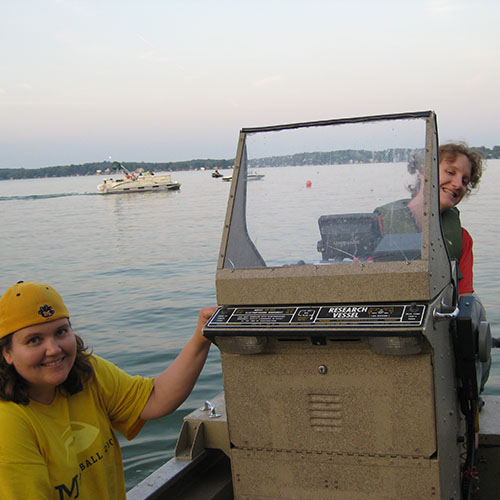
FNR Remembers Carolyn Foley, Names Great Lakes Research Award
Carolyn Foley, a long-time member of the Purdue Forestry and Natural Resources (FNR) and...

Farmer sentiment drops as concerns about input costs increase
In the September Purdue University/CME Group Ag Economy Barometer survey, 52% of respondents...

College of Agriculture adds 9 to ranks of Distinguished Ag Alumni
Purdue University’s College of Agriculture recognized nine alumni at the Distinguished...