

Uyanga brings interdisciplinary approach to poultry science at Purdue
Victoria Uyanga, Ph.D., has joined the Purdue University Department of Animal Sciences as an assistant professor of poultry science, bringing experience in poultry nutrition, physiology and immunology to her new role.
Uyanga’s path to poultry science developed over time, beginning with her first research experience as an undergraduate student in Nigeria.
She earned her bachelor’s degree in animal science from the University of Uyo, where she participated in undergraduate research during her final year. Working with rabbits, Uyanga studied the effects of forages from polluted areas and how heavy metals could transfer into the liver and kidney tissues, an experience that first sparked her interest in physiology.
Her interest in poultry came later while pursuing her master’s degree in animal physiology at the Federal University of Agriculture, Abeokuta. There, Uyanga worked on research examining how broiler breeder’s age and pre-incubation egg storage could affect hatch and chick quality.
“I wouldn’t say I had a linear direction into poultry,” Uyanga said. “It was more like a journey over time.”
That journey continued through her doctoral studies at Shandong Agricultural University in China and postdoctoral training at Iowa State University, where she worked on how functional agents such amino acids, probiotics, prebiotics and nutrient complexes could support poultry health and resilience during thermal, intestinal and immune challenge. Most recently, Uyanga served as an assistant professor at Lincoln University in Missouri, where she trained both undergraduate and graduate students in the core areas of animal sciences.
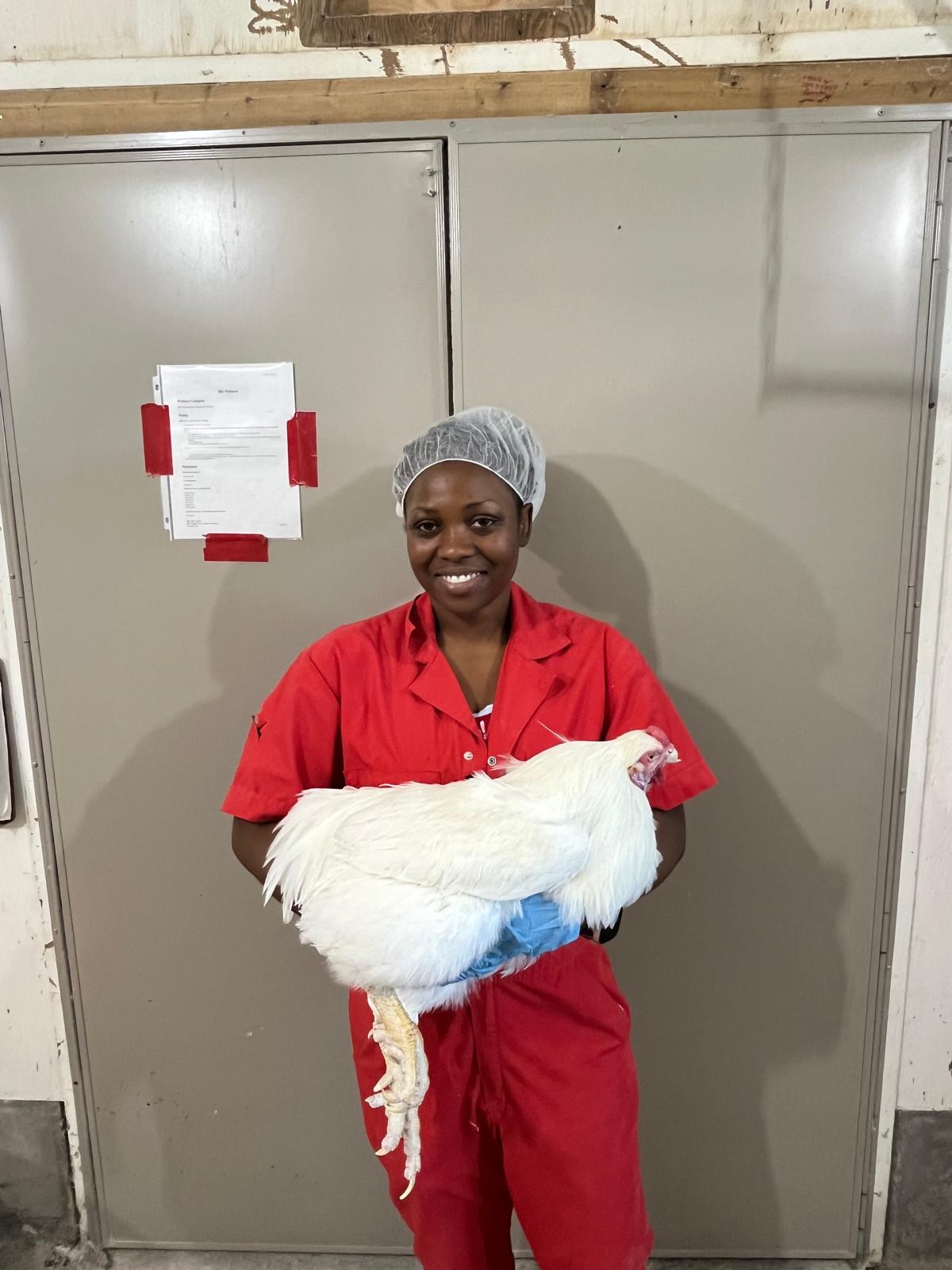 Uyanga conducts a research trial at the Poultry Teaching & Research Facility at Iowa State University.
 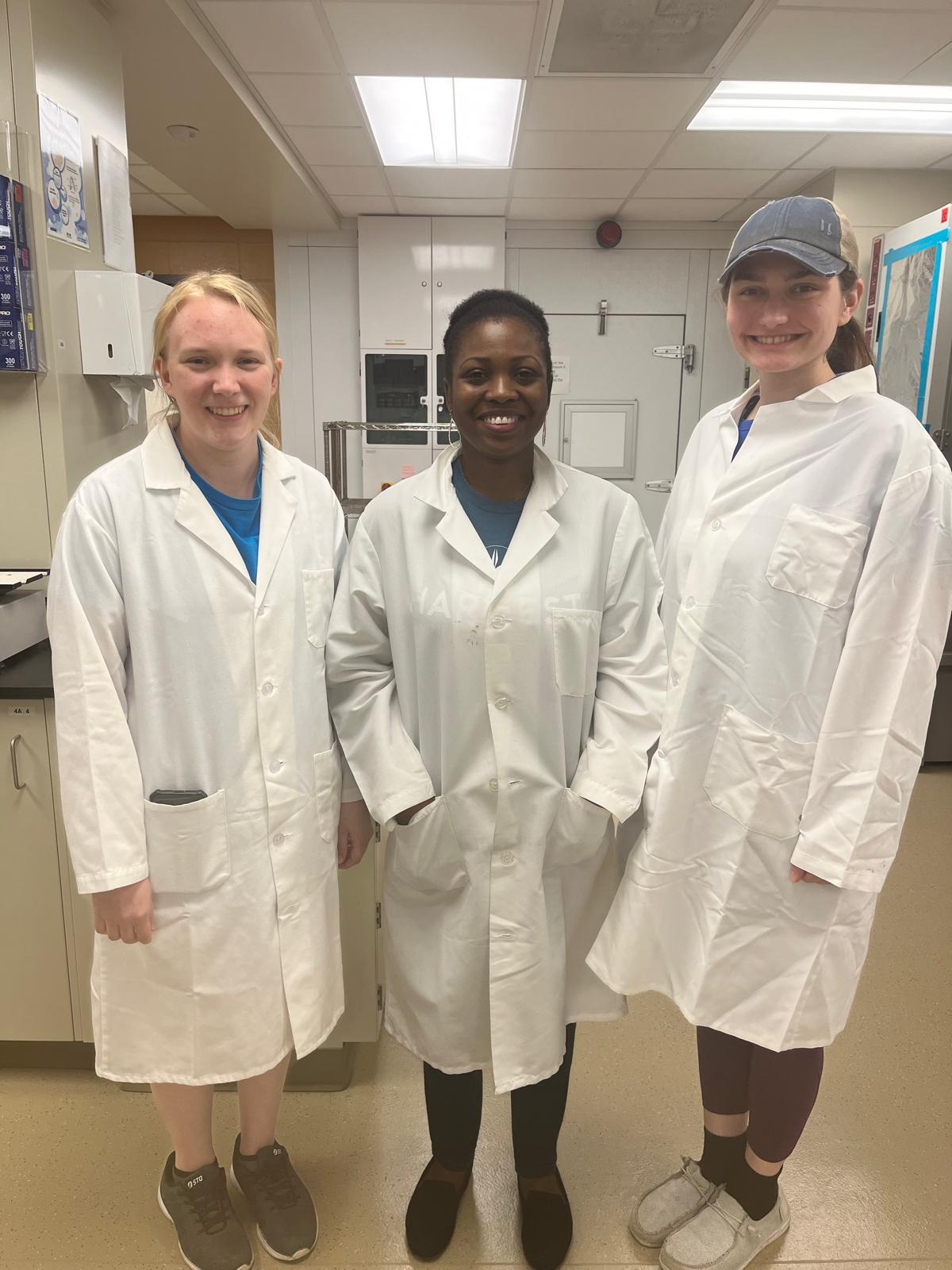 Uyanga works with student researchers at the animal science lab at Iowa State University.
 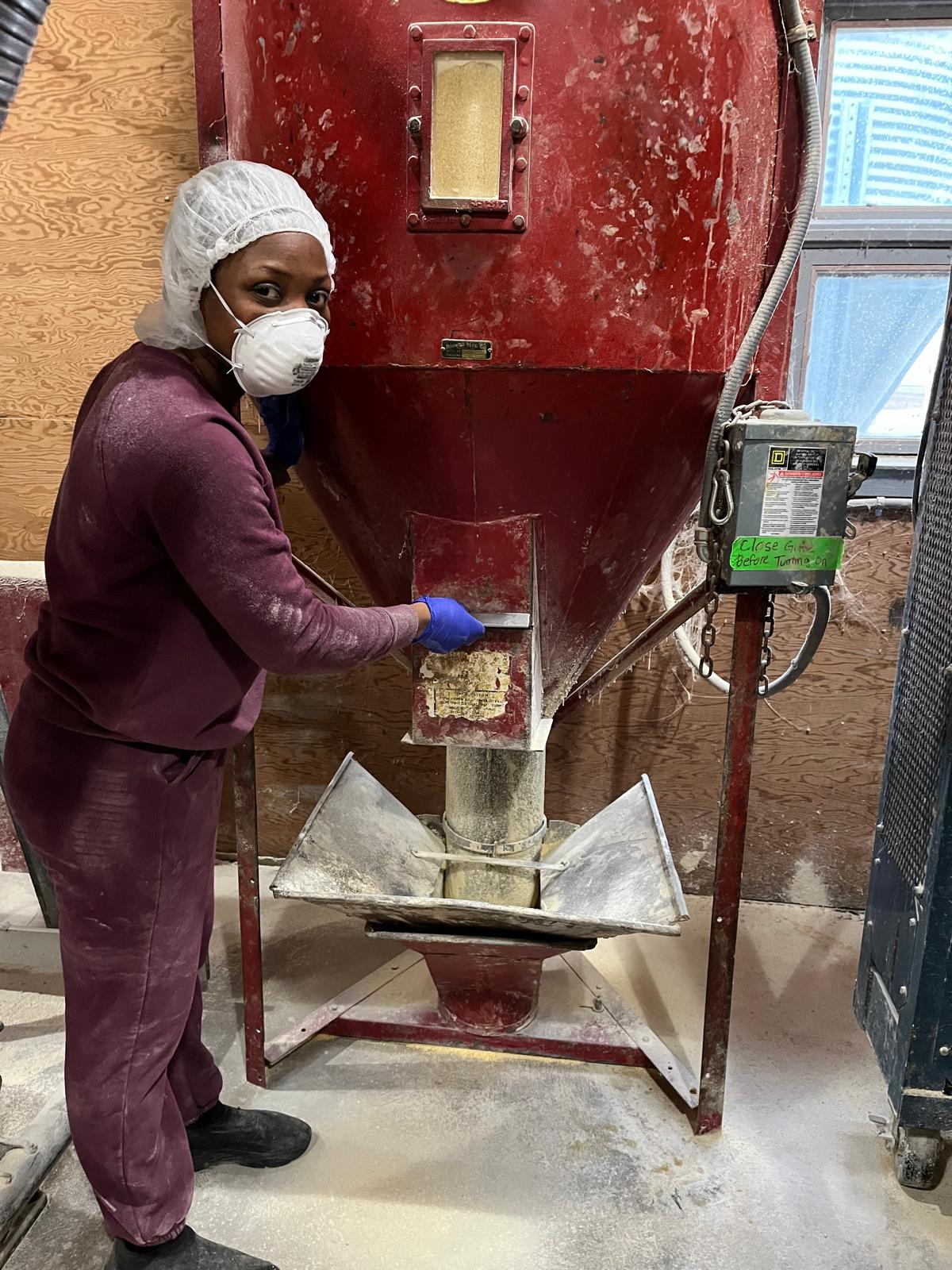 Uyanga works at a feed mill to prepare diets for a laying hen study.
 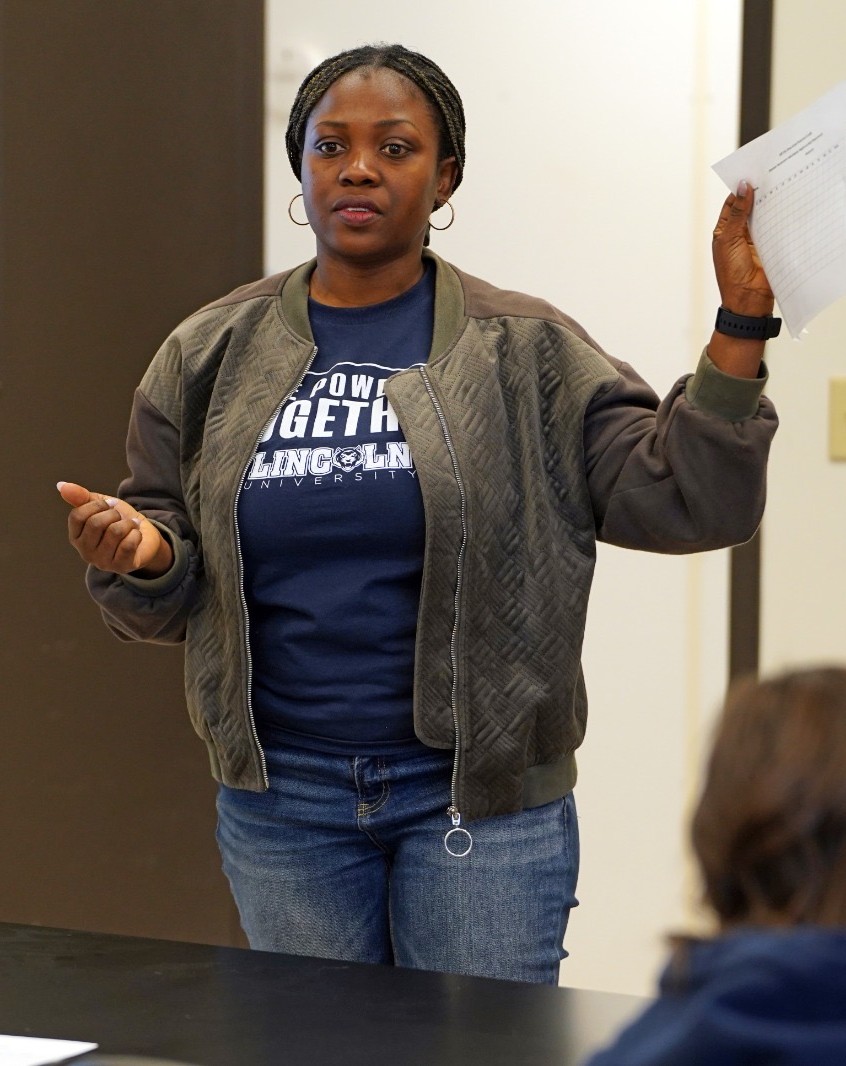 Uyanga interacts with students during an animal science class at Lincoln University in Missouri.
 Finding the right fit at Purdue
For Uyanga, the Purdue position offered an opportunity to bring together the different areas of expertise she has developed throughout her career.
She describes her background as a “three-legged” approach encompassing nutrition, physiology and immunology. At Purdue, she aims to unite these disciplines through the One Health approach that recognizes the interconnection between animal, human and environmental health. By investigating functional ingredients and agricultural byproducts with nutritional and immunomodulating properties, Uyanga hopes to advance poultry health, strengthen the food systems and contribute to environmental sustainability.
Purdue’s academic reputation, research infrastructure and opportunities for collaboration also drew Uyanga to the department.
“The collaborative environment at Purdue is important,” Uyanga said. “The infrastructure and the resources to do impactful research are also available. Importantly, I have the opportunity to work alongside respected colleagues whose work I’ve admired for years”.
Uyanga has already begun building connections across the university, including with faculty whose expertise can complement her research. She sees opportunities to collaborate not only within animal sciences but also with areas such as food science, agricultural and biological engineering, agronomy and forestry and natural resources.
Research with industry in mind
Uyanga’s research program focuses on applied poultry nutrition, with interests including functional amino acids, feed additives and sustainable feed ingredients. She also studies how poultry respond to challenges such as environmental stress and intestinal pathogens.
By examining nutrition alongside physiological and immune responses, Uyanga hopes to develop a holistic understanding of how nutritional strategies can support poultry health, productivity and welfare.
Working with industry will also be an important part of Uyanga’s research. Indiana is a national leader in poultry production, ranking No. 1 in duck production, No. 3 in egg production and No. 4 in turkey production.
For Uyanga, being located in a state with a strong poultry industry creates opportunities to conduct research that addresses imminent challenges producers are facing.
“Being able to work with the industry is going to be important as we move forward,” Uyanga said. “I want my research to answer industry-relevant questions and address the needs of today’s poultry producers.”
One area Uyanga hopes to explore is the use of agricultural byproducts as alternative poultry feed ingredients. For example, products left over from wineries or surplus crops such as watermelons and cantaloupes could potentially be processed and used as feed ingredients. The approach could provide another use for agricultural products that might otherwise go to waste while creating potential alternative feed sources for poultry producers.
A passion for teaching and mentorship
Along with developing her research program, Uyanga is eager to work with students in the classroom and through research. Her work centers on poultry nutrition and production, while also emphasizing the training and mentoring of both undergraduate and graduate students.
She is currently co-instructing ANSC 68100: Animal Sciences Graduate Seminar and has begun working with undergraduate students interested in gaining research experience in applied poultry nutrition.
“Working with the students, I feel that is going to be really beneficial because I value the opportunity to engage with them, provide guidance and learn from their experiences,” Uyanga said. “It’s a win-win scenario.”
As an instructor, Uyanga wants students to feel comfortable participating, asking questions and sharing their ideas. She favors hands-on learning and incorporating real-world examples that allow students to connect classroom concepts with challenges facing modern-day animal agriculture.
“I value students being able to express themselves and share that opinion or that idea that they have, no matter how different it may sound,” Uyanga said. “I feel it takes a certain amount of courage for students to share their ideas especially in a classroom setting.”
Her approach to mentorship extends beyond helping students develop technical knowledge. Uyanga wants students who work with her to become independent thinkers and develop critical-thinking, problem-solving and communication skills that will serve them throughout their careers. She also hopes to encourage students to pursue opportunities they may initially question whether they are ready for.
For students who are curious about poultry science but may not have previous experience with the industry, Uyanga encourages them to explore. Classes, internships, research opportunities and conversations with faculty can help students discover the range of opportunities within poultry science.
Her advice for taking that first step is simple.
Featured Stories

In the September Purdue University/CME Group Ag Economy Barometer survey, 52% of respondents...
Purdue University’s College of Agriculture recognized nine alumni at the Distinguished...
Keep your eyes peeled across Indiana for the newly minted Purdue Forestry and Natural Resources...
“Being at Purdue has changed my thinking entirely,” says Mingyu Zhao, a third-year...
Senior wildlife major Madison Medley spent her summer as a natural resource intern with Hamilton...
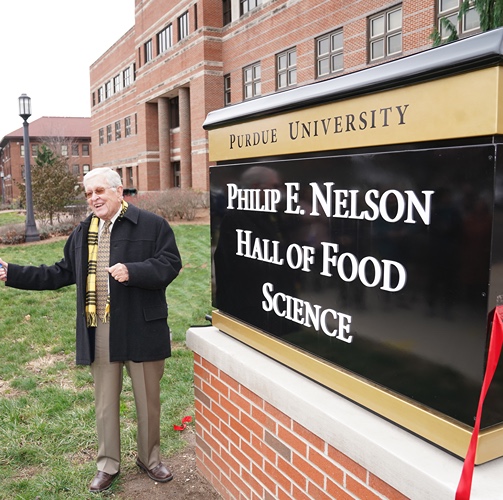
Philip E. Nelson, named Indiana State Fair Tomato King at age 15 for exhibiting 24 perfect...