

Behind the Research: Laura Esman
Laura Esman, research associate and lab manager in Purdue’s Department of Forestry and Natural Resources, Natural Resources Social Science (NRSS) Lab and managing director of the Indiana Water Resources Research Center (IWRRC)
- Managing $4 million in grant funding for the Indiana Water Resources Research Center
- Leading an educational outreach program for protection of whooping cranes
- Working with researchers to develop IRB application protocols
It all started with 9th grade biology class. Growing up in Michigan, Laura Esman was lucky enough to have one of those teachers who really make a difference.
“We were doing really advanced things, and she was so engaging,” Esman says.
Inspired, she went on to get a bachelor’s degree in biology from Albion College and a master’s in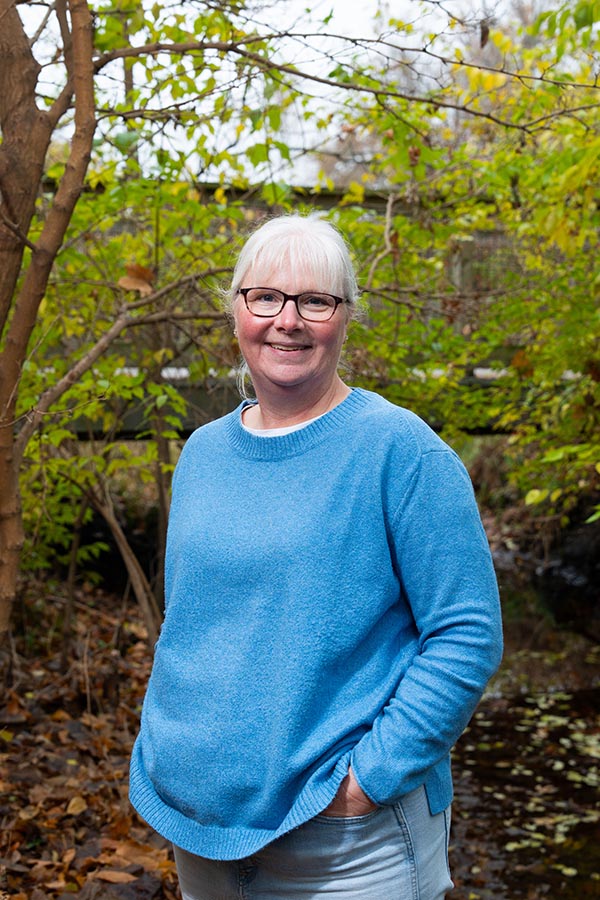 environmental toxicology from Clemson University. From there, it was a long and winding road to Esman’s current position as research associate and lab manager in Purdue’s Department of Forestry and Natural Resources’ Natural Resources Social Science (NRSS) Lab and managing director of the Indiana Water Resources Research Center.
“I had a lot going on between my master’s and ending up here at Purdue,” she says.
While her husband did his PhD at Cornell, Esman worked in a Cornell research lab studying biocontrol agents to control purple loosestrife, an invasive wetland plant that can damage animal habitats and outcompete native plants. She then moved back to Michigan and joined the state’s Department of Environmental Quality, working for nearly a decade in programs dealing with water pollution and invasive aquatic plants and algae.
In 2007, Esman’s husband took a job in Purdue’s Department of Forestry and Natural Resources. The couple moved to West Lafayette, and Esman found work in the Department of Agricultural and Biological Engineering, working for Professor Jane Frankenberger, an expert in agricultural drainage, watershed management, and water quality.
“I worked on projects focused on watershed management practices and developing environmental indicators to assess the impact of conservation management practices on the ground,” she says.
Esman went on to coordinate the Indiana Watershed Leadership Academy, a program designed to teach the skills necessary for successful watershed management. The 40 annual participants include everyone from citizen volunteers to conservation agency staff to stormwater managers.
In 2015, Esman joined the Department of Forestry and Natural Resources, working for Professor Linda Prokopy as a research associate and lab manager for the NRSS lab. A year later, when Prokopy became director of the IWRRC, Esman became managing director.
Esman still holds those dual roles, but with a major difference: Prokopy left Purdue this summer to become Dean of the College of Agriculture and Life Sciences at the University of Vermont. Esman is now winding down Prokopy’s lab before moving on to a new position.
As a research associate and lab manager in the NRSS lab, Esman has focused on facilitating and supporting the social science research projects involving complex interdisciplinary and multi-institutional teams. One of Esman’s favorite projects was an educational outreach program for the protection of whooping cranes, charmingly named ‘Hoosiers for Whoopers.’ Indiana is a migration stopover and a wintering area for whooping cranes, and the program is designed to help raise awareness of their endangered status and their needs. Esman also did all the typical lab manager tasks, coordinating what was once an active lab filled with undergrads, grad students, postdocs and staff. She hired and supervised lab assistants, worked with researchers to design surveys, collected survey data, ran the lab website, and helped develop IRB application protocols.
Her favorite task has been working with surveys. “Somebody hands me a Word doc and I’m able to turn it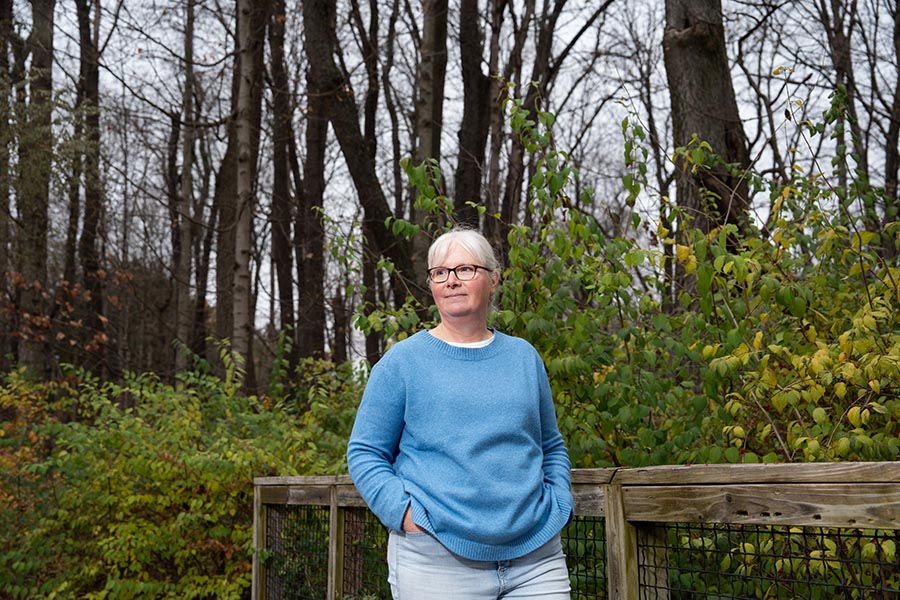 into an attractive survey that we mail to thousands of people,” she says. “And there are always complications, so it makes life interesting!”
The IRB coordination has been the most challenging part of her job, Esman says. “It’s just a complicated process with lots of people,” she says. “It means managing research with many researchers and many universities, making sure it’s all compliant with the protocol, which means knowing the protocol really well – I’m constantly learning throughout the process.”
As managing director of the IWRRC, Esman is responsible for administering approximately $4 million in grant funding for Indiana’s researchers. Esman develops administrative budgets, operates a competitive small grants program, and works with Indiana researchers to submit extremely competitive proposals for national grant programs.
“One of the most rewarding aspects of my managing director position has been seeing research ideas come to life. I enjoy working with Indiana’s researchers to ensure they submit a competitive proposal, and celebrate every time we receive an award notification.”
When she’s not working, Esman loves to bake, do yoga, and walk.
“When the schools closed down during the pandemic, a friend and I started walking every day to maintain our sanity,” she says. “We’ve now walked over 2,000 miles together.”
In January, Esman will begin a new position as the research and reporting administrator with the Illinois-Indiana Sea Grant.
“I’m excited to stay within the FNR and the College of Ag to continue supporting important water research,” she says.
About the Feature
Many people are involved in the remarkable range of programs, services and facilities that undergird research in the College of Agriculture. Collectively they’re integral to the college fulfilling its research mission. “Behind the Research” explores their individual roles. Each academic year, we profile six people whose work supports the College of Agriculture’s global reputation for developing innovative, multidisciplinary solutions to challenges and then putting those solutions into action.
Featured Stories
Carolyn Foley, a long-time member of the Purdue Forestry and Natural Resources (FNR) and...
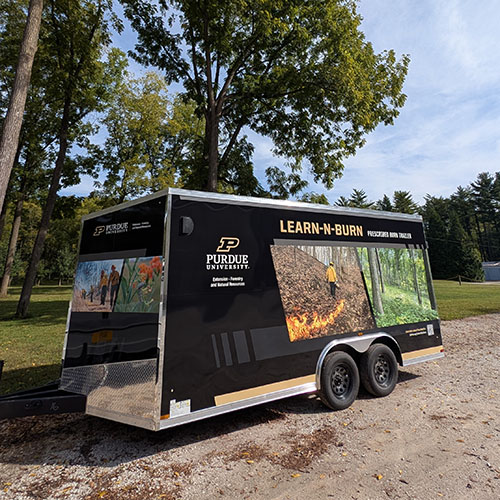
Keep your eyes peeled across Indiana for the newly minted Purdue Forestry and Natural Resources...
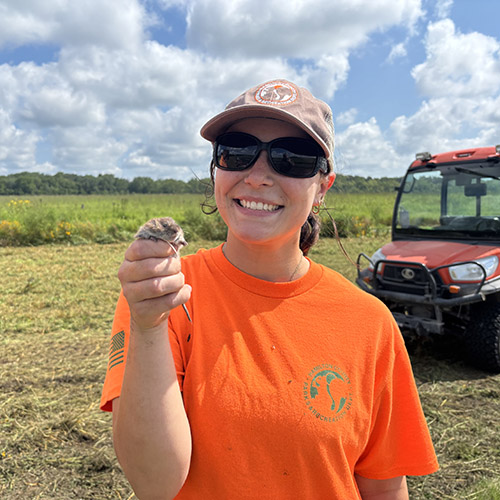
Senior wildlife major Madison Medley spent her summer as a natural resource intern with Hamilton...
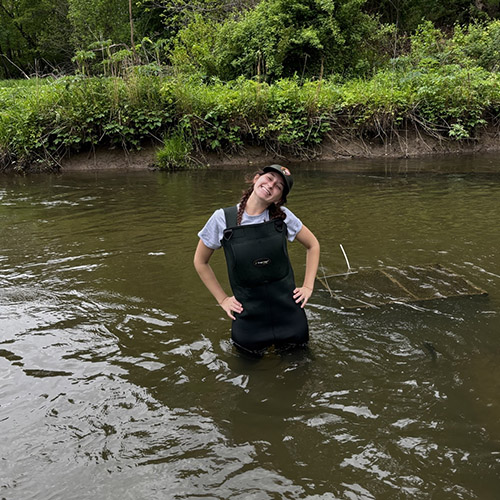
Addy Ellis, a sophomore aquatic sciences and political science double major, spent the summer as...
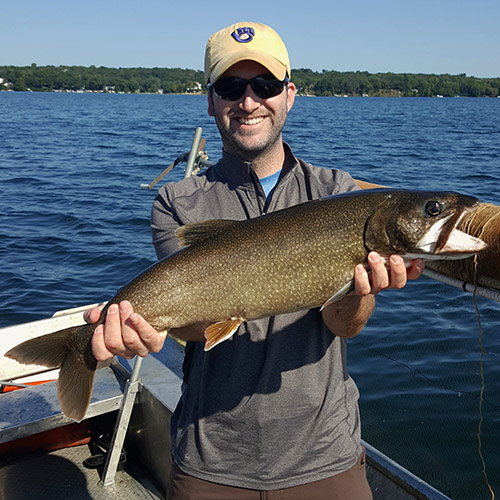
Zachary Feiner, who earned his PhD from FNR in 2015 and spent two additional years in West...
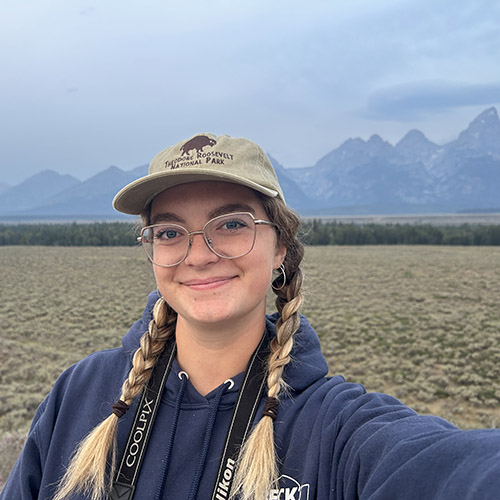
Sophomore wildlife major Gloria Aichinger spent her summer as a seasonal laborer at Theodore...