

FNR Unveils Most-Viewed Videos of 2025
FNR videos were viewed nearly 310,000 times in 2025, accounting for more than 7,400 hours of watch time. Take a look at the most-viewed videos of 2025 from tree identification to woodland management tips to alumni celebrations.
Our top 10 most-viewed videos were all past versions of the ID That Tree series, where extension forester Lenny Farlee introduces native and non-native trees and shrubs of Indiana, including identification characteristics.
Our most viewed video for the second year in a row was ID That Tree: American Elm, with nearly 15,000 views. The video has been watched more than 68,000 times since its debut in June of 2020.
1 - ID That Tree: American Elm -- In this tree identification series you will see how American elm leaves have jagged edges with a large tooth and then smaller teeth like edges on top of it. Find out why these trees are not as easy to find as they used to be.
2 - ID That Tree: Black Walnut -- Learn the identifying characteristics of the black walnut tree, also known as the American black walnut or eastern black walnut, including pairs of leaflets running down each stem, long running ridges on the bark, and round nuts that have a very strong exterior. This sun-loving tree also needs high quality soil.
Number three on our most-viewed video list is ID That Tree: Chokecherry. This video was seen more than 8,800 times in 2025. Since its debut in July 2023, it has been seen nearly 22,000 times.
3 - ID That Tree: Chokecherry -- In this episode of ID That Tree, Purdue Extension forester Lenny Farlee introduces the Chokecherry. This species is found in the North Woods of Northern Wisconsin and the Upper Peninsula of Michigan as well as natively in Indiana in small/medium shrub form. This species has alternately held broad leaves with finely toothed margins, and has short leaf stalks. The stems are a light to medium gray color and have prominent lenticels scattered along them.
No. 4 on the most-viewed list is ID That Tree: Eastern Cottonwood. This video, which debuted in September 2021, was watched nearly 8,000 times in 2025. All told, it has been seen by more than 21,000 people since its launch on YouTube.
4 - ID That Tree: Eastern Cottonwood -- On this edition of ID That Tree, Purdue Extension forester Lenny Farlee introduces you to one of our common bottomland trees, the Eastern Cottonwood. This tree stands out for its triangular or delta shaped leaves, often with prominent teeth along the edges, which extend from long flattened leaf stems. This native tree is named for its early season fruit, which is a little tuft of white hairs that holds a small seed that is produced in large quantities and often blown far from the parent tree.
The No. 5 video in 2025 was ID That Tree: Sweetgum. This video, which debuted on YouTube in March 2021, was watched nearly 6,900 times last year, bringing its lifetime views tally to almost 13,000.
5 - ID That Tree: Sweetgum - Spiky round fruiting structures which hold the seeds as well as star-shaped leaves are signature characteristics of the sweetgum, a tree native to southern Indiana and utilized ornamentally throughout the state. Learn more about the sweetgum from Purdue Extension forester Lenny Farlee.
Next up on the list of most-viewed FNR videos in 2025 is: ID That Tree: White Oak Group. This video from January 2021 caught 6,400 eye-balls in 2025, bringing its lifetime views total to more than 14,600.
6 - ID That Tree: White Oak Group - In this edition of ID That Tree, Purdue Extension forester Lenny Farlee introduces you to the white oak group. In addition to identifying four common varieties of white oak by their leaves and acorns, he also explains how to differentiate them from their cousins, the red oaks.
Number 7 on our list for 2025 is ID That Tree: Honey Locust. This video, which launched on YouTube in October 2021, was watched more than 6,300 times in 2025, bringing its total views to just shy of 20,000.
7 - ID That Tree: Honey Locust -- This native tree comes with its own defense system in very large thorns on the stems and trunk. Meet the honey locust. Purdue Extension forester Lenny Farlee explains that large, long yellow seed pods that resemble bean pods, the option of single or doubly compound leaves on the same tree and smooth gray bark also help identify this species.
8 - ID That Tree: Sassafras -- Join Purdue Extension forester Lenny Farlee as he introduces you to the Sassafras in this edition of ID That Tree. The Sassafras is well known for the tea made from its bark and also for having a variety of shaped leaves from zero to three lobes.
ID That Tree: Northern Catalpa stands pat at No. 9 for the second straight year. In 2025, the video, which debuted in August 2021, was viewed more than 4,800 times, bringing its lifetime views to more than 17,500.
9 - ID That Tree: Northern Catalpa -- On this episode of ID That Tree, meet the Northern Catalpa, native to southern Indiana along the Ohio River bottoms. This species, which provides rot resistant wood great for outdoor usage, features beautiful flower clusters in early summer, huge heart shaped leaves in whirled formation, and long bean-like fruit pods.
10 - ID That Tree: Invasive Tree of Heaven -- In this episode of ID That Tree, Purdue Extension forester Lenny Farlee identifies the invasive tree of heaven, also known as stinking sumac, due to the foul odor that permeates from nearly all parts of the tree. The alternately held compound leaves have teeth at the base of the leaflets on stout stems, while the bark is a medium gray with white wormy marks. This tree spreads through the seeds of its female trees and from suckers off its root system, and it is also a host tree for the invasive spotted lanternfly.
FNR Extension debuted 20 videos in 2024, 14 from the ID That Tree series and six from the Woodland Management Moment series. Both series are hosted by Farlee.
The top three extension video debuts from the past year are listed below. Check them out and make sure to see all that Purdue FNR Extension has to offer on YouTube through the playlists from ID That Tree to the Woodland Management Moment to A Moment in the Wild and more.
The top FNR Extension video debut from 2025 was ID That Tree: Invasive Amur Honeysuckle. Since its debut in February 2025, the video has been watched more than 3,200 times.
1 - ID That Tree: Invasive Amur Honeysuckle - In this video, Purdue forester Lenny Farlee examines one of Indiana’s most troublesome invasive shrubs: Amur honeysuckle. This aggressive species, along with other Asian honeysuckle varieties, is widespread across the state. It’s easily identified by its long, pointed leaves, smooth edges, and fine fuzz.
The 2025 FNR Extension video debut with the second highest views was ID That Tree: Black Raspberry. This video, which debuted on May 2, 2025, was seen more than 1,000 times last year.
2 - ID That Tree: Black Raspberry - In this edition, Purdue Extension Forester Lenny Farlee highlights a native bramble species—black raspberry. A member of the Rubus family, black raspberry is commonly found throughout Indiana, making it useful to recognize its key features. Learn how to identify this plant by its unique leaf pattern (and how it's different from autumn olive), understand its role in wildlife habitats and explore its many uses and benefits.
Our third most highly viewed 2025 debut Extension video is ID That Tree: Witch-hazel. After debuting in June, the video was watched 877 times.
3 - ID That Tree: Witch-hazel - In this episode, Purdue Extension Forester Lenny Farlee introduces us to a relatively common Indiana shrub called Witch-hazel. Discover the characteristics of the environment this shrub is found in, the features of the shrub itself and the interesting history behind it.
The most viewed debut video from the Woodland Management Moment series was: Seeding Into Slash Piles. This video was watched nearly 500 times after its February debut.
A Woodland Management Moment: Seeding Into Slash Piles - In this episode of A Woodland Management Moment, Purdue Extension forester Lenny Farlee shares expert tips for regenerating heavy-seeded hardwoods like oak, hickory, and walnut after a timber harvest. Using a real-world example, we walk through the entire process of seeding into slash piles to maximize growth and create the ideal woodland habitat. Tune in to learn how to ensure successful regeneration and a thriving forest for years to come.
The Purdue Department of Forestry and Natural Resources also has its own YouTube channel, which earned 3,100 views and 52.2 hours of watch time last year. The top viewed video on that channel in 2025 was a short clip of a grey wolf as seen by a student at 2024 Summer Practicum in the Upper Peninsula of Michigan. It garnered 1,076 views last year and has been seen more than 2,100 times since its debut in May 2024.
Grey Wolf in the Upper Peninsula -- FNR student Maggie Oliver shot this video of a grey wolf on the move, while at Summer Practicum in Iron River, Michigan. FNR students, many between their sophomore and junior years, participate in an immersive 5-week learning experience in the Upper Peninsula of Michigan. At practicum, student learn and practice field techniques and learn more about their respective majors and potential careers.
In addition to videos posted on YouTube, FNR and FNR Extension also post videos on social media, most commonly Facebook, instagram and LinkedIn.
The Top 10 videos on Facebook for 2025 including many of those listed above, but also a few outliers. All told, FNR videos posted on Facebook in 2025 were watched 72,575 times. The top video posted in 2025 was of cranes at Jasper-Pulaski Fish and Wildlife Area. The video, taken back Gabrielle Dennis in December 2022, was watched 39,729 times after its posting on Nov. 5.
The rest of the top 10 videos posted on the FNR Facebook page were:
2 - ID That Tree: Invasive Amur Honeysuckle (Posted Feb. 25; Amassed 20,902 views)
3 - ID That Tree: Black Raspberry (Posted May 9; Amassed 19,430 views)
4 - ID That Tree: Invasive Autumn Olive (Posted March 28; Amassed 15,774 views)
5 - Woodland Management Moment: Maintaining Some Open Cover (Posted Jan. 7; Amassed 6,216 views)
6 - ID That Tree: Invasive Multiflora Rose (Posted Oct. 17; Amassed 5,719 views)
7 - Woodland Management Moment: North Facing Slopes (Posted March 14, Amassed 5,005 views)
8 - ID That Tree: Greenbriers (Posted March 21; Amassed 3,782 views)
9 - ID That Tree: Sugarberry (Posted Dec. 12; Amassed 3,570 views)
10 - ID That Tree: Non-Native Norway Spruce (Posted Nov. 21; Amassed 3,335 views)
Featured Stories

Carolyn Foley, a long-time member of the Purdue Forestry and Natural Resources (FNR) and...

Purdue University’s College of Agriculture recognized nine alumni at the Distinguished...
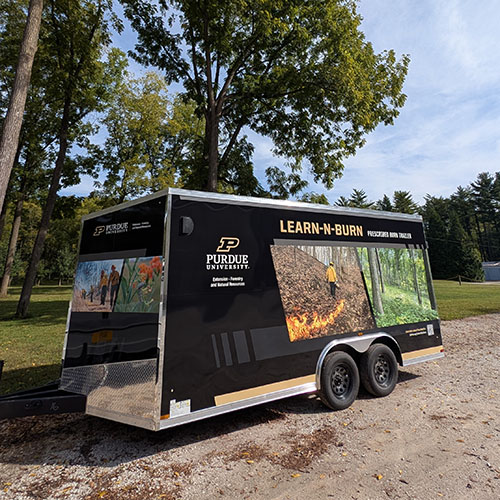
Keep your eyes peeled across Indiana for the newly minted Purdue Forestry and Natural Resources...
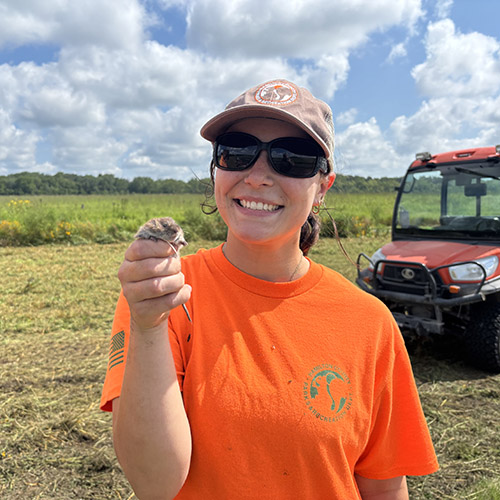
Senior wildlife major Madison Medley spent her summer as a natural resource intern with Hamilton...

Addy Ellis, a sophomore aquatic sciences and political science double major, spent the summer as...

Zachary Feiner, who earned his PhD from FNR in 2015 and spent two additional years in West...