

Behind the Research: Julie Young
Julie Young, Research Associate, Botany & Plant Pathology
- Coordinating an enormous, multidisciplinary DARPA project on using plants as potential chemical sensors
- Mentoring undergrads and graduate students
- Helping innovate new solutions for herbicide-resistant weeds
Weed scientist Julie Young’s workweeks are sometimes chaotic — but never dull. On any given day, Young, a research associate in the Department of Botany & Plant Pathology, might be out doing fieldwork, or working in the greenhouses, or helping graduate students, or learning about new technologies, or reading journal articles, or doing supply orders.
The most difficult part?
“Probably just keeping track of things,” Young says. “I’m pretty dependent on my Google calendar!”
A ‘Farm Kid’ Taking the Long Way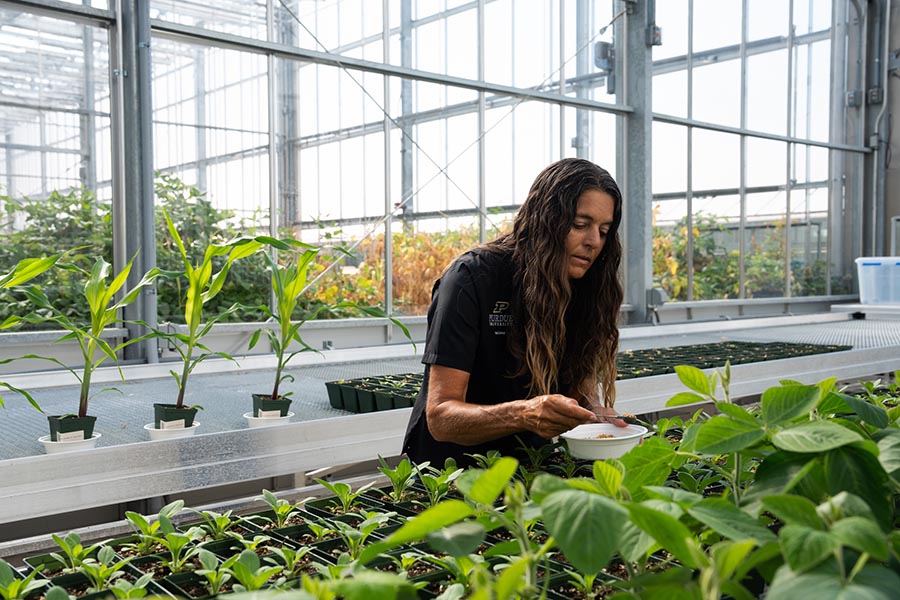 Back to Agriculture
Though Young grew up on a farm near Lansing, Michigan, she didn’t originally consider agriculture as a career. She thought she wanted to be a physical therapist, but her university required students in the program to do volunteer hours in the field.
“It had sounded so noble and helpful, but after I volunteered for a semester, I saw what physical therapy really is: making people have a lot of pain so they can get better,” she says. “I thought, ‘No, I don’t want to do that.’”
She studied biology and chemistry instead, then taught the subjects in high school for two years. Ultimately, she heard agriculture calling and went back to school to earn a master’s in weed science at Michigan State. She studied Roundup Ready soybeans, which were just being launched at the time, focusing on how to control the weeds left behind by glyphosate.
“I learned an incredible amount,” she says. “I really enjoy research, looking at new things and trying to solve problems.”
After her master’s, Young spent several years working in industry for a pesticide manufacturer before taking a research associate job at Southern Illinois University, where her husband, also a weed scientist, had been hired. She stayed there for 15 years, until her husband was hired in botany and plant pathology at Purdue.
A Little Bit of Everything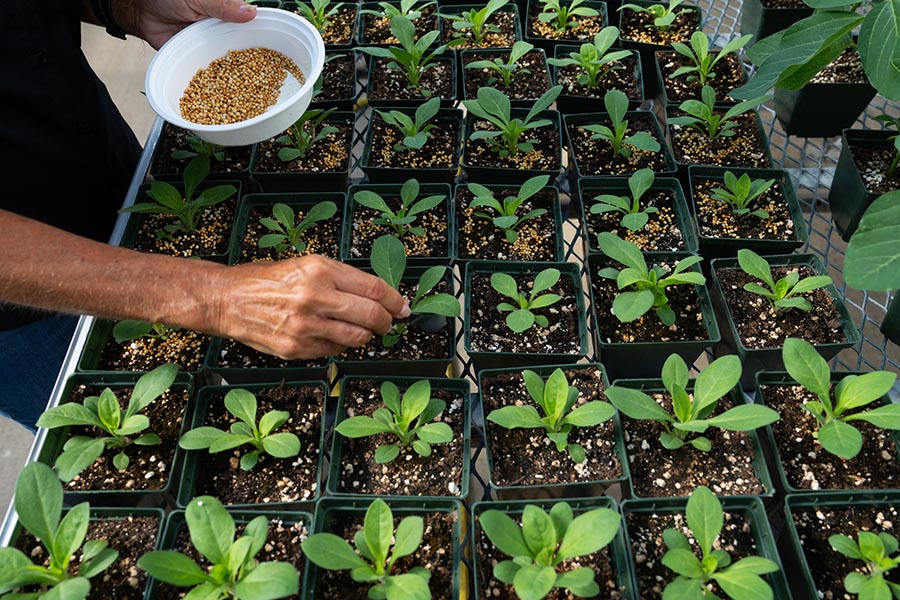
Young has been in her current role for 13 years, working closely with professor Bill Johnson, Professor of Botany & Plant Pathology, and Thomas Butts, clinical assistant professor of site-specific weed management. The work is “somewhat seasonal,” she says. During the summer, she’s in the field at multiple sites in Indiana. Much of her time is spent guiding undergraduate researchers or helping graduate students with their projects. She’s also involved in coordinating cross-disciplinary projects.
“We have so much opportunity to work with professors in agronomy, in ABE, in horticulture,” she says. “Even within our own department, there are people with equipment we don’t have. It’s a very collaborative environment.”
Young does her fair share of “mundane” tasks — “making sure things keep moving and get done,” she says — though she’s rarely at a desk for long. Her favorite part of the job is having a front row seat to cutting edge technology in action.
“We get to see new technologies through our collaboration with Dr. Jin,” she says. Jian Jin is an associate professor in the Department of Agricultural & Biological Engineering. “Sensors and imaging tech — these things are really blowing up right now with the use of AI. That’s the exciting thing to me.”
Young is involved in a major Defense Advanced Research Projects Agency (DARPA) project, testing whether plants show responses to synthetic chemical exposures. Contributors to the project, a collaboration with information science company STR, include Jin and Joshua Widhalm, an associate professor of horticulture. The goal is to see if plants can be used as natural chemical sensors.
Pride in Tackling Challenges and Having Real-World Impact
The DARPA project has a “huge scope,” she says. “It’s been an incredible challenge, trying to figure out how to accomplish the objectives while working with an enormous number of people.”
She’s also proud of the discoveries she and her team have made on herbicide resistance in weeds.
“Our group has a positive direct impact on agriculture, so that makes me feel good about what we do,” she says.
A Dream to See Rainforests and Volcanoes
Though Young’s three children swore they wouldn’t go into agriculture “after being dragged into the greenhouse” throughout their childhoods, two seem to have caught the bug anyway. Young’s oldest daughter works for the Office of the Indiana State Chemist, a government department on Purdue campus that administers agricultural laws involving animal feeds, fertilizers, pesticides, seeds and hemp. Her son is a graduate student in Purdue’s ABE department, specializing in new farm equipment technologies. Her youngest daughter stuck to her no-agriculture guns; she’s an undergraduate at Purdue Polytechnic, studying user experience design.
“It’s really quite wonderful to enjoy time with them,” Young says, acknowledging her luck in having all three adult children in one place, at least for now.
Young dreams of traveling. Puerto Rico’s rainforests and bioluminescent bays, the volcanoes of Hawaii’s Big Island and national parks out west are on her wish list, but for now, she enjoys her days in and around Lilly Hall.
“It’s crazy busy, but it’s never boring,” she says.
About the Feature
Many people are involved in the remarkable range of programs, services and facilities that undergird research in the College of Agriculture. Collectively they’re integral to the college fulfilling its research mission. “Behind the Research” explores their individual roles. Each academic year, we profile six people whose work supports the College of Agriculture’s global reputation for developing innovative, multidisciplinary solutions to challenges and then putting those solutions into action.
More Behind the Research
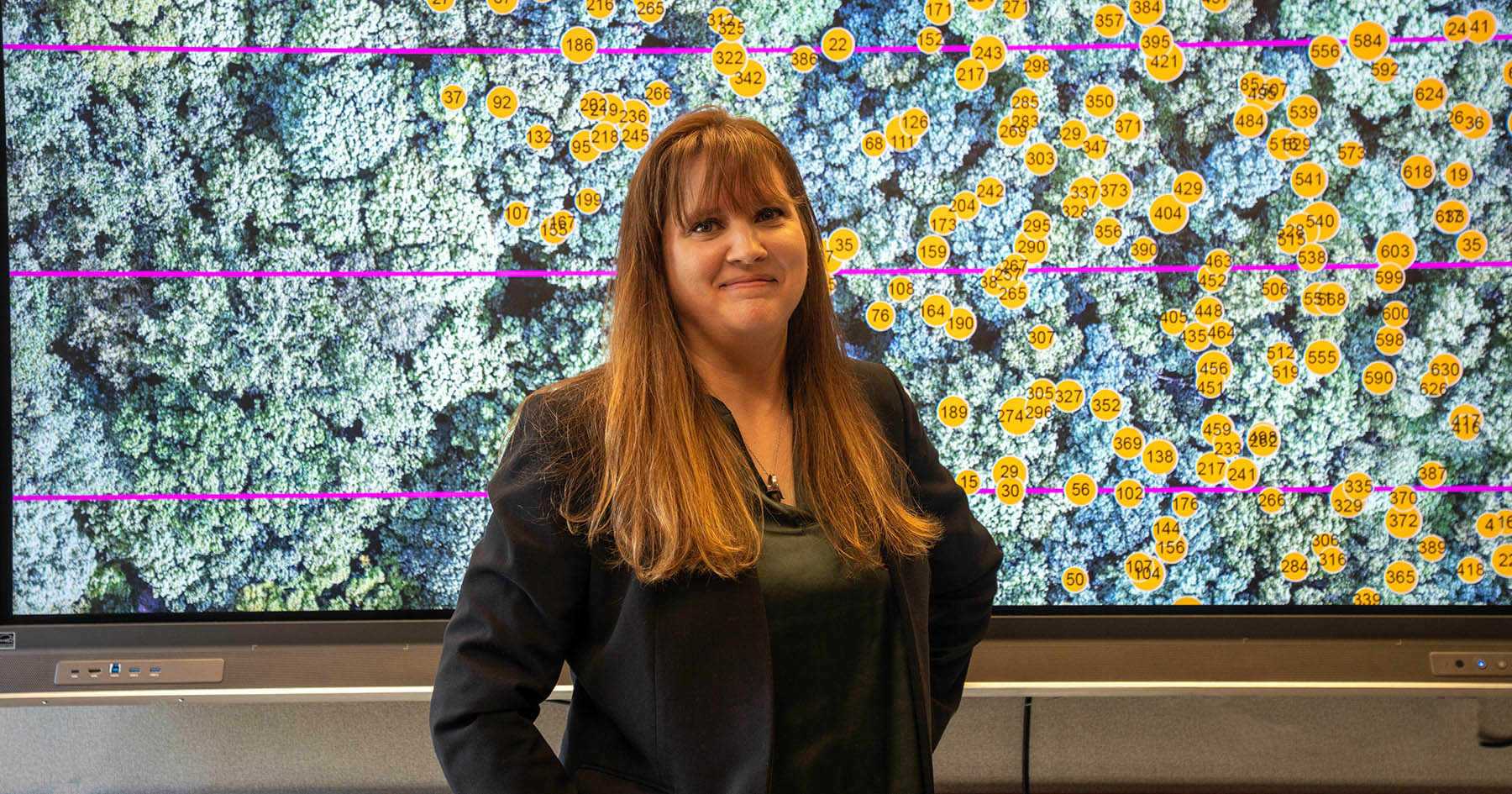
Jackie Getson, project manager for Purdue’s Institute for Digital Forestry, has built a...

The Department of Food Science’s Pilot Plant is a 9,500-square-foot facility with millions...
It’s winter, so right now the Southwest Purdue Agricultural Center (SWPAC) office is quiet....
It all started with 9th grade biology class. Growing up in Michigan, Laura Esman was lucky enough...
In 2015, Emily DeaKyne was a recent college graduate with a degree in applied ecology,...
Hemp makes comfortable clothing and excellent chicken feed. Its seeds can be crushed into oils...