

FNR Field Report: Gabrielle Dennis
Students from Purdue Forestry and Natural Resources took their classroom knowledge to the field for summer internships and paid positions across the country, gaining valuable experience, hands-on training and career guidance. The FNR Field Reports series offers updates from those individuals as their positions draw to a close.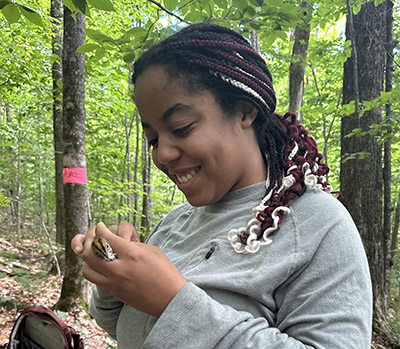
Senior wildlife major Gabby Dennis spent the summer as an ovenbird field technician at the Hubbard Brook Experimental Forest in the White Mountains of New Hampshire.
In this role, she banded and collected blood samples from adult ovenbirds and chicks, searched nests, used FieldMaps to mark observations, captured adults using target netting and playback, resighted color-banded birds, tracked ovenbird and black-throated blue warbler fledglings with radio telemetry and collected insect and vegetation data.
The position, which the Toledo, Ohio, native found on the Texas A&M natural resources job board and Ornithology Exchange, allowed Gabby to apply skills and knowledge from her FNR courses.
“Learning orienteering from (Summer) Practicum was important because I navigated almost daily by myself using a GPS and/or compass,” Dennis shared. “I used much of my knowledge from FNR536 Disturbance Ecology with Dr. Jenkins and Dr. Saunders. It was interesting seeing another part of the Appalachian Mountains in New Hampshire this summer after being in the Smokies in the spring with that class. It was sad seeing beech-bark disease in NH, but cool seeing ash without emerald ash borer symptoms. Dendrology was helpful for tree ID too.”
Being an ovenbird field technician also taught Dennis new skills, such as how to track fledglings with radio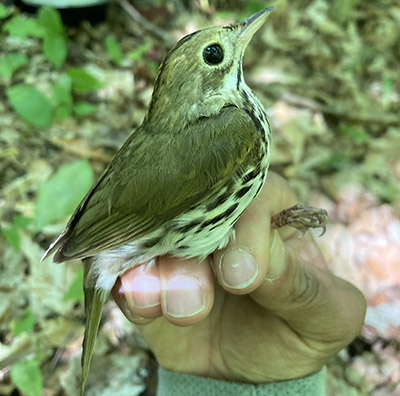 telemetry, how to collect blood samples, how to band nestling and how to search for nests.
Banding the adults and nestlings or finding a new nest were Gabby’s favorite parts of the position, while hiking in very rugged terrain with lots of rocks, mud, elevation and black flies were the most challenging parts of the job.
Despite the challenges, Gabby says the position strengthened her urge to work with birds.
Previously, Dennis gained on-the-job experience acting as a seabird research assistant on Middleton Island in Alaska, and working as an interpretive educator at Columbian Park Zoo.
She also has served as the birds working group leader for the Purdue student chapter of The Wildlife Society. In addition, Gabby has researched bobcats through Dr. Pat Zollner’s lab and assisted with bird banding through Dr. Barny Dunning’s lab.
Beyond her experiences on the job this summer, Dennis also had the opportunity to explore the New Hampshire landscape.
“I summited 7 of the 48 4,000 footer mountains in NH in my free time,” she shared. “My favorite trail was Franconia Ridge, which is a small portion of the Appalachian Trail. It has 360-views when you reach the area above tree line, and it leads you to summit Mt. Lincoln and Mt. Lafayette.”
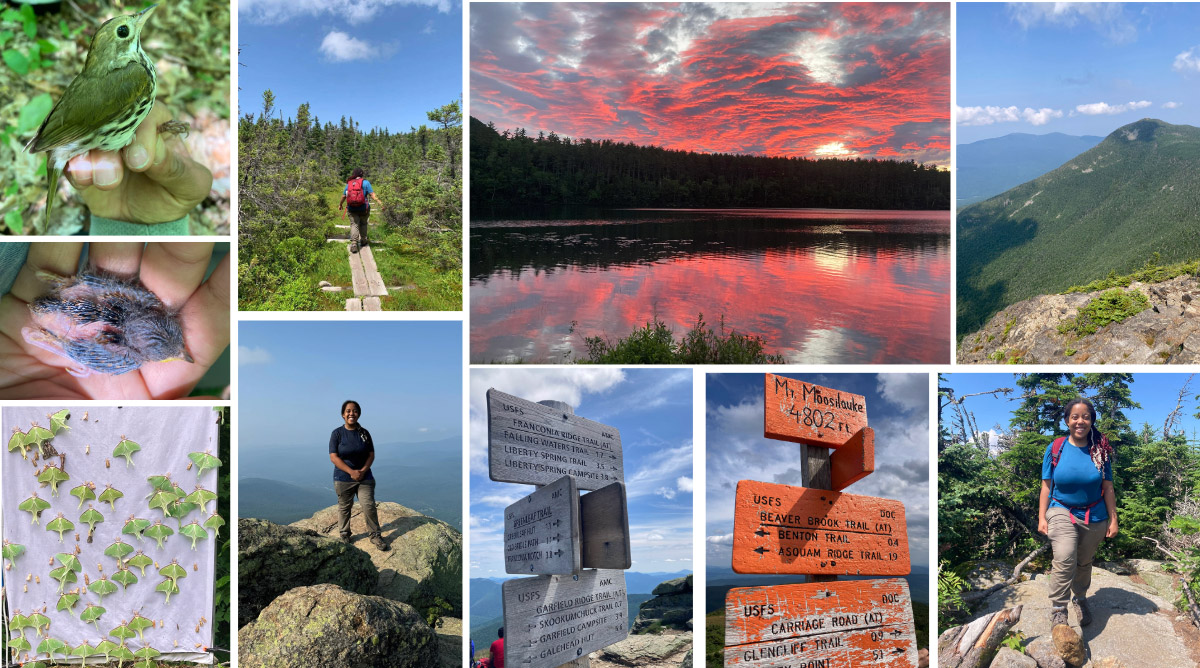 A collage of images from Gabby Dennis's summer in New Hampshire.
 Featured Stories
Carolyn Foley, a long-time member of the Purdue Forestry and Natural Resources (FNR) and...
Purdue University’s College of Agriculture recognized nine alumni at the Distinguished...
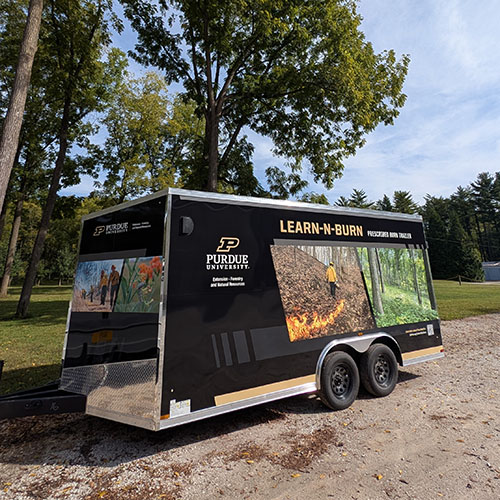
Keep your eyes peeled across Indiana for the newly minted Purdue Forestry and Natural Resources...
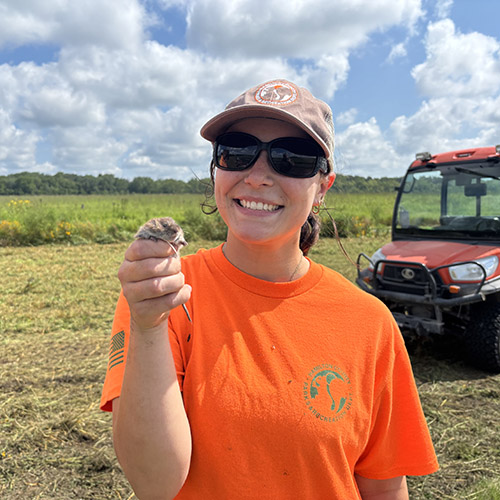
Senior wildlife major Madison Medley spent her summer as a natural resource intern with Hamilton...
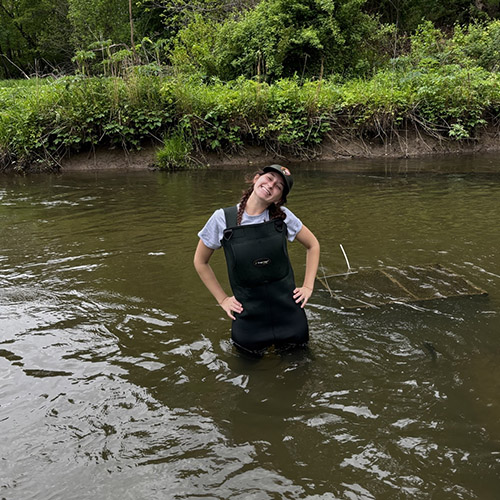
Addy Ellis, a sophomore aquatic sciences and political science double major, spent the summer as...
Zachary Feiner, who earned his PhD from FNR in 2015 and spent two additional years in West...