

FNR Field Report: Kira King Recaps Week 1 of the Study Abroad Trip to Sweden, Norway
Throughout the 2026 Sustainable Natural Resources study abroad course in Sweden and Norway, FNR students will check in to provide weekly updates on the trip's highlights.
Kira King, a rising junior from Lebanon, Indiana, shares about Week 1. The double major in natural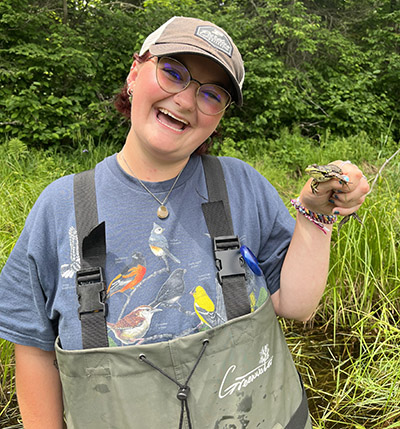 resources & environmental science (NRES) and wildlife, with a minor in Spanish, is passionate about conservation and protecting our biodiversity. In her free time, she enjoys cross-stitching, reading, baking and camping.
Within FNR, Kira is a member of the Purdue student chapter of The Wildlife Society and will serve as the club's treasurer for the 2026-27 school year. Last summer and during the 2025-26 school year, she worked as a technician in Dr. Jason Hoverman's lab, working on the Help the Hellbender project and with other amphibians and macroinvertebrates. This spring she also was a member of the FNR Flight Crew in Dr. Pat Zollner's lab, serving as a camera operator and data scorer, counting deer, turkey and coyote populations. Previously, Kira worked in the natural resources social science lab, helping organize surveys given to Midwest farmers regarding cover crop usage.
She also is involved in the Purdue MANRRS chapter (Minorities in Agriculture, Natural Resources and Related Sciences), which she will serve as the chapter's treasurer beginning in the fall. Kira also will be an NRES Ambassador this year.
During the three-week Sustainable Natural Resources study abroad course students will examine natural resources broadly defined, including forestry, fisheries, wildlife, agriculture, mining, outdoor recreation, and urban sustainability. They will define, discover, and document examples where sustainability of resource use matters. The course explores the effect of terrain, climate, vegetation, faunal assemblages, social structures and technologies on natural resource use. FNR 46000 is a collaboration of Purdue University, North Carolina State University, and the Swedish University of Agricultural Sciences. American and Swedish students work together to research issues in resource management.
The course is co-taught by FNR's Drs. Tomas Hook and Doug Jacobs as well as other instructors from NC State and SLU.
Kira King provides her recap of Week 1 of the trip below.
Monday June 22 - Kiruna, Sweden
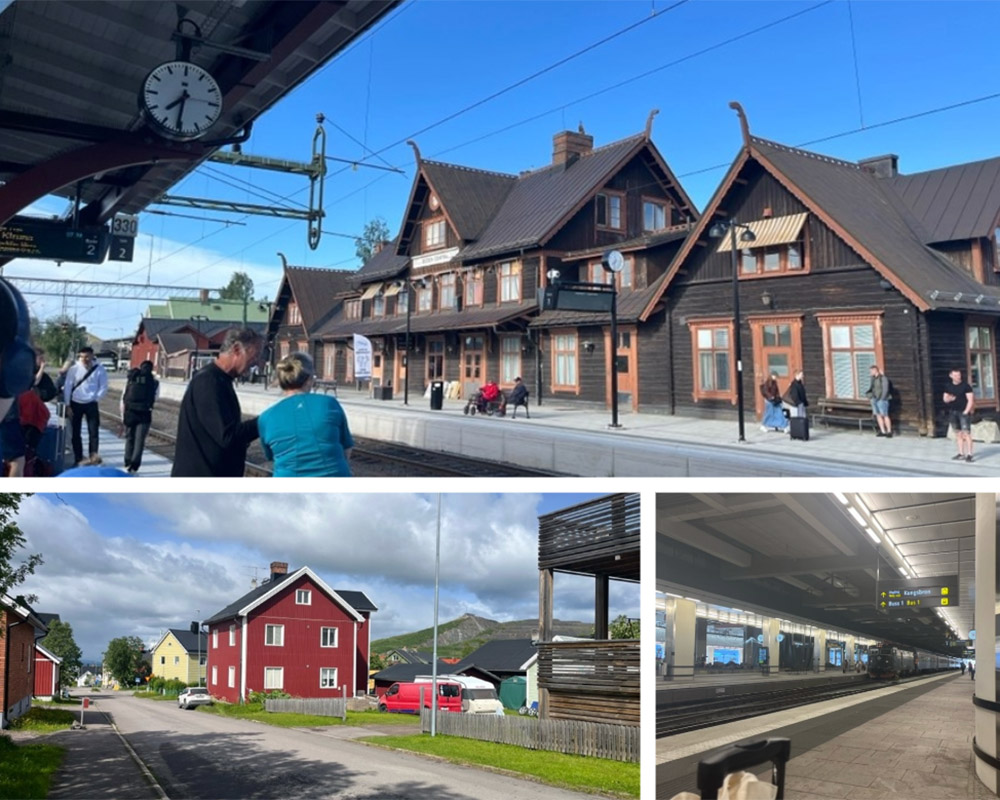
The start of our trip! For a fellow Purdue student, Lauren, and I our trip started a little differently than everyone else. Lauren and I flew together over to Sweden and had made it through two of our three flights with no problem until, on our flight to Kiruna, the plane experienced a malfunction with the wing flaps and instead of landing in Kiruna, had to turn around and head back to Stockholm. We eventually booked tickets on an overnight train to Kiruna (accompanied by many of our fellow passengers who also got turned around), so that we could join our fellow students by noon on Monday. By the time we walked from the train station to Camp Ripan, we were very thankful to have our first shower in four days and then get to know our fellow students. The rest of the night was spent getting a quick course introduction and then playing cards with other Purdue students before heading to bed.
Tuesday June 23 - Kiruna, Sweden
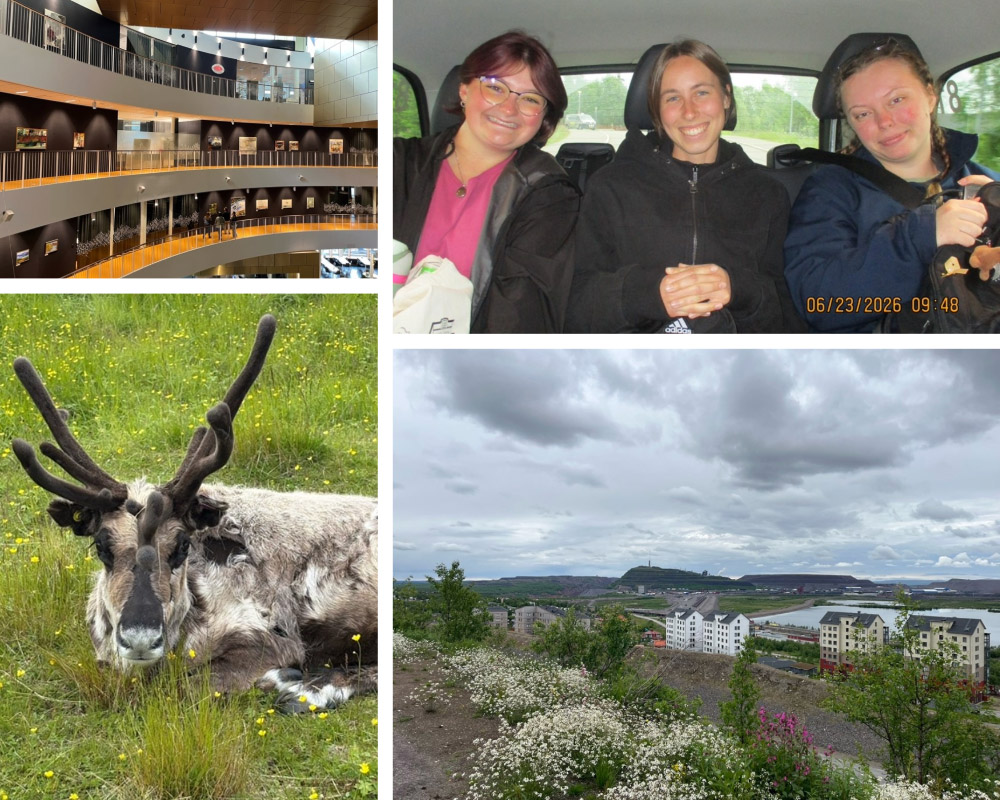
Today we started off with a lovely breakfast from our camp (something we later realized we took for granted) and then got on a charter bus with a local guide to tour the new city center. Due to the iron mine located in Kiruna, the ground has become unstable, meaning the whole city must be moved three kilometers from its current place. The city began plans to move in 2004 and it is not scheduled to be done until 2035 or after. During our tour we got to tour their new town hall, see the new location of the Kiruna church, which is over 100 years old, and got to walk around the new shops that had been established. Our tour guide was a local, so we got to hear his perspective on the move and ask questions about the logistics of the move and what it meant to families who had spent their whole lives in the old city. We then met up with another guide to tour the old city and hear the history of the buildings still standing and their fate in the coming years.
In the afternoon, we then headed to an open-air Sámi museum, to hear from a member of the Sámi people about their history and culture. The Sámi people span across the arctic region of Europe called Sápmi. Our tour guide explained how reindeer are the soul of the Sámi people as they depend on them for food, clothing and shelter and that, even though the Sámi people can’t be as nomadic as they once were, they still follow the reindeer between spring and wintering grounds. She spoke about continuing to pass down Sámi culture while also living in the modern world and working, paying taxes, etc. She had amazing perspectives on the world, social systems, religion and identity that led to very meaningful conversations within our group. We then got the chance to feed lichen to some reindeer owned by local reindeer herders.
After returning to camp a few of us decided to try out the spa located within our camp. We spent a relaxing evening in multiple types of saunas, a cold plunge pool, a hot tub and putting on locally made face scrubs. We then, of course, ended our night with some competitive rounds of euchre, spoons and old maid.
Wednesday June 24 - Kiruna to Abisko, Sweden
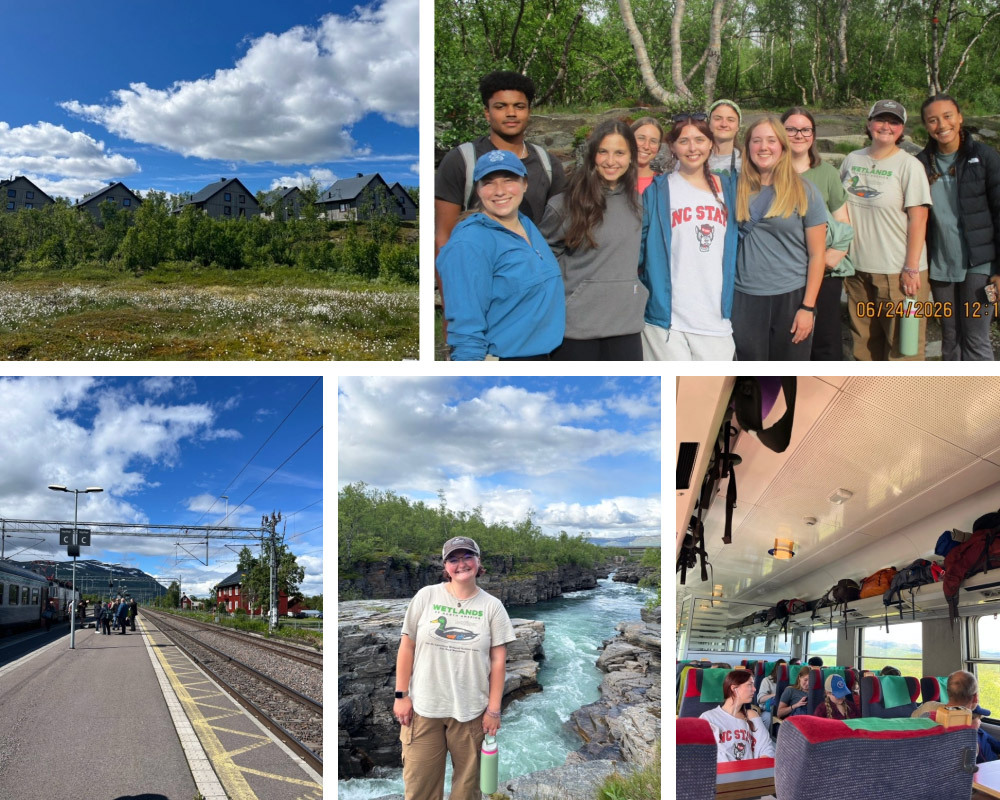
Our morning again consisted of a Camp Ripan breakfast before it was time to pack up and check out to begin heading to our next city. We had one last walk through the city of Kiruna as we walked to the train station then got to experience an hour train ride to Abisko. A section of the rail happened to be down for maintenance so when we got off the train the professors took a bus to our lodging and all the students hauled our luggage down the mile and a half gravel trail to the tourist station where we were staying. That afternoon we settled into our cabins, got to know our new roommates for the next week and made a grocery run (back down the mile and a half path) so we could have ingredients to make our meals for the next week as a cabin. After dinner, a group of Purdue and NC State students decided to check out a trail by the river that ran through the national park we were staying in and out to Torneträsk Lake.
Thursday June 25 - Abisko, Sweden
We started the day off cooking breakfast together as a cabin then headed to the Abisko National Park visitor center to speak to a park ranger and learn about the history of the park. We then took a break for lunch, which I spent eating my lunch on a bog behind our cabins and catching up on some reading.
After lunch we walked to the Abisko research station where we talked to the manager of the station, learning about research going on within the arctic through the Swedish Polar Research Secretariat. She also highlighted opportunities within the Association of Polar Early Career Scientists across the arctic at various research stations and oceanic vessels. We ended our time here with a tour of the facility and a look at the research currently being conducted to predict the effects climate change might have on soil and vegetation growing on slopes.
Later in the afternoon, a group of both Purdue and NC state students, including me, hiked along the delta that led out to the lake, enjoying the beautiful landscape.
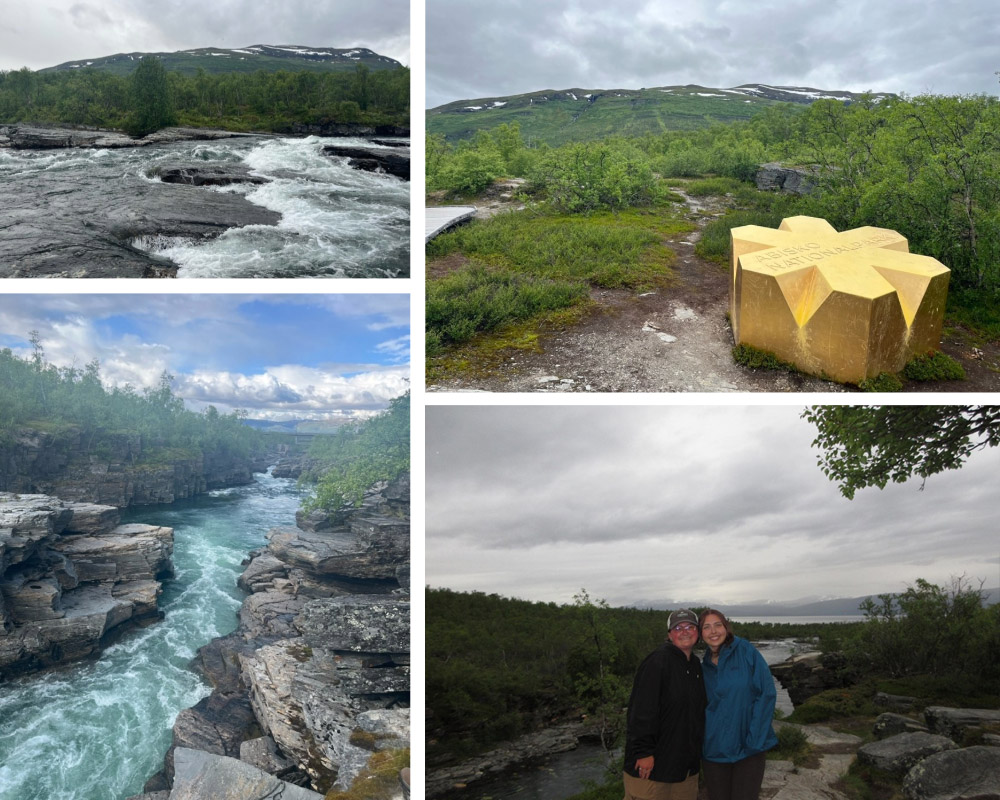
Friday June 26 - Abisko, Sweden
Today we started by walking back to the Abisko research station, this time with a local researcher teaching us about climate change and how its effects are more pronounced in the arctic. He showed us examples from the national park so that we could see the effects in a very clear way and understand why the research being conducted was so important to be able to predict the changes the arctic will see in coming years. We then were given the chance to watch an intern with the national park bird band at a ringing station within the national park that operates every week to gain information on the birds within the park. While we were at the station, we were able to watch a Willow Warbler, Reed Bunting and a Bluethroat be banded, all species we could not see back home.
On our way back to camp, we stopped at a bog habitat where research regarding climate change, permafrost, temperature and carbon dioxide levels was being conducted as bogs, or mires as they are called here, are sinks for carbon dioxide and their permafrost is at risk for thawing and releasing CO2 into the atmosphere.
For lunch, another Purdue student and I tried the buffet in the tourist station’s restaurant then headed out to polar plunge in the delta where the water was around 34 degrees F. After getting our share of the cold water, we decided to warm up Sweden style, in the sauna. After our time in the sauna, chatting with locals about the World Cup, we headed back to our cabin to finish off the night with some card games.
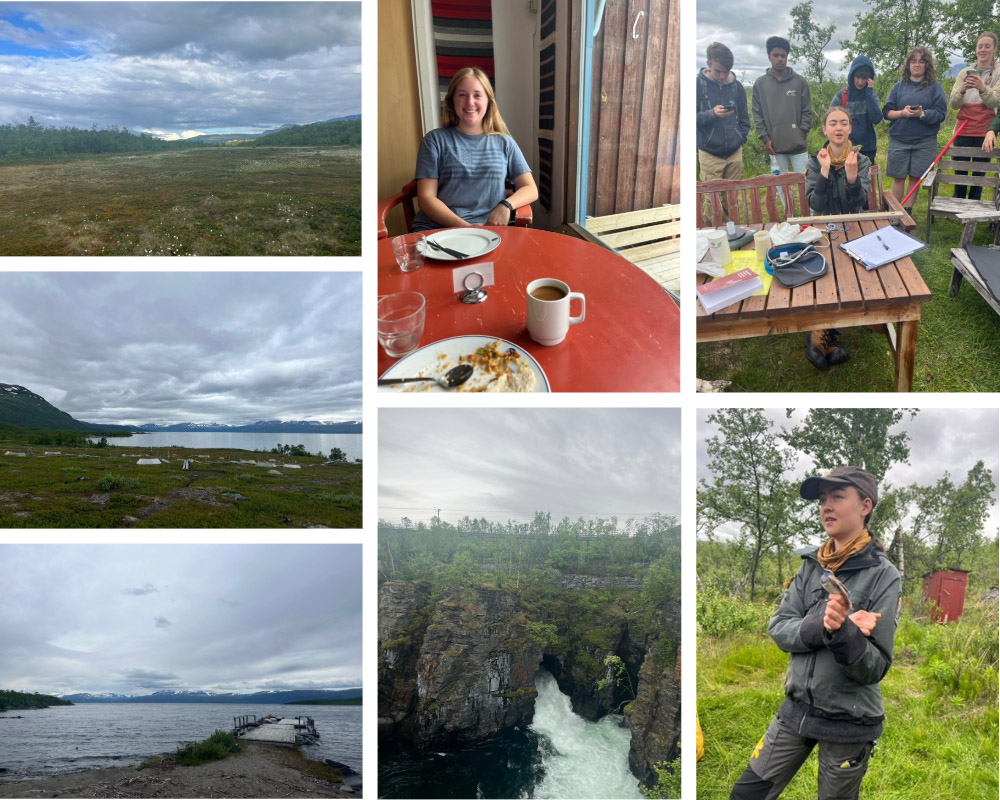
Saturday June 27 - Abisko, Sweden
Today was technically a free day for the trip; however, in as beautiful a place as Abisko National Park, plans were quickly made to hike the surrounding mountains. After breakfast another student, Katherine, and I decided we would climb Slåttajåkka, a mountain within the park. After figuring out the trails we wanted to take and then the general direction we needed to go after the trails ended, we set off. It was around a two-mile hike up the mountain to the waterfall. We made stops along the way to look for rocks and drink from the falls, as the water was safe to drink. Near the top there was still snow so, of course, as someone who loves the cold, I had to take advantage of it and lay down in it. We then saw a Willow Ptarmigan, a type of grouse native to subarctic areas and a bird many of us had been hoping to see. The hike was around a 3,000 feet elevation change by the top of the falls. By the time we wandered around, making our own paths at times, the total hike ended up being six miles.
Once other groups had returned from their hikes, we swapped stories, ate dinner and, needless to say, had an early bedtime.
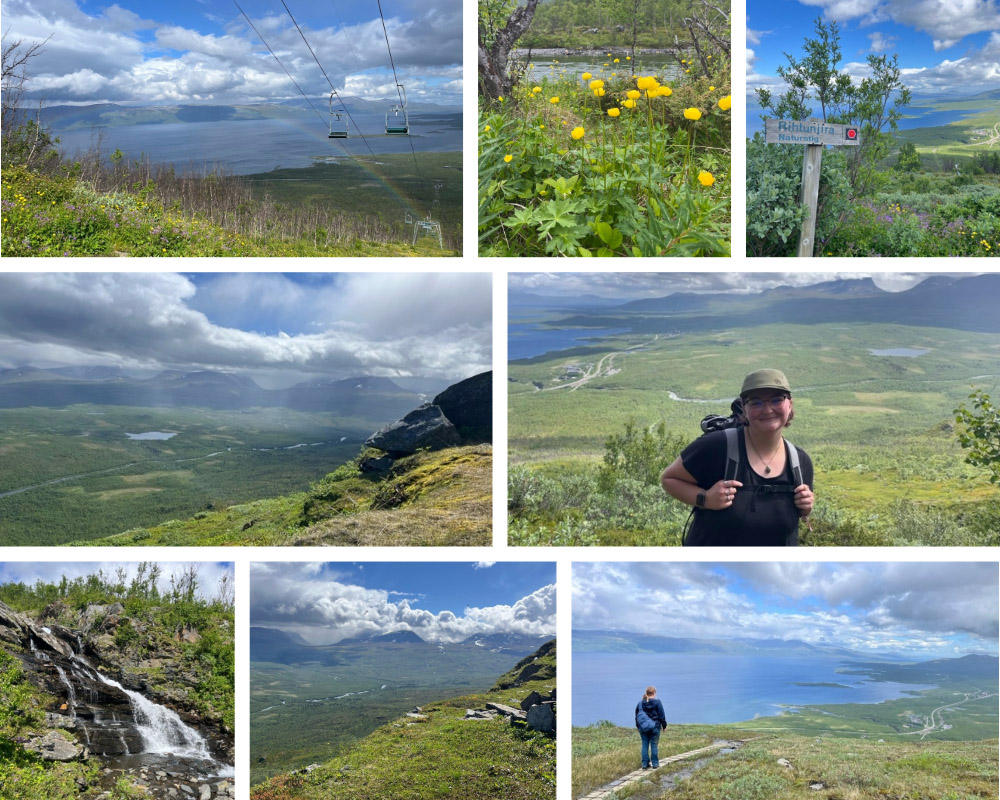
Sunday June 28 - Abisko, Sweden
Today everyone slept in and then soaked up the last bits of the national park as we were set to leave Abisko for Norway the next day. Another Purdue student, Allison, and I decided to go on a four-mile hike on one of the trails we hadn’t hiked yet and saw a Sámi village along the way, showcasing the structures one might see in a traditional Sámi village. After our hike, our cabin decided we needed to do one last polar plunge in the cold water so we headed back out to the delta where we found a spot deep enough to jump in and tried to stay in as long as we could bear before it was simply too cold. Then it was time to warm up, eat dinner and get ready to head to the ski lift as we were going to watch midnight sun from the top of Mt. Njullá. We all got to experience the ski lift to the Aurora Sky Station close to the top of the mountain then a few of us explored the top of the waterfall near the station before making the 1.2 mile, very steep and rocky, hike to the summit. From there we got to watch the sun touch the horizon, then we quickly hiked back to the ski lift to head back down the mountain before it closed for the night.
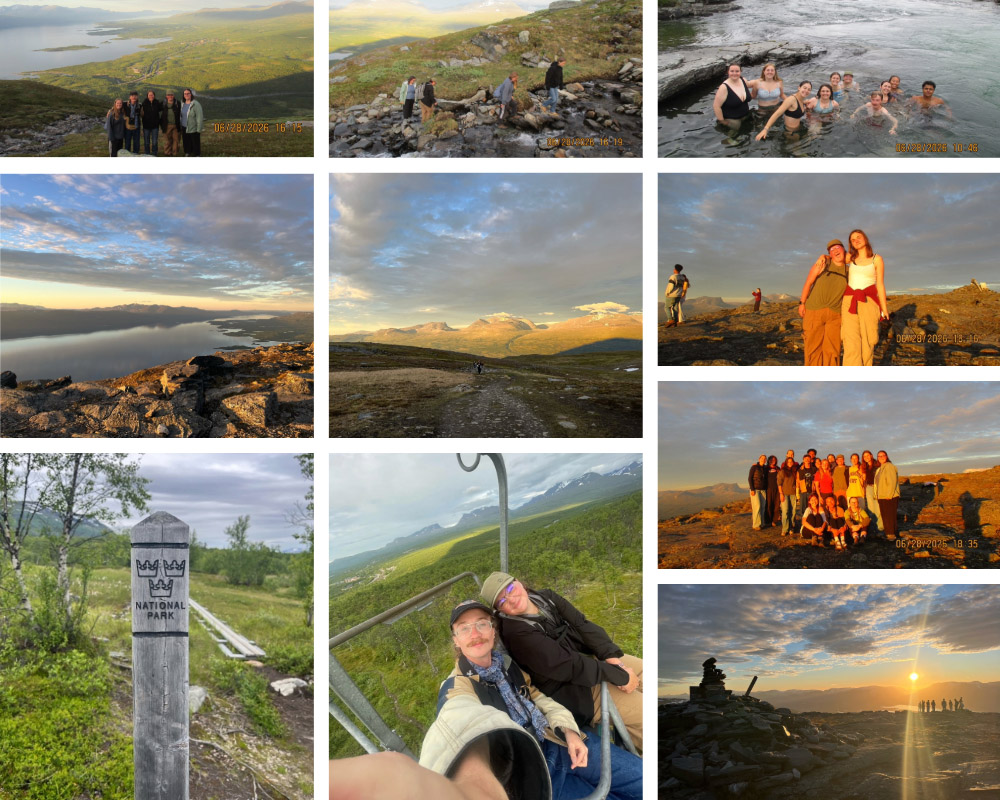
Featured Stories
Carolyn Foley, a long-time member of the Purdue Forestry and Natural Resources (FNR) and...
Purdue University’s College of Agriculture recognized nine alumni at the Distinguished...
Keep your eyes peeled across Indiana for the newly minted Purdue Forestry and Natural Resources...
Senior wildlife major Madison Medley spent her summer as a natural resource intern with Hamilton...
Addy Ellis, a sophomore aquatic sciences and political science double major, spent the summer as...
Zachary Feiner, who earned his PhD from FNR in 2015 and spent two additional years in West...