

Students Experience Wonders of Costa Rica Through Study Abroad Trip
The Costa Rica Rainforest Experience study abroad trip allowed students to experience the wonders of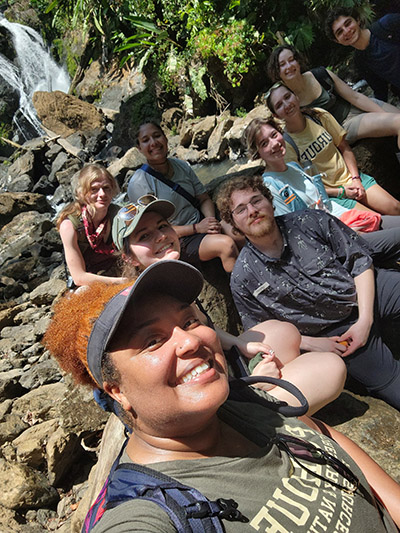 Costa Rica during 10 days over Spring Break. The trip, led by Dr. Patrick Ruhl and Megan Gunn, Illinois-Indiana Sea Grant aquatic education associate, included stops at the La Tirimbina Field Station, El Copal, Los Quetzales National Park, and boat trips to Poor Man’s Paradise, San Pedrillo Station at Corcovado National Park and Caño Island Biological Reserve.
The course offered students the opportunity to explore biodiversity and Costa Rican societal values in tropical rainforest, Pacific dry forest, Pacific rock reef and Pacific mangrove ecosystems.
The 10-day excursion included birding, boat trips, seining in rivers and hiking, while exposing students to sustainable management of tourism, conservation in Costa Rica and hands-on experiences in wildlife and aquatic sciences.
Junior wildlife and aquatic sciences double major Lauren Toepp shared about the trip, her favorite things and the impact the trip had on her FNR studies and future career.
“I learned so much on the Costa Rica study abroad,” Toepp said. “Our tour guide, Carlos, was so knowledgeable and willing to be patient and share his experience and knowledge and answer all the questions that we endlessly asked him. I learned about the history of Costa Rica and their Indigenous communities and the land that they currently own as well as the current state of Costa Rican laws and protections for their lands and waters in their efforts towards the conservation of the natural world. I learned that Costa Rica along with Panama, Ecuador and Colombia have the largest multi-country marine protected area in the world and it protects around 2,600 marine species. I learned the differences between the many ecosystems in Costa Rica, how they differ from the ecosystems we have in the United States and saw firsthand how altitude effects the differences and diversity of both plants and animals.”
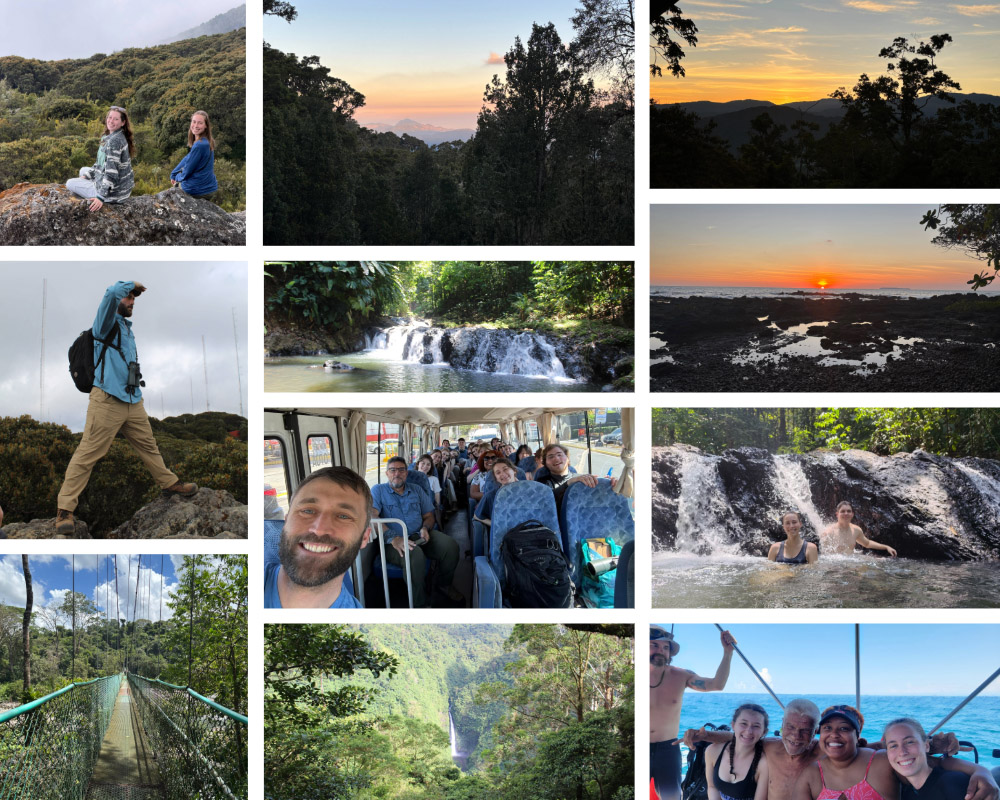 A collage of photos from Costa Rica by Lauren Toepp: Top row (Left to right): Aanesera and Lauren in Chirripó National Park which is one of the highest places in Costa Rica; sunrise at El Copal; sunrise at El Copal. Second row: Dr. Patrick Ruhl straddles two rocks on a hillside; The waterfall at Corcovado National Park. Sunset on the Osa Peninsula. Third row: The group on the bus when they first arrived in Costa Rica; Nathan and Lauren in the waterfall at Corcovado National Park. Bottom row: The bridge at Tirimbina; the waterfall from the first day the group arrived in Costa Rica; Addi, Megan, and Lauren with their dive guide.
 In addition to the knowledge she gained, Toepp enjoyed exploring on land and water and seeing the biodiversity in Costa Rica.
“The best part of the trip for me was staying so close to the ocean and being able to spend my free time swimming and exploring the beach and tide pools,” she shared. “I loved going on the morning bird hikes and the night herp hikes to be able to see as many new species as possible. My favorite experience of the trip was being able to dive in the Pacific Ocean! I got certified in freshwater, so this was my first time diving in saltwater, and I got to dive twice in one day. Being able to see all the marine species that I have grown up adoring was amazing! Seeing sharks, manta rays, eels and sea turtles in their natural habitat surrounded by all the coral and fish and being able to hear the sounds of the reef was surreal!
“It is difficult to choose just one favorite species! My favorite species underwater were the garden eels because it was so funny to watch them go into their tunnels if something got too close and then come back out after it was gone. The Northern Emerald Toucanet is my favorite bird I learned about because it was like a mini toucan but better because it was my favorite color, green! The blue jean poison dart frog was my favorite herp we encountered because, true to their name, they look like they are wearing little blue jeans! My favorite mammals were the Pantropical spotted dolphin because they get more spots as they age and the Honduran white bats because they looked like little adorable cotton balls in their community tent. And lastly my favorite insect was the tailless whip scorpion because they look so interesting.”
All told, Toepp said the experience brought her classwork to life and clarified her career goals.
“This study abroad enhanced my FNR experience because I was able to see so many new species that I had either only seen in pictures or videos or did not know existed at all,” Toepp explained. “I was able to see so many concepts that I have learned in classes be applied to the different ecosystems that we encountered. The entire trip reassured me that I made the correct decision to study wildlife and aquatic sciences because it gave me a chance to enjoy nature that I have not seen before without worrying heavily about getting a good grade. It made me realize that I want to be able to promote conservation and raise awareness for species that are not seen as the cutest by the public and make them realize that they are still essential for the proper functioning of the ecosystems.”
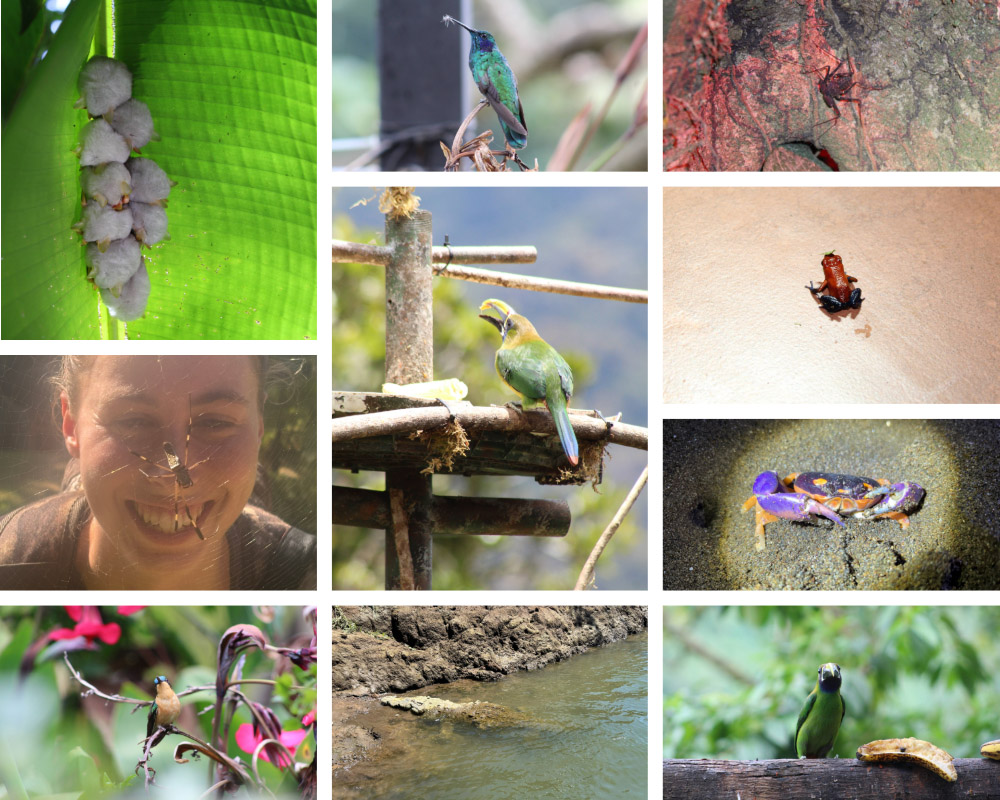 A collage of images from Costa Rica taken by Lauren Toepp. Top row (Left to Right): Honduran white bats; Lesser Violetear (Hummingbird), whip scorpion. Second row: Lauren behind a golden orb weaver web; Northern Emerald Toucanet; blue jeans poison dart frog, also known as the strawberry poison dart frog; Halloween crab. Bottom row: Purple-throated Mountain-gem; American crocodile; Northern Emerald Toucanet.
 For Nathan Smith, a senior construction management major, the trip to Costa Rica offered insights in cross-cultural communication.
“I was the only non ag student on the trip so my experience relates to my academic journey a little differently,” Smith said. “I am pursuing an Advanced Global Technology minor which is centered around intercultural competence. My time in Costa Rica definitely enhanced my ability to connect and appreciate diverse cultures. I also was able to observe some building practices that inspired me for my construction management major.
“I learned how each ecosystem we visited functioned and the survival strategies of all the individual species we encountered. The most intriguing topic I learned about was Costa Rica’s conservation legislation and policies. Equally as interesting, we learned about Costa Rican life and culture.”
Being immersed in the Costa Rican culture and learning from locals was a highlight of the trip for Smith.
“My favorite part of the experience was learning from the owners of Las Vueltas Ecolodge at Cerro Las Vueltas,” Smith shared. “Their unique story and the sustainable practices they have developed over their lives on their farm were super inspiring to me. My favorite species (I encountered) was the White-faced Capuchin.”
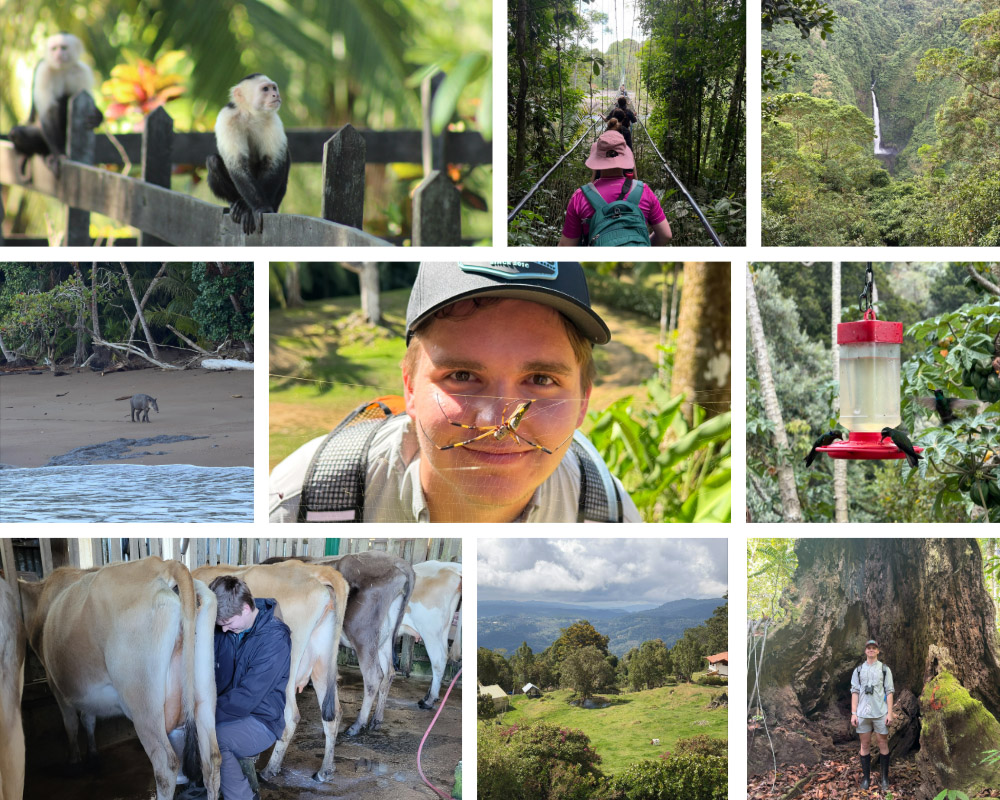 A collage of images from Costa Rica, taken by Nathan Smith. Top row (Left to Right): White-faces Capuchins at Poor Man's Paradise; Walking bridge over river in La Tirimbina reserve; Waterfall at Cinchona. Row 2: Tapir walking on beach in Corcovado National Park; Me behind an orb weaver web in Corcovado National Park; Hummingbirds. Row 3: Nathan milking a cow at Las Vueltas; View from Las Vueltas lodge; Nathan inside a decaying tree in Corcovado National Park
 The Spring Break experience also provided memorable experiences for trip administrators.
“For me a highlight was listening to the students talk about how they never thought they would be able to experience something like this, and just how grateful they were for the opportunity and how amazed they were at the biodiversity and breathtaking natural landscapes,” said Dr. Patrick Ruhl, clinical professor of teaching and learning in FNR. “Some of the students had never been out of the country before, so to be able to introduce them to tropical ecosystems was really special. In a course like this, students have an opportunity to experience unfamiliar and exotic plants, animals and biomes, but they also get a chance to learn a lot about themselves and a lot about the world.”
Featured Stories
Several Forestry and Natural Resources students, staff and recent alumni have been recognized for...
A plume of contamination spreads underground. A building's foundation weakens. A wetland...
Jarred Brooke, Extension wildlife specialist, was honored with a Career Achievement Award at the...
Sophomore forestry major Brett Cox recaps week 2 of the Sustainable Natural Resources study...
Morgan Hamilton, a rising senior majoring in aquatic sciences, has had an...
Throughout the 2026 Sustainable Natural Resources study abroad course in Sweden...