

Why farmers markets and food safety are here to stay
Fresh produce growers and consumers have been hearing mixed messages about farm markets shutting down because of regulations established through the Food Safety Modernization Act (FSMA), specifically the Produce Safety Rule.
“Here’s why farmers markets will never go away: Consumers will always be able to buy direct from the farmer,” said Amanda Deering, clinical assistant professor, Department of Food Science at Purdue University. “Farmers’ markets provide an opportunity for direct-to-consumer sales of a variety of products, including fresh fruits and vegetables” continues Deering.
“FSMA helps ensure consumer confidence that the foods they buy are safe as possible,” Deering said. “FSMA is all about preventing contamination and this is done, in part, by educating producers with programs like Good Agricultural Practices (GAPs). The goal is to prevent contamination from occurring rather to reacting to an outbreak like we have in the past.”
A farm is covered by the FSMA Produce Safety Rule based on total sales. Growers are exempt from the Produce Safety Rule if their annual average total in produce sales (in the previous three years) is $25,000 or less. If average food sales are in the $25,000 - $500,000 range, vendors can still qualify for an exemption if they sell within the same state or within 275 miles of the farm. At that point, they would only be required to label their produce with the farm name and contact information.
The practice of growers selling to another business, such as a restaurant, is considered wholesaling. The Indiana Department of Health (ISDH) requires wholesale growers and distributors to register at no charge at https://forms.in.gov/Download.aspx?id=10956 with a simple one-page form. ISDH also recommends that growers who are wholesaling also take a GAPs course. In addition, ISDH offers growers the availability of farm food safety consultants as a resource who can help answer questions if needed.
Deering recommends all fruit and vegetable growers, regardless of size and where they sell, invest in taking a GAPs training. These trainings provide best practices for growing fruits and vegetables. The current GAPs training developed by the Produce Safety Alliance offered by Purdue Extension provides information on topics such as worker training, production and postharvest water, postharvest handling and sanitation, and how to develop a Farm Food Safety Plan.
Purdue Extension will provide opportunities for GAPs training twice a month starting in October. The ~8 hour training sessions will be held each month through March 2018, with the exception of December. For training schedules, registration, or more information go to www.safeproduceIN.com. You also can contact Amanda Deering at (765) 494-0512 or Scott Monroe, food safety educator for Purdue Extension, at (765) 427-9910.
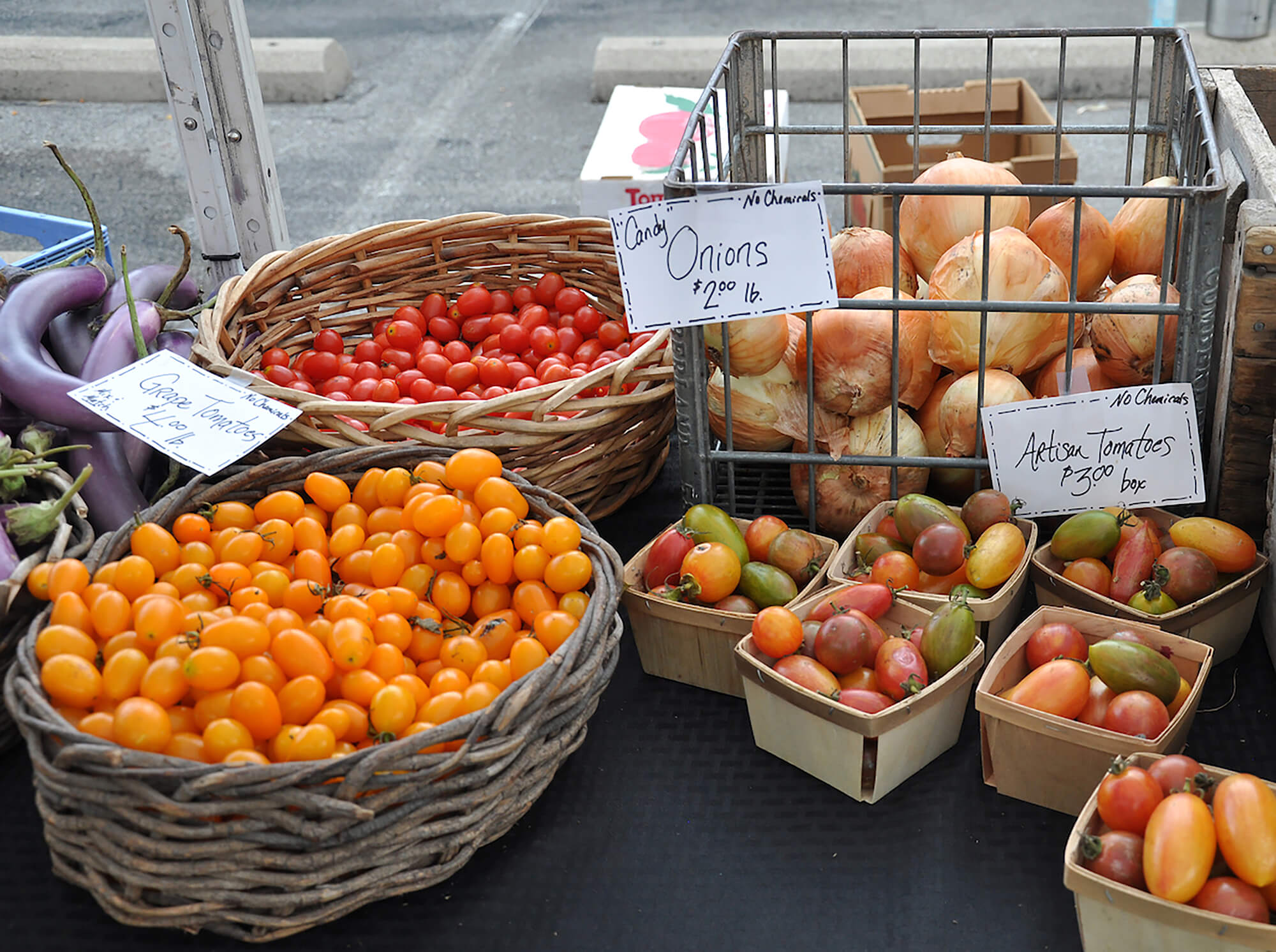 , opens larger image Purdue Extension will offer trainings beginning in October to all farm market vendors, promoting food safety and continued consumer confidence in vendors through Good Agricultural Practices. (Purdue Agriculture photo/Tom Campbell)
 Featured Stories

Maksym Chepeliev, a leading international scholar recognized prominently for his work in...
In recent years attendees at Purdue Agriculture alumni, donor, and faculty and staff events have...
People think grass is simple. Lawns, right? Mow regularly and add some water and fertilizer. What...

The Office of Indiana State Chemist (OISC) is warning Indiana residents about an illegal...

A prominent protein on most human cells may be key to unlocking the code that makes humans...

Ava Hoskins, a double major in aquatic sciences (fisheries concentration) and natural resources...