

Collaboration in action: Beekeepers help The Purdue Bee Lab make buzz-worthy mutation discoveries
When most people picture a bee, they imagine a small black insect with a fuzzy body, yellow stripes and glossy dark eyes. But beyond the classic black-and-yellow pattern mutant bees exist that defy expectations, some with unconventional coloring and others with unusual eyes.
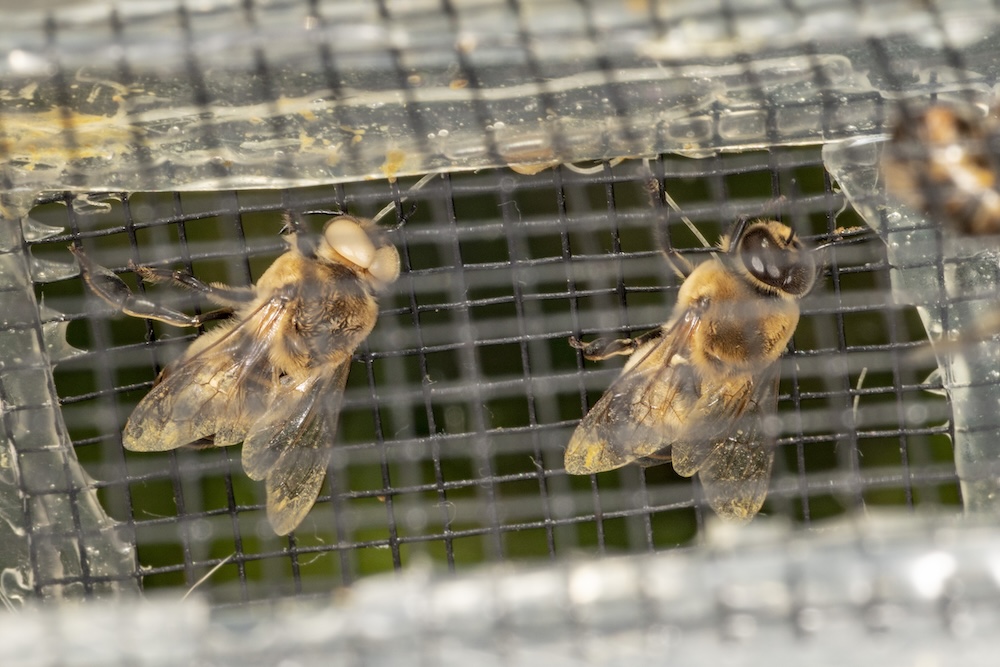
In 2022, The Purdue Bee Lab—led by Brock Harpur, associate professor in Purdue’s Department of Entomology—received an email from a beekeeper in Minnesota reporting that their colony was producing drones, male honey bees who mate with the queen, with yellow eyes. As Purdue entomologists prepared to receive the queen from Minnesota, other beekeepers reached out with similar “mutant drones.” The lab issued a nationwide call to beekeepers, asking whether they had observed drones with similarly unusual traits, such as abnormal eyes or atypical coloration.
“The bee genome was published in 2006, and it’s now starting to enrich the beekeeping community,” said Harpur. “We wanted to work with the beekeeping community to show them how modern genomic tools work in a simple test case. We thought identifying this would be a fun leaping off point for us and the beekeeping community.”
After sending flyers and presenting outreach talks, Harpur received four solid leads from four different states.
“These beekeepers had colonies that were regularly producing atypical drones, which is exceedingly rare. We had yellow eyes that kicked off this whole project, white eyes, ivory eyes that we got to do more experiments with, and then most recently, one called ‘Marshmallow,’ which is the first albino Hymenopteran ever reported."
- Brock Harpur
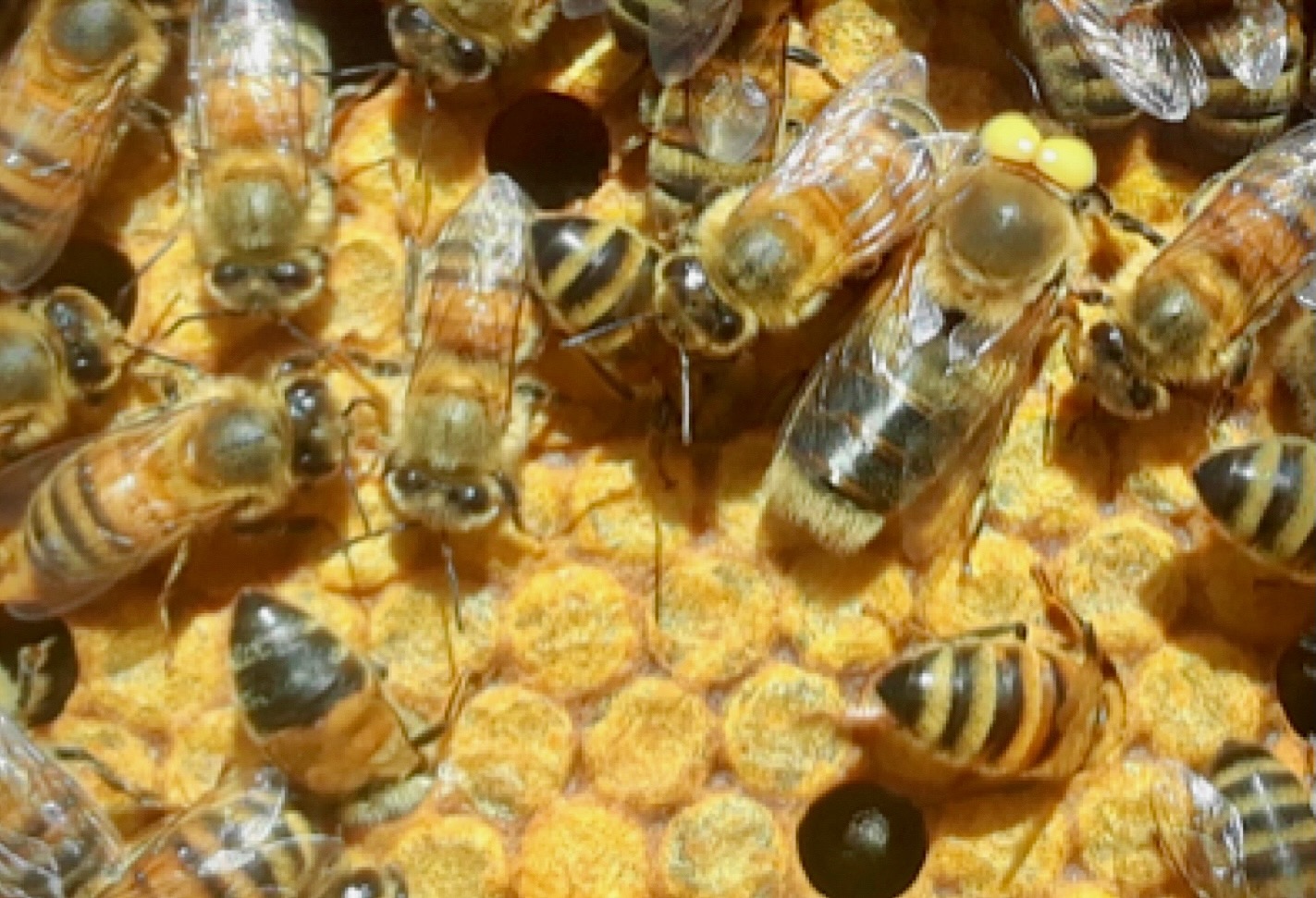 The honey bee colony that launched the mutation project, sourced from a Minnesota beekeeper (image provided by The Purdue Bee Lab).
 According to Harpur, these types of mutations have been reported in literature since the 1950s and were used in older honey bee genetic studies to help map the genome. However, little has been published about the phenotype—what causes the color variations and whether those changes are associated with differences in behavior.
Beekeepers sent samples of the mutant drones to Harpur’s lab, and, in a few cases, sent the queen producing them. This allowed his team to perform careful genetic and behavioral experiments. Through collaboration with beekeepers nationwide, the scientific and beekeeping community is now able to learn about the life history of these mutations that first caught our eye nearly 80 years ago.
The white-eye mutation was spotted by Kentucky beekeeper Phillip Patterson, a discovery that launched research now published in the Royal Entomological Society. Riley Shultz, a PhD candidate in Purdue’s Department of Entomology, played a key role in developing and advancing the study.
“I received a ‘swarm call’ from someone in a nearby town. After retrieving the swarm and setting it up in a hive, I discovered that the queen was producing white-eye drones."
- Phillip Patterson
Shultz added, “Because the queen’s eyes were normal, we thought she probably carried one normal copy and one mutated—that’s how she had sons with both normal and white eyes.”
To test whether the single recessive mutation was driving this white-eye phenotype, Patterson was asked to place a drone frame in his colony to encourage the queen to lay males. When a queen encounters a larger-than-normal comb size, she will lay unfertilized eggs, which develop into male bees. The queen in Patterson’s colony successfully filled an entire frame with drones. Patterson then tracked the number of days until the bees emerged into adults and recorded how many drones had wild-type versus white eyes.
Wild-type honey bees display the typical traits found in natural environments. In genetics, "wild-type" refers to the standard, naturally occurring form of a species, characterized by normal physical features like black eyes.
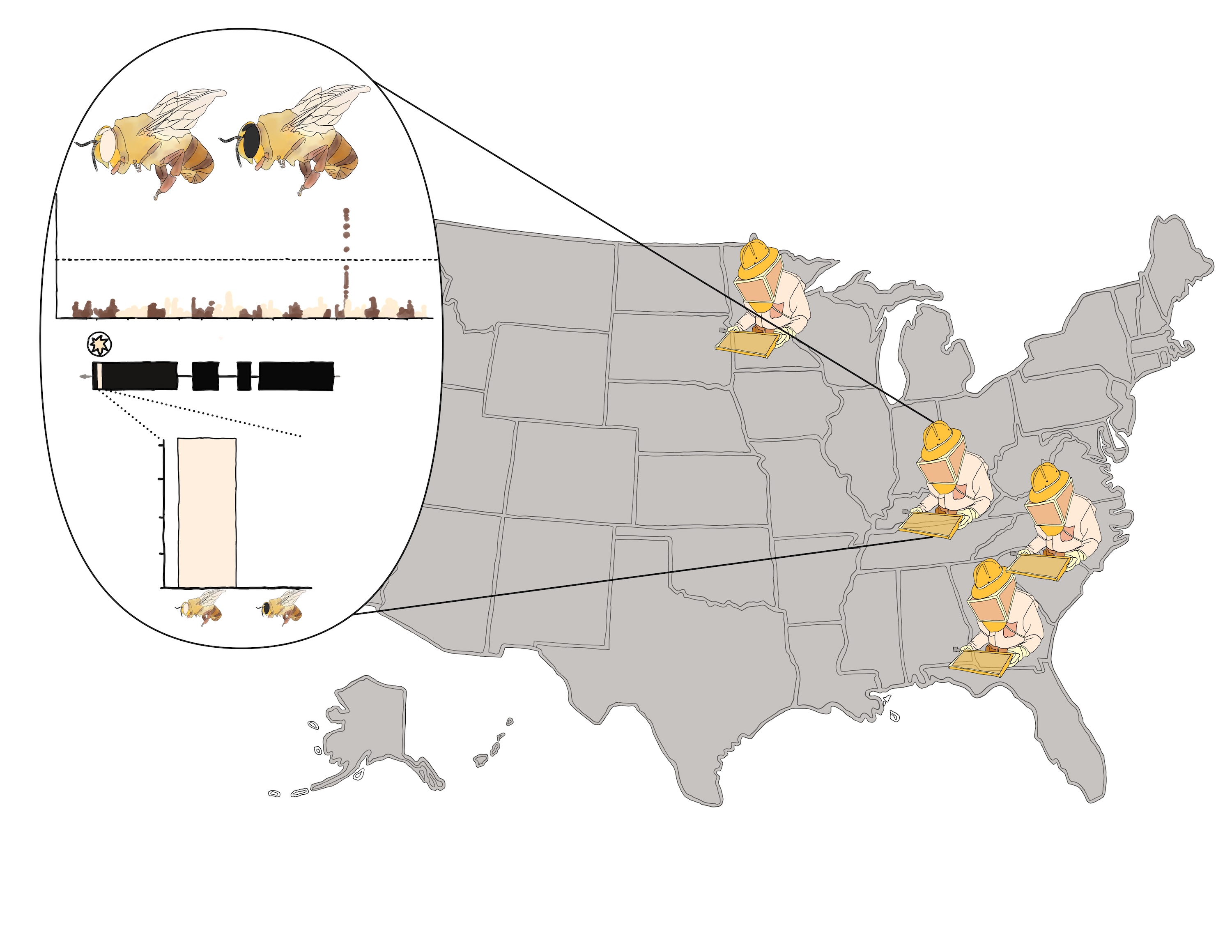 Among the four beekeepers who observed mutations, The Purdue Bee Lab found that Phillip Patterson's colony producing white-eyed bees consisted of approximately 50% wild-type and 50% white-eyed drones (abstract graphic created by Riley Shultz).
 Patterson also submitted samples to The Purdue Bee Lab, allowing researchers to conduct a Genome Wide Association Study using two different sequencing methods to identify the mutation responsible for the trait. Both methods pointed to the same section of DNA on chromosome 11, suggesting that the cause of white eyes stems from somewhere in that region.
Although the exact role of this gene is not yet fully understood, researchers believe the mutation might interfere with the pigment-production pathway, preventing dark pigment from forming.
This information opens the door for future research to confirm exactly how this gene affects eye color.
“Being able to identify the mutation that is causing specific phenotypes like diseases is a very difficult process—it’s hard to say whether just one gene is causing this or if it’s the combination of multiple genes. Having more studies on mutation discovery would add to science. Investigating mutations can help us to understand the function of genes that were previously unknown."
- Riley Shultz
Working with a beekeeper in Georgia, The Purdue Bee Lab is continuing its research into unusual eye pigmentation, now focusing on a different shade of white: ivory. After bringing the queen into Purdue’s apiary, the lab has been able to conduct a series of behavioral tests to better understand how this mutation affects drones.
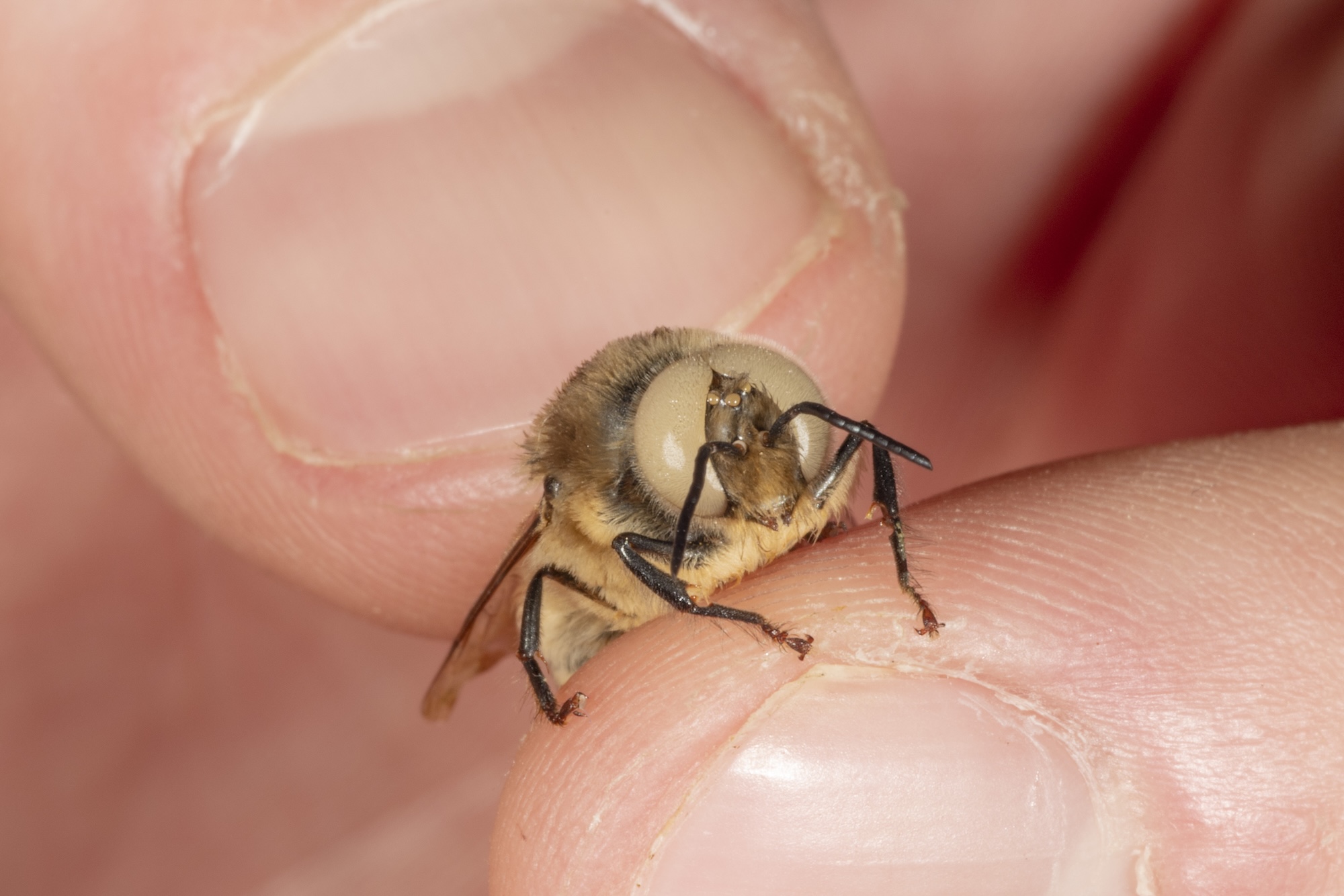
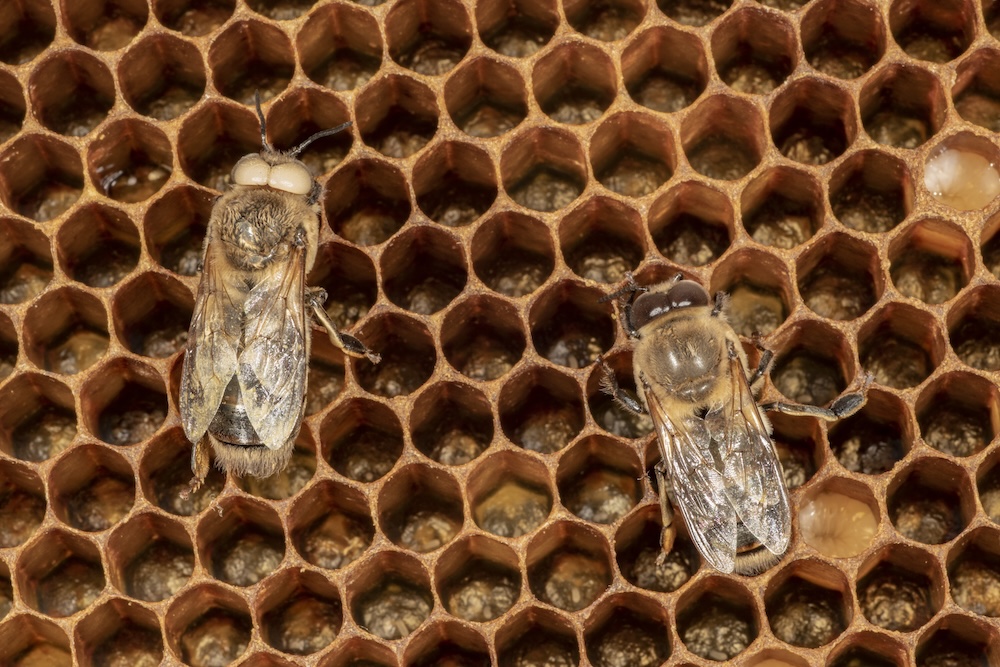
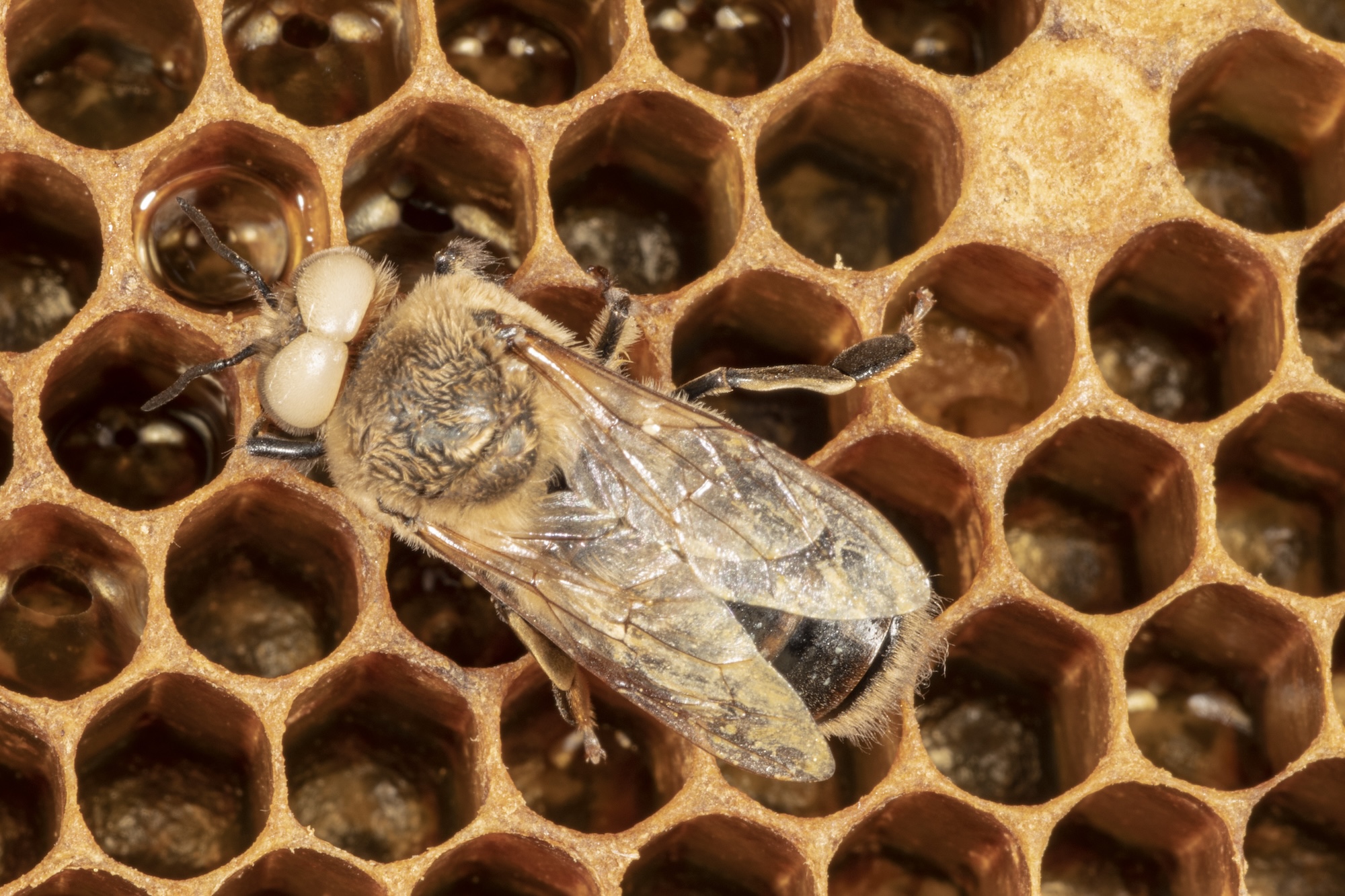
“Brock Harpur has made it really easy to work with his lab, which is a huge bonus. Continuing to ask how and why things happen is essential for us to build a better world.”
- Benjamin Dictus, chief culture office and principal beekeeper at Bee Downtown in North Carolina
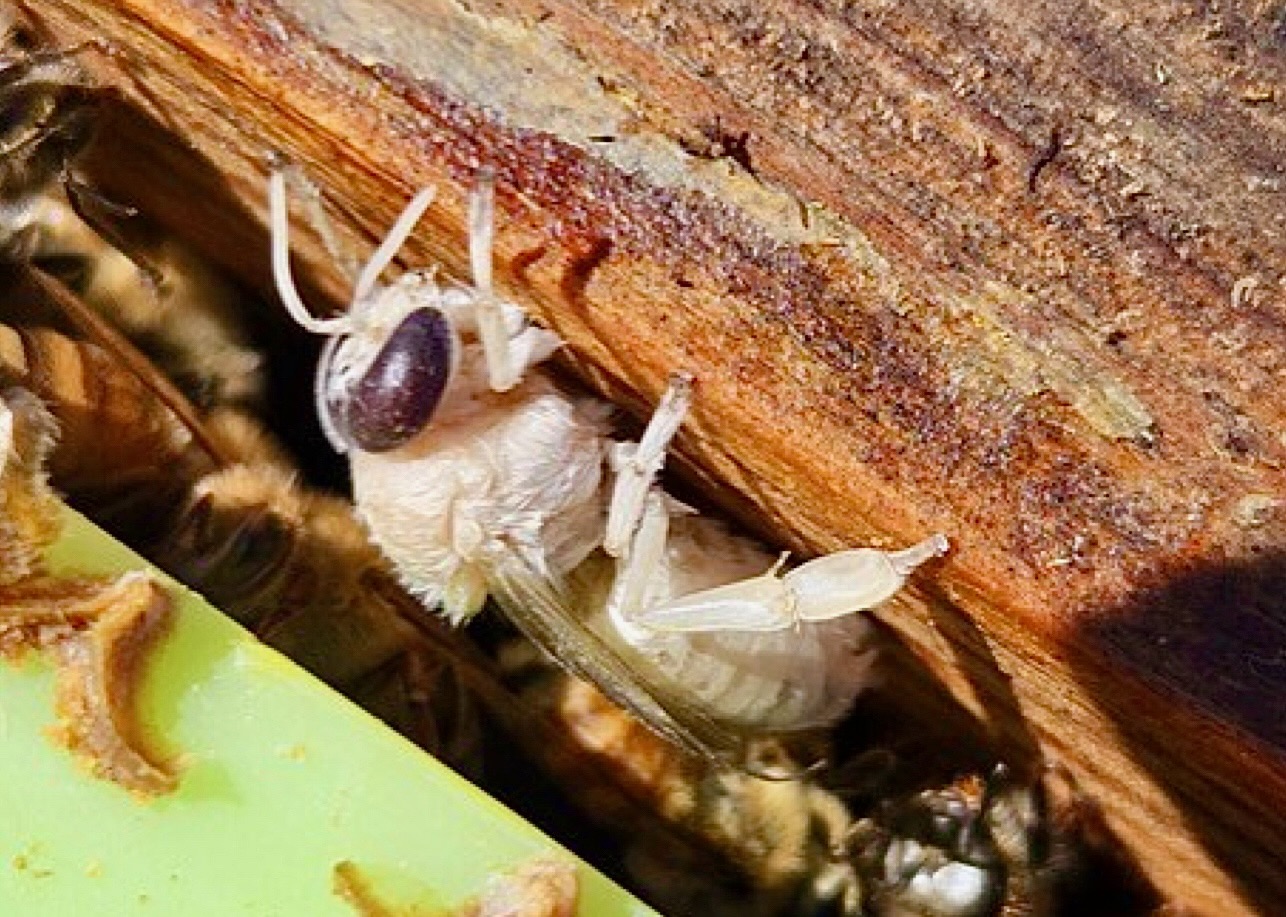 Maryann Helton, president of the North Carolina State Beekeepers Association, master beekeeper, and former beekeeper and partnerships manager at Bee Downtown, discovered the “Marshmallow” honey bee drone, the first documented albino Hymenopteran, while working for Bee Downtown (image provided by Maryann Helton).
 Bee a part of the genomics research
The Purdue Bee Lab invites beekeepers, researchers and even community members to contribute to the ongoing honey bee genomics research. If you have mutant drones in your colonies, or know someone who does, please reach out to honeybee@purdue.edu.
Featured Stories

For Brody Cox, preparing for the Indiana State Fair began long before he entered the show...
Carolyn Foley, a long-time member of the Purdue Forestry and Natural Resources (FNR) and...

In the September Purdue University/CME Group Ag Economy Barometer survey, 52% of respondents...

Purdue University’s College of Agriculture recognized nine alumni at the Distinguished...
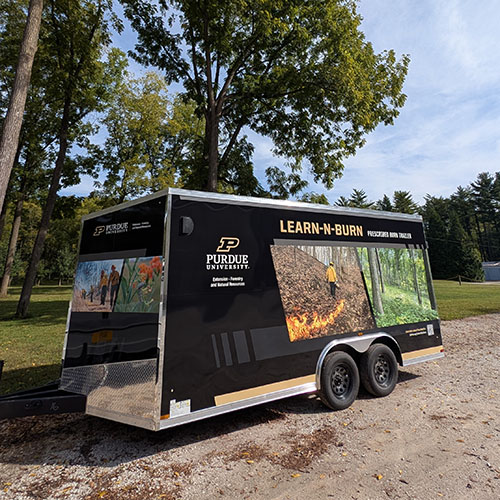
Keep your eyes peeled across Indiana for the newly minted Purdue Forestry and Natural Resources...

“Being at Purdue has changed my thinking entirely,” says Mingyu Zhao, a third-year...