

Biochemistry prepares young undergraduates for graduate school and biotech careers with new molecular genetics course
Nitrile gloves, starch-white lab coats and foggy safety goggles. The hum of sterile hood fans and the shine of black lab benches. Science classrooms across Purdue make these sights a key part of hands-on learning, and the College of Agriculture’s Department of Biochemistry is adding to the experience with a new course in molecular genetics.
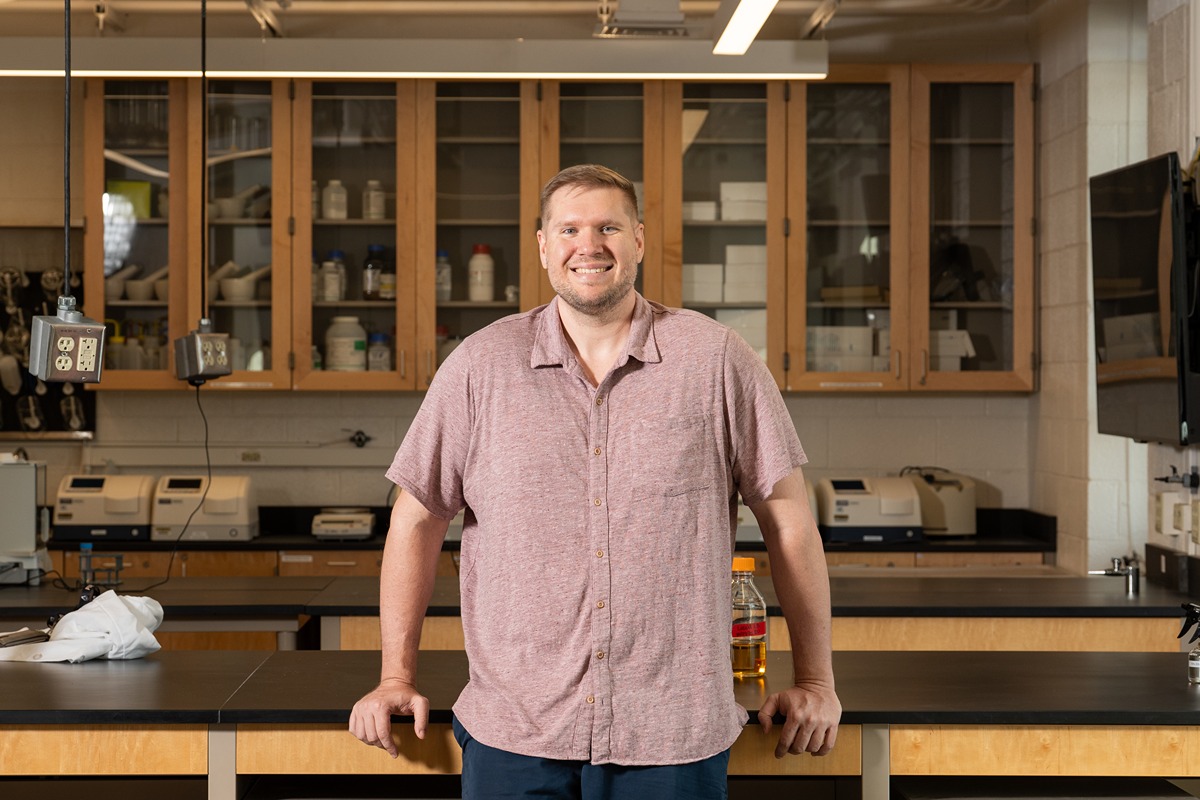
“One of the foundational reasons that this molecular genetics course was developed was based on student feedback,” Ben Carter, assistant clinical professor of biochemistry, said. “We wanted to develop a course that aligned with their interests and their career goals.”
In this new course, freshman and sophomore biochemistry majors emulate graduate students and career scientists. Carter, the instructor and course creator, teaches them the patterns of genetic inheritance and the molecular mechanisms at play in those patterns. The goal is for students to leave his class proficient in techniques desirable and relevant to biotech industries and academic labs.
The lab portion of the course is built in three modules. First, in classical genetics, students breed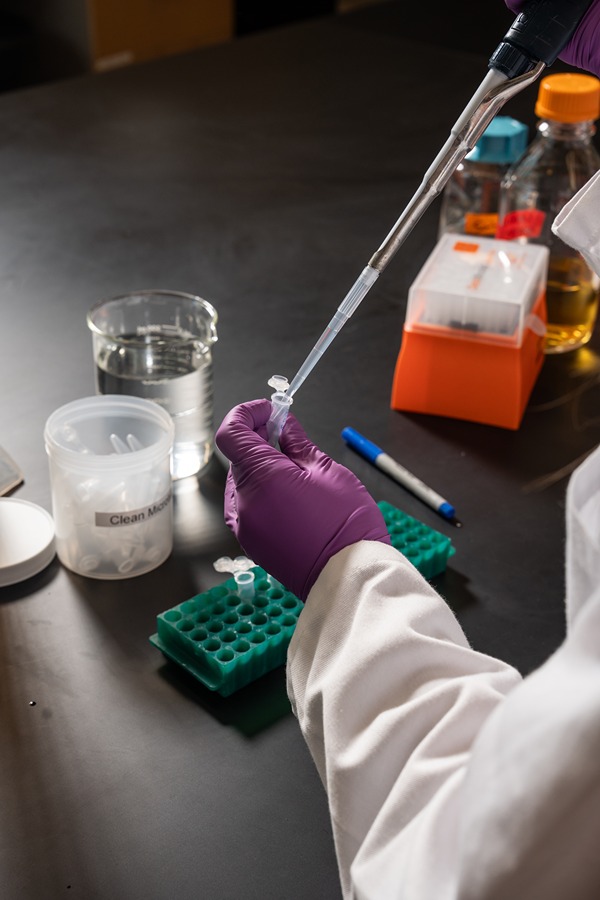 Arabidopsis, a model plant common in plant science research, and analyze how physical traits are inherited from one generation to the next.
Then, students perform CRISPR-based gene-editing. They choose a gene from a list to “knock out,” or remove, from a yeast’s genome — a common microscopic fungus used in pathology research. Previously published papers help students develop a hypothesis for how the yeast will change. They grow the fungus to observe the transformation. This process mimics how a professional lab documents the function of genes.
In their last module, students put the DNA sequence they removed from yeast into a circular DNA plasmid which can insert itself into the yeast’s genome. They are testing their hypothesis of how the gene functions by seeing if the physical trait returns to normal.
“I anticipated failure at all steps. I generated replacement reagents for each step for the different genes in case a group's experiments failed so they could continue,” Carter said. “When students look at published science papers, they assume that everything just worked correctly because that's how it's presented in the paper. But that's not actually how science works. So I think portraying those kinds of setbacks as a learning experience is another way of preparing them for graduate school and research.”
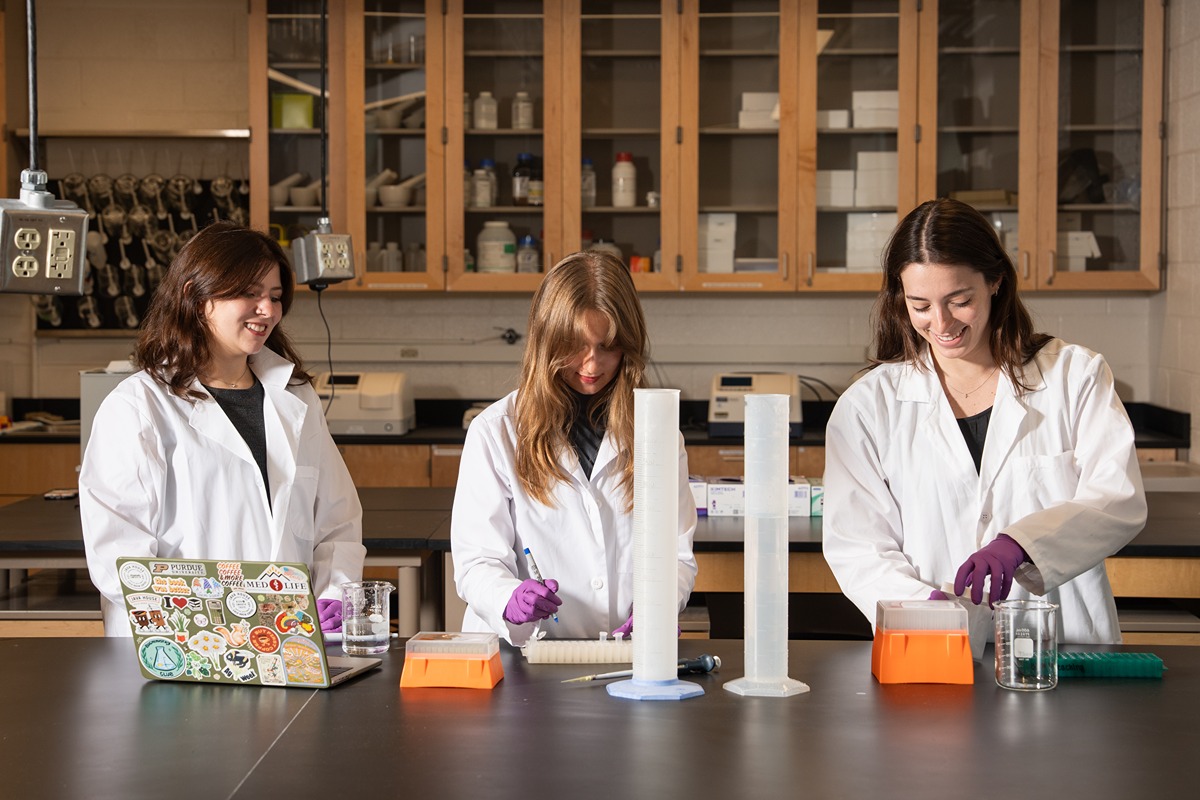 , opens larger image From left, undergraduate teaching assistants Elise Denger, Elysia Uggen and Maren Eaton develop and test materials for the course.
 Carter didn’t create the class on his own, nor does he teach it by himself. Upperclass biochemistry majors Elysia Uggen, Maren Eaton and Elise Denger advised the development of the course, tested the lab protocols and prepared the materials for experiments. Uggen, Eaton and Denger also served as the inaugural class of teaching assistants for the course.
“I am excited about making a lasting impact on future undergraduates in my department, helping the students build familiarity and confidence with molecular genetics topics early in their college experience, which I think will help prepare them for future biochemistry coursework,” Denger said.
Eaton had just completed a semester of student teaching for another biochemistry course before helping develop the molecular genetics course. “I wanted to bring a fresh perspective to the class, both as a teaching assistant and as a fellow student,” she said. “Further, the prospect of planning, developing, testing and refining experimental methods was very exciting — few opportunities come up as an undergraduate researcher to substantially develop this skillset, which can make one a uniquely competitive applicant for graduate studies.”
Though new, the class has already earned the respect of students and faculty. In a feedback review, one student reported, “This class reminded me why I chose to be a future biochemist; you gave me that spark back. The passion you had for your subject matter was unmatched.”
Featured Stories
The Office of Indiana State Chemist (OISC) is warning Indiana residents about an illegal...
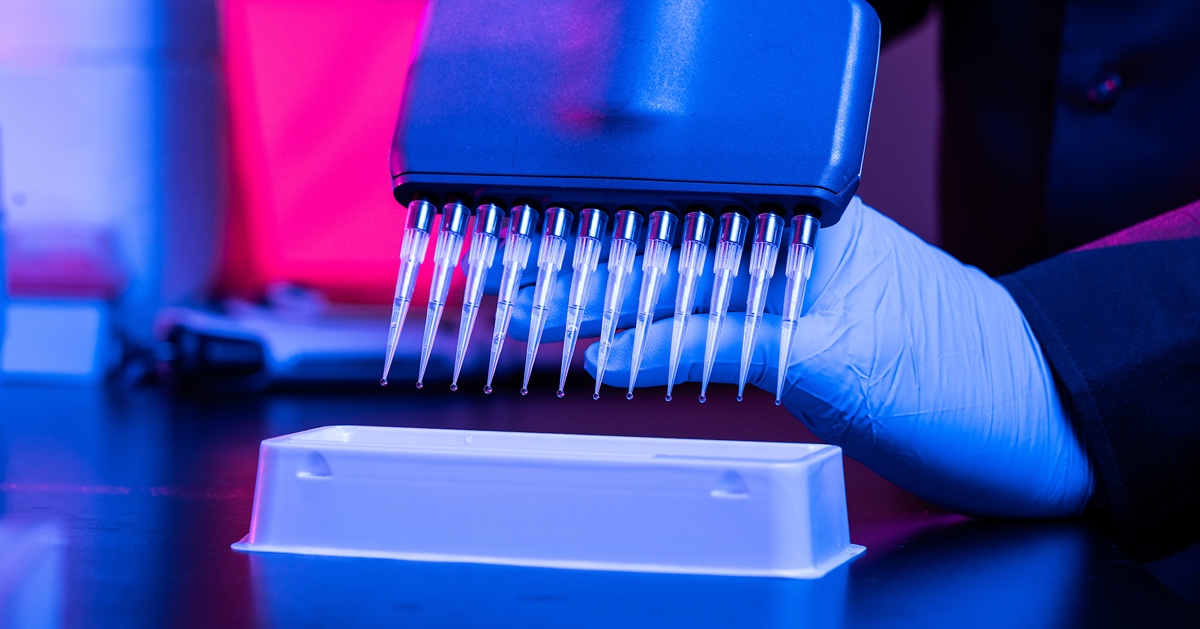
A prominent protein on most human cells may be key to unlocking the code that makes humans...
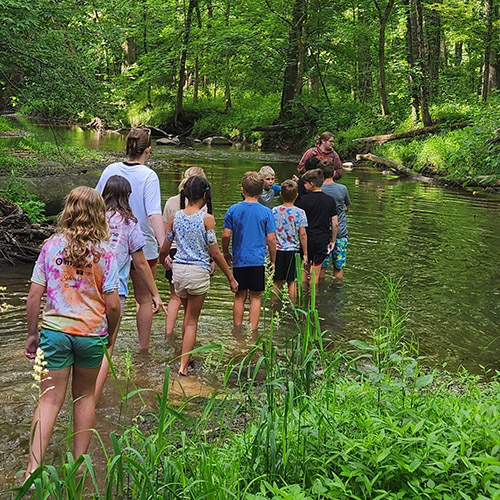
Ava Hoskins, a double major in aquatic sciences (fisheries concentration) and natural resources...
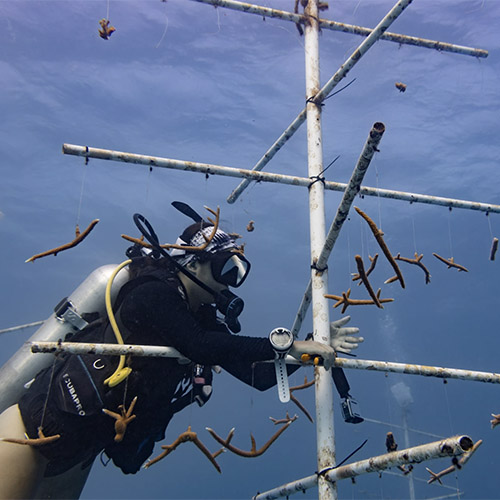
Ashlynn McLaughlin, a senior aquatic sciences major with a concentration in marine and freshwater...
For Brody Cox, preparing for the Indiana State Fair began long before he entered the show...
Carolyn Foley, a long-time member of the Purdue Forestry and Natural Resources (FNR) and...