resource
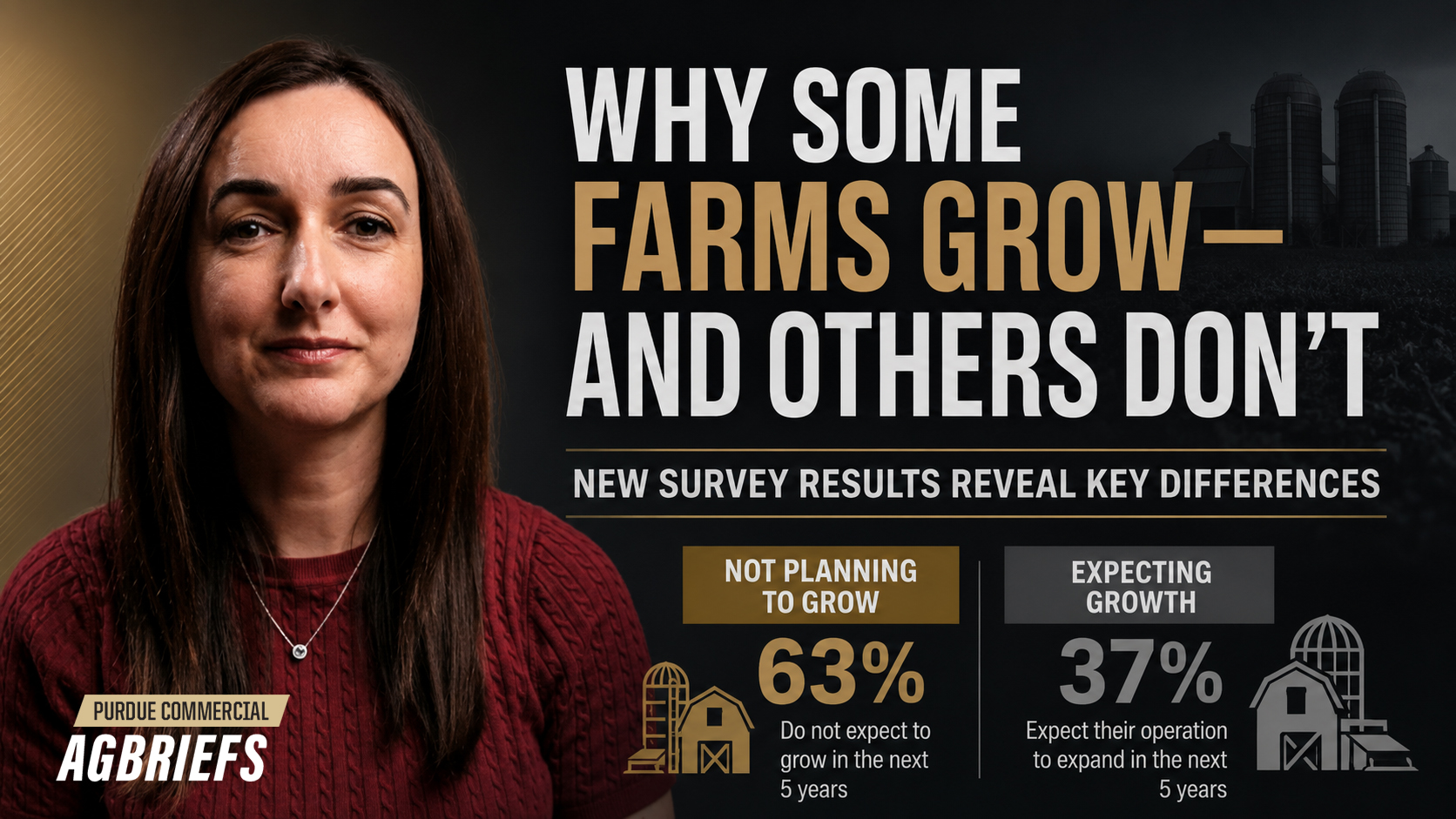
Why Some Farmers Plan to Grow While Others Don’t
A new Purdue Commercial AgBrief explores what sets growth-oriented farms apart—from investment confidence to risk tolerance.
July 30, 2026
Learn More
resource
A new Purdue Commercial AgBrief explores what sets growth-oriented farms apart—from investment confidence to risk tolerance.
July 30, 2026
Learn More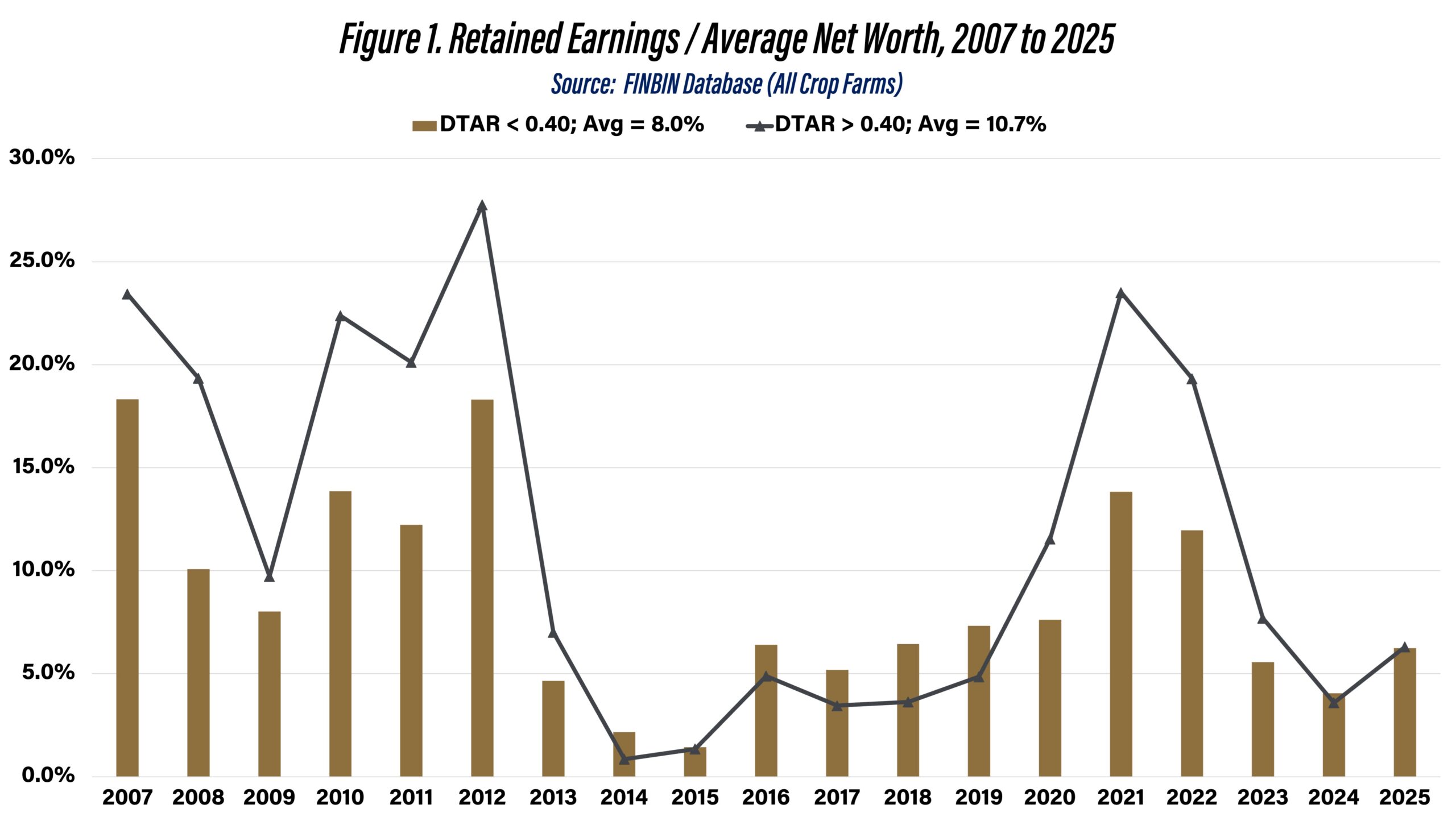
resource
Increasing financial leverage will increase expected returns as long the marginal returns from the use of loans exceed the cost of borrowing. In favorable economic times, higher leverage can improve financial performance and stimulate farm growth. However, in unfavorable economic times, leverage can cause business performance to deteriorate rapidly. Thus, higher leverage may increase expected returns and financial risk.
July 24, 2026
Learn More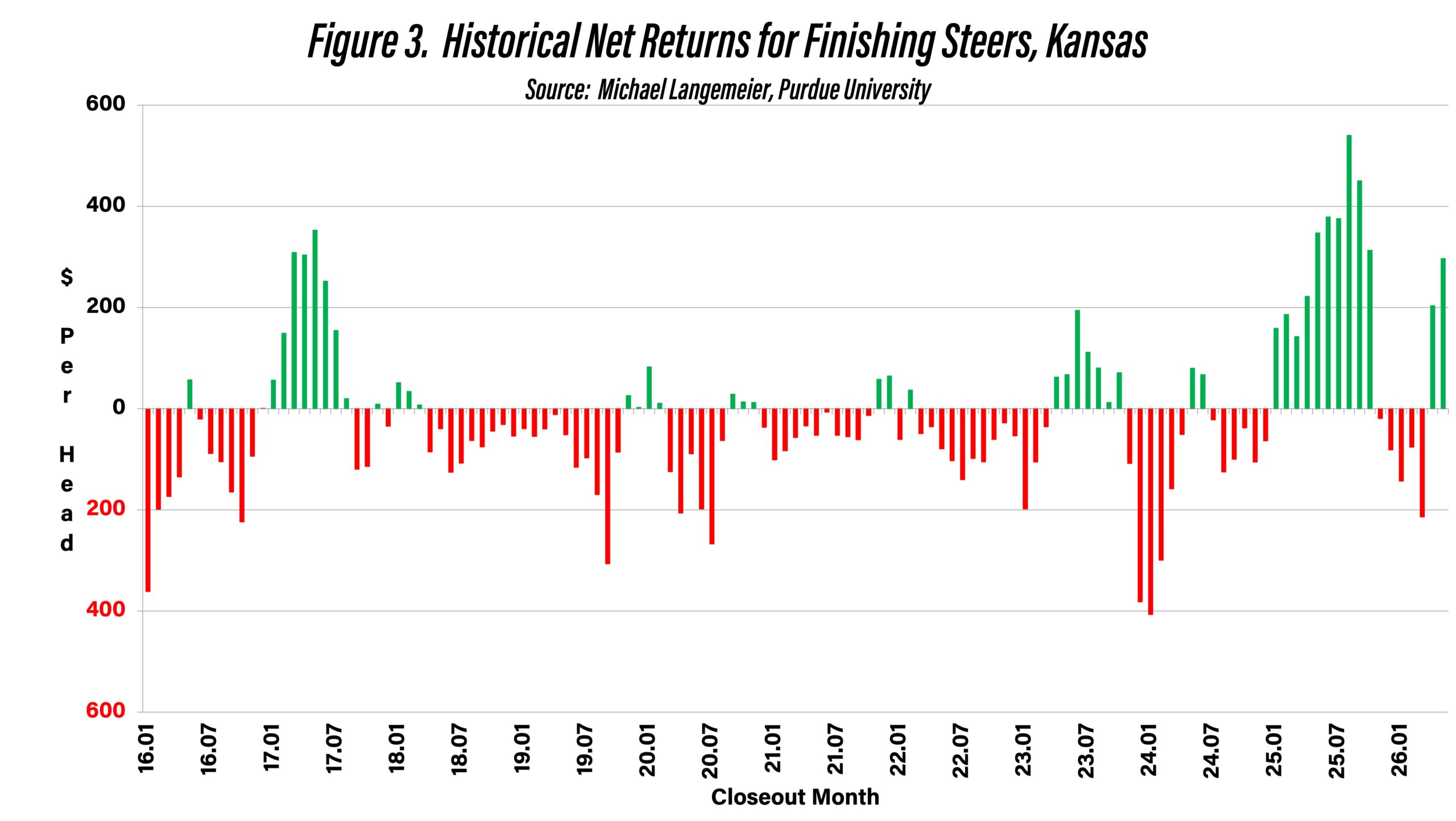
resource
Cattle finishing is a tight margin business where profitability relies on feeder cattle prices relative to fed cattle prices and feed costs. This means that relatively high fed cattle prices, like we are experiencing in 2026, or relatively low feed costs do not necessarily translate into strong net returns. This article examines trends in feeding cost of gain, breakeven prices, and net returns for the last ten years.
July 24, 2026
Learn More
resource
Farm equipment markets are constantly changing, but what can auction data tell us about where agriculture is headed? In this episode of the Purdue Commercial AgCast, hosts Chad Fiechter and Todd Kuethe are joined by Andy Campbell, co-founder of TractorZoom, to discuss how data is reshaping equipment markets and the decisions farmers make every day.
July 23, 2026
Learn More
resource
Organic crops often generate higher profits—but that doesn’t mean every organic farm succeeds. In this Purdue Commercial AgBrief, Purdue ag economist Michael Langemeier analyzes five years of FINBIN enterprise data to compare the profitability of conventional and organic crop production.
July 22, 2026
Learn More
resource
More than 100 farmers, agribusiness professionals, and industry partners gathered in Harrison County on Friday, July 10, for the 2026 Purdue Farm Management Tour. Hosted by Purdue University’s Center for Commercial Agriculture and Purdue Extension, the annual event gave attendees an opportunity to step away from their own operations and learn directly from two Indiana farm families who are navigating today’s agricultural challenges through innovation, diversification, and thoughtful management.
July 22, 2026
Learn More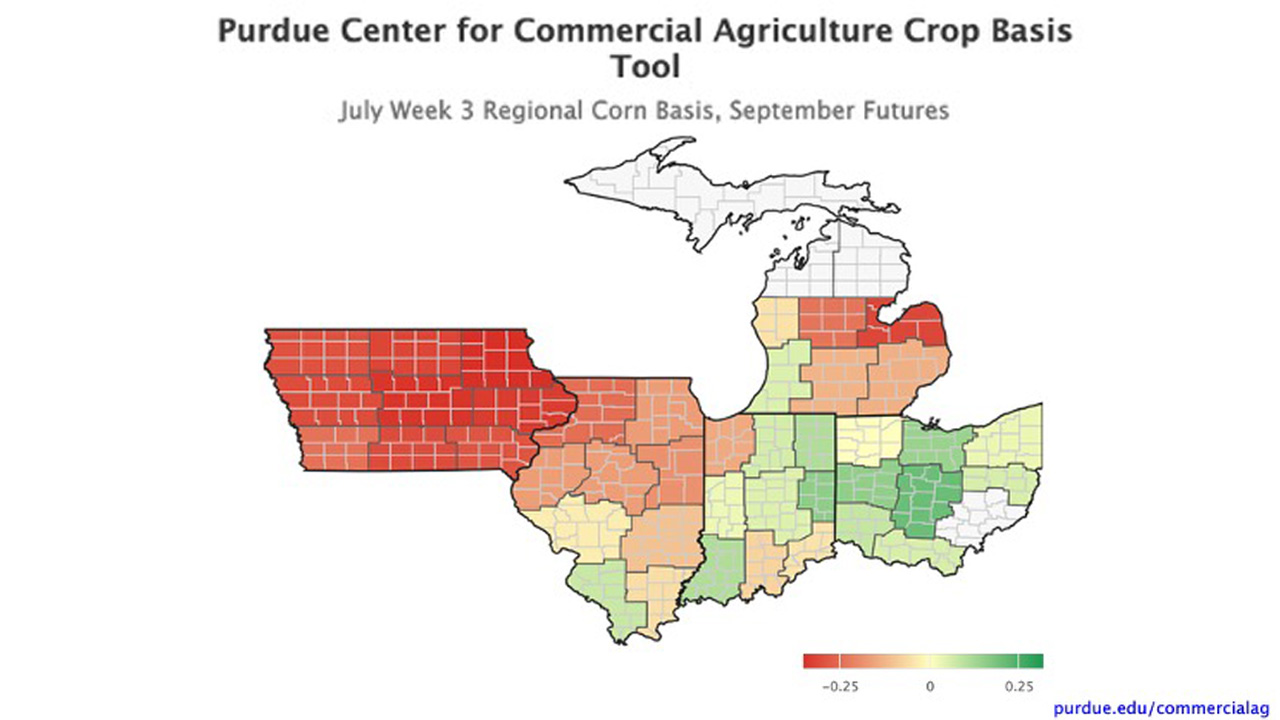
resource
Corn and soybean basis continued strengthening across much of the Eastern Corn Belt through mid-July, although some local markets have already begun to soften. See where basis is strongest, where it’s weakening, and what seasonal trends suggest for the weeks ahead.
July 20, 2026
Learn Morepaer_article
June’s CPI and PPI both cooled, and the cooling reaches all the way back to Stage 1 — consistent with a genuine, if possibly temporary, easing of the energy shock rather than a one-month statistical blip. But most of the movement inside the food basket this month — dairy’s reversal, the citrus and lettuce climate stories, the tomato tariff baseline, Brazil’s coffee cycle, and the beef–pork divergence — traces to category-specific supply and policy dynamics that would be happening with or without the conflict.
July 17, 2026
Learn More

resource
Every month, the Purdue University/CME Group Ag Economy Barometer surveys U.S. farmers about the issues shaping their operations and outlook. Michael Langemeier breaks down the June 2026 survey results and explains what they reveal about producer sentiment, farm profitability, land values, artificial intelligence, input costs, equipment investment, trade, and the broader agricultural economy.
July 9, 2026
Learn More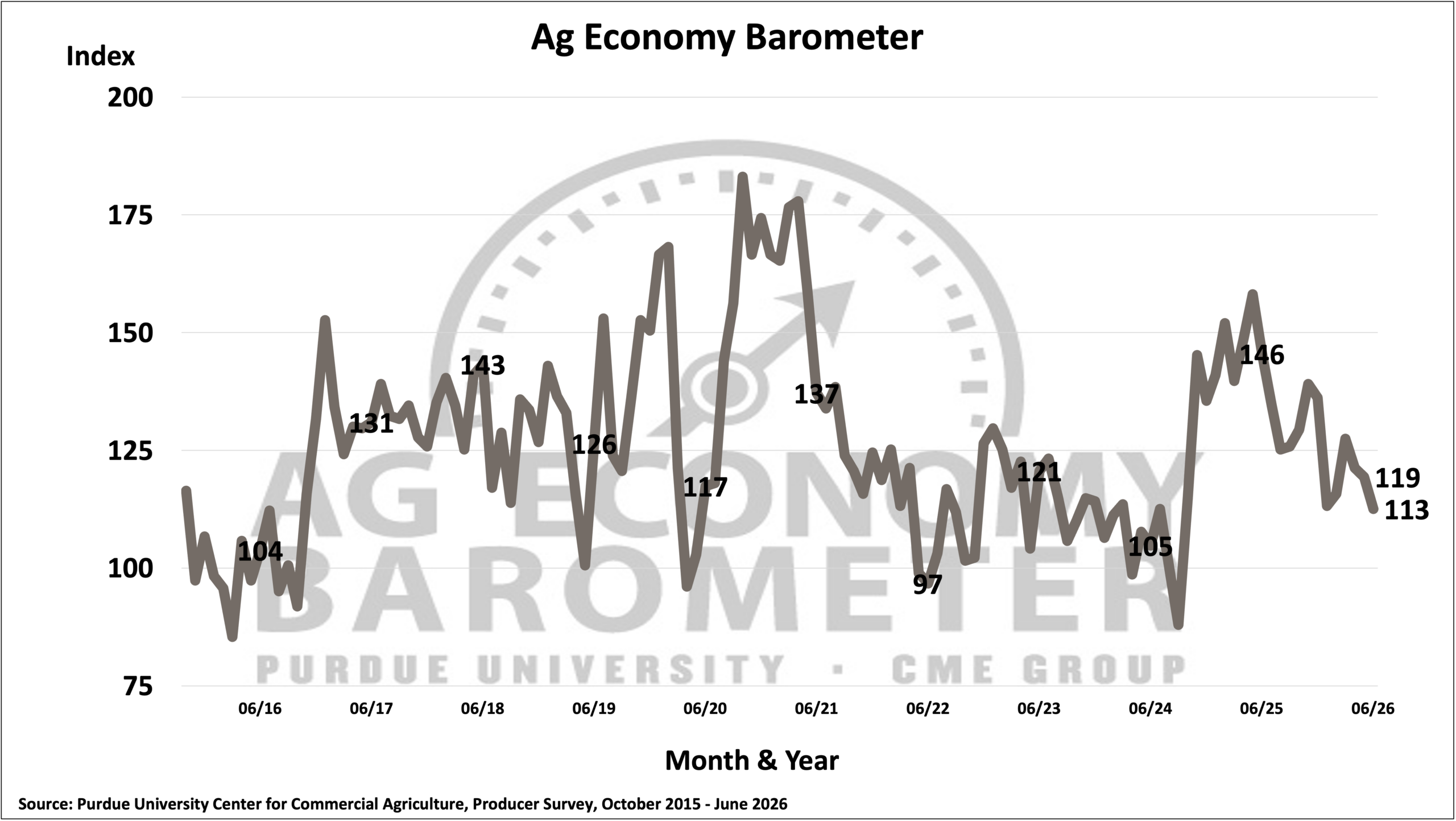
resource
Producers continued to express concern about farm finances as the June Purdue University/CME Group Ag Economy Barometer recorded a 6-point decline in farmer sentiment to 113.
July 7, 2026
Learn Morepaer_article
A potential record El Niño is now forecast with high model consensus; the spring predictability barrier has been crossed; and we are within the critical agricultural windows for the most exposed crop systems.
July 6, 2026
Learn More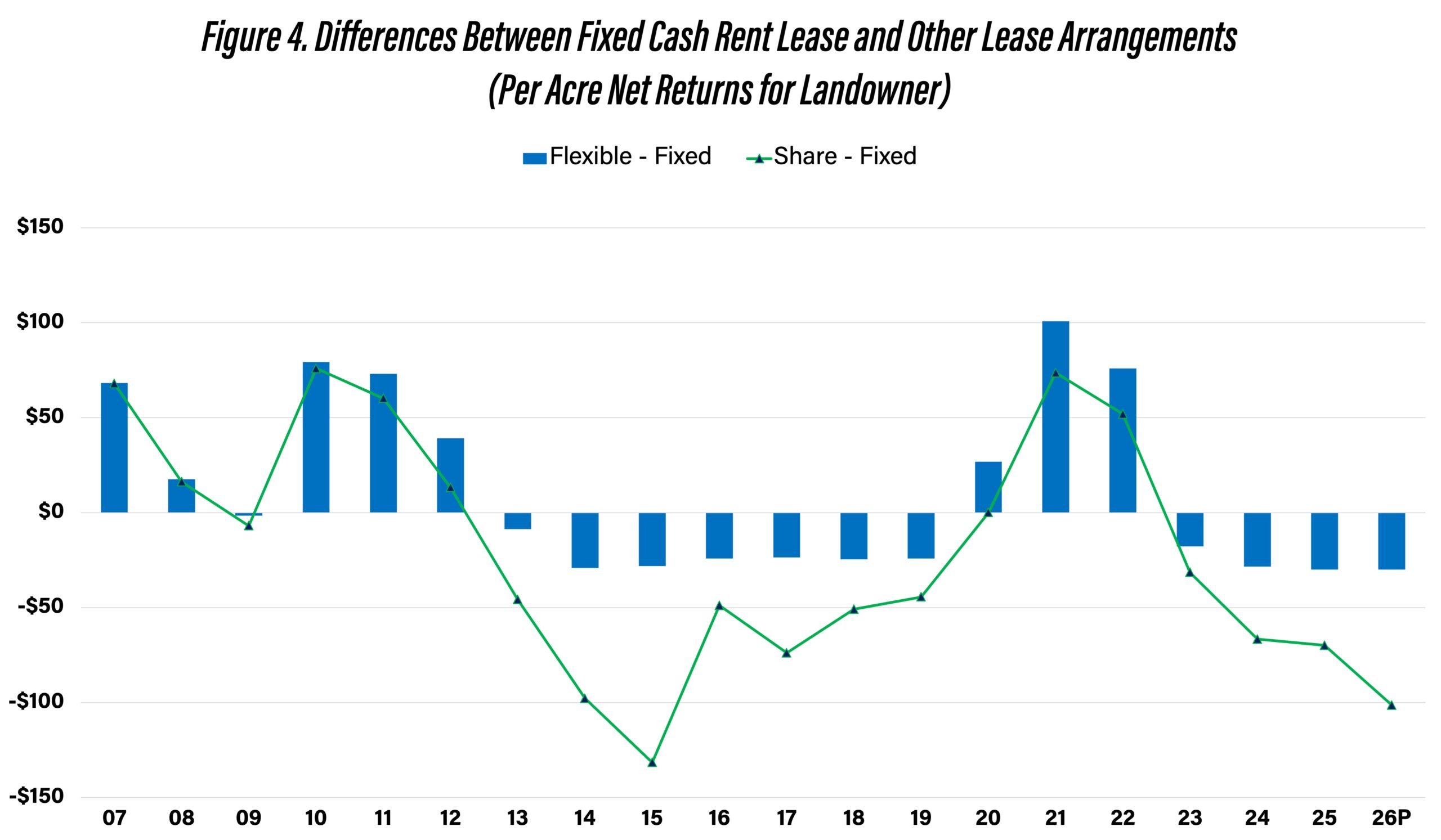
resource
Leases on agricultural land are strongly influenced by local custom and tradition. However, in most areas, landowners and operators can choose from several types of lease arrangements: crop share, fixed cash rent, flexible cash leases. Each leasing arrangement has advantages and disadvantages. Rather than focusing on the advantages and disadvantages of various lease arrangements, this article uses a case farm in west central Indiana to illustrate net returns to land derived from crop share, fixed cash rent, and flexible cash lease arrangements.
July 2, 2026
Learn More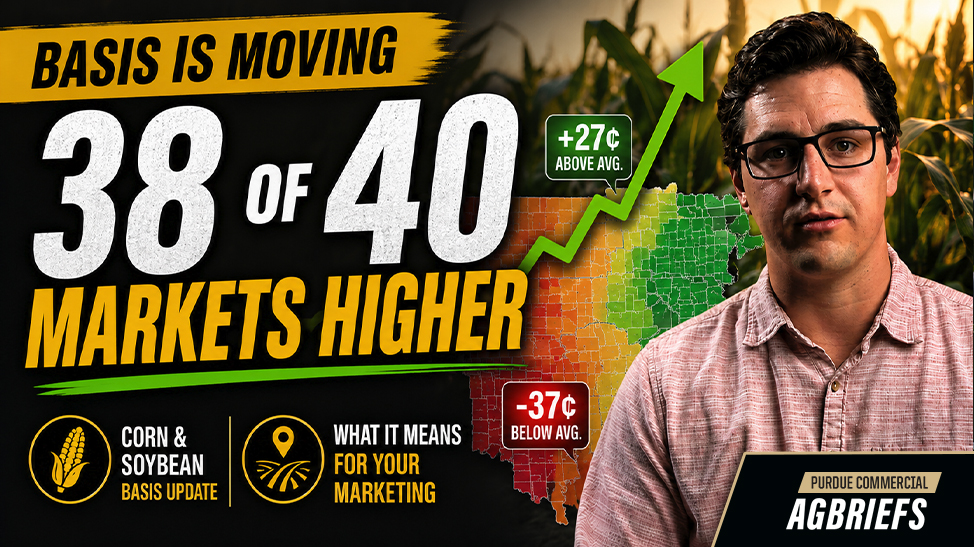
resource
Corn and soybean basis strengthened across much of the Eastern Corn Belt over the past month — a surprising shift from the typical seasonal pattern of basis weakening heading into June. Josh Strine breaks down the latest corn and soybean basis trends, how current basis levels compare with historical averages, and what strengthening basis could mean for grain marketing decisions heading into July.
June 30, 2026
Learn More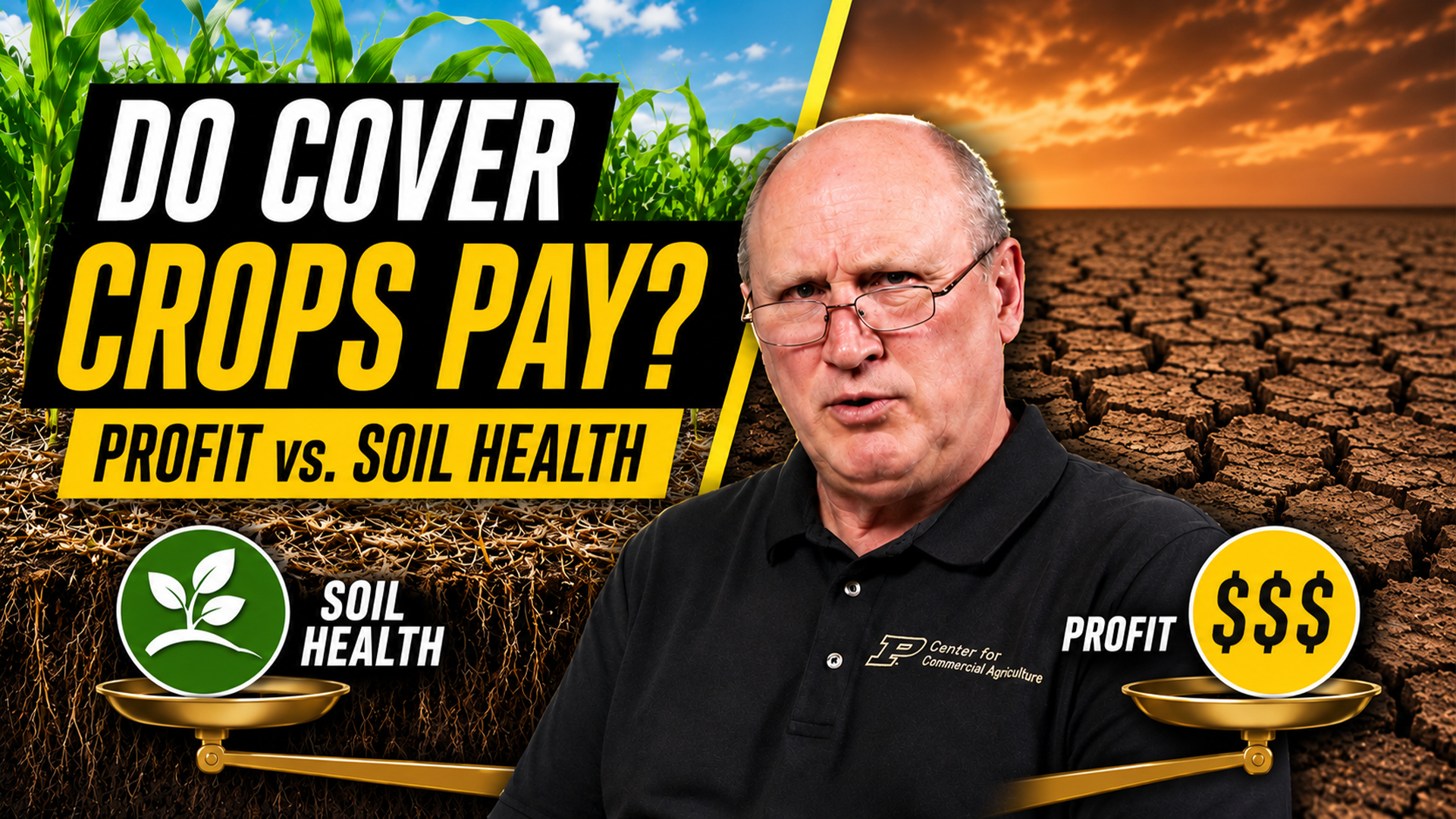
resource
Cover crops offer potential soil health benefits, but adoption decisions involve tradeoffs. Learn how scenario analysis can help farmers evaluate the impact of cover crops on profitability, risk, and long-term farm goals.
June 24, 2026
Learn More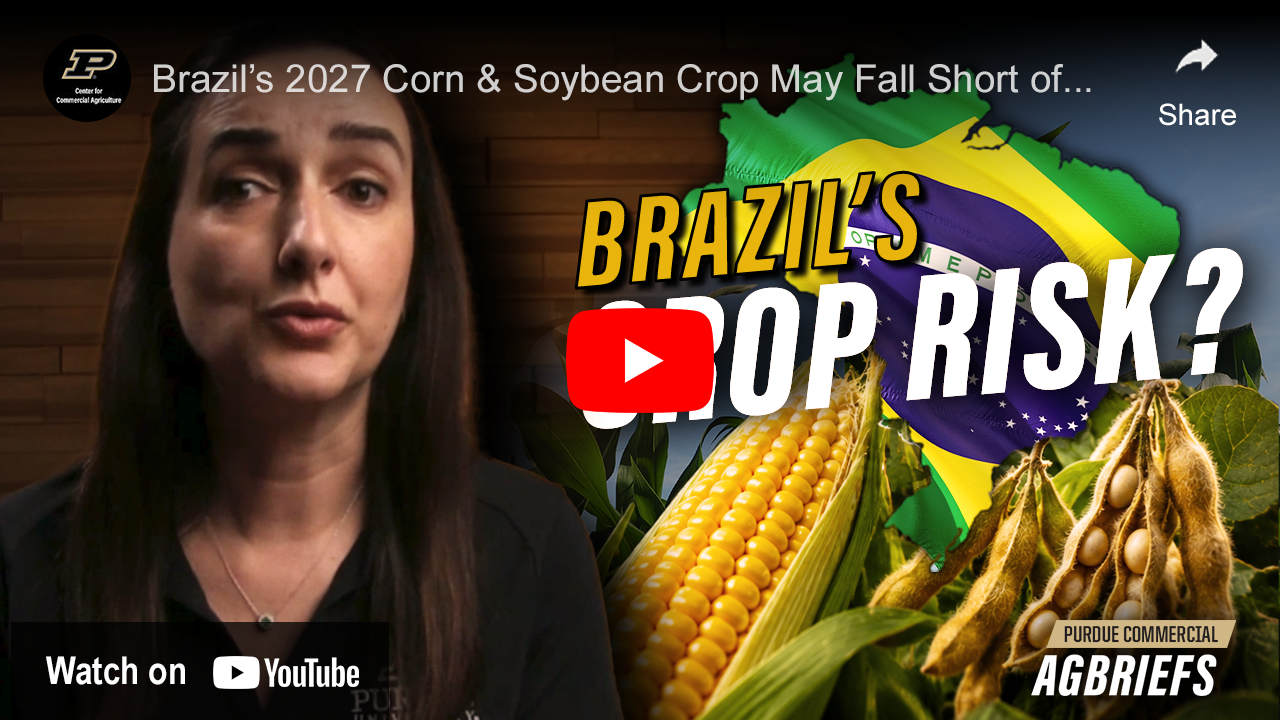
resource
Brazil, the world’s largest soybean producer and a major corn exporter, is facing a more complicated production outlook for the 2027 crop year. Low commodity prices, high fertilizer costs, tighter credit conditions, and El Niño conditions, already present and expected to strengthen later this year, are all weighing production prospects. In this Purdue Commercial AgBrief, Joana Colussi looks at the key factors that could influence Brazil’s next crop season, and what it could mean for U.S. corn and soybean producers.
June 24, 2026
Learn MoreWe are committed to ensuring that all digital content meets accessibility standards in accordance with the Americans with Disabilities Act (ADA) and WCAG 2.1 Level AA guidelines. While we have made significant progress, you may encounter documents that are not yet fully accessible or that have been temporarily removed. We are actively working to remediate these materials. If you encounter any accessibility barriers or need assistance accessing content, please contact us so we can provide an alternative format.