

Purdue website provides information on Indiana water resources
The Indiana Water Resources Center (IWRRC) officially launched the State of Indiana Waters website. The website provides a single source of information for the general public regarding the status of Indiana’s water resources including ground and surface waters.
“Water resources in Indiana are used by everyone including agriculture, industry, residents and also provide important ecosystem services. Unfortunately, there has not been a regular evaluation of these resources for the entire state, nor is there one place to find this information in a user-friendly format for the public. This website provides up-to-date information for the current water year,” said Linda Prokopy, professor of natural resources social science in the Department of Forestry and Natural Resources at Purdue University and director of the IWRRC.
Providing this information to the public as a single source in an easy to understand manner was a need for Indiana and fell within the goals of the IWRRC. The website was funded through their small grants (104B) program.
The IWRRC will host a webinar at 12:30 p.m. Nov. 7 to show how to use the website to monitor current water conditions, review the new water year summary and view surface and ground water trends. The webinar is presented by Keith Cherkauer, a professor in the Department of Agricultural and Biological Engineering at Purdue.
“Indiana is a state with generally abundant water resources, but that doesn’t mean that water is always available when and where it is needed. The State of Indiana Waters website takes publicly available data on streamflow, groundwater, and reservoirs and puts the data into context relative to the most recent 30 years of observations,” Cherkauer said. “During the webinar, I will explore the information available through the State of Indiana Water web page, discuss the methodology used to put together a consistent dataset, and talk about the state of Indiana’s water resources at the end of the 2018 water year.”
The IWRRC was established under the authority of the Water Resources Research Act of 1964 and is one of 54 centers nationwide. The centers are housed at their respective land-grant universities to support water research and disseminate information to the public. Each of the 54 centers are awarded an annual base grant (104B) to help support applied and peer-reviewed research, education, and outreach activities on local or regional water resource issues.
The website is at https://iwrrc.org/indiana-water/. Find links for upcoming webinars and recordings of past webinars at https://iwrrc.org/webinars/.
Featured Stories
Do you have a favorite place, species, landscape or natural phenomenon in Indiana? Share it with...

Alumna Isabella von Seggern is pursuing a veterinary degree with a focus on poultry.

The U.S. Forest Service invested decades of work and tens of millions of dollars to develop a...
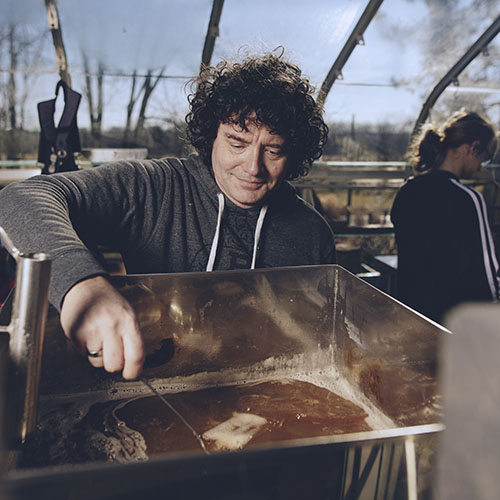
Researchers are working to scale up the green production of maple syrup in the Central Hardwood...

The eyes are the window to the soul, according to an old saying. But Purdue University’s...

For her contributions to and impact on wildlife management in the state of Indiana, Geriann...