

Building community starts in the lab
Ask Purdue biochemistry students in the College of Agriculture about their experience, and they’ll tell you about their research in areas like plant metabolism, fungal pathogens or cancer therapeutics. Their work is diverse, but their description of the department is the same: a community.
That’s not a coincidence. Programs for both undergraduates and graduate students emphasize collegiality in addition to academic inquiry.
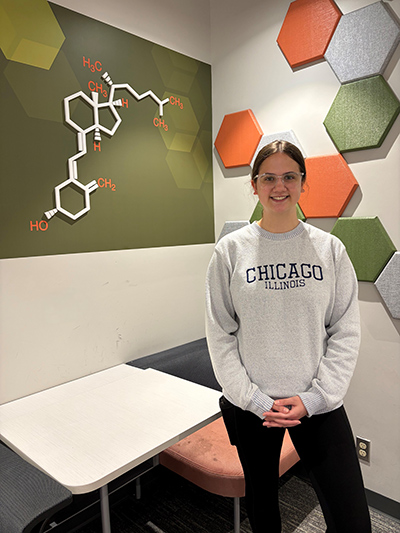 Finding the right chemistry
For graduate students, required lab rotations facilitate good working relationships. While many biochemistry programs require rotations of different lengths, Purdue has found the sweet spot with three 5-week rotations in a semester, said Joe Ogas, department head and professor of biochemistry.
“There are many different types of scientific problems, and it’s certainly a goal to expose students to the breadth and depth of what we’re doing in the department,” Ogas said.
Virginia Akins, a second-year PhD student, took full advantage of that opportunity, even starting in a summer bridge program to allow her an extra 5-week rotation. She worked in Ogas’s lab, as well as those of Distinguished Professor Natalia Dudareva and Assistant Professor Feng Wang before joining Assistant Professor Lisa Mydy’s lab.
“I was an FFA kid, so my interest has always been in the agricultural side of research and how we can help with things like global hunger. I knew I wanted to do plant research from the very beginning,” Akins said. Now she works with plant compounds that may have both agricultural and human therapeutic applications, using both structural biology and bioinformatics.
Relationship building is another crucial goal. “The philosophy behind rotations is that they give both mentor and mentee an opportunity to explore that relationship, which is important in the student’s development as a scientist,” Ogas said.
“I only applied to programs that did rotations,” Akins said. “I saw how much happier people who did rotations were — how much surer they were in their choice.”
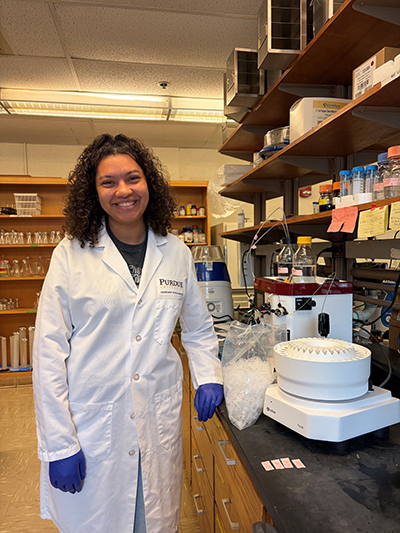 During her Purdue visit, doctoral student Taylor Bias observed that graduate students knew each other well, and she could imagine herself working with the department’s faculty for five or six years.
She completed rotations with Professor Vikki Weake and Associate Professor Xing Liu before joining the lab of Professor and Associate Department Head Mark Hall.
“I felt like I fit in with the other grad students and that I could communicate with Mark well,” Bias said. “I also thought the project was very interesting; I’d never worked with fungal pathogens or anything bigger than proteins.”
Even after students select a mentor or principal investigator, their previous rotations form a base of support. If their research requires expertise or equipment their home lab doesn’t have, they have familiar colleagues to ask for assistance. The relationships Akins developed also helped her identify faculty for her doctoral committee.
In her rotations, Bias learned useful research protocols that she now uses in Hall’s lab, as well as how different labs perform similar techniques. The experiences also bolstered her social skills. Now she runs into colleagues in the hallway, at student coffee and bagel gatherings, and at conferences.
Changing labs multiple times in a semester “forces you to come out of your shell and make new friends and be social,” she said.
Students are evaluated at the end of each rotation with feedback on next steps in their development. Completing all rotations in a semester helps students take their preliminary exams earlier and become PhD candidates sooner, making them eligible for fellowships. Students can also complete industry internships while graduating in the same amount of time.
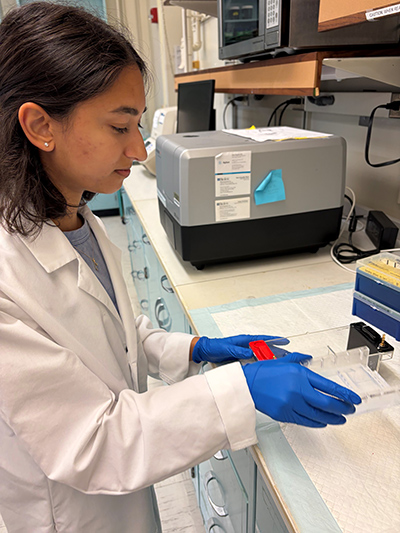 Gaining a graduate edge
The Graduate Certificate program in biochemistry and molecular biology gives undergraduates an advantage in their next academic step or future career. Biochemistry majors often join the department with AP (advanced placement) credits that fulfill their basic requirements. Taking note, Ogas, worked with a team of colleagues to develop the certificate program, which students apply for in the spring of their third year. Students who combine significant undergraduate research with graduate coursework in the fourth year of the undergraduate plan of study can earn the certificate concurrently with their bachelor’s degree.
Most students completing the certificate program intend to continue graduate study, so the lab research is valuable. For students who want to remain at Purdue, their first-year coursework is finished.
Niah Patel followed this accelerated model, earning her degree and certificate in May. She started her graduate rotations this summer.
“I realized when I was a sophomore that I wanted to go to graduate school,” Patel said. “I thought one way to set myself up for success in a PhD program would be to do this graduate certificate.”
Patel’s undergraduate research was not in biochemistry, but in Professor Amanda Deering’s food science lab, studying microbiology and produce safety. “I’m doing a little bit of catching up with my biochemistry-specific lab and research skills, but because of my undergraduate background and the graduate certificate, I think I’m doing pretty well with that.”
The graduate courses she took challenged her to be more independent in her interpretation of data, looking for holes in the research or gaps pointing to future experiments and learning how to present her own work in presentations or grant proposals.
“When you're writing a real grant proposal or doing your own research, you also have to know, ‘If this part fails, what am I going to do next? How am I going to keep this line of research going?’”
Her first rotation in Professor Elizabeth Tran’s lab “really helped me develop more lab skills,” she said. “They say that when you can time things right and do your techniques really smoothly, that you have ‘good hands,’ and I think that’s one of the most important things you learn,” Patel said. She is now working with Assistant Professor Kyle Cottrell in her second rotation.
Students helping students
An additional bonus for certificate students is mentorship from graduate classmates, who can provide guidance alongside the faculty.
“Undergraduates want to know how you chose where to apply and then decided where to go to school, and it’s nice to be able to give advice and help someone,” said Bias.The shining thing about our department is the people in it. Not only the faculty and staff, but the students themselves are so welcoming, helpful and kind, and won’t shy away from any questions that you might have.”
- Taylor Bias, Department of Biochemistry doctoral student
That encouragement helped Patel’s transition. “I went in already feeling like I have a community, which I think is an advantage,” she said.
Featured Stories
The Office of Indiana State Chemist (OISC) is warning Indiana residents about an illegal...
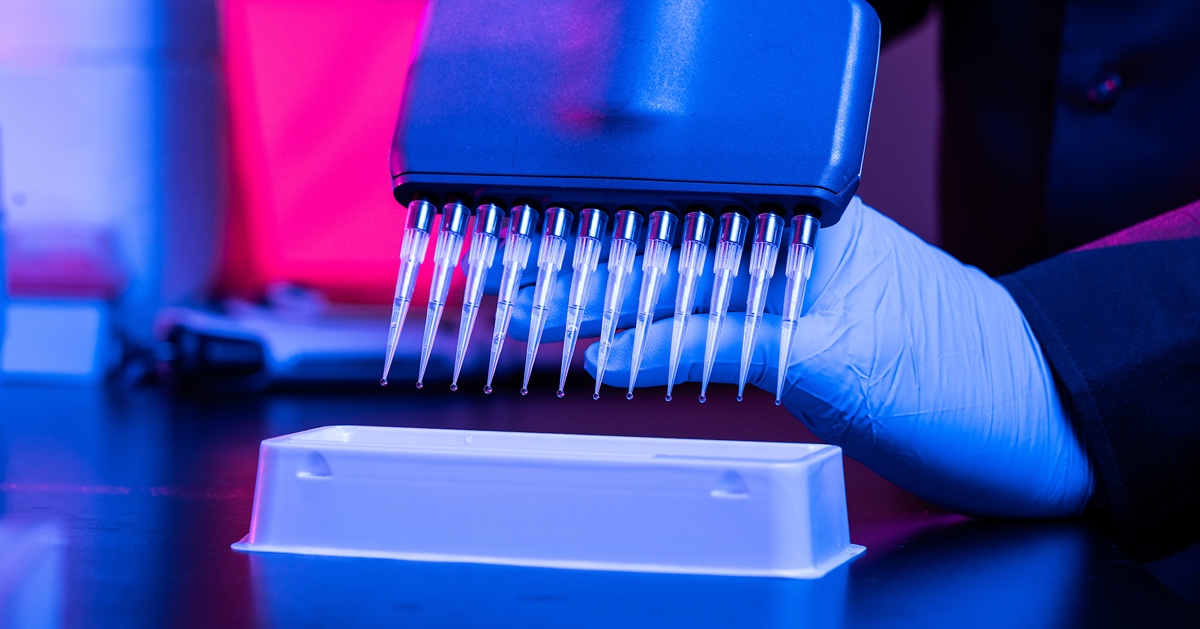
A prominent protein on most human cells may be key to unlocking the code that makes humans...
Ava Hoskins, a double major in aquatic sciences (fisheries concentration) and natural resources...
Ashlynn McLaughlin, a senior aquatic sciences major with a concentration in marine and freshwater...
For Brody Cox, preparing for the Indiana State Fair began long before he entered the show...
Carolyn Foley, a long-time member of the Purdue Forestry and Natural Resources (FNR) and...