

Forestry & Natural Resources
Zhou, Liang Earn Maple Syrup Industry Grant
Purdue Forestry and Natural Resources assistant professors Mo Zhou and Jingjing Liang will be part of a collaborative study with the University of Kentucky on “Enhancing the Awareness, Knowledge and Understanding of Sustainable Maple Syrup Production Practices Among Current and Potential Maple Syrup Producers.” The duo has been awarded a $100,000 grant from the United States Department of Agriculture - Acer Access and Development Program for their portion of the study.

The proposal was one of 12 selected for funding by the Acer program, which offers grants to support the efforts of states, tribal governments and research institutions to promote the domestic maple syrup industry.
“This project will provide the scientific knowledge and tools to help landowners better manage their forests for nontimber products as an important source of income,” Zhou said. “It will also help quantify and secure the supply of maple sap for the maple syrup industry.”
Liang, who specializes in quantitative forest ecology, will develop matrix models to predict the growth of sugar maple and red maple trees under climate change in the central and northern hardwood regions. Liang will apply machine learning to develop forest growth models under different scenarios of climate change, building on his previous work in “Estimating dynamics of central hardwood forests using random forests.”
Zhao, who teaches forest economics and management, will quantify historical harvesting data, estimate the risk of natural disturbances and develop an interactive spatial decision support system. Based on the growth models developed by Liang, Zhou will use her expertise in economic assessments under risk to develop a spatiotemporal-economic analytic tool for maple syrup production.
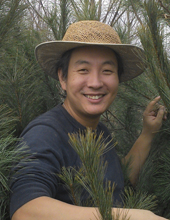
Jingjing Liang
This research supports the team’s greater goals from the Acer proposal, which stated:
“Sustainable maple syrup production is dependent upon many factors, including forest stand dynamics, the number and size of sugar and red maple trees suitable for tapping, and the optimal temperature range during the tapping season. Furthermore, forest succession, climate change, and natural disturbances all influence these factors. The interplay among these factors determine potential level of maple syrup production in a particular locality. The long‐term goal of this project is to develop education and extension training resources, building on integrated research to enhance producer and landowner awareness, understanding, and knowledge of sustainable maple syrup production in Kentucky and other maple producing states. To achieve this long‐term goal, several activities will be implemented under two specific objectives: (1) develop spatiotemporal‐economic education and extension analytic tools to enhance maple syrup production by county in syrup producing states, and (2) develop and implement novel education and extension resources targeting new and current maple syrup producers in Kentucky.
“The project will utilize the most current and forecasted data on maple syrup production for all maple syrup producing states by county with flexibility for similar application at individual producer and landowner unit in an easy to use online dashboard portal. This project will recruit new maple syrup producers, expand current maple syrup production, and educate landowners and operators about the economic benefits of maple syrup production as a viable business and a sustainable natural resource activity.”
Zhou and Liang will work in conjunction with a number of researchers at the University of Kentucky and others in extension and with ties to the maple syrup industry. This collaboration was built upon previous work with the University of Kentucky, which addressed emergent issues in hardwood management, including the conservation of oak resources in the Eastern United States and the economic feasibility of timber stand improvement in the Central Hardwood Region. These previous efforts are the result of two USDA proposals and have produced a paper that is currently under review.
The current maple syrup project team includes Zhou and Liang as well as:
- Thomas Ochuodho, PhD: Assistant Professor of Forest Economics and Policy; Department of Forestry and Natural Resources, University of Kentucky; Project Director
- Billy Thomas, MS: Extension Forester; Department of Forestry and Natural Resources Extension, University of Kentucky; Co-PI
- Jacob Muller, PhD: Assistant Professor of Hardwood Silviculture and Forest Operations Extension; Department of Forestry and Natural Resources, University of Kentucky; Co-PI
- John Lhotka, PhD: Associate Professor of Silviculture, Department of Forestry and Natural Resources, University of Kentucky; Co-PI
- Zachary Hackworth, MS: Forestry Research Technician; Department of Forestry and Natural Resources, University of Kentucky
- Thomas Brandeis, PhD: Supervisory Research Forester with the USDA Forest Service, Southern Research Station, Forest Inventory and Analysis unit in Knoxville, Tennessee
- Pamela Snyder: Forest Management Chief, Kentucky Division of Forestry (KDF)
- Clint Patterson, MS: College Forester with Berea College, Berea, Kentucky
- Seth Long: President of the Kentucky Maple Syrup Association (KMSA); Partner.
- Shad J. Baker: County Extension Agent for Agriculture, Natural Resources and Community Development; Cooperative Extension Service, University of Kentucky
- Jeremy Williams: County Extension Agent for Agriculture and Natural Resources; Cooperative Extension Service, University of Kentucky
- Myrisa Christy: Program Director for the Kentucky Center for Agriculture and Rural Development (KCARD); Partner.
- Douglas McLaren: President of Kentucky Woodland Owners Association (KWOA)
Featured Stories

Inspired by opportunity, driven by purpose
In recent years attendees at Purdue Agriculture alumni, donor, and faculty and staff events have...
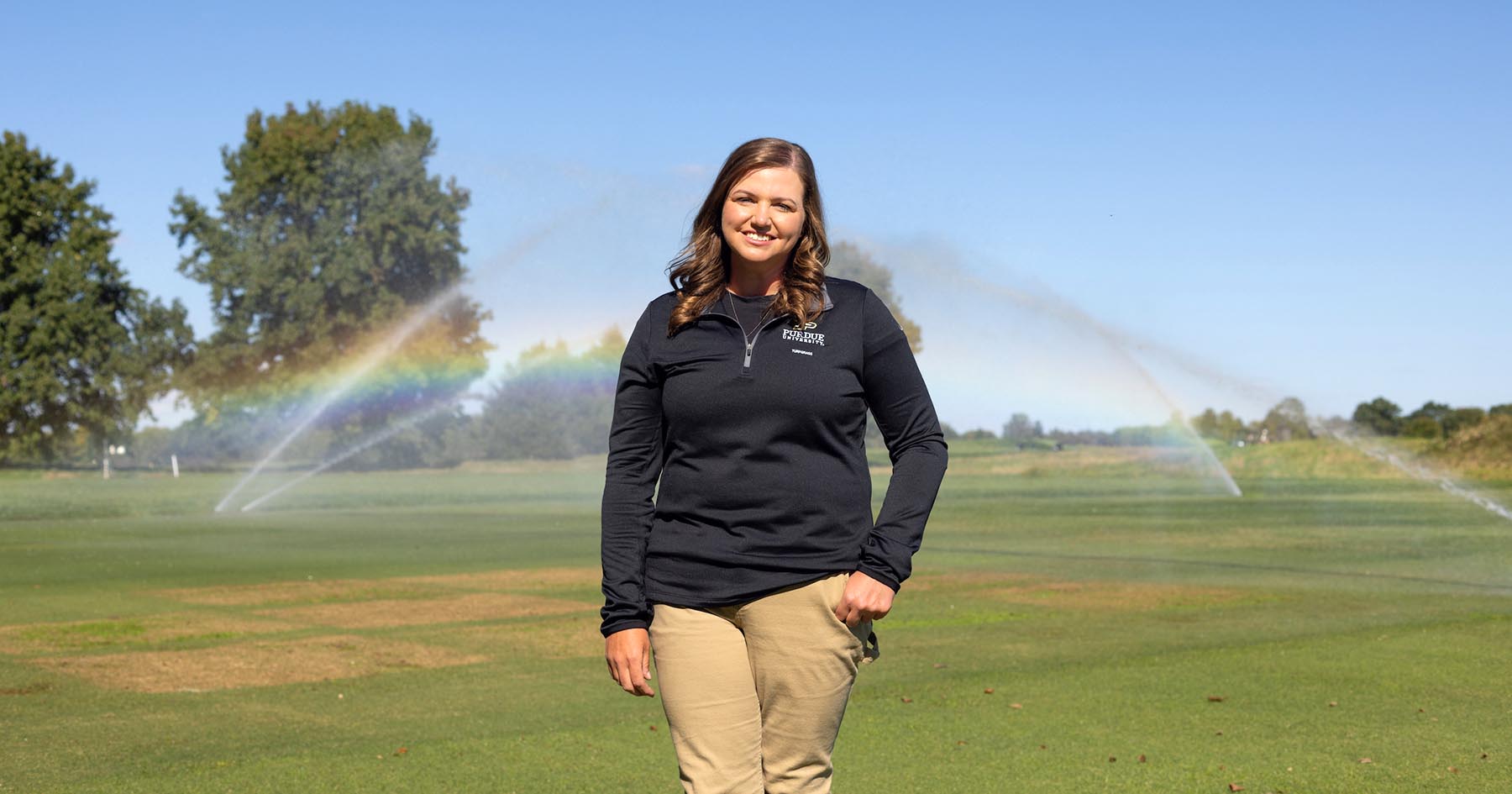
Behind the Research: Jada Powlen
People think grass is simple. Lawns, right? Mow regularly and add some water and fertilizer. What...

Indiana residents warned about illegal pesticide product
The Office of Indiana State Chemist (OISC) is warning Indiana residents about an illegal...

Study details surprising human immune cell link to HIV
A prominent protein on most human cells may be key to unlocking the code that makes humans...
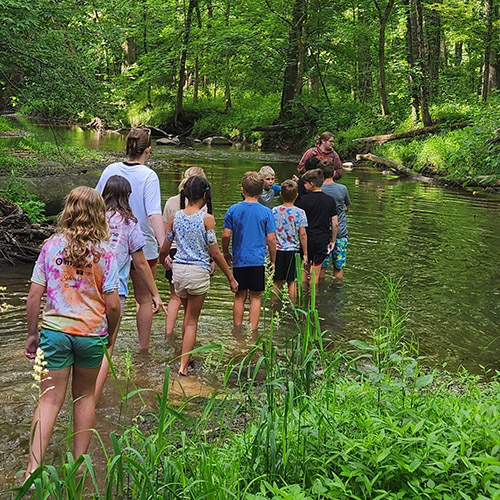
FNR Field Report - Ava Hoskins
Ava Hoskins, a double major in aquatic sciences (fisheries concentration) and natural resources...
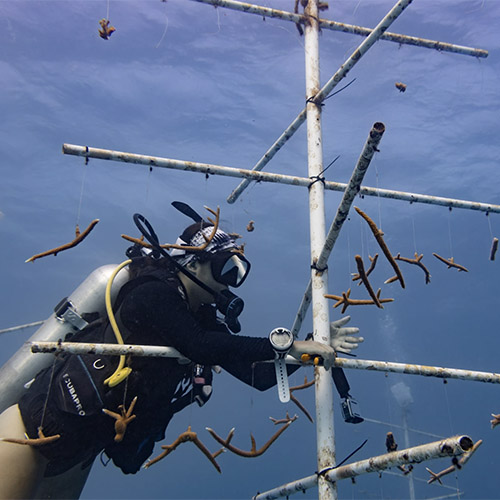
FNR Field Report - Ashlynn McLaughlin
Ashlynn McLaughlin, a senior aquatic sciences major with a concentration in marine and freshwater...