

Meet Zachary Feiner: 2025 Outstanding Young Alumni Award Winner
Sometimes, even when your path is obvious to everyone around you, it takes you a while to find your place. And then, it is as if there was never another option.
Dr. Zachary Feiner grew up near the rivers and lakes of southwest Wisconsin, camping, fishing and just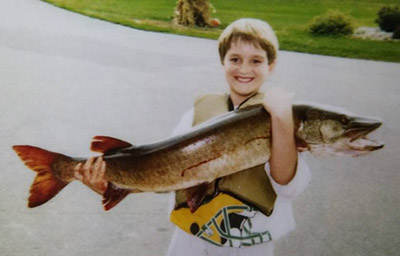 being outdoors. He always loved science. Biology was his favorite class in middle school and high school, but that led him to start college as a pre-med major. While it was clear to everyone around him that working in the outdoor spaces he loved was his destiny, it wasn’t until his senior year of college that fisheries as a profession came into focus for Zach personally. After that, Feiner was off an running, leading to his selection as Purdue Forestry and Natural Resources’ 2025 Outstanding Young Alumni Award recipient.
“I think you could have seen it coming, although I wouldn’t say I saw it coming,” Feiner admitted. “I was definitely the kid that was always outside. When I say I grew up on the Wisconsin River, that is in a lot of ways literally true. We were fishing all of the time, especially with my dad. We were out there camping and fishing a good part of a lot of the summers of my childhood. Fish and fishing, camping, hunting and being outside were always something that I loved and still do today.
“I knew I wanted to do something with science and biology, but I wasn’t really quite sure what. It wasn’t until my senior year of college that I took a course called Ecology of Fishes at UW-Madison that I realized you could do fish and fisheries and ecology as a career. It wasn’t clear to me until then that fisheries ecology was an entire area of research, management and outreach with all of these different aspects that were all super-duper interesting. That’s what really fired my interest in my specific field – realizing that all of the stuff that I loved to do in my free time could just be my job too. All of the things that I was thinking about in terms of how lakes and rivers work and how fish populations were responding to environmental change – all things that I still think about on a daily basis – could actually be what I did as a job. That is really what inspired me to figure out how to make fisheries a career as opposed to just a hobby.”
And the impact that Feiner has had in his career has not only helped address broader fisheries issues in his home state, but has allowed him to directly work with the species and places he grew up with as a child.
“I work on mainly the inland lakes in Wisconsin, working on a lot of walleye stuff, which is probably what we were fishing for the majority of my time growing up,” the Spring Green, Wisconsin, native said. “I also do a lot of work with panfish, bluegill, yellow perch and black crappie, all fish that I fish for. A lot of the ecosystems I fished in as a kid are now the places I am doing science. As part of my job with the Wisconsin DNR (Department of Natural Resources), I am actually doing the science that supports the management, policies and decision that go into the DNR rule book, which influences how we go out and fish and how we think about how angling influences our fisheries too.”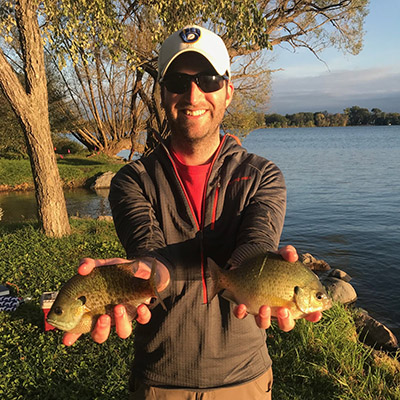
While it took Feiner until late in college to find his career path, he hopes to be able to help other future natural resources professionals realize their options earlier.
“Two things that would have really helped me were knowing that: there are a lot of different pathways in ecology in general, fisheries specifically, that I wasn't aware of, but then also all the different ways you can get experience that can help you jump into that field down the road,” Feiner shared. “When I thought about fisheries as a kid, I thought that was just the DNR and there wasn’t really anything else to it. Coming to the realization that there were actually all these different directions and layers that you can do, whether it is agency or academic, research versus management or policy. I dabbled in the pre-med world but I did not enjoy it very much. I knew that wasn’t going to be me and that’s when I ended up taking a really diverse range of courses like the fisheries course and an entomology course and trying to figure out what I actually enjoyed.
“I think it really would have helped me to know what the possible avenues were and then potentially try and gain better experience when I was younger. When I realized that I wanted to do fisheries my senior year, I had zero fisheries experience, so I was not going to be a good candidate for any job. So, I took a year off and did some internships. That is something I always tell people – be willing to grab ahold of those opportunities that do come your way, whether that is working as an undergrad in someone’s lab or doing an internship or taking a gap year. There are a lot of different ways to get experience that make you a viable candidate and a much better scientist.”
So what was it about that pivotal Ecology of Fishes course that changed Feiner’s career path? The course, taught by Dr. Jake Vander Zanden, who in a full circle moment later would become Feiner’s supervisor at the Center for Limnology, exposed Zach to a lab that got him out in the field experiencing sampling techniques, seeing fish in their various ecosystems and getting hands-on with the fish species. He also was exposed to the breadth of fields and concepts in fisheries ecology.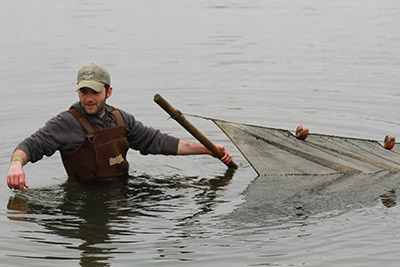
“I think in some ways that course helped it all come together,” Feiner recalled. “The lab component got you out in the field and all of the stuff we got to do was really interesting to me. The lecture part was much more on the science. I just remember all of the different ecological concepts that came out of that course. It wasn’t just fisheries but it all had a fisheries flavor to it, from thinking about how whole ecosystems worked to limnology, food web ecology and invasive species ecology. There are all these different aspects in addition to basic fisheries ecology and fisheries management ideas. I definitely remember more about that course than I do a lot of my other undergrad courses.”
After finishing his bachelor’s degree at Wisconsin, Feiner opted for a gap year to gain experience. He took an internship working on native trout conservation with the Arizona Department of Game and Fish. The fieldwork heavy position tasked Feiner with catching fish in a particular stream area and documenting his findings for biologists.
“It was a super cool job and an amazing way to get a lot of experience in different fishery techniques that really helped springboard me into my master’s degree,” Feiner said.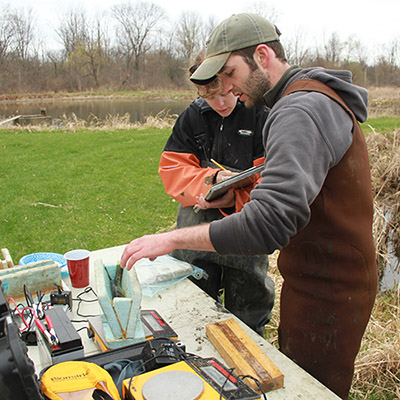
His master’s studies took Feiner to North Carolina State University, where his research focused on invasive species ecology, namely focusing on the effects of invasive white perch.
“Invasive white perch are this anadromous fish that have invaded a bunch of reservoirs in North Carolina and they have a lot of negative impacts on native species,” Feiner explained. “I was studying their competitive interactions as well as changes in their life history, their growth and maturity. What makes them a successful invader was really the driving question. It was a ton of field work but also a lot of really interesting statistics and population modeling that ended up being a really nice and really ambitious master’s degree.”
Feiner ended up publishing four papers out of the data collected for his master’s degree. He also gained a lot of skills while working under co-advisors Jim Rice and Derek Aday among others.
“They were both incredibly supportive, super creative scientists that were able to help me develop a lot of the parts of my skills portfolio,” Feiner noted. “Derek especially was a really great writer and helped me develop in that regard. The other person that really influenced me there was my committee member Joe Hightower, who was really into Bayesian statistics. He got me doing coding and Bayesian statistics and taught a really great quantitative fisheries course that I took there. Some of the Bayesian stats from my master’s really springboarded me into using it a lot in my PhD. If you look through my dissertation there are all sorts of really highly quantitative methods and that is really where the seed came from. Having a committee member that was super quantitative and made the quantitative stuff super interesting and more of a puzzle than a problem helped me have that mindset going into doing more analysis during my PhD.
“I’m not sure what the trick was. I think part of it was just his enthusiasm for it. He was learning it at the same time I was since it was somewhat new at the time, and it became more like, ‘why don’t we try this method and see how it works?’ It was helpful to go back and forth and learn from each other. It was something to figure out because it could be useful, not like a big difficult problem. There were still hard things to figure out in the implementation, but we were moving toward some kind of goal. That is one of the aspects of my job I really enjoy – getting to take a new quantitative method, apply it in a novel way and figure out how it works. As frustrating as it can be sometimes, it is always really fun to have a really elegant method that gives you a better answer than you could get through other methods. If you can figure it out, there is a big payoff at the end, giving you more information and something more interpretable and that can be really satisfying.”
Feiner found the life history theory part of his thesis work at NC State especially enjoyable. His research showed that the white perch was a great invader because of its flexible life history, meaning they can adapt their growth patterns, and age and size at which they reproduce based on environmental conditions. This piqued his interest in continuing work in that realm. He then found a PhD project that Dr. Tomas Höök at Purdue had advertised, investigating the effects of fishing and other ecosystem stressors, from changes in invasive species, water productivity and harvests, on the life history strategies of yellow perch in the Great Lakes.
“I applied, had an interview and a really good conversation with Tomas and it was a really good fit,” Feiner said. “Tomas and I got along really well and it became a really cool project and allowed me the opportunity to join his lab and work on some of the similar ideas I had been interested in working on at an even larger scale in the Great Lakes.
Feiner, who completed his PhD from Purdue Forestry and Natural Resources in 2015, spent two additional years in West Lafayette as a postdoctoral scholar, researching food webs and trying to understand trophic complexity, or the diversity of resources that an organism relies on and how that affects their position in the food web and responses to changes in their resource base.
“Tomas is a really good ideas guy,” Feiner said. “He was willing to let me run on some of these things and also threw some side projects my way. There is a lot of breadth in my PhD because of that and then I was able to take some of those side projects and jump off of them and do a postdoc as well. I got experience in everything from genetic analysis to food web analysis, fatty acid assays, life history theory and all kinds of different aspects of ecology that fed into my PhD experience and my postdoc experience because of that. I also was able to have interactions with other DNRs and increase my ability to build productive collaborations and share data, etc.
“Going back to the quantitative piece, I continued to really focus on building my toolbox, keeping up with Bayesian analysis but also individual-based modeling. I took (Dr.) Rob Swihart’s Quantitative Methods for Ecology course, which is really the course I remember the best from Purdue and the one I use the most in terms of skills and things I learned. Having all these quantitative skills that I can apply to the interesting questions that the DNR wants to ask and some of the questions that I want to ask has become a really powerful tool in my arsenal in my current job and in my DNR job. A lot of the work I do now is a statistical analysis on long-term data sets that either the DNR or UW has collected, and asking questions of these data has really been important to my growth into my positions here.”
Feiner began his career as a fisheries research scientist with the Office of Applied Science with the Wisconsin Department of Natural Resources in 2018. In that role, he answered important management questions and supported management decisions at the DNR regarding the 15,000 lakes, the Great Lakes and thousands of miles of rivers and streams, alongside five other DNR scientists.
“In a lot of ways, the first few years of my job was almost like doing another postdoc,” Feiner assessed. “The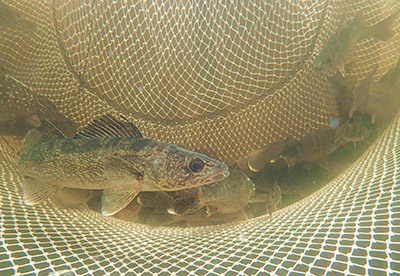 job itself was 100% science. It was all research, coming up with the methods, figuring out where the data were or how to go collect the data if you needed to and writing papers. There also was a good chunk that was consultation and interaction with DNR biologists. Coming in it was like ‘Here's some high-priority DNR research questions on walleye and panfish fisheries that we want answers to. Here's your sign-in to our giant, amazing database,’ a treasure trove of all of the state’s fisheries data. Setting me loose in there was just like walking into a candy store. It was a really nice kind of introduction to how the DNR worked, but I still got to do science and use all the skills that I developed during my grad school career. I also started to develop collaborations with folks at the Center for Limnology at UW-Madison, which gave me an academic/agency partnership that's been really, really important to a lot of the work that I've done.”
One of the first projects Feiner worked on was about Wisconsin panfish. As part of the DNR’s panfish species team, he worked with other researchers and biologists at a team meeting outlining important research questions, then collaborating to figure out the data, do the research and write up the papers.
“Right off the bat, in the first few years I was at the DNR, I had a series of research products about panfish fisheries in Wisconsin that ended up being pretty important to understanding how we think about panfish and panfish management in the state,” Feiner shared. “One showed that instead of having a linear relationship between how many fish are in the lake and how many fish anglers are catching, it actually flattens out. What that meant was that panfish populations could decline but anglers would still be able to find those fish. They are actually able to continue depleting the fishery even after the fishery started to collapse.
“Another really cool paper on angling technology found that anglers who were using technology had higher catch rates than those who didn’t for a lot of species. A third project was about how anglers responded to panfish regulations. We found that in Wisconsin our limits were so high that they were actually not meaningful. If people only ever catch four or five fish and your limit is 25, it doesn’t really matter. We also found that once you get the regulations to bite a bit, people change their behavior. They start keeping larger fish and throwing the smaller ones back. Those three projects really helped us describe what the panfish fishery looks like in Wisconsin and has shaped how we think about regulations and helped us understand broader aspects of fisheries and social-ecological systems that I am still working on today. It makes it a lot more rewarding when you do something that people are interested in and can use in their daily life, whether that is a biologist thinking about regulations or an angler thinking about what they should fish for or where to go.”
Feiner became an honorary fellow with the Center for Limnology at the University of Wisconsin-Madison in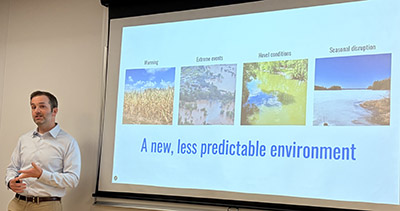 2019. In 2020, he moved into an assistant scientist role, a dual position within the Center and the Wisconsin DNR, which allowed him to advise students and work as a fisheries research scientist. His work involved Wisconsin panfish, walleye, yellow perch and bluegill, angler behavior and values, and general climate effects and ice phenology in lakes.
“It was really much more of a mosaic: I was still a DNR fisheries research scientist. I was on all the research teams. I had my DNR email, but I also had a home at the CFL and had PI status there, so I could write grants and advise postdocs and co-advise students,” Feiner explained. “Part of the initial job was to be a research liaison between the two places. That was really the hope of the position, to build up stronger collaboration and capacity at both organizations, and make sure there was that connection with what people are doing at the university. Is that being translated to the DNR and vice versa, are there priority questions or resources at the DNR that could be leveraged with the university to really help do that impactful research too?”
Feiner’s home at the CFL became more official in 2026, when he moved into a faculty role as an assistant professor in the UW-Madison Department of Biology and Center for Limnology. Even in this new position, he aims to maintain many of the WDNR connections and applied work that have been a lifeline through his career.
Advising and mentoring students added more skills to Feiner’s toolkit.
“When you are going through a PhD and a postdoc or working at the DNR, you are the one doing all of the research; you’re at the computer doing the code, collecting the data and writing the papers,” he said. “It has been interesting to let go and set a student on something and say I’m going to help guide you but you’re the one doing the work. Trying to be supportive and be a good mentor, while also giving students flexibility and capacity to go down those interesting research veins, like Tomas did for me, is sometimes a trickier tightrope to walk than I expected, but it has also been really rewarding. It is fun to watch them grow and improve as a scientist, a writer and a communicator and that is really rewarding.”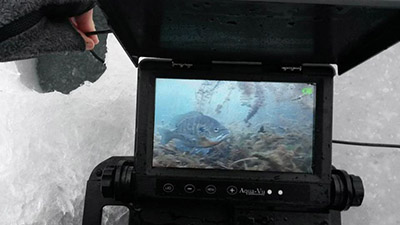
Feiner is a leader on climate impacts and adaptation in Midwest fisheries, including his role as co-chair of the Wisconsin Initiative of Climate Change Impact’s (WICCI) Fisheries Working Group. He also serves on multiple research and management groups, including the Midwest Glacial Lakes Partnership Science and Data Team and as co-primary investigator of the Center for Limnology’s North Temperate Lakes Long-Term Ecological Research Program.
Some of the career highlights for Feiner include his work in lake phenology, specifically walleye phenology, and change in ice and loss of winter.
“It has been a really fascinating vein of research because it seems like changes in ice phenology are being more variable and are having really strong downstream impacts on lake ecology and fish populations. A paper that we put out last year, Barta et al, actually led by an undergraduate I advised at UW, was really amazing and captured the public imagination. It ended up all over the news, but it also was a really good piece of science to show how climate impacts on changes in ice phenology can redound all the way through, affecting the ability of fish populations, in this case walleye, to sustain themselves in a changing and increasingly unpredictable climate.
“Another highlight piece was a paper by the WICCI fisheries working group that thought about RAD Climate Adaptation and Fisheries. RAD stands for resist, accept and direct. Essentially when you are faced with a big ecological change, you can resist that change and try to keep things the same, accept that change and let things happen, or direct that change and guide the ecosystem to a new place that still offers benefits. We started by asking what the Wisconsin fisheries management landscape looked like if we put everything into those buckets. We realized that we did a ton of resisting and that led to a whole new line of questioning about what it actually looks like to put RAD into practice and turn the framework into really actionable decision making in Wisconsin.”
With the Midwest Glacial Lakes Partnership Science and Data Team and WICCI, Feiner and his colleagues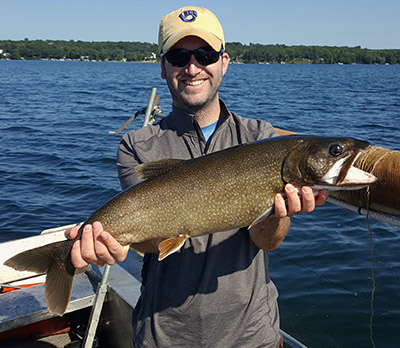 aim to take what scientists know about how lake ecosystems function, how lake management and climate affect lakes and put it into practice for stakeholders, agencies and lakeshore landowners.
“Those are the types of service things I gravitate toward - how do we take what we know and put it into action, or make it understandable for non-scientists,” Feiner noted. “I've always collaborated with a lot of different people, and it's really fun to get in a room with a bunch of people that are smarter than you and talk about how we should think about lake management or how we should think about fish climate impacts on fish. Those can be really invigorating conversations and lead to entirely new kind of avenues of research.
“The baseline of what keeps me engaged is being fascinated with how these ecosystems tick, what makes them work and why they do what they do. The second part of that is being able to take that information and put it in front of people and have that either influence policy or just influence what somebody thinks about when they look out at a lake. That is really cool and a lot of fun, and an interesting challenge in its own right. I also do a ton of collaboration. The folks at CFL and at DNR are amazing, and the folks on WICCI and MGLP as well. To have all these people that are not just colleagues, but also friends, and are fun to sit around and throw around ideas and develop cool new projects and interesting lines of research with is a way to really keep things fresh and interesting. Those conversations that can be really stimulating and exciting and can really help keep you going too.”
To date, Feiner has 65 publications to his credit and has brought in more than $3.2 million in grants. In 2022, he received the Excellence in Research Award from the Wisconsin DNR’s Office of Applied Science. The award honored Feiner’s work with panfish as well lake phenology and recognized him “for being a productive scientist, but also for doing cool science that was important to push forward different kinds of management and policies and translating that into information that the public could use.”
When he was notified of his selection as FNR’s 2025 Outstanding Young Alumni Award winner, he was again surprised and honored to be recognized.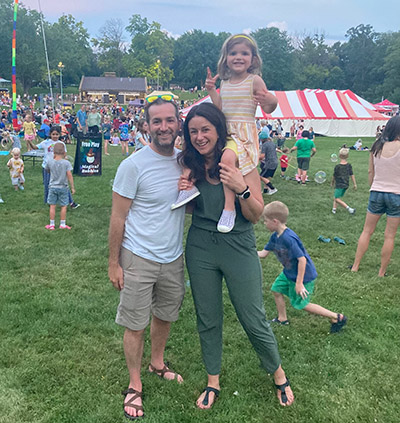
“I’m incredibly honored to be chosen for this award – my experiences at Purdue have helped shape me personally and professionally, so this recognition also speaks to the opportunities for growth that FNR provides to students,” Feiner said. “In a lot of ways, my time at Purdue transformed the way I think about ecology and research and really reinforced my love of the job as well. I have collaborators, colleagues and friends from my time at Purdue that I still keep in touch with, work with and publish papers with.
“It was humbling and amazing to even be nominated and considered to be a good representative for this award, especially by folks like Tomas Höök and Carolyn Foley who I respect an enormous amount. They are mentors from my time at FNR that turned into great colleagues and friends. Looking back at previous award winners, it makes it all the more amazing of an honor. I really appreciate it and am amazed to even be nominated much less win it.”
Featured Stories
Ashlynn McLaughlin, a senior aquatic sciences major with a concentration in marine and freshwater...
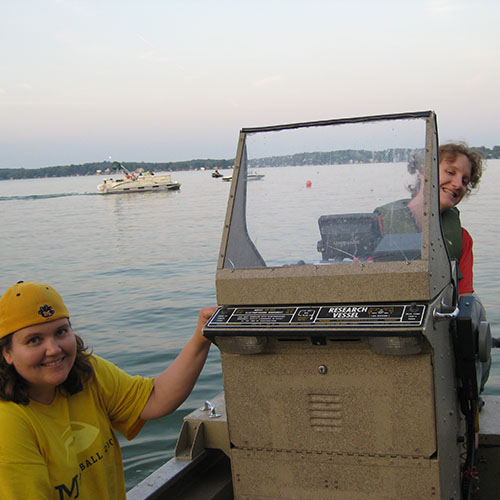
Carolyn Foley, a long-time member of the Purdue Forestry and Natural Resources (FNR) and...
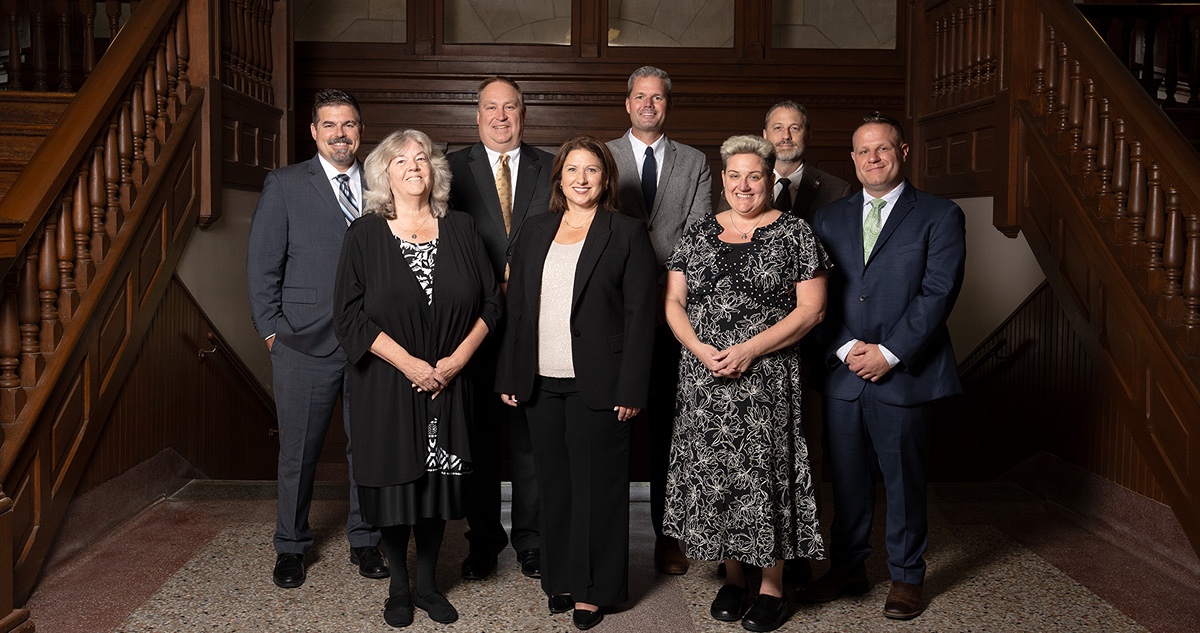
Purdue University’s College of Agriculture recognized nine alumni at the Distinguished...
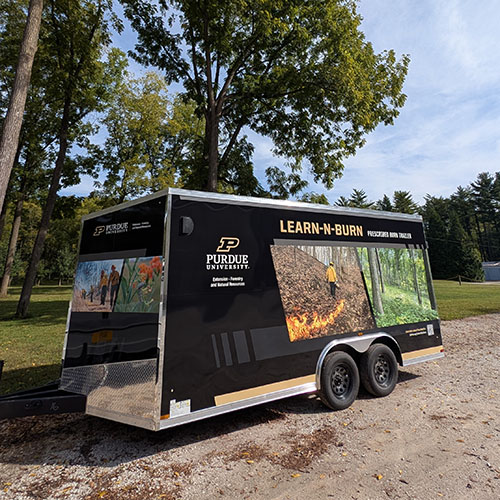
Keep your eyes peeled across Indiana for the newly minted Purdue Forestry and Natural Resources...
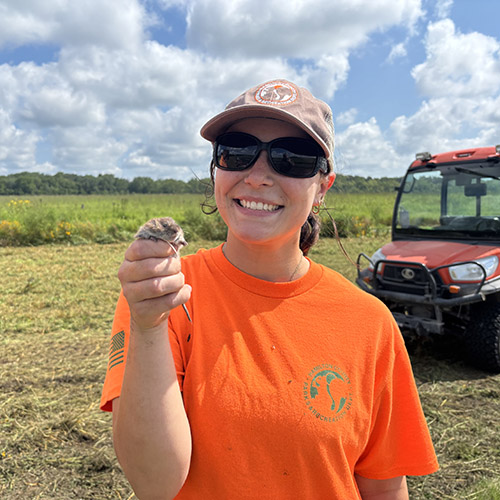
Senior wildlife major Madison Medley spent her summer as a natural resource intern with Hamilton...
Addy Ellis, a sophomore aquatic sciences and political science double major, spent the summer as...