No results found!
paer_article
The March 2026 Producer Price Index: Reading the Food Price Pipeline
The Bureau of Labor Statistics collects Producer Price Index (PPI) prices on the Tuesday of the week containing the 13th of each month. The March survey date was March 10. The Iran conflict began on February 28, making March 10 exactly ten days post-onset. The February survey date was February 10 — eighteen days before the conflict began – but well within the window of pre-conflict rhetoric and US troop buildup in the region.
April 16, 2026
resource
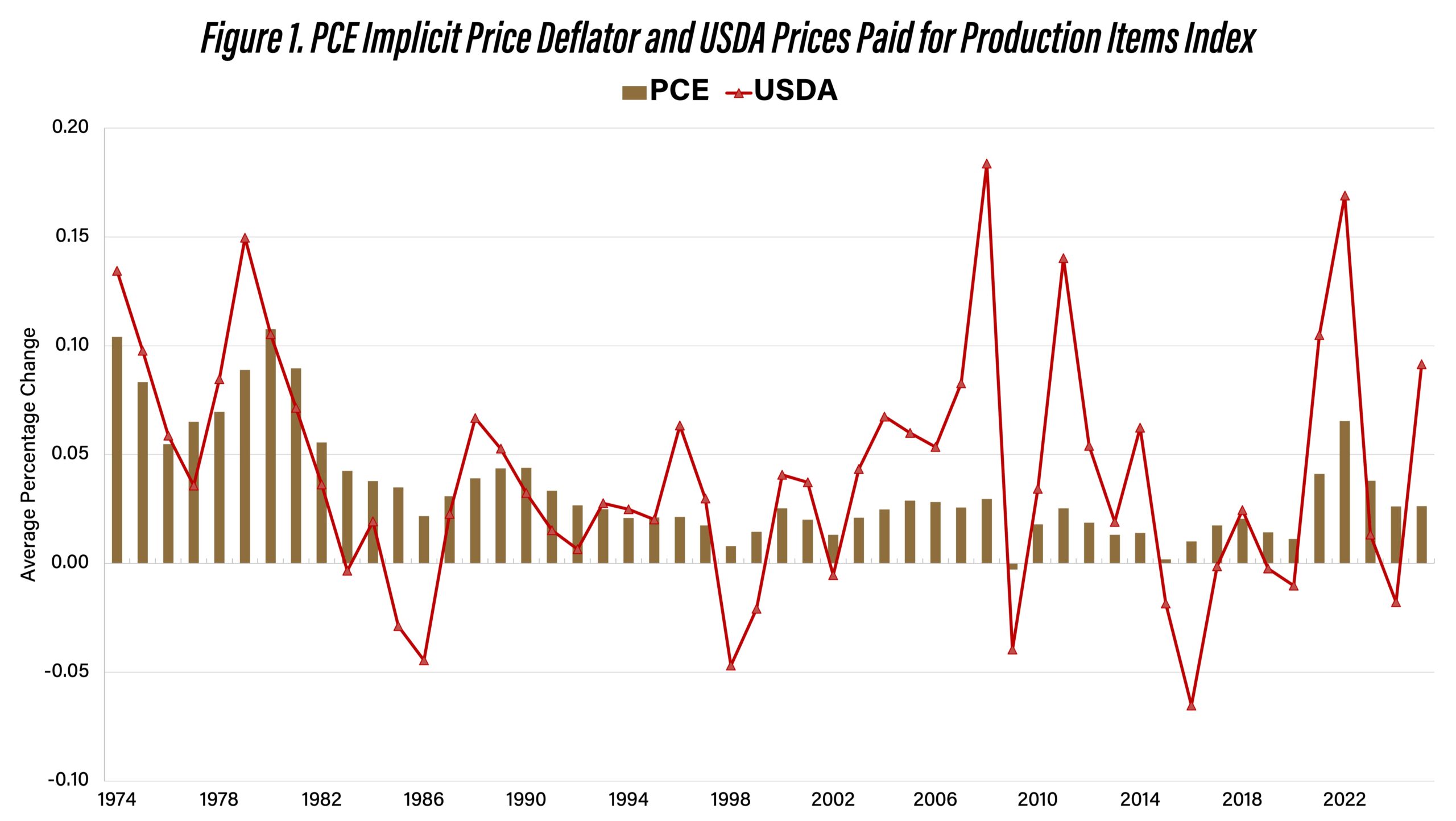
Inflation Is Falling… So Why Are Farm Costs Rising?
General inflation has eased from recent highs, but farm input costs remain elevated and in some cases are still rising. Fertilizer, fuel, and other key inputs continue to be driven by supply shocks and global market forces, creating a disconnect from broader inflation trends. That gap is keeping breakeven prices high and adding uncertainty to 2026 planning decisions. See how these trends are shaping cost expectations for the year ahead.
AgCast 216: How Rice Farmers Cut $31/Acre Water Costs, Lessons from the Delta, Part 7
Lessons From the Delta continues — this time from the edge of a 120-acre on-farm reservoir. In Part 7 of the Purdue Commercial AgCast mini-series, Chad Fiechter and Todd Kuethe visit a rice farm in Arkansas to understand how farmers are managing water, labor, and costs in ways that look very different from the Midwest.
April 15, 2026
The March 2026 CPI Report: What It Tells Us About the Iran Conflict’s Inflation Footprint — And What Is Still Coming
The March 2026 CPI report confirms what the structural analysis predicted: the Iran Conflict’s initial consumer price impact is concentrated in motor fuels, which respond to crude oil prices with almost no lag. The 0.9 percent monthly CPI increase is large by recent standards — the largest monthly increase since mid-2022, but it is not yet the broad-based food and goods inflation that a prolonged Strait of Hormuz disruption will eventually produce.
April 13, 2026
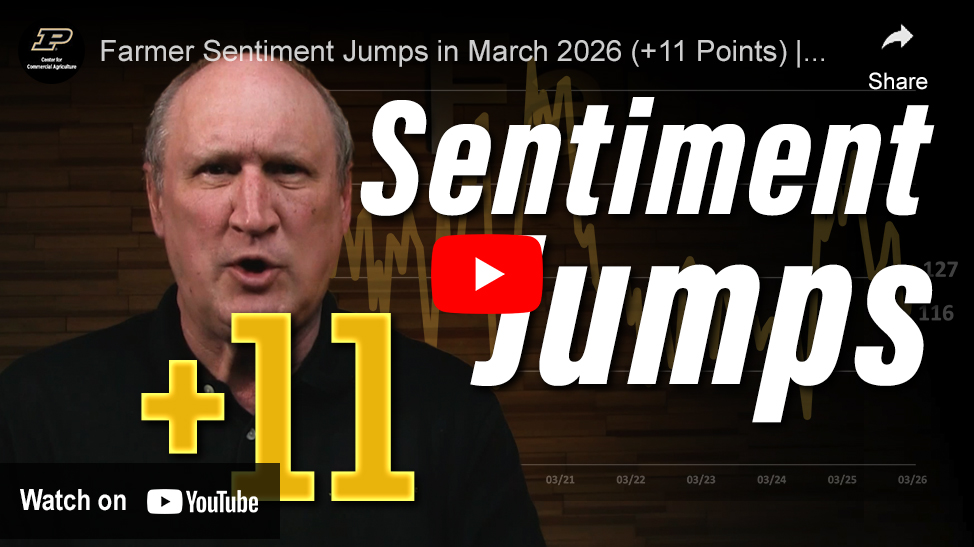
Farmer Sentiment Jumps in March 2026 (+11 Points) | Ag Economy Barometer
Farmer sentiment rose sharply in March, with the Purdue University/CME Group Ag Economy Barometer increasing 11 points as future expectations improved. Yet nearly 70% of producers still say it’s a bad time to invest, citing ongoing pressure from high input costs and weak output prices.
April 9, 2026
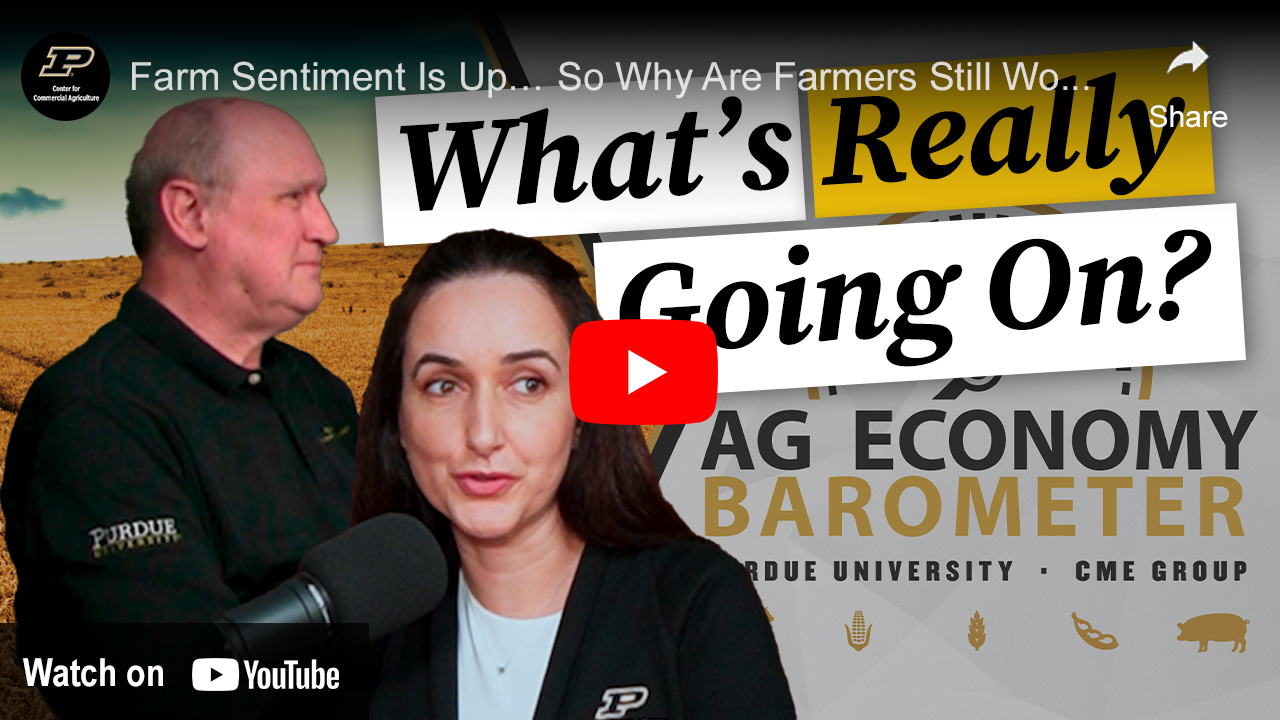
AgCast 215: Farm Sentiment Is Up… So Why Are Farmers Still Worried?
In this episode of the Purdue Commercial AgCast, Joana Colussi and Michael Langemeier break down the March 2026 Purdue University/CME Group Ag Economy Barometer. Despite rising input costs and global uncertainty tied to geopolitical conflict, farmer sentiment moved higher—driven in part by stronger crop prices and government payments.
April 8, 2026
Farmer Sentiment Improves Despite Rising Input Cost Concerns
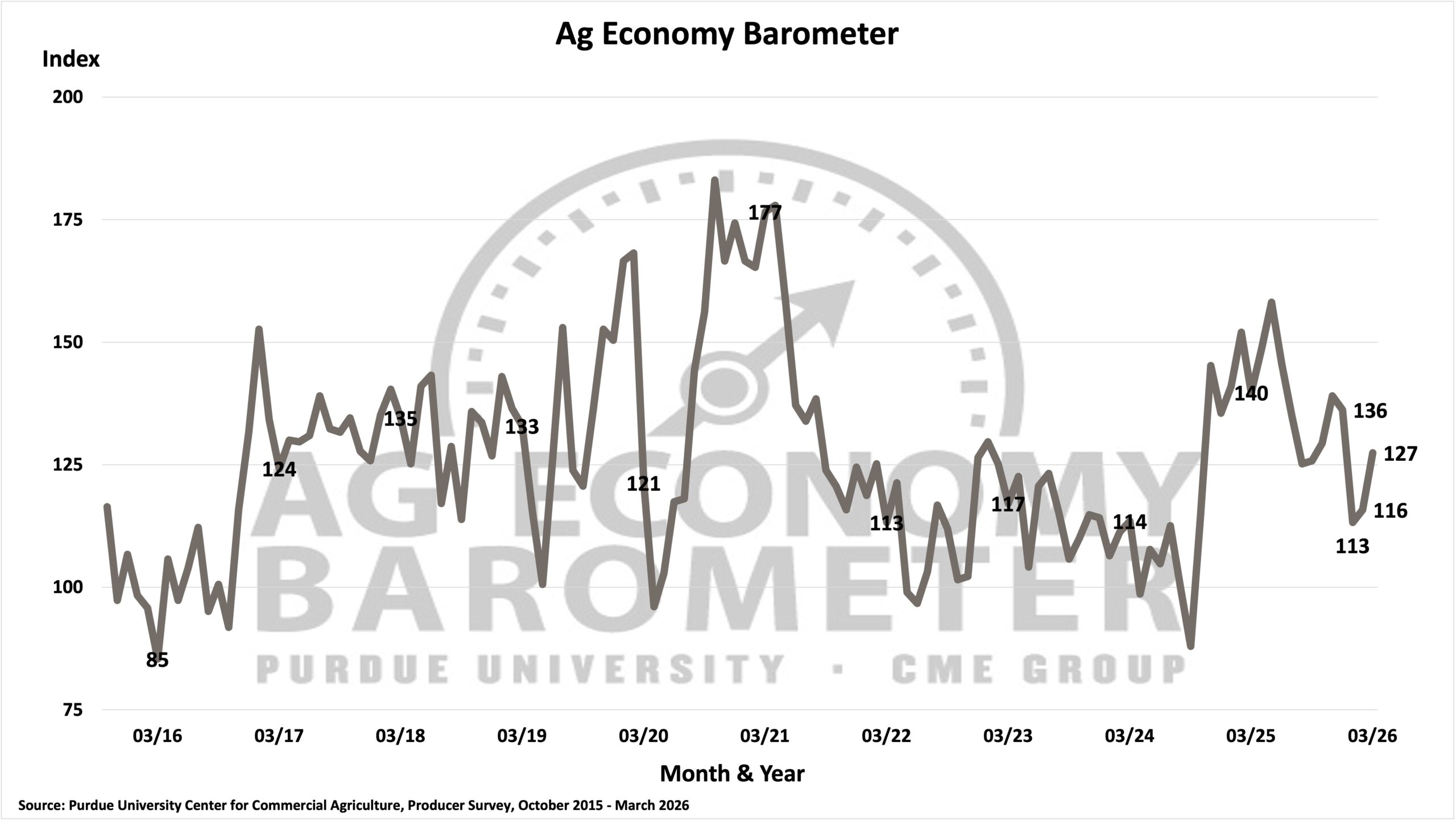
Farmer sentiment improved in March as the Purdue University/CME Group Ag Economy Barometer rose to 127, up from 116 in February. The improvement was driven by a notable increase in producers’ expectations for the future.
April 7, 2026
Trends in General Inflation & Farm Input Prices
Farm input costs don’t move in lockstep with inflation. Understanding which costs follow inflation—and which don’t—is key to managing margins in today’s volatile environment.
April 2, 2026
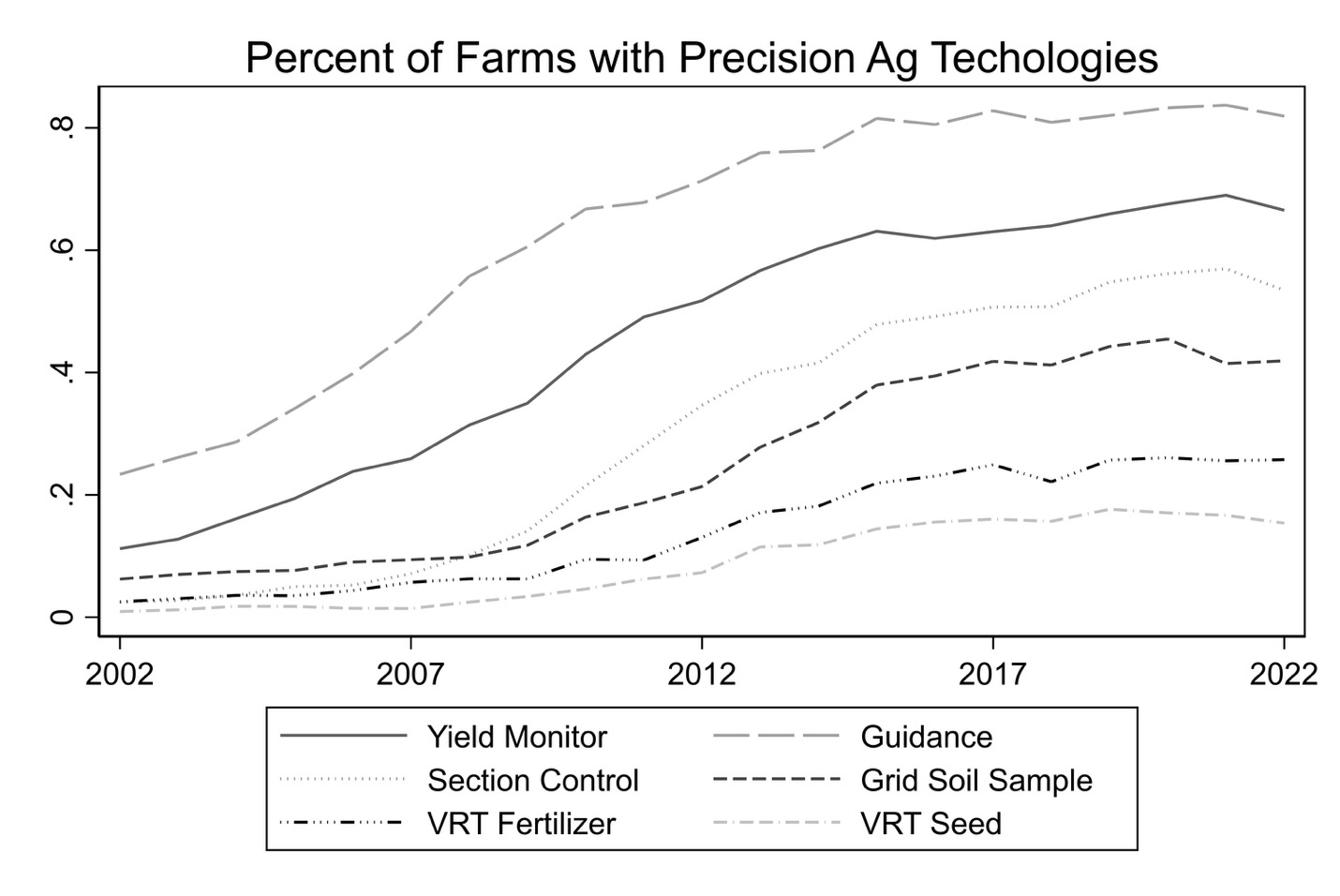
Precision Ag Paying Off?—Here’s What the Data Shows
Precision agriculture tools are widely adopted—but do they actually improve profitability? A 21-year study of 570 farms finds most technologies don’t increase efficiency, with gains concentrated among lower-performing operations.
program
Purdue Farm Management Tour 2026
Two outstanding farms in south-central Indiana will host visitors wanting to learn about farm and crop management on July 10th for the Purdue University Farm Management Tour.
April 1, 2026
AgCast 214: Farming with No Margin for Error, Lessons from the Delta, Part 6
Rice farming in the Mississippi Delta offers a look at how farms operate under tighter labor, water, and capital constraints. In this episode, farmers share insights that translate beyond rice—highlighting how production intensity shapes equipment decisions, timing, and risk management in ways Midwestern producers can apply.
The Iran Conflict and Global Food Security: Why the Burden Falls Hardest on the World’s Most Vulnerable
When an energy shock ripples out from the Persian Gulf, the headlines focus on oil prices, gasoline costs, implications for value chains and the profit margins of U.S. producers.
March 31, 2026
The Iran Conflict and Consumer Food Prices: A Broad but Lagged and Sticky Shock
The initial public reaction to an oil price shock reaching $110 per barrel is often to project near-immediate, dramatic increases in grocery prices. This instinct overstates the direct farm-to-retail transmission channel in a straightforward and measurable way. The USDA Economic Research Service tracks how each dollar of consumer food spending is distributed across the supply chain in its Food Dollar Series. The picture it reveals is sobering for those who expect large and rapid retail food price responses driven purely by higher farm input costs.
The Iran Conflict, Energy Prices, and U.S. Farm Profitability: A Balanced Assessment
The conflict that began on February 28, 2026, with U.S.-Israeli airstrikes on Iran triggered the closure of the Strait of Hormuz — the narrow chokepoint through which approximately 20 percent of the world’s traded oil and significant volumes of liquefied natural gas (LNG) flow. Within days, Brent crude oil surged from roughly $70 per barrel to over $110, the highest level since Russia’s 2022 invasion of Ukraine. Gasoline prices at the pump rose roughly 17 percent in the first two weeks of the conflict, and diesel — the lifeblood of farming operations — followed closely.
Extracting Value from Precision Agriculture Technology is Difficult
Precision agriculture technology promises efficiency gains, but evidence shows most tools don’t improve farm performance. This analysis of Kansas farms highlights which technologies deliver measurable returns—and why management, learning, and farm efficiency level matter more than adoption alone.
March 26, 2026
Brazil Soybean Boom Slowing? Profit Pressure Signals a Shift
Brazil is expected to produce a record soybean crop, but profitability is sharply declining due to rising costs and lower prices. Margins in key regions could fall to near break-even levels, potentially slowing acreage expansion and influencing global soybean supply and price dynamics.
March 25, 2026