

Conservation Science
Signature Themes
The Department of Forestry and Natural Resources is characterized by broad scholarly activities across diverse disciplines and mission areas. To highlight the department's impactful programming, we have organized our integrative activities across three cross-cutting themes: Conservation Science, Advanced Ecological Sensing and Analytics, and Environmental One Health.
Work in the Conservation Science Theme area integrates conservation science and natural resource management to advance biodiversity protection and the sustainable use of working lands and waters. Our faculty, staff and students conduct applied and basic research in forests, wetlands, lakes, rivers, agricultural landscapes and urban systems — working directly in nature and alongside farmers, landowners, residents, agencies, Tribal partners, non-government agencies and industry — to translate science into practice.
Using the best available evidence — from field experiments and long-term monitoring to genomic tools, geospatial modeling and community-engaged participatory methods — we develop and deploy scientific approaches that strengthen ecological resilience, support sustainability and promote responsible stewardship of natural and human systems.
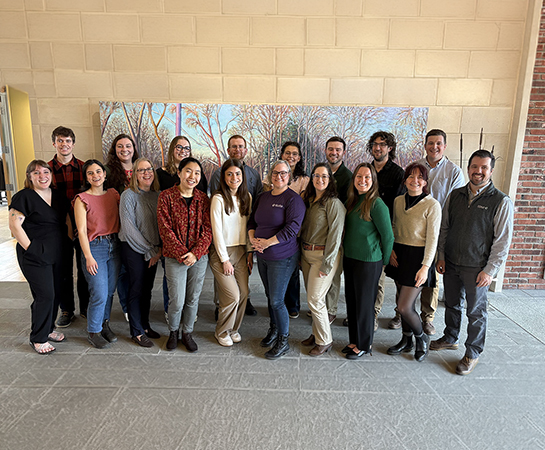
ILSL Academy Celebrates Graduation of First Class

Danielle Howard has been hired as an Extension prescribed fire specialist housed with the...

Andrew DeWoody, professor in the Department of Forestry and Natural Resources (FNR), has been...

Dr. Abhinav Tyagi's past work has focused on applying genomics to wildlife conservation and...
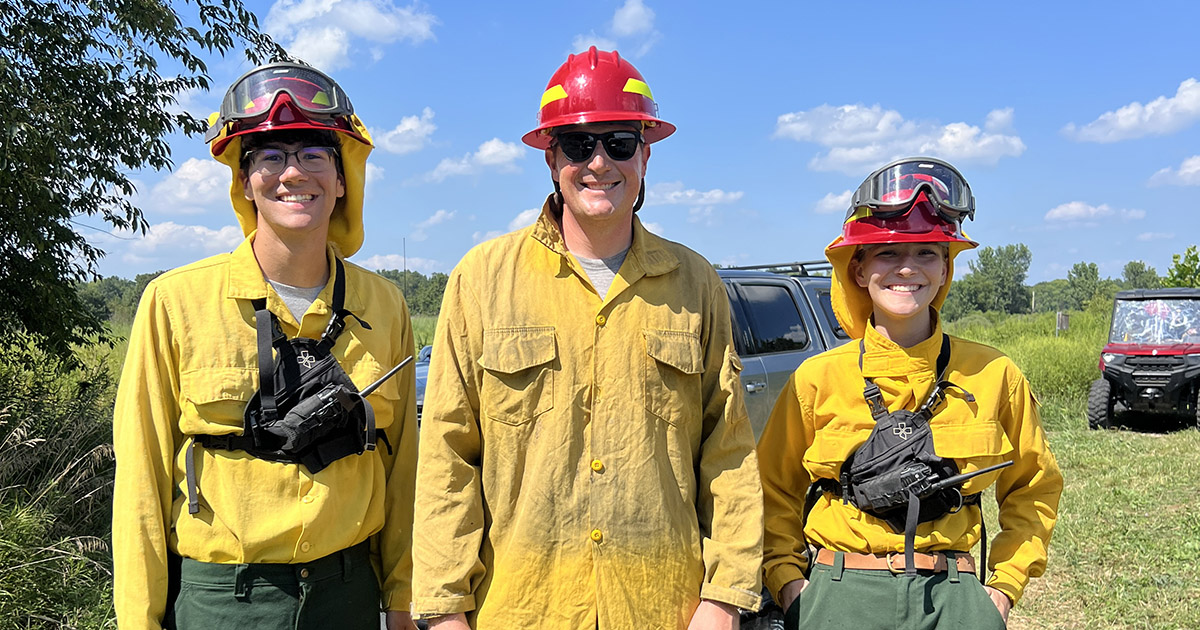
Jackson Schwartz, who completed his bachelor’s degree in wildlife in May, spent the summer...

The Help the Hellbender research program, based in Purdue Forestry and Natural Resources, was...
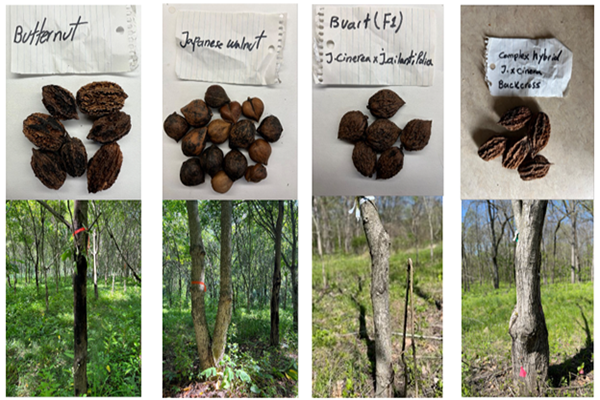
Restoring Butternut, Strengthening Forests
A project led by Doug Jacobs and research scientist Aziz Ebrahimi focuses on conserving and restoring butternut (Juglans cinerea), a native North American tree threatened by butternut canker disease. The goal is to identify and propagate disease-tolerant trees while maintaining the species' genetic integrity. Researchers combine genomic tools, field disease assessments and advanced phenotyping to distinguish pure butternut from hybrids and to identify individuals with improved tolerance.
To date, they have genotyped thousands of trees across multiple states, identified highly tolerant families and advanced backcrosses with high butternut genomic content, and established grafted orchards to test long-term durability. These efforts provide landowners and state agencies with science-based tools to guide restoration and improve forest health.
The project is supported by Purdue University's Hardwood Tree Improvement and Regeneration Center (HTIRC) in partnership with the USDA Forest Service, state departments of natural resources, The Morton Arboretum, the University of Connecticut, UC Davis and the Canadian Forest Service.
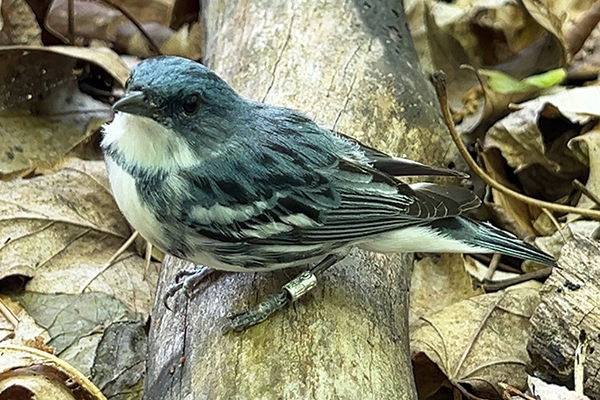
Tracking Warblers, Connecting Continents
Purdue FNR is involved in a multidisciplinary collaboration dedicated to conserving the breeding population of cerulean warblers in southern Indiana. This initiative, the Southern Indiana Cerulean Warbler Birdscape (SICWB), leverages the shared knowledge and conservation expertise of more than two dozen partnering agencies and organizations, bringing together a team of nearly 50 leading conservation professionals in a coordinated, landscape-scale effort on the breeding grounds in North America, as well as the migratory and stationary non-breeding grounds in Central and South America. Patrick Ruhl’s lab in FNR is working to address critical knowledge gaps related to the breeding habitat requirements and migratory ecology of cerulean warblers that breed in southern Indiana. This small migratory bird spends only a portion of the year in Indiana, so, in addition to detailed breeding habitat assessments, researchers in the Ruhl lab also will use geolocators to track the migration routes of cerulean warblers from Indiana to Columbia to help SICWB make strategic and informed conservation decisions.
Join the Quest, Protect Hellbenders
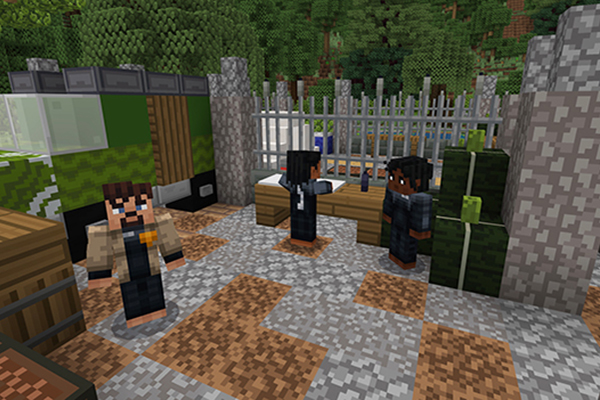
The endangered eastern hellbender salamander is coming to a video game screen near you with the launch of Help the Hellbender: A Minecraft Conservation Quest, a new edition of Minecraft.
Through game-based learning, players will learn about the current ecological threats to the eastern hellbender, the species’ habitat needs and distinct biology through quests, challenges and exploration. All of the tasks in the game, from gathering hellbender eggs to releasing them in the wild and working with agriculture producers and industry to protect habitat, mirror real-world activities and conservation initiatives, including the current Farmers Helping Hellbenders Initiative.
Of Minecraft’s 700 million users, 43% fall in the 15- to 21-year-old age range, while an additional 21% are 22 to 30 and 20.6% are under 15. This is the perfect audience to reach because they are the next generation of wildlife managers, farmers and environmental activists that will protect the endangered hellbender for years to come.
Help the Hellbender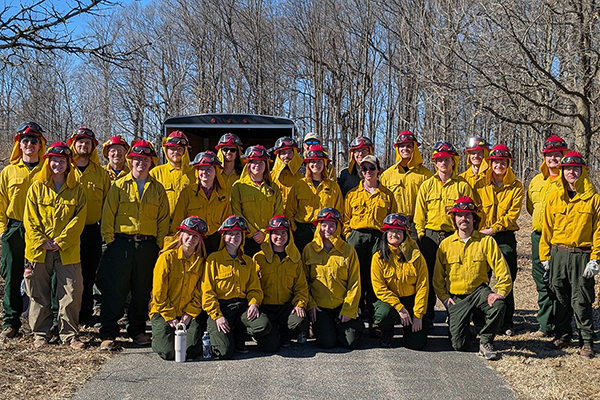
Prescribed Fire for Healthier Lands
From teaching and training students, landowners and professionals to testifying in legislative committees, FNR faculty and staff are working to expand prescribed fire across Indiana. Mike Saunders and Extension wildlife specialist Jarred Brooke co-teach FNR-333 Applied Fire Ecology, where students get hands-on experience implementing fire, working with landowners to write burn plans and can become “red card” certified through a partnership with the Indiana DNR.
Since 2017, Brooke and Extension forestry specialist Ron Rathfon have led 14 Learn-N-Burn Workshops. In 2025, FNR Extension led three prescribed fire webinars and five workshops reaching more than 100 professionals, thanks to a partnership with the Natural Resources Conservation Service.
Thanks to funding from the Sam Shine Foundation, FNR expanded its outreach capacity by hiring an Extension prescribed fire specialist, Danielle Howard, in May 2026.
Brooke also testified before the Indiana House and Senate Natural Resources Committees regarding HB-1557, Prescribed Burning (signed into law in 2025), which provides liability protections for fire practitioners and creates a statewide certification program. Thanks to funding from the Sam Shine Foundation, FNR is expanding its outreach capacity by hiring an Extension prescribed fire specialist in 2026.
Prescribed Burns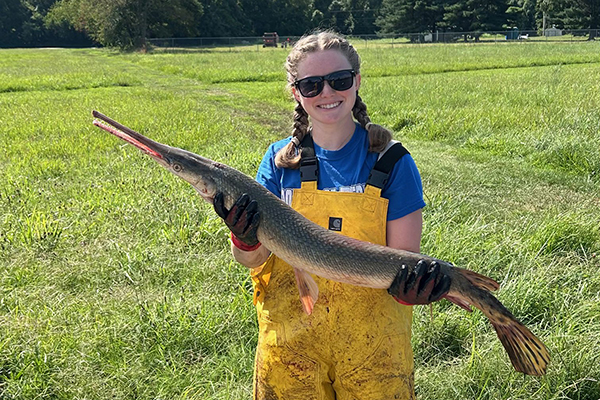
Studying Bowfishing, Sustaining Fisheries
Bowfishing has the potential to expand fishing participation and help control invasive species, but it also may have unintended consequences on native species. Through a project funded by the Indiana Department of Natural Resources (DNR), graduate students Erin Driehaus and Juan Carlos Martinez are assessing bowfishing tournaments in Indiana and their impacts on harvested fish assemblages and populations, while also exploring how Indiana residents view the sport of bowfishing.
Driehaus’ project component will provide some of the first biotic data about bowfishing in Indiana and could be used to make decisions about implementing or relaxing regulations on bowfishing. It will also provide more information for stakeholders who may be unsure about the impact bowfishing has on native and invasive populations. After collecting data at bowfishing tournaments, researchers are exploring overall trends and patterns. They also are implementing potential harvest and management scenarios in a model to forecast how bowfishing could impact native and invasive species. This will provide information for stakeholders who may be unsure about the impact on these populations.
Martinez’ project component aims to understand the perspectives of stakeholders, from bowfishers and anglers to the general public, to determine public opinion, identify conflicts and, in turn, sustainably manage bowfishing in the state. By conducting surveys and interviews, researchers want to learn what motivates bowfishers. This will allow them to better inform bowfishers about how they can become active stewards for the environment and help the Indiana DNR lessen the impact of invasive fish.
Bowfishing Research
Restoring Butternut, Strengthening Forests
A project led by Doug Jacobs and research scientist Aziz Ebrahimi focuses on conserving and restoring butternut (Juglans cinerea), a native North American tree threatened by butternut canker disease. The goal is to identify and propagate disease-tolerant trees while maintaining the species' genetic integrity. Researchers combine genomic tools, field disease assessments and advanced phenotyping to distinguish pure butternut from hybrids and to identify individuals with improved tolerance.
To date, they have genotyped thousands of trees across multiple states, identified highly tolerant families and advanced backcrosses with high butternut genomic content, and established grafted orchards to test long-term durability. These efforts provide landowners and state agencies with science-based tools to guide restoration and improve forest health.
The project is supported by Purdue University's Hardwood Tree Improvement and Regeneration Center (HTIRC) in partnership with the USDA Forest Service, state departments of natural resources, The Morton Arboretum, the University of Connecticut, UC Davis and the Canadian Forest Service.
Tracking Warblers, Connecting Continents
Purdue FNR is involved in a multidisciplinary collaboration dedicated to conserving the breeding population of cerulean warblers in southern Indiana. This initiative, the Southern Indiana Cerulean Warbler Birdscape (SICWB), leverages the shared knowledge and conservation expertise of more than two dozen partnering agencies and organizations, bringing together a team of nearly 50 leading conservation professionals in a coordinated, landscape-scale effort on the breeding grounds in North America, as well as the migratory and stationary non-breeding grounds in Central and South America. Patrick Ruhl’s lab in FNR is working to address critical knowledge gaps related to the breeding habitat requirements and migratory ecology of cerulean warblers that breed in southern Indiana. This small migratory bird spends only a portion of the year in Indiana, so, in addition to detailed breeding habitat assessments, researchers in the Ruhl lab also will use geolocators to track the migration routes of cerulean warblers from Indiana to Columbia to help SICWB make strategic and informed conservation decisions.
Join the Quest, Protect Hellbenders
The endangered eastern hellbender salamander is coming to a video game screen near you with the launch of Help the Hellbender: A Minecraft Conservation Quest, a new edition of Minecraft.
Through game-based learning, players will learn about the current ecological threats to the eastern hellbender, the species’ habitat needs and distinct biology through quests, challenges and exploration. All of the tasks in the game, from gathering hellbender eggs to releasing them in the wild and working with agriculture producers and industry to protect habitat, mirror real-world activities and conservation initiatives, including the current Farmers Helping Hellbenders Initiative.
Of Minecraft’s 700 million users, 43% fall in the 15- to 21-year-old age range, while an additional 21% are 22 to 30 and 20.6% are under 15. This is the perfect audience to reach because they are the next generation of wildlife managers, farmers and environmental activists that will protect the endangered hellbender for years to come.
Help the Hellbender
Prescribed Fire for Healthier Lands
From teaching and training students, landowners and professionals to testifying in legislative committees, FNR faculty and staff are working to expand prescribed fire across Indiana. Mike Saunders and Extension wildlife specialist Jarred Brooke co-teach FNR-333 Applied Fire Ecology, where students get hands-on experience implementing fire, working with landowners to write burn plans and can become “red card” certified through a partnership with the Indiana DNR.
Since 2017, Brooke and Extension forestry specialist Ron Rathfon have led 14 Learn-N-Burn Workshops. In 2025, FNR Extension led three prescribed fire webinars and five workshops reaching more than 100 professionals, thanks to a partnership with the Natural Resources Conservation Service.
Thanks to funding from the Sam Shine Foundation, FNR expanded its outreach capacity by hiring an Extension prescribed fire specialist, Danielle Howard, in May 2026.
Brooke also testified before the Indiana House and Senate Natural Resources Committees regarding HB-1557, Prescribed Burning (signed into law in 2025), which provides liability protections for fire practitioners and creates a statewide certification program. Thanks to funding from the Sam Shine Foundation, FNR is expanding its outreach capacity by hiring an Extension prescribed fire specialist in 2026.
Prescribed Burns
Studying Bowfishing, Sustaining Fisheries
Bowfishing has the potential to expand fishing participation and help control invasive species, but it also may have unintended consequences on native species. Through a project funded by the Indiana Department of Natural Resources (DNR), graduate students Erin Driehaus and Juan Carlos Martinez are assessing bowfishing tournaments in Indiana and their impacts on harvested fish assemblages and populations, while also exploring how Indiana residents view the sport of bowfishing.
Driehaus’ project component will provide some of the first biotic data about bowfishing in Indiana and could be used to make decisions about implementing or relaxing regulations on bowfishing. It will also provide more information for stakeholders who may be unsure about the impact bowfishing has on native and invasive populations. After collecting data at bowfishing tournaments, researchers are exploring overall trends and patterns. They also are implementing potential harvest and management scenarios in a model to forecast how bowfishing could impact native and invasive species. This will provide information for stakeholders who may be unsure about the impact on these populations.
Martinez’ project component aims to understand the perspectives of stakeholders, from bowfishers and anglers to the general public, to determine public opinion, identify conflicts and, in turn, sustainably manage bowfishing in the state. By conducting surveys and interviews, researchers want to learn what motivates bowfishers. This will allow them to better inform bowfishers about how they can become active stewards for the environment and help the Indiana DNR lessen the impact of invasive fish.
Bowfishing Research