

FNR Field Report: Katie Schouten
Throughout the fall, Purdue FNR will catch up with students, faculty and staff about their summer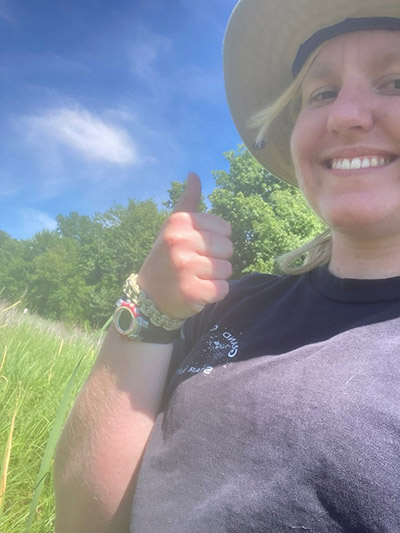 experiences from jobs and internships to study abroad and research trips in the FNR Field Reports series.
Sophomore forestry major Katie Schouten spent the summer as an intern with the Lake Maxinkuckee Environmental Fund after filling out an application on their website in early spring. Katie’s mother and grandmother encouraged her to apply for the internship, which was created through an endowment in honor her late grandfather.
As a summer intern, Katie performed water sampling with volunteers in the community, was part of the Turtle Action Response Team program (TART), organized a bike tour, participated in an aquatic vegetation survey and monitored osprey nests around the lake.
“Lake Maxinkuckee is part of the Clean Lakes Indiana program, so I was out on the lake once a month collecting data for that database,” the Leiter’s Ford, Indiana, native explained. “As part of the TART team, I oversaw putting out and repairing turtle boxes to protect turtle nests. Monitoring the osprey nests, I had to document how many chicks there were and roughly what growth stage they were in. That was my favorite part of the summer.
“I learned a lot about water management and wildlife conservation practices. There are many moving pieces to keep a body of water healthy. I did a lot of water sampling, once or twice a week, over the course of the summer. Learning all the different techniques to water sample for algae and nutrients was very interesting. I also learned about how diverse the wildlife in the wetlands and around the lake is. I didn’t know that we had a river otter in one of our wetlands, but it was so exciting to see the trail camera footage.”
The internship allowed Katie to apply her coursework in a real-world setting.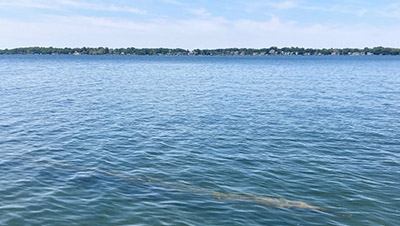
“During my freshman year, I took two semesters of botany and drawing on the knowledge was a highly valued resource,” she said. “I was able to use my base knowledge to ID plants and learn the differences between similar looking species. It was also helpful when my employer was talking about different parts of a plant and I was able to follow along and contribute. There were a lot of invasive and native species that I worked with this summer and knowing the general anatomy of a plant was invaluable.”
While the work increased her knowledge and skills, Katie said the people she worked with also made it a great experience.
“I had the opportunity to work with some amazing volunteers this summer,” Katie recalled. “So many people care about Lake Maxinkuckee and want future generations to have the same resource as them. Our water sampling volunteers did amazingly and collected important data. They were eager to learn the process and even sometimes brought along family and friends to show them too. It was a great internship and was perfect for someone like me who just finished their freshman year and didn’t have a lot of experience yet. I learned skills I will be using in the future, and this internship was a great place to start.”
Working at LMEF has not only prepared Katie for a future in natural resources, but also for upcoming coursework.
“I have become even more excited for my wildlife sciences minor,” Katie said. “This internship really highlighted how interconnected everything is. I still want to be a forestry major, but I am also looking forward to having a wildlife minor.”
Outside of the classroom, Katie is involved with the Purdue Student Society of Arboriculture and the Society of American Foresters. She also is an FNR Ambassador.
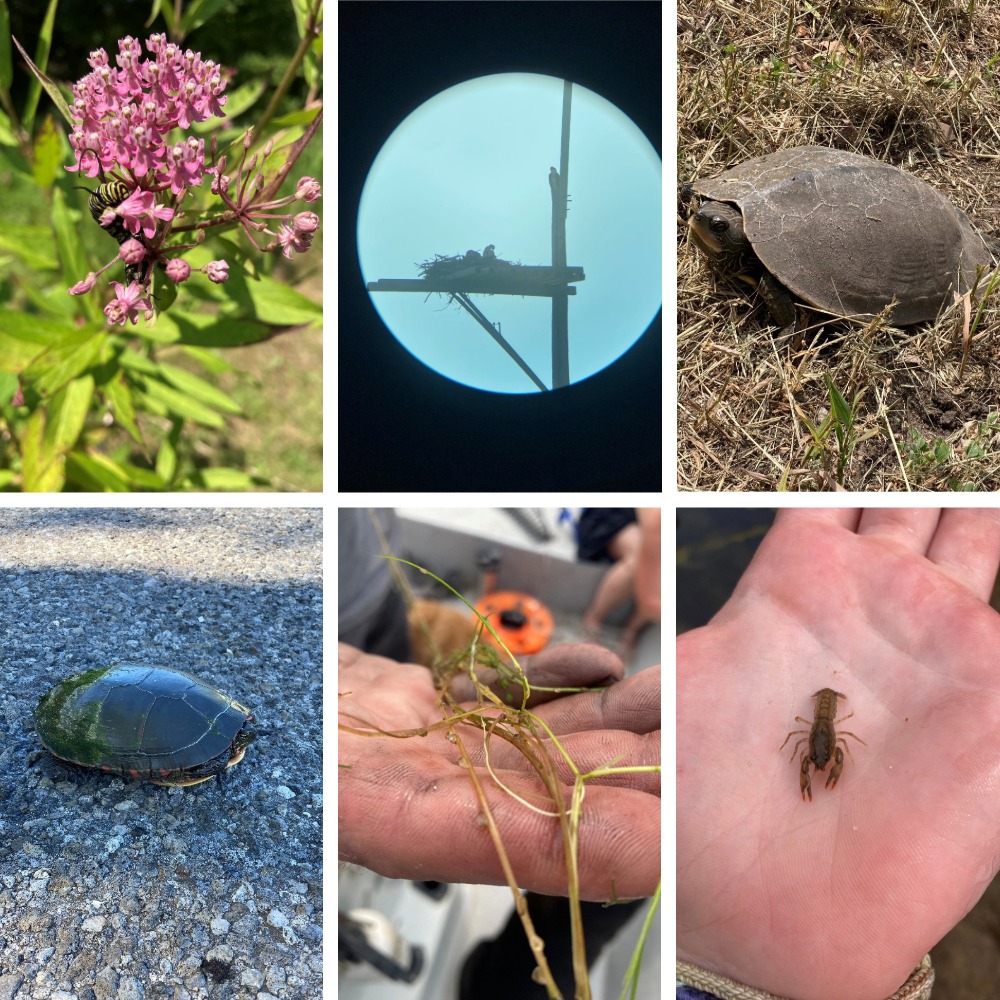 A collage of images from Katie Schouten's internship with the Lake Maxinkuckee Environmental Fund: a monarch caterpillar on swamp milkweed found along the levee at the Kline Wetland; one of the osprey nests Katie watched this summer, including two chicks in the nest and an adult sitting on the pole. This structure was specifically designed for ospreys to encourage them away from power lines in the area.; A northern map turtle female laying her eggs. Northern map turtles are the most common in the lake. Katie put a turtle box over this spot after the turtle left.; a painted turtle Katie found on the side of the road on the way to the Lake Maxinkuckee Environmental Council meeting after giving an informal presentation on different species of the turtles in the lake; freshwater mussels on an aquatic plant Katie found during an aquatic vegetation survey; a tiny crawdad Katie found while collecting examples of macroinvertebrates for a bike tour she organized. She and her colleagues named him Mr. Mini.
 Featured Stories
Carolyn Foley, a long-time member of the Purdue Forestry and Natural Resources (FNR) and...
Purdue University’s College of Agriculture recognized nine alumni at the Distinguished...
Keep your eyes peeled across Indiana for the newly minted Purdue Forestry and Natural Resources...
Senior wildlife major Madison Medley spent her summer as a natural resource intern with Hamilton...
Addy Ellis, a sophomore aquatic sciences and political science double major, spent the summer as...
Zachary Feiner, who earned his PhD from FNR in 2015 and spent two additional years in West...