

2025 Purdue CARET State Conference Research Showcase
Four Agricultural Economics undergraduates participated in the 2025 Purdue CARET State Conference Research Showcase late last fall! Each highlighted their research through a poster presentation and discussed their findings with conference attendees, with hopes that their work can lead to practical solutions.
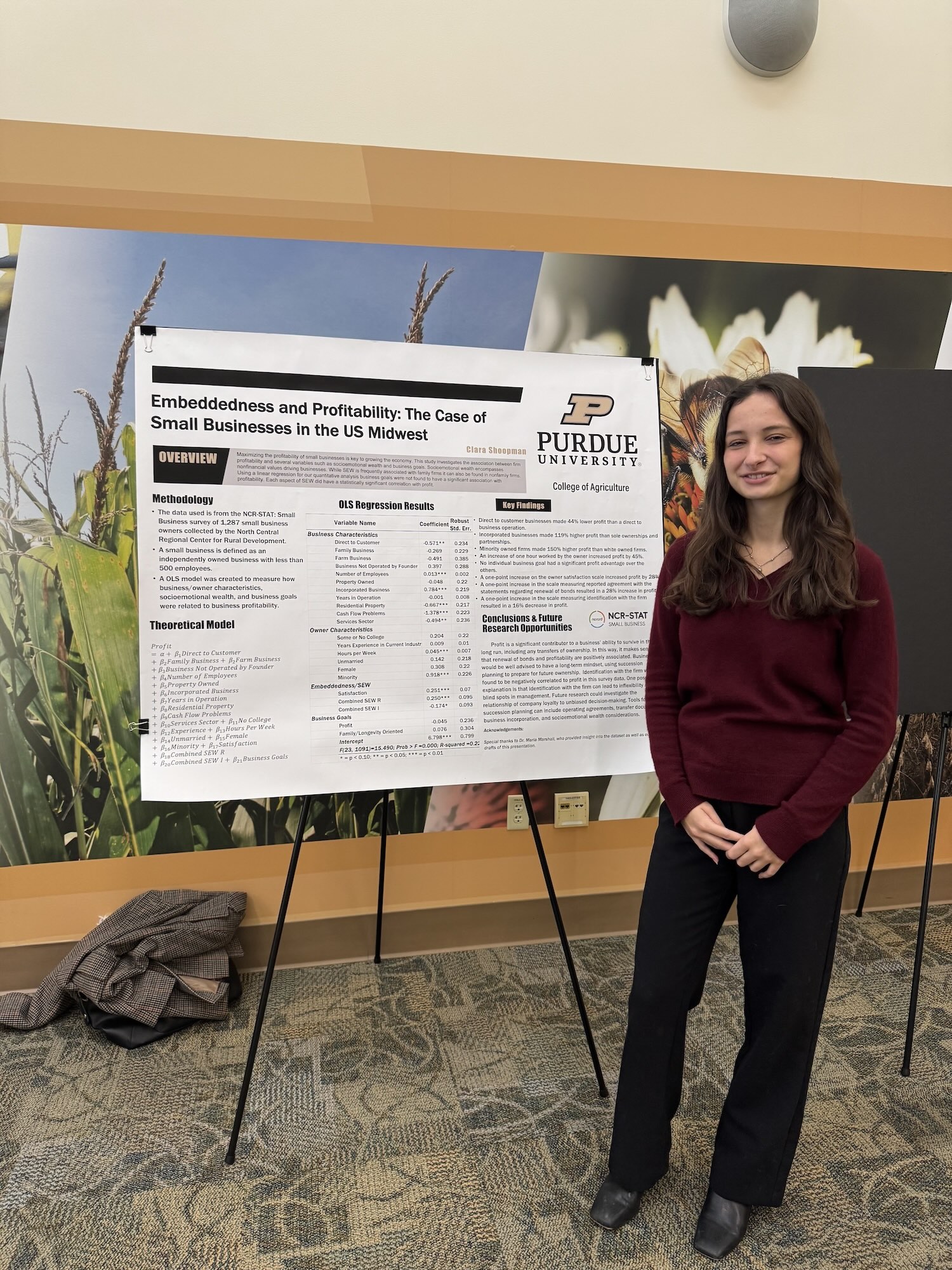
Clara Shoopman (December 25 Graduate; Henderson, NV) shared, “This was my second time presenting my research formally; the first was at AAEA this summer in Denver. My research paper titled “Embeddedness and Profitability” won first place at AAEA for undergraduate paper. It was also accepted to the undergrad AAEA journal and will be published in the 2025 edition (whenever that comes out, I’ve been waiting a couple of months). This conference was special because of its focus on Extension and the discussions I had with professionals about how they see it in their fields. My research focused on small business owners, and many of the professionals there either owned their own businesses or had some connection to a family business, so I got to hear their perspectives and how their experiences aligned with my findings. Overall, undergrad research has been a great experience, and I’m so grateful to have had this opportunity!”
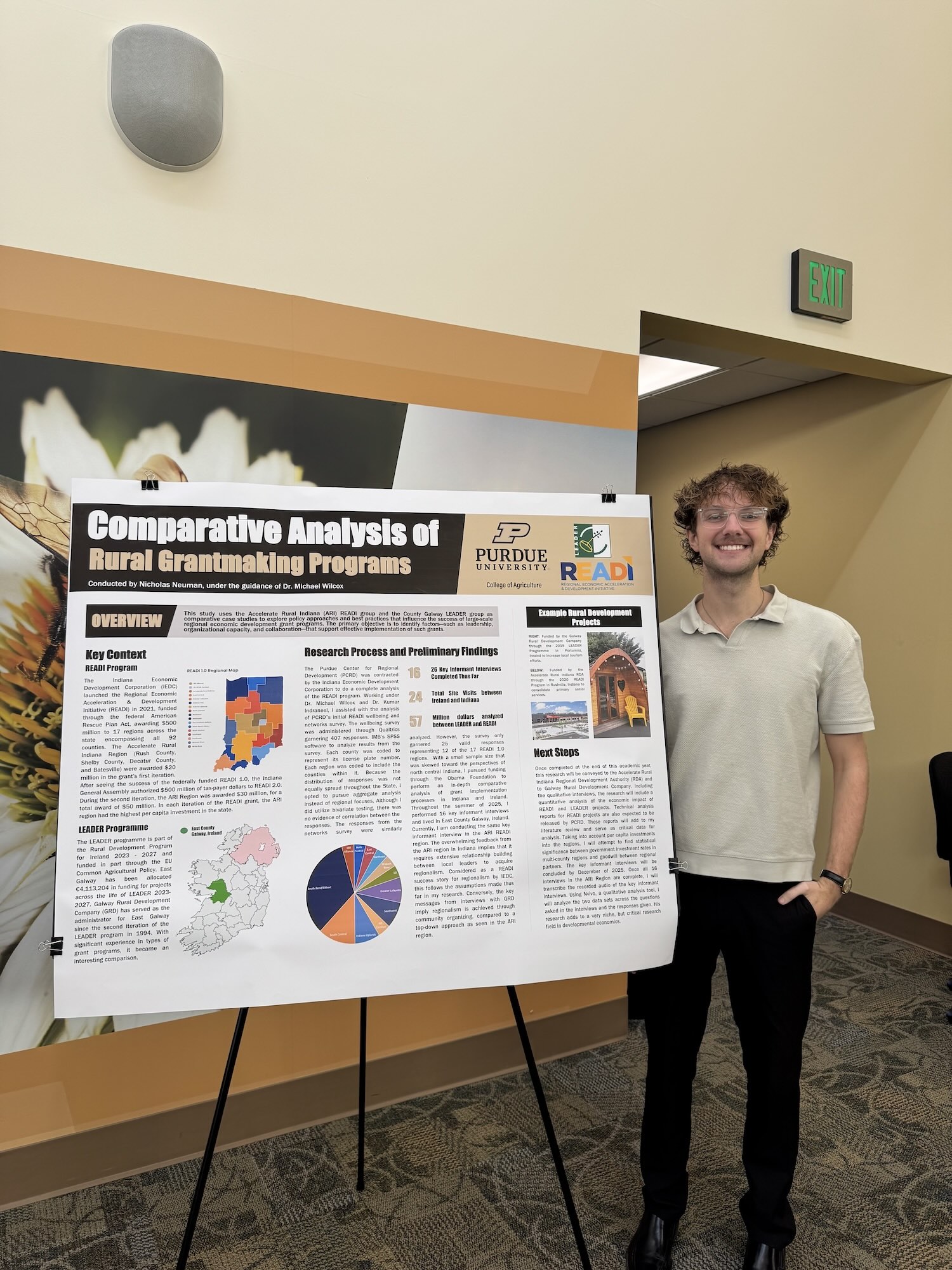
Nicholas Neuman (Senior; Rushville, IN) stated, “While I am currently still in the data gathering and analysis phase of my research, the experience has already been transformational. Funded by the Obama Foundation, I was able to live and work in Galway, Ireland, last summer to perform my research. Although my research has a focus on rural grants, it has also vastly expanded my cultural awareness, independence and network.”
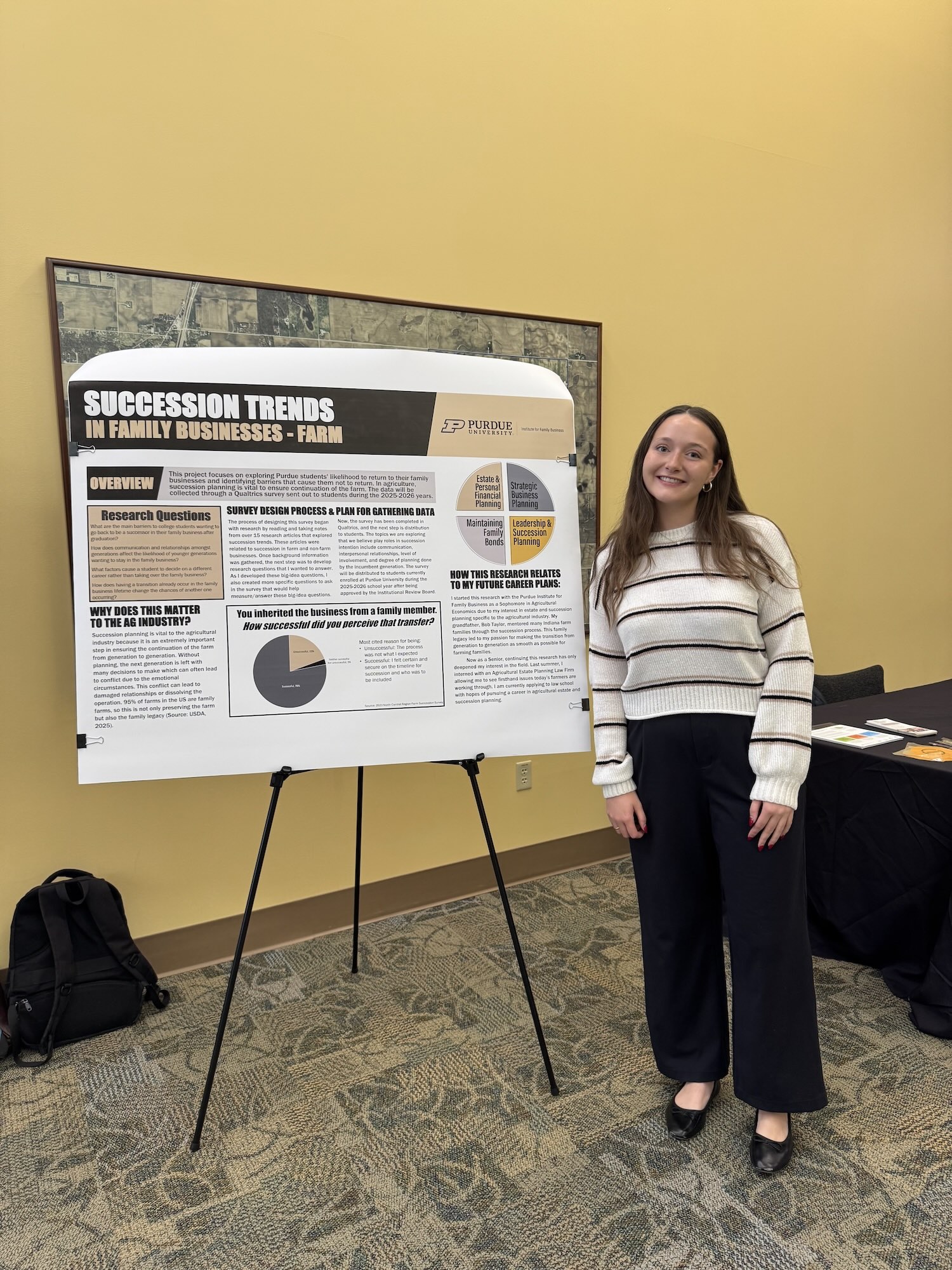
Karie Taylor (Senior; Rossville, IN) added, “Participating in undergraduate research all four years that I have been at Purdue has deepened my understanding of agriculture and allowed me to take away more from the classroom. I spent time doing research through Data Mine my freshman year, which was a great way to integrate into Purdue. In my sophomore year, I began my current project, which focuses on succession trends in family businesses. When I began this project, I was unsure of the career I wanted to pursue after graduation; however, after spending the last three years learning more about the barriers families face when transitioning their operations, I can confidently say this research inspired my future plans of becoming an agricultural estate planning attorney. My mentors throughout this process, Dr. Maria Marshall and Renee Wiatt, have made this experience more than just a learning opportunity by connecting me with industry professionals, inviting me to conferences and pushing me to present my findings. This commitment even helped me reconnect with the law firm where I interned last summer. Without this project and my research professors, I would not be as prepared as I am now for life after Purdue, as I begin my journey towards a career in law.”
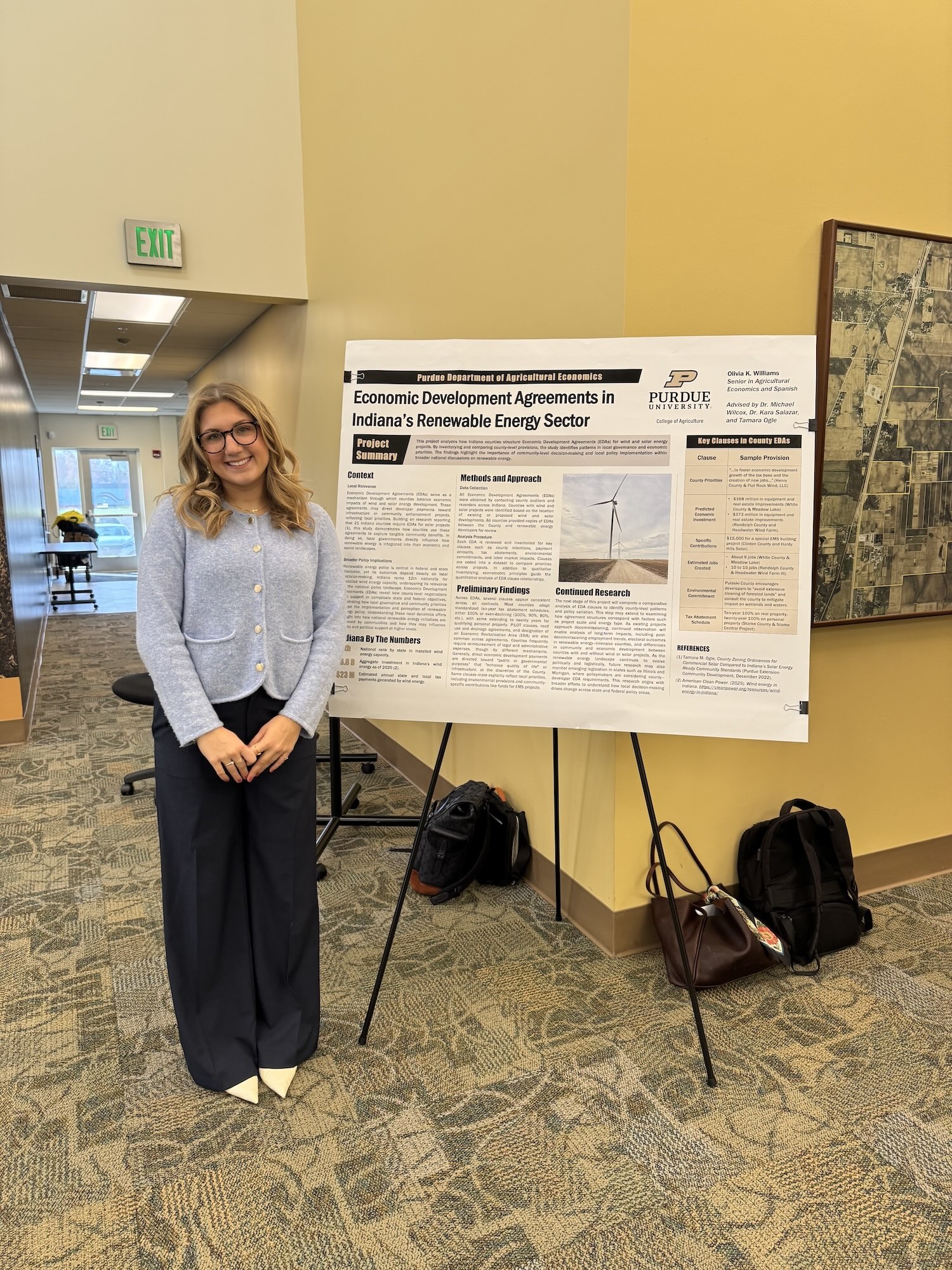
Olivia Williams (Senior; East Grand Rapids, MI) explained, “The subject matter I’m studying (how contract negotiation shapes rural development and local fiscal capacity) is something I likely wouldn’t have encountered in an undergraduate classroom, yet it has prepared me very distinctly for the career I hope to pursue. This project also connected me with faculty and professionals well beyond my usual networks, showing me what engaged, community-focused research can look like in practice. Most importantly, it clarified that the type of law I want to practice sits at the intersection of rigorous economic analysis and real-world impact, and that agricultural economics has been the perfect foundation for that path. This particular presentation challenged me to articulate complex legal and economic concepts in a way that was accessible, which fundamentally deepened my understanding of my own work.”