

Nelson’s vision to bring food science to the fore
Philip E. Nelson, named Indiana State Fair Tomato King at age 15 for exhibiting 24 perfect tomatoes, later developed the technology that allows tomato paste and orange juice to be stored safely and shipped all over the world.
That discovery would earn him the World Food Prize. But to get there, he had to fail multiple times. In one experiment he lost 30,000 gallons of tomato — enough paste to fill a swimming pool.
Nelson was testing his technology in two tanks tucked in the hills of Allentown, Pennsylvania. When he got the call that the tanks had spoiled, he checked his research records, found the problem and was successful on his second try.
The next year, an Indiana tomato processor installed eight 40,000-gallon tanks. “When I went over to see the installation and the tanks,” Nelson said, “I knew we either had a big success or the biggest Bloody Mary ever made.”
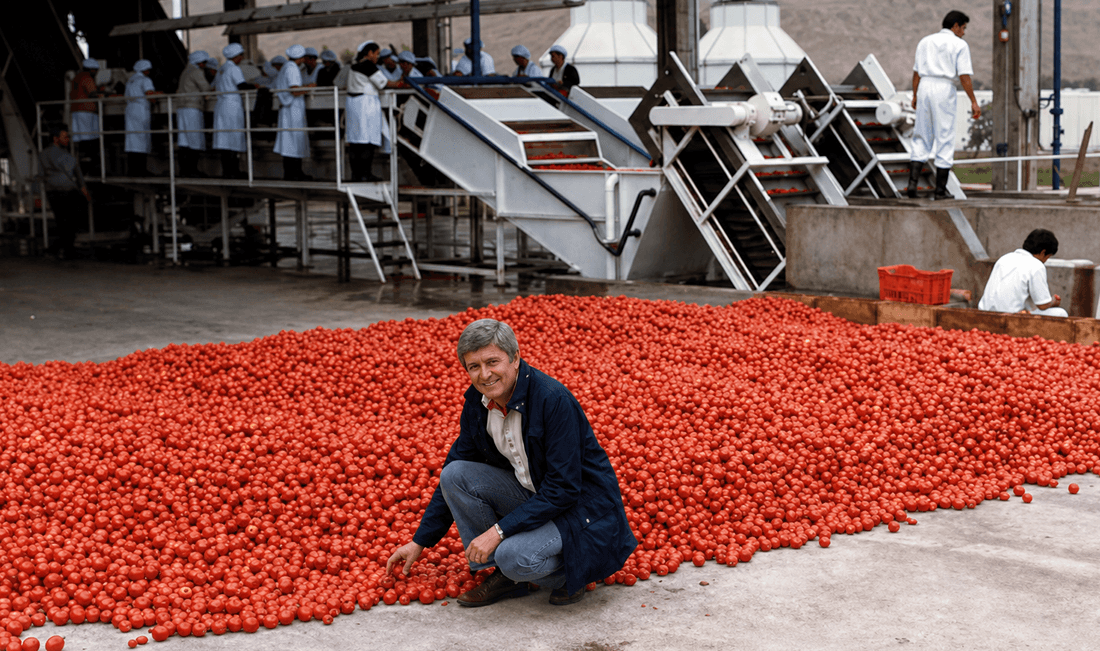
Nelson’s persistence and entrepreneurial approach to problem-solving were key to his success as the founding head of Purdue University’s Department of Food Science. “I always told my students that failure is not the falling down. It’s the staying down.”
An entrepreneur at heart
Nelson’s career started on a 500-acre farm in Morristown, just outside Indianapolis, where he grew his award-winning tomatoes. His parents also owned the Blue River Packing Company, a tomato-canning factory.
“And that was really my love — the factory,” Nelson said. “The factory had an attraction to me because you took the product and were actually able to sell it to the consumer.”
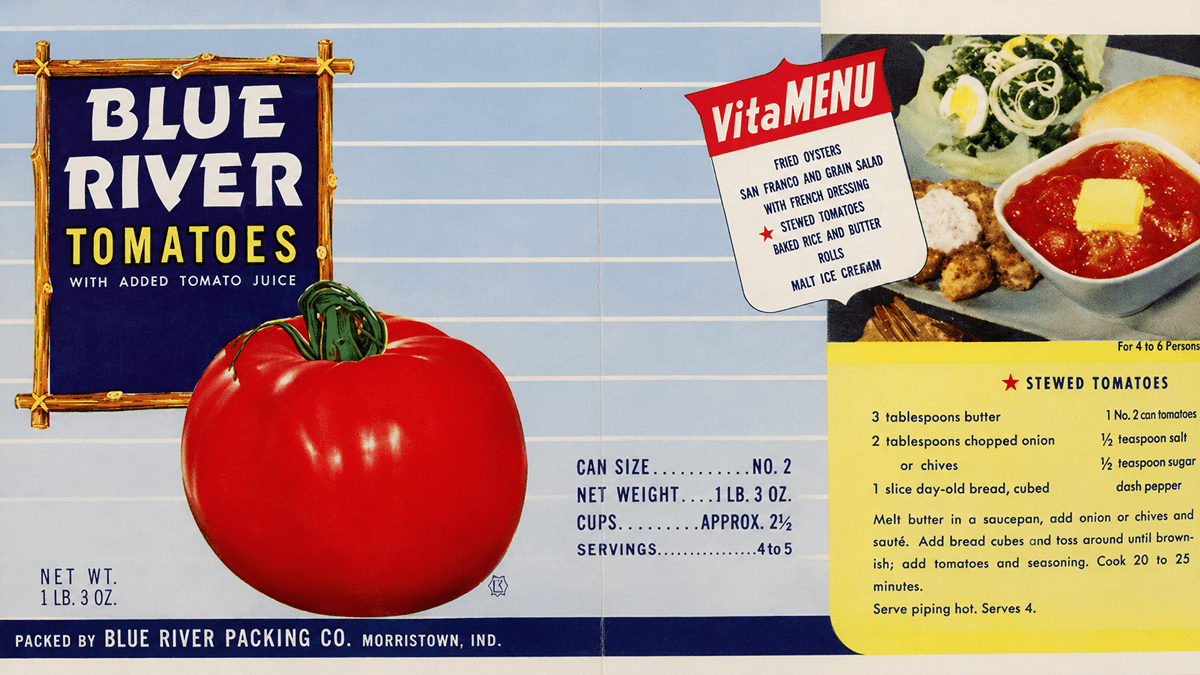
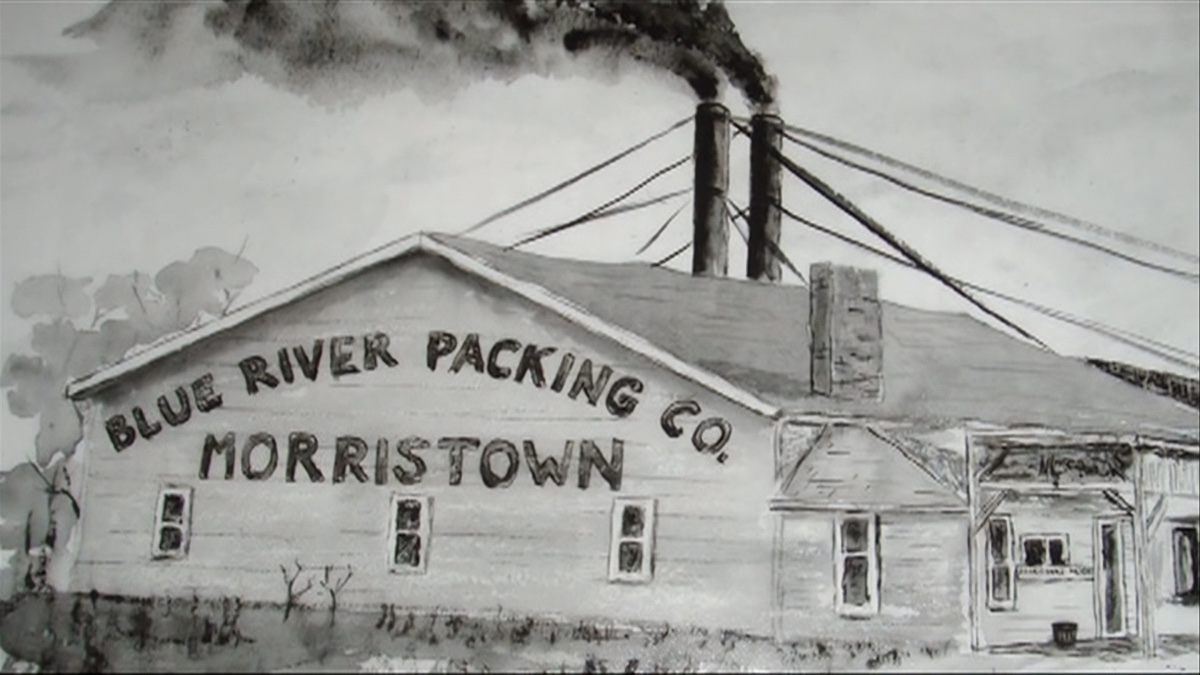
With his interest in food preservation and processing, it was Purdue Extension that sealed his attendance at Purdue. The Tomato King had lunch with the governor and drove a car around the Indianapolis Motor Speedway track — all arranged by Extension following his state fair win, which made an impression.
He studied general agriculture — but his most important undergraduate discovery was finding his partner in life. “Meeting Sue at Purdue was a life-changing experience,” Nelson said.
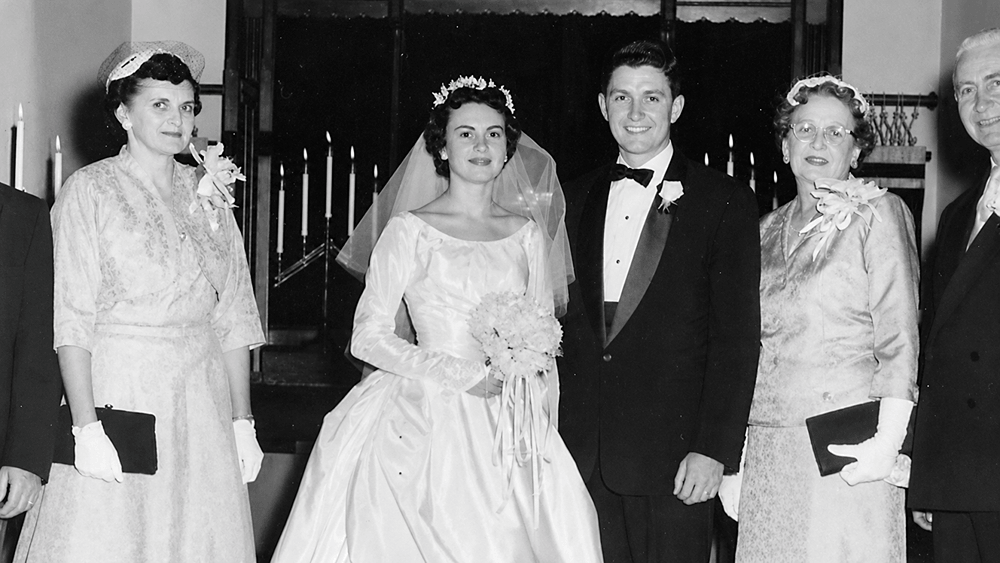
They married in 1955 and returned to the family farm when he graduated in 1956. Staying on the farm was not their destiny; the canning factory closed, prices were down and Nelson had other goals. Sue commuted to Butler University to finish the education degree she had started at Purdue, and Nelson was accepted to vet school at Purdue.

When the Nelsons visited Purdue to find housing, Phil dropped in on the horticulture professor who taught the only food processing course he had taken as an undergraduate. He left the meeting with an assistantship in horticulture, which changed the course of his life — and eventually the field of food science. He finished his doctoral degree in 1967, joining the faculty in the Department of Horticulture and Landscape Architecture.
Making the case for food science
Though other land-grant universities had food science departments, it wasn’t even a course of study at Purdue. So Nelson and a colleague in animal sciences, Bernie Liska, formed the Food Science Institute, which also included faculty from biochemistry, agronomy and agricultural engineering. With Liska as its first head, the team developed a curriculum, although students still earned their degrees in their departments.
As the program grew, Nelson became director and the institute moved into Smith Hall. When Liska became dean of the college, the Department of Food Science finally became a reality in 1983, starting with nine faculty and 30 students.
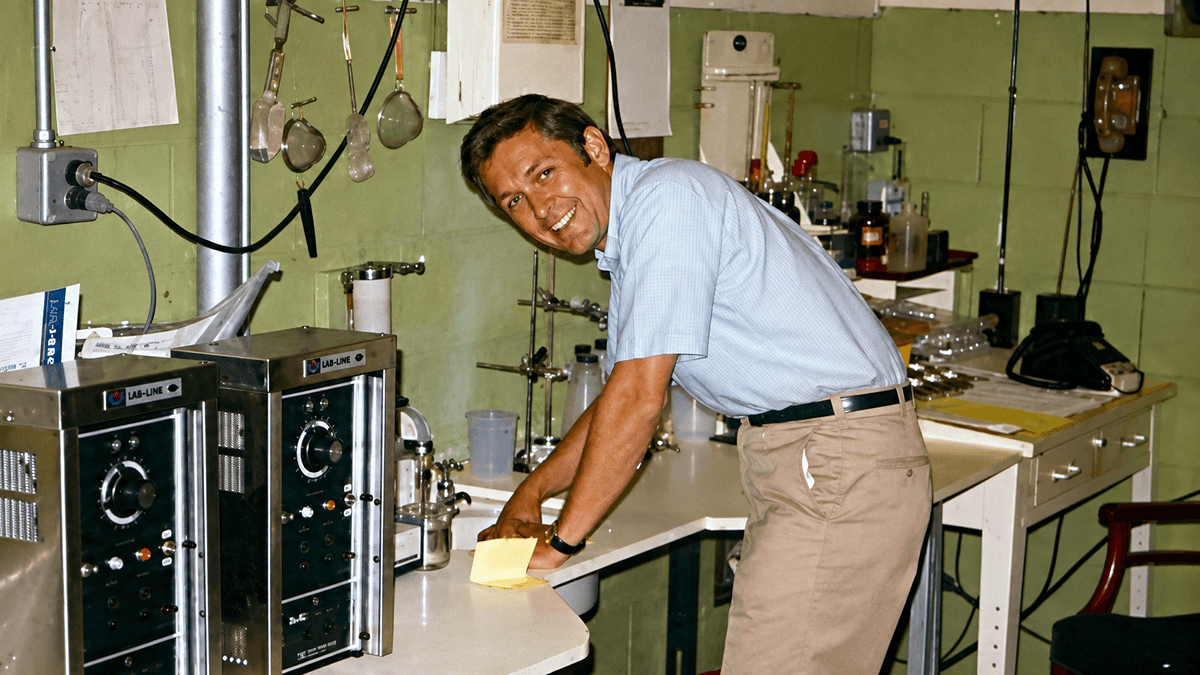
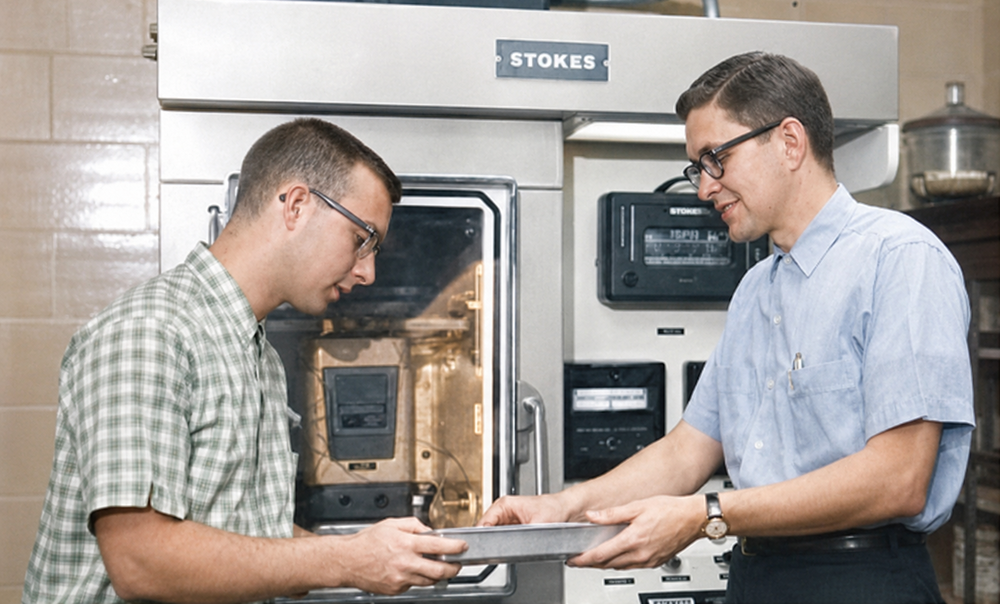
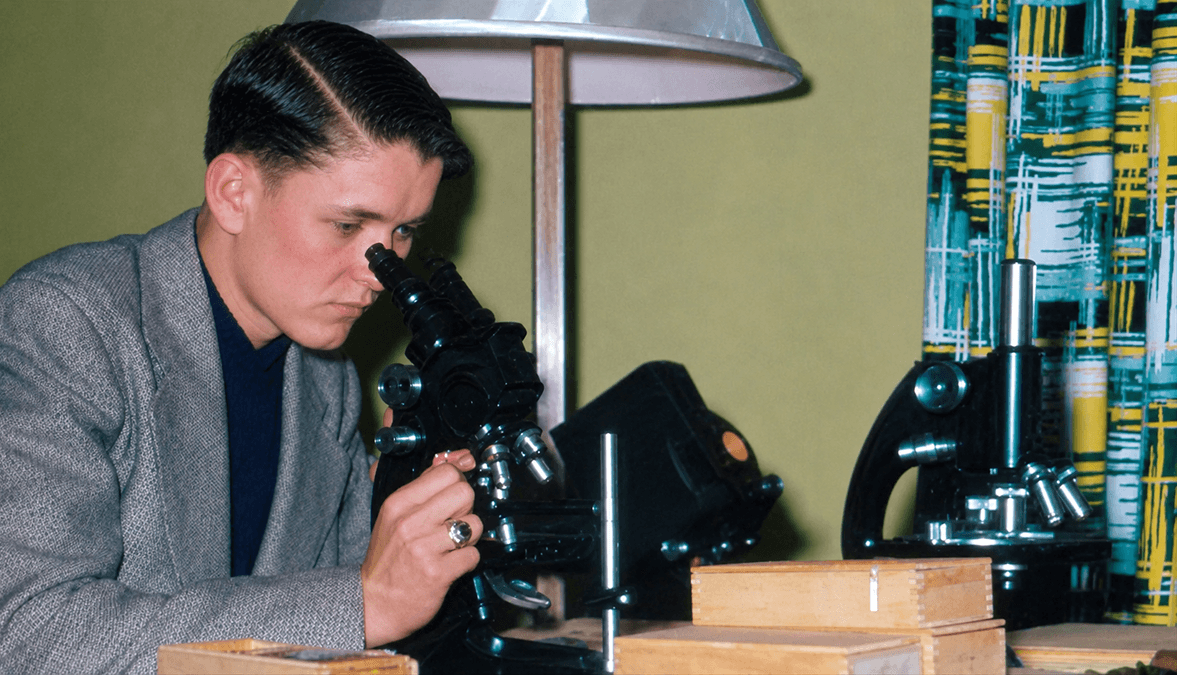
As a fledgling department, the faculty members scrambled for their own research grants, and Nelson’s entrepreneurial instincts flourished. “Since I had this industry interest, I decided I had to go out and ask industry to help. That was unique for Purdue back then,” he said.
One of the first sponsors for Nelson’s research in the safe storage of food at a larger scale was a Cincinnati, Ohio, company that made beer tanks. Over objections from some administrators who thought industry money would ruin his career, Nelson convinced the company’s president that funding research on storing other food products in his tanks would lead to an increase in sales.
Gaining industry trust and input
Industry partnerships proved valuable at several steps in the development of the department. Nelson recognized a department without its own alumni would struggle with fundraising, “But we had alumni in animal sciences, biochemistry and agronomy who went into the food industry.”
He tapped them as industrial associates, advising on the types of research that would benefit food industries. “I'm sure it was the first industry group at Purdue that charged the group members to be on my board.”
When associates told him they lacked basic research in carbohydrate chemistry, he formed a research center and attracted member companies to help support the research. It was named for Roy Whistler, one of Purdue’s world-renowned biochemistry faculty who specialized in the area. Whistler was a professor emeritus, already retired from research, but Nelson knew his reputation would draw attention.
“Whistler and I went to the dean, and they allowed me to form the Whistler Center for Carbohydrate Research without a carbohydrate chemist. But I had the name.” The first director, James BeMiller, professor emeritus of food science, was a student of Whistler’s. Nelson also hired its current globally recognized leader, Distinguished Professor of Food Science and Roy L. Whistler Chair Bruce Hamaker.
Training students to be the best
Certain that students and industry were the department’s most important customers, Nelson applied business principles to ensure success.
“In most departments, university students are given a hurdle and the department says, ‘If you get over that hurdle, you’re fine — you pass.’ We said, ‘We’re going to help you get over the hurdle.’”
Nelson’s goal: train the best students, supplying industry with workforce-ready potential employees they could interview directly from the department.
The department was equally deliberate in the students they recruited. Nelson observed how successful Purdue Athletics was in recruiting students and followed some of the football team’s recruiting practices to build undergraduate enrollment.
That connection would prove fruitful later when Purdue’s then-president, Steven C. Beering, asked Nelson to serve as faculty representative to the Big Ten Conference and the National Collegiate Athletic Association (NCAA). Spending time with Purdue trustees and academic leadership at athletic events and NCAA meetings gave him opportunities to discuss the department’s success and its needs — including its own building.
Back to his roots for research
As Nelson was helping build food science, he was also advancing research that would benefit industry and prevent food loss. From his days on the family farm, he knew one challenge he wanted to solve.
“One of the problems was the tomatoes would get ripe, and the bottleneck was the factory. We couldn’t can them fast enough, and the tomatoes would rot in the field,” he said. He sought a way to store tomatoes so they could be processed later throughout the year, preventing waste.
“There was this new technology called aseptic processing. It hadn’t really been used in industry; it was more of a concept. With this technology, you sterilize the product so it won’t spoil, you sterilize the container, then you put the two together, and it will stay sterile.”
Nelson worked on aseptic processing for years, sterilizing food storage tanks, filtering any air in the tank, and devising an aseptic valve. Perfecting this technology at large scale meant that tomato pulp and juice could be stored without destroying its vitamin content and used later to make products like ketchup, sauces and soups.
He also worked with entrepreneur William Scholle, who used a special machine to fill and seal bags of battery acid, instead of using cans. Scholle wondered if the same technology could be used for food.
“He had an entrepreneur’s vision and wanted to feed the world,” Nelson said. “So, with Purdue’s machine shop, we modified his filler so that you could take a bag that had been sterilized by irradiation. You’d take the sterile product, and with this machine, we could put the two together and not recontaminate the product.”
This technology, packaged as “bag in box,” is how tomato paste is moved around the world in 300-gallon sterile bags. The Scholle family later established the William R. Scholle Endowed Chair in Food Processing, with Nelson the first to receive it. In 2022, a portion of Scholle’s gift was used to establish the Philip E. Nelson Endowed Chair in Food Science.
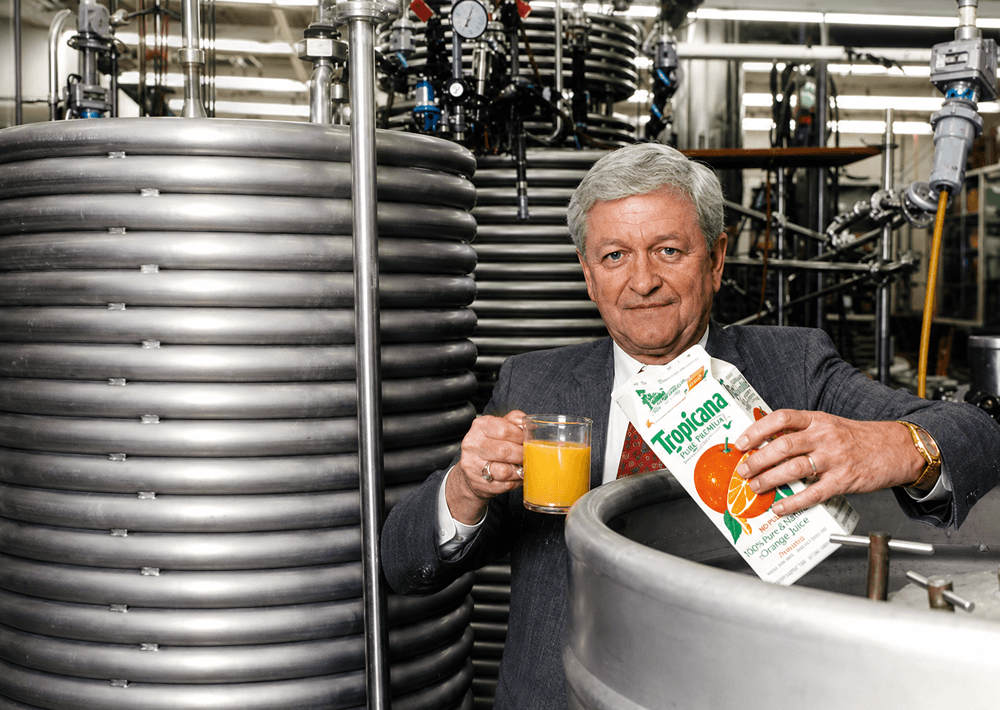
Nelson’s research earned him several patents and took him across the globe, from Venezuela and Japan to Kenya and Norway, working with companies like Kikkoman, PepsiCo and Tropicana. Aseptic processing helps store not only tomatoes but foods like orange juice and fruit puree for baby food. Tropicana was the first to store orange juice aseptically in 2-million-gallon tanks. A Brazilian company used the technology to ship orange juice around the world in 8-million-gallon tankers.
Teamwork key to growth
The building is named after Nelson, but he’s quick to cite dozens of people who helped build the department. One is Suzanne Nielsen, among the first faculty members he hired. He asked her to develop a new food chemistry course; now her Food Analysis textbook is in its sixth edition.
“When I stepped down as department head, I thought a logical choice was Suzanne next,” Nelson said. Nielsen, who died in 2025, served as head from 2003 to 2013. He credits her leadership as a factor in the department’s continued success. “She is another person who really impacted Purdue.”
Steve Smith, hired from industry to direct the pilot plant, a small-scale manufacturing facility used for teaching and scalable trials in food production, also played a key role. “Steve was a guy who could just do anything in the pilot plant,” said Nelson. “He was so outgoing that he really developed the industry coming in to use our lab.”
In his 29 years at Purdue, Smith also led the sensory evaluation lab and was instrumental in coordinating the department’s aseptic processing and packaging workshops. The annual workshop, now offered in person and online, has trained thousands of experts in the field over 43 years.
Earning the Nobel Prize of Agriculture
While Nelson’s vision helped establish food science at Purdue, one event he didn’t foresee was winning the 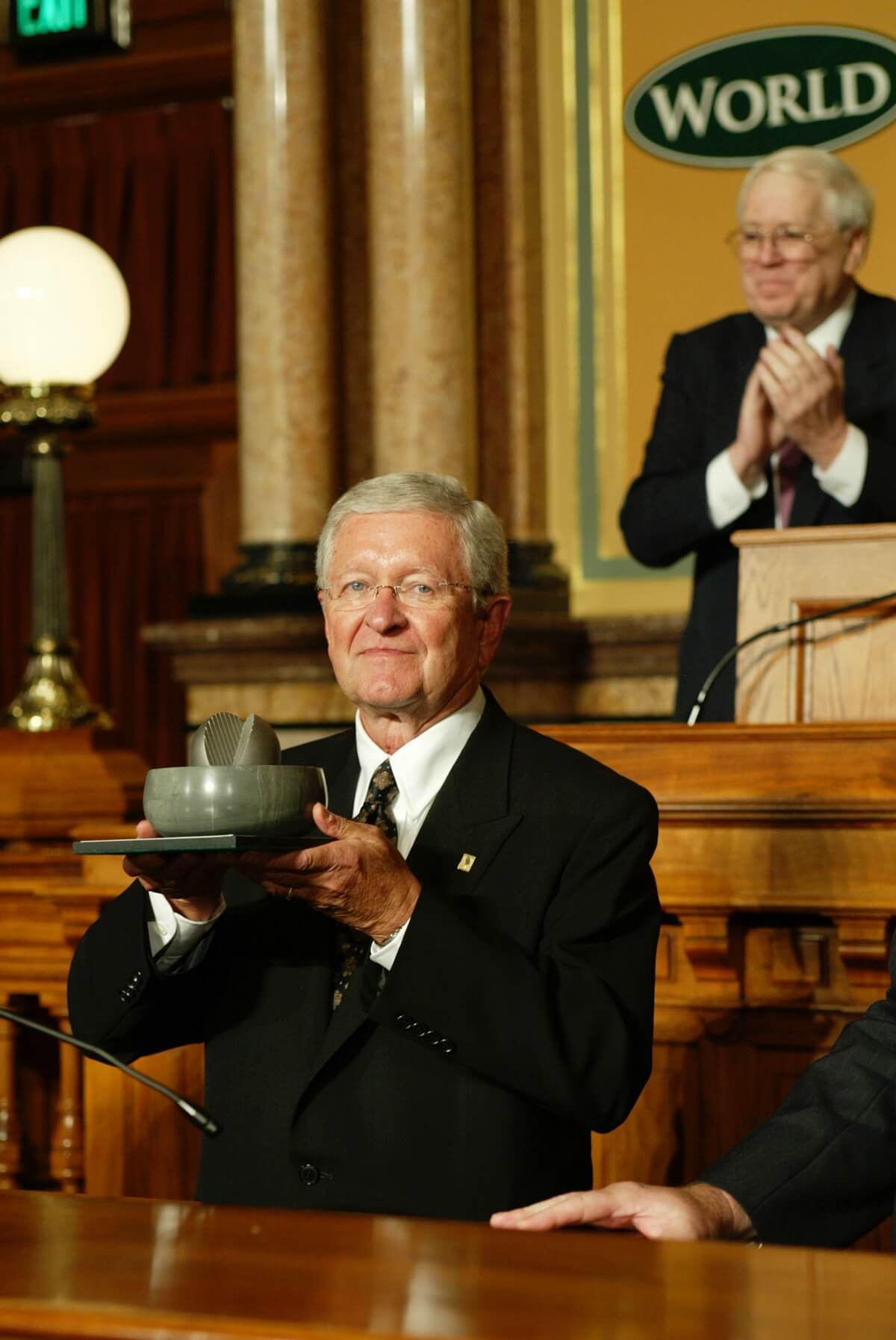 2007 World Food Prize. Rushing off to class one day, he distractedly answered his phone. The caller asked if he knew much about the World Food Prize — Nelson didn’t — then told him he was going to learn, because he’d just been named that year’s laureate.
The World Food Prize was created by Norman Borlaug, whose achievements increasing wheat production earned him the moniker “Father of the Green Revolution” and the 1970 Nobel Peace Prize. He established the award as an equivalent to the Nobel, but for breakthroughs in food and agriculture.
It was a world-changing experience for Nelson. He began to focus more effort in the department on technology and training in developing countries to reduce post-harvest food loss.
A living legacy
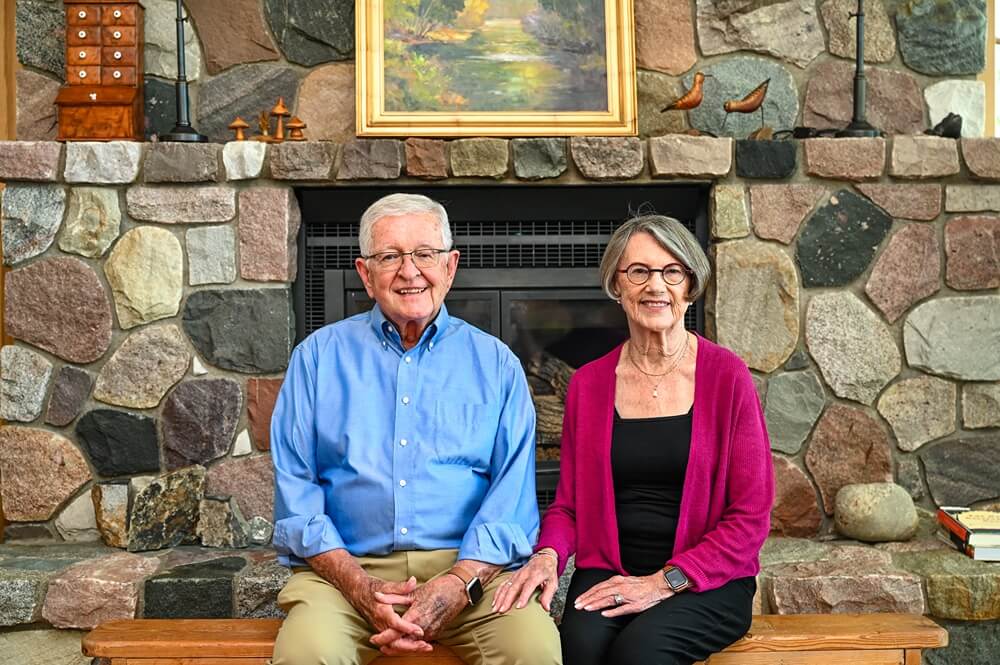
Nelson, who retired as professor emeritus in 2010, had both global and local impact. His sons Brad and Andy attended Purdue, and his granddaughters Mary Claire and Tess studied in the department he helped found.
His entrepreneurial approach and industry involvement were keys to his departmental vision. “I like being different,” he said. “I like being successful. That was the drive. But I also think back to the shoulders that I stood on. There are so many people back then who helped make it happen.”
Purdue Food Science is currently ranked sixth in the nation, according to U.S. News and World Report. The department has 28 faculty members and educates about 150 undergraduates and 60 graduate students each year.
One of those former graduate students, Senay Simsek, is now the Dean’s Chair and department head for food science. “I was a graduate student at Purdue when Phil was transitioning the leadership of the department to Suzanne Nielsen, and I had the opportunity to see firsthand the vision, ambition and sense of purpose that shaped Purdue Food Science,” she said.
“Phil believed bringing food science to the forefront, partnering with industry, pursuing innovations that could change lives, and, above all, training students to be the very best. Today, as department head, I feel both the responsibility and the privilege of carrying that legacy forward and to build upon it. “
For Phil and Sue Nelson, the most important goal was achieved. “I think we left Purdue better than when we arrived,” he said.
Transcript for Victories and Heroes: Philip E. Nelson
[Visual Description] [The video opens with archival black-and-white photographs of a young
Philip Nelson on a family farm in Indiana, surrounded by fields and agricultural machinery.
Historical photographs transition to the exterior of the Blue River Packing Company canning
factory with workers sorting fresh tomatoes.]
Narrator: Born in 1934, Philip Nelson grew up on a 500 acre farm near Morristown, Indiana. He
also worked in his family's tomato canning factory, the Blue River Packing Company. Following
his high school graduation, Nelson studied at Purdue University. When he finished his degree,
he returned to the family farm in canning business. But when his father closed Blue River
packing, Nelson headed back to Purdue to earn his PhD. This led to a 46 year career at the
university, where he became the founding head of Purdue's Department of Food Science.
[Visual Description] [The scene transitions to an interview setting where Dr. Philip Nelson, an
senior man with glasses, speaks warmly toward the camera. Historical photographs of the early
Purdue Department of Food Science faculty and campus buildings are shown, followed by
archival footage of Purdue football games and enthusiastic crowds in the stadium.]
Dr. Philip Nelson: In 1983, we formed the Food Science department. When I started my
research, there was no one wanting to fund it. I decided I had to go out and ask industry to help.
I got the money and I had the associate dean of the experiment station come into my office,
close the door, said, you shouldn't take industry money, that'll run your career. It's not good. And
well, I didn't listen We didn't have enough students, so you look at who is the best at recruiting
students. And I looked around Purdue and it was the athletic department. So I copied my
recruitment after the football recruitment. And it worked.
[Visual Description] [Video shows harvested tomatoes piling up in fields and rotting
on vines. Images shift to industrial tanks, valves, and food processing lines operating inside a
research laboratory.]
Narrator: Searching for a way to reduce tomato spoilage led Nelson to develop aseptic food
processing, which allows juice or puree from crops like tomatoes and oranges to be stored for
long periods and transported in bulk around the world.
[Visual Description] [Dr. Nelson continues his interview on camera, gesturing as he describes
the challenges of perishable crops. Footage shows early pilot laboratory equipment at Purdue,
including five small 100-gallon stainless steel storage tanks and students operating pilot
processing lines.]
Dr. Philip Nelson: On the farm and raising tomatoes, one of the problems was that tomatoes
would get ripe. The bottleneck was the factory. We couldn't can them fast enough. Tomatoes
would rot in the field. At that time, I had the concept, if somehow we could get those tomatoes
and rather than putting them in a can, put them in something tank, so I could hold it there. And
then throughout the later in the year, process it, then maybe we can save those tomatoes. And
there was this new technology called aseptic processing. It was brand new. And what it is is you
sterilize the product so it won't spoil. You sterilize your container, and then you put the two
together and it'll stay sterile. So I decided maybe I could do this with some tanks. And I put in a
little processing line and five little 100 gallon tanks in the pilot lab of the horticulture department,
and used students to process tomatoes and put them in these tanks. We had to develop an
aseptic valve and then a way to sterilize the tank.
[Visual Description] [Archival photos show entrepreneur Bill Scholle alongside early flexible
plastic container designs. Footage shows automated industrial packaging machines sterilizing
large flexible bags, filling them with tomato puree, and sealing them inside sturdy corrugated
outer boxes.]
Narrator: Nelson also worked with an entrepreneur to adapt a bag-in-box method to store food.
[Visual Description] [Dr. Nelson demonstrates or references a flexible sterile storage bag filled
with tomato paste. Video clips show cargo ships, trains, and delivery trucks transporting bulk
bag-in-box containers globally.]
Dr. Philip Nelson: I had a gentleman entrepreneur named Bill Scholle. He was putting battery
acid in a plastic bag, but he said, what I want you to do is to make my filler so we can package
food. I want to feed the world. So we modified his filler so that you could take a bag that had
been sterilized by radiation. And with this machine, we could put the two together and not
recontaminate the product, called bag in box. There we go. And here we go. A bag that's been
filled with sterile product and will now be distributed around the world. That's the world now.
That's how tomato paste is moved around the world. And it's the number one product that's
made from vegetables.
[Visual Description] [Photographs and video from the 2007 World Food Prize award
ceremony in Des Moines, Iowa. Ambassador Kenneth M. Quinn presents the World Food Prize
medal to Dr. Philip Nelson on stage in front of an audience of dignitaries.]
Narrator: Nelson's breakthrough earned him the 2007 World Food Prize often called the Nobel
Prize of Agriculture.
[Visual Description] [Dr. Nelson smiles as he recounts receiving the notification call from
Ambassador Quinn.]
Dr. Philip Nelson: The phone rings, I pick it up. And this guy was called Ambassador Quinn.
And he's talking about the World Food Prize, do I know about it? And I said, well, I've heard of it
but I really don't know much about it. And I thought he was trying to sell me a ticket to the
banquet. He finally said, well, you're going to learn more about it because you're coming to the
banquet. You're this year's laureate. Well, I about fainted. I had to sit down.
[Visual Description] [The video shows exterior views of the modern Philip E. Nelson Hall of
Food Science on the Purdue University campus, highlighting the building entrance and
dedicated signage.]
Narrator: Another milestone in Nelson's career was the construction of the Food Science
Building, which was ultimately named after him.
[Visual Description] [Dr. Nelson gives his concluding remarks with a humble expression. The
video ends with a fade-out to closing text credits and Purdue University logos.]
Dr. Philip Nelson: It was unbelievable, a dream come true. We did a lot of thinking out of the
box. I think of the shoulders that I stood on. I mean, there's so many people back then that
helped make it happen. It was a team. It was a good time. It was a great time.
Featured Stories
In recent years attendees at Purdue Agriculture alumni, donor, and faculty and staff events have...
People think grass is simple. Lawns, right? Mow regularly and add some water and fertilizer. What...

The Office of Indiana State Chemist (OISC) is warning Indiana residents about an illegal...
A prominent protein on most human cells may be key to unlocking the code that makes humans...
Ava Hoskins, a double major in aquatic sciences (fisheries concentration) and natural resources...
Ashlynn McLaughlin, a senior aquatic sciences major with a concentration in marine and freshwater...